
 Fax: (239) 692-9436
 Tel: 239-430-3668
Foot pain got you feeling down? Our latest article uncovers the secrets of conquering plantar warts! Don’t let them hold you back – discover the path to happy, healthy feet! #FootHealth #PodiatryTips #FFLC #PlantarWarts
Patrick Bartholomew, DPM
Kevin Lam, DPM, FACFAS
Plantar warts are a common foot condition that can cause discomfort and pain. As a podiatrist, I frequently encounter patients seeking relief from these vexing lesions. This article will delve into the world of plantar warts, offering insights from a podiatric perspective on their causes, symptoms, diagnosis, and various treatment options.
What Exactly are Plantar Warts?
Let’s start with the basics. Plantar warts, medically known as verruca plantaris, are small, rough growths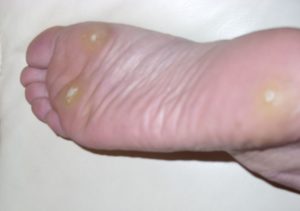 that typically appear on the soles of the feet. Unlike corns or calluses, which are caused by friction and pressure, plantar warts are a direct result of an infection with the human papillomavirus (HPV). It’s important to understand that there are over 100 different types of HPV, and only a few of them cause warts on the feet. The specific HPV strains responsible for plantar warts thrive in warm, moist environments, making places like public swimming pools, locker rooms, and communal showers prime breeding grounds for transmission.
The virus enters the skin through tiny cuts or breaks, often imperceptible to the naked eye. Once inside, it infects the superficial layer of skin cells, causing them to grow rapidly and form the characteristic wart. While warts can appear anywhere on the foot, they are most common on weight-bearing areas like the heel and ball of the foot. This is because the pressure of walking and standing pushes the wart inward, often leading to a flattened appearance and making them more painful than warts on other parts of the body.
Identifying the Culprit: Symptoms of Plantar Warts
Patients often come to my office complaining of a sharp, localized pain in their foot, particularly when walking or standing. This is a tell-tale sign of plantar warts.
Navigating Treatment Options
The good news is that plantar warts are treatable. However, they can be notoriously stubborn and may require persistence. As a podiatrist, my approach to treatment is individualized, taking into account the patient’s age, overall health, the size and number of warts, and their level of discomfort. Here are some of the common treatment modalities I utilize:
- Topical Medications: Over-the-counter salicylic acid preparations are often the first line of defense. These work by gradually peeling away the layers of the wart. Prescription-strength salicylic acid or other topical acids may be prescribed for more resistant warts. These treatments require consistent application and patience.
- Cryotherapy: This involves freezing the wart with liquid nitrogen. The extreme cold destroys the wart tissue, which then eventually sloughs off. Multiple sessions are often required, typically spaced a few weeks apart. While effective, it can be uncomfortable during and after the procedure.
- Canthardin: This is a blistering agent derived from the blister beetle. It’s applied to the wart in the office and then covered. A blister forms under the wart, lifting it off the skin. This is generally less painful than cyrotherapy during application but can be uncomfortable as the blister forms.
- Surgical Excision: For large, painful, or persistent warts that haven’t responded to other treatments, surgical removal may be considered. This involves cutting out the wart under local anesthesia. While effective, it does carry a risk of scarring and may require some downtime for healing.
- Laser Therapy: Pulsed dye laser or CO2 laser therapy can be used to destroy the wart tissue by targeting the blood vessels that supply it. This is often reserved for resistant cases.
- Immunotherapy: In some cases, for very stubborn or widespread warts, stimulating the body’s own immune system to fight the virus can be an option. This might involve injecting antigens into the wart or using topical immune-modulating creams.
- Combination Therapies: Often, a combination of treatments yield the best results. For example, cryotherapy might be followed by topical acid application.
Prevention is Key to Feet Protection
While treatments are available, preventing plantar warts is always preferable. Here are my top tips for prevention:
- Wear flip-flops or shower shoes: Always wear protective footwear in public areas like swimming pools, locker rooms, gyms, and communal showers.

- Keep your feet clean and dry: HPV thrives in moist environments. Wash your feet daily and dry them thoroughly, especially between the toes.
- Avoid walking barefoot: Minimize walking barefoot, especially on potentially contaminated surfaces.
- Don’t pick or scratch warts: This can spread the virus to other parts of your body or to others.
- Change socks daily: If you’re prone to sweaty feet, change your socks frequently.

Plantar warts can be a nuisance, causing significant pain and impacting daily activities. As a podiatrist, I emphasize early intervention and a tailored treatment plan to effectively eradicate these viral invaders. If you suspect you have a plantar wart, don’t hesitate to seek professional help. With the right diagnosis and treatment, you can get back on your feet, pain-free.
 If you have plantar warts and seeking medical care, contact Dr. Bartholomew’s office at (239) 430-3668 (FOOT) or visit www.NaplesPodiatrist.com to schedule an examination.
Serving Southwest Florida Since 2005, Family Foot & Leg Center has multiple convenient locations throughout Collier, Lee, Charlotte, and Sarasota Counties. Offering pediatric to geriatric family care: Ingrown Toenails, Heel Pain, Bunions, Foot / Ankle Arthritis Pain, Plantar Fasciitis, Foot / Ankle Surgery, Custom Orthotics, and Diabetic Wound Care. In office X-rays, ultrasounds, and minor surgical suite exam rooms. Practice powered by EMR and advanced technologies.
Home of the Lam Minimally Invasive No-Scar Bunion Surgery! Come Discover Why Patients Love Our 5-Star Foot & Ankle Care!
Same Day Appointments! Easy Online Appointment Scheduling.

Dr. Kevin Lam, DPM, FACFAS, DABLES, DABPS is Clinical Director of Family Foot and Leg Center, PA — Southwest Florida’s premier podiatric practice. He earned his Doctor of Podiatric Medicine degree with honors from Temple University School of Podiatric Medicine and completed advanced surgical training at Mount Sinai Medical Center and Jackson Memorial Health System, Miami. Named among America’s Top Podiatrists. Board-certified in foot surgery, reconstructive rearfoot and ankle surgery, and lower extremity surgery. Serving Southwest Florida since 2005 across 9 locations from Marco Island to Sarasota.