
 Fax: (239) 692-9436
 Tel: 239-430-3668
Best overall for a bathtub: a stationary transfer bench; best for an accessible walk-in shower: a shower chair with a back and arms; best simple option after clearance for independent transfers: a shower stool. The best shower chair after foot surgery fits your bathroom and lets you follow your surgeon’s weight-bearing instructions—this 2026 guide compares five seating designs by those needs.
- The best shower chair after foot surgery depends on bathroom access, transfer ability, and your surgeon’s restrictions.
- A stationary transfer bench supports seated entry across a bathtub wall; confirm fit and practice with professional guidance.
- A backed shower chair suits accessible walk-in showers but does not solve a difficult threshold.
- Naples Podiatrist provides specialist foot and ankle care; ask your surgical team about bathing and weight-bearing restrictions.
Why this matters
A shower seat supports you while washing. Getting onto it—and getting off it—requires a separate plan, especially when you cannot put weight through your operated foot.
A chair does not make a shower safe if you must hop over a tub wall to reach it. Before choosing equipment, read the instructions for your operation and review how to shower with a cast or boot on your foot. A seat does not waterproof a dressing or give permission to remove a boot.
Whether your goal is returning to pickleball, golf, running, or everyday walking, protect the repair during ordinary tasks first. Your bathroom setup belongs in your recovery plan before surgery, not after your first difficult shower.
What makes the best shower chair after foot surgery?
Use these criteria to assess a shower seat in 2026. Reject any design that fails your transfer or bathroom requirements, even if it has appealing extras.
- Transfer compatibility: You must be able to enter, sit, and exit without violating your prescribed weight-bearing limits.
- Bathroom fit: Check the doorway, tub floor, threshold, seat footprint, and space outside the enclosure.
- Seated support: Choose a backrest and arm supports when your assessed balance and transfer needs call for them.
- Correct adjustment: Seat height must support your planned transfer; adjustable legs must lock securely according to the instructions.
- Rated capacity and condition: Verify the manufacturer’s capacity, hardware, feet, and any locking mechanisms on the exact model.
- Water management: The setup must allow drainage and curtain placement without leaving a slippery puddle outside the shower.
No single design meets every need. A physical or occupational therapist can assess transfers and help match equipment to your home.
Shower seating at a glance
These are equipment categories, not tested product models. Features such as removable arms, cushioning, adjustable legs, and transfer locks vary; confirm them on the exact item you select.
| Rank and seating type | Best for | Standout design feature | Key limitation |
|---|---|---|---|
| 1. Stationary transfer bench | Seated entry into a compatible bathtub | Seat spans the tub wall | Needs space inside and outside the tub |
| 2. Shower chair with back and arms | Accessible walk-in showers | Back and arm support while seated | Does not bridge a threshold |
| 3. Sliding transfer bench | Assisted transfers when scooting is difficult | Seat moves along a frame | Requires correct locking and transfer technique |
| 4. High-capacity shower chair | Users needing a higher verified capacity | Models designed for greater supported load | Wider frames can restrict bathroom access |
| 5. Shower stool | Later recovery with cleared independent transfers | Compact seat without a backrest | Less seated support than a backed chair |
1. Stationary transfer bench: best for bathtub entry
A stationary transfer bench extends across a bathtub wall, with part of the seat outside the tub. With a suitable transfer plan, you sit from the bathroom side and move across while bringing your legs into position.
The advantage is access. You do not have to step over the tub wall while standing, but you still need enough strength, balance, and assistance to complete the seated transfer without loading your operated foot.
Stationary transfer bench pros:
- Provides a seated route across a compatible bathtub wall.
- Leaves part of the seat accessible from outside the tub.
- Offers a broad transfer surface rather than a small landing seat.
Stationary transfer bench cons:
- Takes up floor space outside the bathtub.
- Requires curtain planning to keep water contained.
- Scooting across the seat still requires physical effort.
Best for: A bathtub user whose therapist confirms that a seated transfer works with the surgical restrictions.
Check compatibility with sliding shower doors, the tub’s curved floor, and the available approach space. Do not assume that a bench fits because its seat appears wide enough in a photograph.
Verdict: Buy if the bench fits your tub and your assessed transfer plan.
2. Shower chair with back and arms: best for walk-in showers
A shower chair with a back and arms provides support inside an accessible shower. It is the practical starting point when you can reach the seat using the transfer method approved for your recovery.
The backrest supports sitting, and arms provide hand-placement options where the manufacturer permits their use. Neither feature replaces properly installed grab bars or makes an inaccessible threshold manageable.
Backed shower chair pros:
- Provides back support during washing.
- Offers arm supports for an assessed sitting or standing technique.
- Fits entirely inside a sufficiently large shower enclosure.
Backed shower chair cons:
- Does not bridge a tub wall or shower curb.
- Fixed arms can obstruct some sideways transfers.
- A large footprint can crowd a small shower.
Best for: An accessible walk-in shower with enough room for the chair, your transfer, and any needed helper.
For your 2026 purchase, compare the usable seat width as well as the overall frame width. Your cast or boot also needs room without pressing against the enclosure or forcing your foot into an uncomfortable position.
Verdict: Buy for accessible walk-in showers after confirming entry and exit.
3. Sliding transfer bench: best for assisted seated transfers
A sliding transfer bench uses a seat that travels along a frame. It reduces the need to repeatedly scoot across a stationary surface, but it introduces moving parts and a model-specific operating sequence.
A helper must understand the equipment if your transfer plan requires assistance. The seat must be secured as directed before you transfer onto or off it.
Sliding transfer bench pros:
- Moves the seated user along the frame.
- Reduces the need for repeated sideways scooting.
- Provides a seated approach across a compatible tub wall.
Sliding transfer bench cons:
- Locks and moving parts require careful operation.
- Needs room for the frame and seat travel.
- Does not eliminate the need to lift or position your legs.
Best for: A patient who finds stationary scooting difficult and has an assessed plan for using a sliding seat, with assistance when needed.
Ask your therapist to demonstrate the exact model. A demonstration of another bench does not establish where this model locks or how its transfer sequence works.
Verdict: Hold until the fit, assistance needs, and locking procedure are confirmed.
4. High-capacity shower chair: best for higher support requirements
A high-capacity shower chair is designed for users whose needs exceed the verified rating or usable dimensions of another chair. The deciding information is the exact model’s stated capacity and fit—not the word “heavy-duty” in a listing.
Check the seat and frame together. A chair that accommodates your body still fails the selection process if it blocks the doorway or leaves no transfer space.
High-capacity shower chair pros:
- Provides options with higher manufacturer-rated capacities.
- Offers wider seating on models designed that way.
- Allows capacity and body fit to drive the selection.
High-capacity shower chair cons:
- Wider frames can conflict with narrow enclosures.
- Larger equipment leaves less room for a helper.
- A higher capacity does not solve a difficult transfer.
Best for: A user who needs a higher verified capacity or different seating dimensions than a standard chair provides.
If you also need to cross a tub wall, assess a high-capacity transfer bench instead of choosing an in-shower chair solely for its rating.
Verdict: Buy when the verified capacity, dimensions, and transfer design all match.
5. Shower stool: best for cleared, independent later recovery
A shower stool provides a compact sitting surface without a backrest. It suits a narrower situation than a supported chair: you have clearance for the required transfers and can maintain seated balance without back or arm support.
Compact does not mean appropriate for early recovery. A stool inside a bathtub still leaves you with the problem of crossing the wall.
Shower stool pros:
- Uses less enclosure space than many backed chairs.
- Provides seated access in a suitably sized shower.
- Has no backrest obstructing access behind your torso.
Shower stool cons:
- Provides no back support.
- Lacks arm supports for transfers.
- Does not address threshold access or poor seated balance.
Best for: Later recovery when your clinician has cleared independent transfers and your balance suits unsupported sitting.
Verdict: Skip during restricted recovery unless your care team confirms this design meets your needs.
How these shower seats were ranked
The 2026 ranking puts access and transfer compatibility ahead of compactness or extra features. Stationary benches lead for compatible bathtubs; backed chairs lead for accessible walk-in showers. Sliding and high-capacity designs address specific requirements, while stools serve a more limited recovery stage.
This is a design-based guide, not a hands-on product test. No chair category overrides your surgeon’s instructions. Naples Podiatrist provides specialist foot and ankle care; your surgical team should define the restrictions that guide equipment selection.
Check the whole transfer before turning on water
Use this sequence with your therapist or discharge team before your first postoperative shower. If you cannot complete the transfer within your restrictions, use the alternative washing method your team recommends.
- Confirm restrictions: Ask when showering is permitted, what must stay dry, and whether the boot stays on.
- Measure access: Record the opening width, usable floor width, and threshold height in inches; compare them with the exact equipment specifications.
- Check equipment: Verify the capacity in pounds, secure assembly, leg adjustment, and model-specific locks.
- Practice dry: Rehearse entry and exit with the recommended assistance before adding water.
- Prepare supplies: Position the towel, soap, and handheld shower within seated reach without twisting or leaning far.
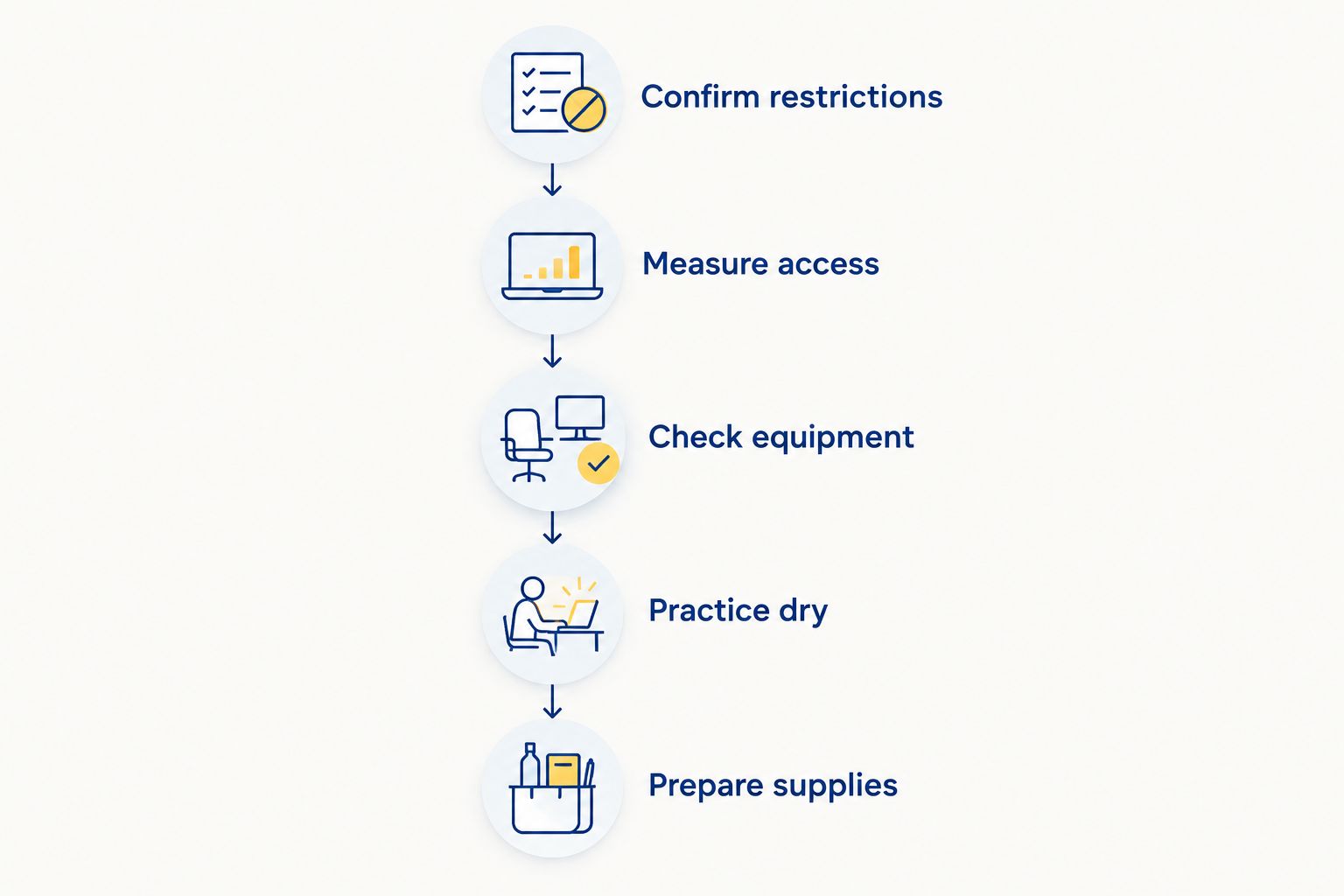
Do not use a towel rail, soap dish, or shower door as a grab bar. Stop if the chair shifts, the transfer requires prohibited weight-bearing, or you feel dizzy. Pain medicine, fatigue, and a wet floor make improvising a poor plan.
For questions about foot surgery recovery, Naples Podiatrist offers access to specialist foot and ankle doctors. Ask for guidance before attempting a transfer that conflicts with your discharge instructions.
Discuss your recovery needs
Ask a foot and ankle specialist about postoperative restrictions and recovery concerns.
Which shower seat should you choose?
Choose a stationary transfer bench for a compatible bathtub, or a backed chair for an accessible walk-in shower. Those are the default starting points for this 2026 guide—not automatic clearance to shower independently.
Choose a sliding bench when an assessed transfer calls for it. Choose higher-capacity equipment when the rating and dimensions require it. Leave the unsupported stool for a recovery stage that permits it.
The useful question is not simply which chair is best. It is: can you reach this seat, wash, and leave while following every restriction?
FAQ
What’s the best shower chair after foot surgery if I have a bathtub?
A stationary transfer bench is the starting choice for a compatible bathtub because it supports seated entry across the tub wall. Confirm the fit and transfer technique with your care team before use.
Is a shower chair or transfer bench better when I cannot bear weight?
The better design is the one that allows your assessed transfer without loading the operated foot. A transfer bench addresses a tub wall, while a chair inside the shower does not solve entry access.
Can I shower as soon as I have a chair?
No. Your surgeon must clear showering and explain how to protect the incision, dressing, cast, or boot. Seating does not change those instructions.
Can I remove my surgical boot to shower?
Remove your surgical boot only when your surgical team permits it. Ask how to protect your foot and maintain its required position during washing and transfers.
Is a shower stool enough after ankle surgery?
A shower stool is appropriate only when your transfer ability, seated balance, and surgical restrictions allow unsupported seating. A backed chair offers support that a stool does not provide.
What should I do if my dressing gets wet?
Contact your surgical team promptly for dressing instructions. Do not remove or replace the postoperative dressing unless your team has told you how.
Can Naples Podiatrist help with showering questions during recovery?
Naples Podiatrist provides foot and ankle medical and surgical care. Ask your treating team about bathing restrictions and whether you need a physical or occupational therapy assessment for transfers.
One last thing
Rehearse the exit, not just the entry. A setup is incomplete if you can sit down but cannot get back out without pushing through your operated foot. Include drying off and reaching your walking aid in that rehearsal.
Related guides
- How to prepare for foot or ankle surgery day
- Foot surgery recovery times by procedure
- How to reduce swelling after foot or ankle surgery