
 Fax: (239) 692-9436
 Tel: 239-430-3668
Best overall: narrow-width lace-up walking shoes. Best for running: narrow-width running shoes. Best for pickleball: court shoes with secure heel and midfoot fit. The best shoes for narrow feet in 2026 hold your foot without squeezing your toes; this guide ranks shoe types by activity and explains how to check the fit.
- The best shoes for narrow feet secure the heel and midfoot while leaving room for your toes.
- Choose narrow-width walking shoes for everyday use and activity-specific shoes for running, pickleball, or golf.
- Do not size down to fix excess width; compare width, heel shape, and upper volume instead.
- Naples Podiatrist provides specialist foot and ankle care when shoe slipping accompanies pain, numbness, or instability.
Why this matters
A loose shoe lets your foot slide inside it. Tightening the laces harder does not fix every mismatch, and choosing a shorter shoe sacrifices toe room.
Start by measuring your feet for the right shoe size. Check length and width while standing, then assess the actual shoe rather than relying on the size printed inside it.
A narrow heel does not automatically mean you need a narrow forefoot. You can have heel slipping and still need generous room around a bunion or your toes. The right shoe secures the back of your foot without compressing the front.
What makes the best shoes for narrow feet?
Use these criteria when comparing shoes in 2026. A narrow label is a starting point, not proof that the shoe fits.
- Heel retention: Your heel stays seated during walking without repeated lifting or rubbing.
- Midfoot adjustment: Laces or straps hold your foot without painful pressure across the top.
- Toe space: Your toes rest naturally rather than overlapping or pressing against the upper.
- Appropriate volume: The upper does not fold excessively when you fasten the shoe.
- Activity match: The outsole and shoe construction suit walking, running, court play, or golf.
- Insert compatibility: If you use an orthotic, it sits properly without lifting your heel out of the shoe.
Width and volume are different. Width describes side-to-side room; volume includes the space above your foot. A low-volume foot can slide in a shoe even when the forefoot width seems correct.
Narrow-foot shoes at a glance
These are ranked shoe categories, not claims that a particular manufacturer or model fits every narrow foot. Compare the exact pair you intend to wear.
| Rank and shoe type | Best for | Standout feature to look for | Key limitation |
|---|---|---|---|
| 1. Narrow-width lace-up walking shoes | Everyday walking and errands | Adjustable midfoot with a secure heel | Walking construction is not a substitute for court footwear |
| 2. Narrow-width running shoes | Running and run-walk exercise | Heel retention during forward movement | A narrow upper can still crowd the toes |
| 3. Secure-fitting court shoes | Pickleball and tennis | Foot containment during lateral movement | Forefoot fit needs careful checking |
| 4. Narrow-width lace-up dress shoes | Office wear and social occasions | Adjustable closure rather than slip-on retention | Tapered toe shapes can restrict toe room |
| 5. Adjustable sandals with a heel strap | Casual warm-weather walking | Separate adjustment at the forefoot and ankle | Exposed feet have less protection |
1. Narrow-width walking shoes: best for everyday use
Narrow-width lace-up walking shoes are the default choice for errands, neighborhood walks, and keeping up with grandchildren. Look for a heel that stays seated and an upper that adjusts around your midfoot without bunching.
Do not choose by softness alone. A comfortable shoe must also hold your foot when you turn, stop, and change pace.
Narrow-width walking shoe pros:
- Laces let you adjust the midfoot separately from the toe area.
- A narrow-width version offers an alternative to shortening the shoe.
- An enclosed upper protects your foot better than an open sandal.
Narrow-width walking shoe cons:
- A narrow forefoot can press on bunions or prominent toe joints.
- Walking shoes are not designed to replace sport-specific court shoes.
Best for: Everyday walking when your main problem is slipping in standard-width shoes.
Verdict: Buy if the heel stays seated and your toes remain comfortable. Skip any pair that needs painfully tight laces.
2. Narrow-width running shoes: best for running and run-walk exercise
Narrow-width running shoes are the appropriate category for repeated forward movement during running. Assess heel retention, forefoot room, and comfort with the socks you use for exercise.
A runner with a narrow heel still needs space in front of the longest toe. Check fit while standing; a seated try-on does not show how your foot spreads under load.
Narrow-width running shoe pros:
- An adjustable lace system helps secure the midfoot.
- Running-specific construction matches the intended activity.
- A heel-lock lacing pattern offers an additional adjustment when the shoe otherwise fits.
Narrow-width running shoe cons:
- Heel-lock lacing does not correct a shoe that is too wide throughout.
- A tight upper can create pressure over the top of your foot.
Best for: Running or run-walk exercise with a shoe that matches your foot shape.
For your 2026 running-shoe purchase, compare fit with your usual socks and any prescribed orthotics. Do not assume the same printed size fits identically across different models.
Verdict: Buy for running after checking heel retention and toe clearance. Skip sizing down to stop sliding.
3. Secure-fitting court shoes: best for pickleball and tennis
Court shoes are the right category for pickleball and tennis because those activities involve side-to-side movement. For narrow feet, the challenge is finding a pair that contains your heel and midfoot without squeezing the forefoot.
Check lateral movement, not just straight-ahead walking. If your foot shifts inside the shoe during a controlled side step, the fit needs further adjustment or a different shape.
Secure-fitting court shoe pros:
- Court-specific construction suits lateral movement.
- Laces provide adjustable retention across the midfoot.
- An enclosed upper keeps your foot contained during direction changes.
Secure-fitting court shoe cons:
- A shoe that feels secure at the heel can still compress your toes.
- Tightening the upper excessively creates pressure rather than a better fit.
Best for: Pickleball and tennis players who need secure fit during lateral movement.
Older players should assess balance as well as comfort. New instability, repeated ankle rolling, or pain deserves an examination rather than another attempt to tighten the shoe.
Verdict: Buy a court-specific pair that passes the side-step check. Skip walking shoes as a substitute for pickleball footwear.
4. Narrow-width lace-up dress shoes: best for work and occasions
Narrow-width lace-up dress shoes give you more control over fit than a loose slip-on. Choose a toe shape that follows your foot rather than forcing your toes into a pointed front.
Heel slipping in a dress shoe is not a reason to accept toe compression. Compare another width or shoe shape before changing the length.
Narrow-width dress shoe pros:
- Laces provide adjustment that a slip-on lacks.
- An enclosed heel offers retention for walking between activities.
- A less tapered toe shape leaves more usable forefoot space.
Narrow-width dress shoe cons:
- Stiff seams or edges can rub prominent joints.
- A tapered front can restrict toes despite a suitable heel fit.
Best for: Office days, dinners, and occasions that require dress footwear.
During a 2026 dress-shoe fitting, stand and walk before deciding. Reject a pair that pinches immediately rather than counting on a break-in period to create missing space.
Verdict: Buy an adjustable pair with comfortable toe room. Skip pointed styles that secure your foot by squeezing it.
5. Adjustable heel-strap sandals: best for casual warm-weather walks
An adjustable sandal with a heel strap is a better starting point for narrow-foot retention than a loose backless style. Look for separate adjustments around the forefoot and ankle so you do not need to grip with your toes to keep the sandal on.
Check that your foot stays centered on the footbed. Your toes should not hang over the front, and straps should not dig into the skin.
Adjustable sandal pros:
- Separate straps accommodate differences between heel and forefoot fit.
- A heel strap helps retain the sandal during walking.
- The open design lets you see where straps contact your skin.
Adjustable sandal cons:
- Exposed toes and skin have less protection from injury.
- Strap pressure is a concern when sensation is reduced.
Best for: Casual warm-weather walking when your skin, sensation, and balance allow open footwear.
Sandals are not the default choice for someone with diabetic neuropathy or a foot wound. Ask your clinician about protective footwear instead.
Verdict: Buy only when the straps secure your foot without rubbing. Skip loose backless sandals for active walking.
How to check narrow-foot fit before buying
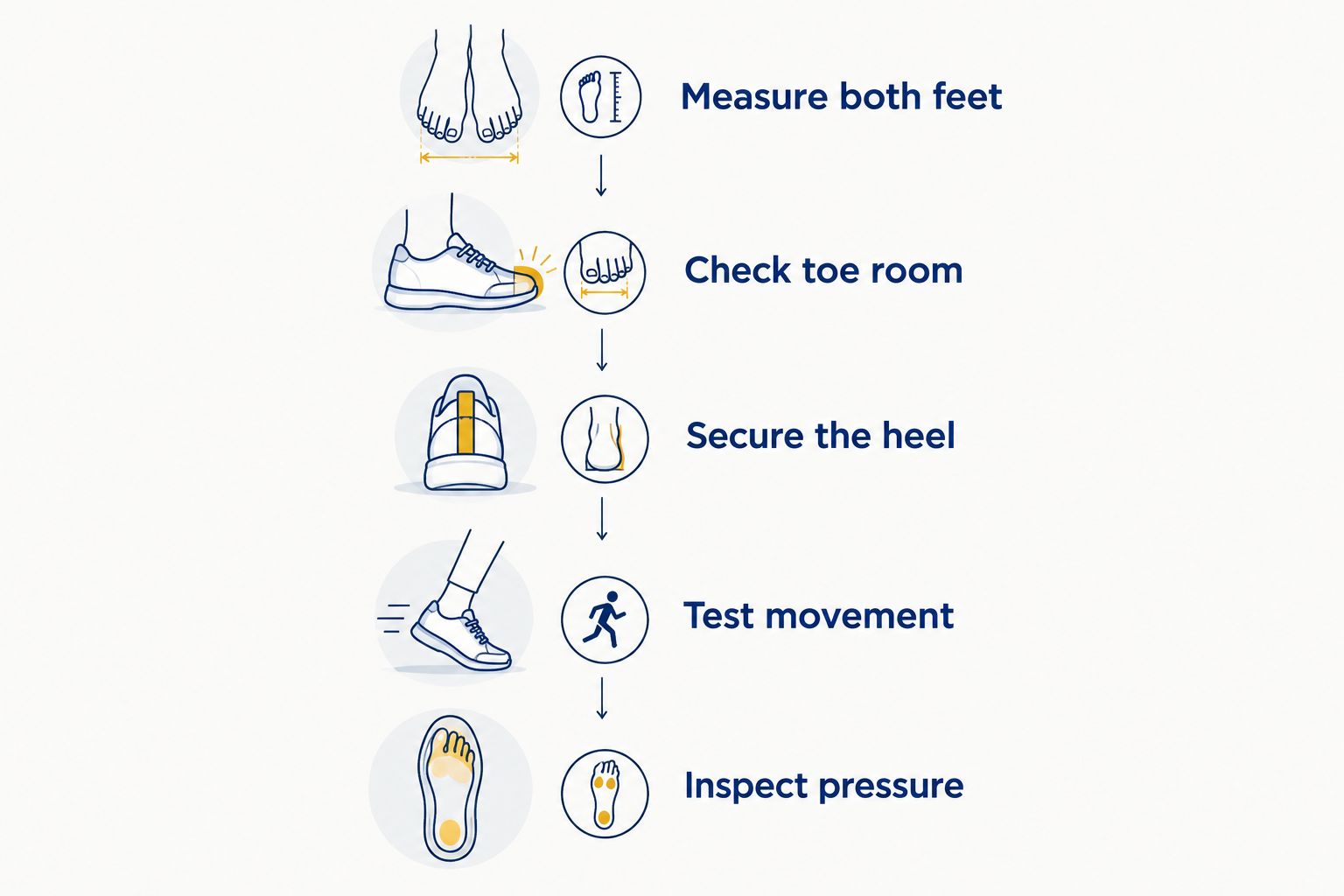
Use this practical fitting sequence for any shoe category. It is a shopping check, not a substitute for a foot examination.
Measure both feet
Measure both feet while standing and account for the larger foot. Length alone does not explain whether you need a narrower width, a shallower upper, or a different heel shape.
Check toe room
Allow approximately 1/2 inch of space beyond your longest toe as a general fitting guide, then confirm that the shoe feels secure elsewhere. The longest toe is not always the big toe.
Secure the heel
Fasten the shoe with comfortable tension. If the lace panels meet completely while your foot still slides, compare a lower-volume or narrower-fitting shoe rather than pulling harder.
Test movement
Spend 5 minutes walking indoors as a practical try-on exercise, not a medical threshold. Check 3 movements where safe: straight walking, turning, and a controlled side step. Court footwear needs particular attention during that last movement.
Inspect pressure
Remove the shoes and look for rubbing or focal pressure. Pain, burning, or numbness means you should stop the fitting test, not keep walking to break the shoes in.
Can insoles or lacing fix loose shoes?
Lacing adjustments help when the basic shoe shape already matches your foot. A heel-lock pattern changes tension around the ankle opening; it does not make an oversized forefoot narrower.
An insert takes up space, but adding one also changes where your foot sits inside the shoe. Stacking inserts can crowd the toes or raise the heel above the shoe's retaining structure.
If you already use an orthotic, bring it to the fitting. Read about custom orthotics for narrow feet when support and shoe fit need to be assessed together.
Choose the shoe first for fit; use an orthotic for a clinical need, not simply to fill empty space.
When to see a foot and ankle specialist
Persistent slipping accompanied by pain, numbness, skin damage, or repeated ankle instability needs assessment. The problem can involve shoe fit, foot structure, or another condition that a shoe change alone does not address.
Naples Podiatrist provides podiatric care for patients whose narrow-foot shoe problems accompany ongoing symptoms. Bring the shoes that cause trouble, your usual socks, and any inserts to the appointment.
Seek prompt medical care for an open wound, spreading redness, a suddenly hot and swollen foot, or inability to bear weight after an injury. With diabetes or reduced sensation, do not rely on pain alone to judge whether footwear is causing harm.
Get help with foot pain
Discuss shoe fit, persistent pain, or instability with a foot and ankle specialist.
How we ranked these shoe categories
This 2026 ranking prioritizes heel retention, adjustable midfoot fit, toe space, activity suitability, and compatibility with prescribed inserts. It ranks categories by their use case rather than making unsupported claims about individual models.
Walking shoes come first because they address everyday use. Running shoes, court shoes, dress shoes, and sandals each serve a different purpose. None earns a recommendation unless the actual pair fits your foot.
Which shoes should you choose?
Start with narrow-width lace-up walking shoes if you need an everyday pair. Keep the correct length, compare widths and upper volume, and reject shoes that pinch or slide.
For running, pickleball, or golf, choose footwear made for that activity and repeat the same fit checks. Do not expect one comfortable walking shoe to handle every sport.
Naples Podiatrist is best for podiatric care when narrow-foot shoe fit problems come with persistent pain, numbness, or instability. An examination helps separate a footwear mismatch from a condition needing treatment.
FAQ
What’s the best shoe type for narrow feet?
Narrow-width lace-up walking shoes are the best starting point for everyday use. Choose a pair that holds your heel and midfoot without squeezing your toes; use activity-specific footwear for sports.
Should I buy a smaller size if my shoes are too wide?
No—do not shorten the shoe just to reduce width. Keep adequate toe clearance and compare narrower widths, lower-volume uppers, or a different heel shape.
Can I have narrow heels but need a roomy toe box?
Yes, a narrow heel can coexist with a broader forefoot or prominent toe joints. Choose footwear that secures the heel while leaving the toes comfortable.
Does heel-lock lacing fix narrow-foot heel slipping?
Heel-lock lacing helps retention when the shoe otherwise fits. It does not correct a shoe that is too wide or too large, and it should not create pressure or numbness.
Are running shoes suitable for pickleball if they fit my narrow feet?
Court-specific shoes are the better choice for pickleball. Check that the court shoe holds your foot during controlled lateral movement as well as forward walking.
Do narrow feet automatically need custom orthotics?
No, narrow feet alone do not establish a need for custom orthotics. A clinician assesses symptoms, foot structure, and function before recommending an insert.
When should I see a podiatrist about narrow-foot shoe problems?
See a podiatrist when slipping or pressure accompanies persistent pain, numbness, skin injury, or instability. Seek prompt care for an open wound, spreading redness, or a suddenly hot and swollen foot.
One last thing
A shoe can feel tight and still fit poorly. Excess lace tension can press on the top of your foot while leaving the heel loose.
For your next 2026 fitting, ask a different question: Does the shoe hold my foot comfortably, or am I forcing my foot to hold the shoe? If you must grip with your toes or tolerate pressure to stop slipping, choose another shape.
Related guides
- Best pickleball shoes for foot and ankle support
- Best golf shoes for foot and ankle support
- Best walking shoes for seniors with foot pain

