
 Fax: (239) 692-9436
 Tel: 239-430-3668
Overview:
- What is nail fungus?
- Causes, Symptoms, and Treatment
- Prevention
Dr. Mustafa provides tips for avoiding nail fungus.
It’s August, but Thanksgiving and Christmas are just around the corner. The holidays provide some good time and food with your loved ones. So, when you slide your feet into a new pair of heels, are you going to be mortified to see your toenails are thick and discolored?
Most commonly, these changes are due to an infection of the nail caused by a fungus. Nail fungus can be difficult to treat, therefore the sooner you begin treatment the better chance you have of eradicating the fungus. Once the nail fungus has been present for an extended period of time, it is much more difficult to treat. Nail fungus, also referred to as onychomycosis, is an infection underneath the surface of the nail caused by fungi or yeast. When the fungi take hold, the nail becomes darker, debris can collect under the nail, and white discoloration may appear. Over time, the affected nails become very thick and difficult to trim. The fungus can even spread to adjacent nails.
You may have been exposed to the fungi when walking around barefoot like swimming pools, locker rooms, and showers. Injury to the nail bed, even pressure from shoes, will make it more susceptible to the fungi. Anyone can be affected but people with chronic diseases, such as diabetes, circulatory problems, or immune-deficiency conditions, are especially prone to developing a fungal nail infection.
Other contributing factors may be a history of athlete’s foot and excessive perspiration. Treatment can take months to a year to completely clear the fungus.
Your healthcare provider will discuss treatment options with you to determine what the best option is for you. Unfortunately, recurrence is common. For these reasons, prevention is key. Proper hygiene and performing daily foot exams including your toes are the first line of defense. Clean and dry feet can better resist infection by the fungus.
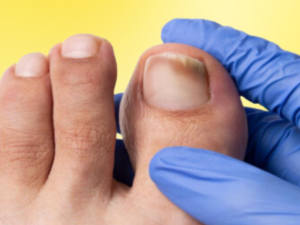
Below are some tips to help you avoid nail fungus:
- Never go barefoot
- Treat athlete’s foot if present
- If signs of nail fungus are present, avoid nail polish
- Wear flip flops or shower shoes in public areas. For example, at public showers at the pool or gym, or walking around a public pool.
- Wash your feet with soap and water daily. Make sure to thoroughly dry your feet after washing, including between your toes. You may even want to wash your feet after the gym or going to a public pool.
- Disinfect your shoes with an over-the-counter antifungal spray or powder.
- Wear moisture wicking and breathable socks. Socks made of synthetic fibers that wick moisture away from your feet are recommended. If your feet perspire, then you should change your socks throughout the day. Don’t share clippers or foot products with other people. Disinfect instruments used to cut your nails and other pedicure tools.
- Avoid tight fitting shoes and use shoes made with breathable material.
- Keep nails trimmed and clean. Nails should be at the same length as the tip of the toe.
- Wash your shoes, this includes hiking boots to sandals. Shoes that haven’t been cleaned are a great place for fungus to thrive.
 For more information about preventing or treating nail fungus, contact your podiatrist or healthcare provider.
To schedule an appointment, contact Dr. Mustafa’s office at (239) 430-3668 (FOOT) or visit www.NaplesPodiatrist.com
—————–



Dr. Kevin Lam, DPM, FACFAS, DABLES, DABPS is Clinical Director of Family Foot and Leg Center, PA — Southwest Florida’s premier podiatric practice. He earned his Doctor of Podiatric Medicine degree with honors from Temple University School of Podiatric Medicine and completed advanced surgical training at Mount Sinai Medical Center and Jackson Memorial Health System, Miami. Named among America’s Top Podiatrists. Board-certified in foot surgery, reconstructive rearfoot and ankle surgery, and lower extremity surgery. Serving Southwest Florida since 2005 across 9 locations from Marco Island to Sarasota.