
 Fax: (239) 692-9436
 Tel: 239-430-3668
Custom orthotics are worth the cost in 2026 when an examination identifies a specific need for individualized support or pressure relief that a suitable ready-made insert cannot address. They are not automatically better for every painful foot; shoe fit, rehabilitation, follow-up visits, and adjustments also affect whether the treatment is useful.
- Is custom orthotics worth the cost? Yes, when a diagnosed problem requires individualized support rather than generic cushioning.
- Naples Podiatrist offers custom orthotics as part of specialist foot and ankle care.
- Over-the-counter insoles remain a reasonable option when standard support meets your needs.
- Judge value by walking comfort, skin protection, shoe compatibility, and a clear follow-up plan.
Is custom orthotics worth the cost in 2026?
Custom orthotics are worth considering when the prescription solves a defined problem—not simply because the device is custom-made. A useful recommendation explains what needs support, where pressure needs relief, and how the device fits into your treatment plan.
Start with the difference between custom orthotics and over-the-counter insoles. Neither option replaces a diagnosis, and neither belongs in a shoe that squeezes your toes or lets your heel slide.
| Option | Best for | Main advantage | Main limitation |
|---|---|---|---|
| Custom orthotics | A diagnosed need for individualized support or pressure redistribution | Shape, support, and cushioning can be prescribed for your foot | Requires assessment, compatible footwear, and follow-up if problems develop |
| Over-the-counter insoles | Standard support or cushioning needs without a complex fitting problem | Lets you try a ready-made shape in suitable shoes | Standard shapes do not accommodate every foot or pressure pattern |
| Footwear changes | Shoes that crowd your toes, lack depth, or fit poorly | Addresses the shoe itself rather than adding another layer | Does not provide every type of prescribed support |
| Rehabilitation | Diagnosed strength, flexibility, or movement limitations | Addresses physical impairments that an insert does not correct | Requires participation and is not a substitute for needed pressure relief |
These approaches are not mutually exclusive. Your podiatrist can combine footwear changes, exercises, and orthotics when each addresses a different part of the problem.
Why this matters
Foot pain can interrupt neighborhood walks, golf, pickleball, or running. The right question is whether an orthotic helps you perform the activity you need without introducing another problem.
For your 2026 treatment decision, separate the device from the outcome. A detailed foot scan describes shape; the clinical examination determines what treatment that shape actually needs.
Ask your clinician to finish this sentence plainly: the orthotic is intended to help you do what? An answer tied to walking, standing, or protecting a vulnerable area is more useful than a promise to improve alignment everywhere.
When custom orthotics deserve consideration
Persistent symptoms with a clear mechanical treatment target
Best for: a diagnosed problem that needs more specific support than a standard insert provides. Custom orthotics can support selected foot structures or redistribute pressure, but the prescription should explain why those changes suit your symptoms.
Persistent pain alone does not prove that custom orthotics are necessary. Before ordering, discuss whether the diagnosis, shoe fit, existing insert, and rehabilitation plan have been reviewed adequately.
A foot shape that standard inserts do not accommodate
Best for: an individualized fitting need identified during an examination. A ready-made insert that presses into the wrong place, leaves a symptomatic area unsupported, or crowds the shoe is not a successful fit.
Custom construction allows the prescription to address those fitting requirements. The limitation remains practical: the finished orthotic still has to work inside the footwear you actually wear.
A prescribed need to relieve pressure
Best for: patients whose clinician identifies a specific area requiring pressure redistribution. This is especially important when sensation is reduced, because comfort alone cannot confirm that an insert is safe.
Diabetes, numbness, or a previous wound calls for clinical guidance rather than self-selection. An active wound or a hot, swollen foot needs assessment; buying an insert is not an adequate response.
When custom orthotics are not the next move
Do not order custom orthotics solely because you have low arches, high arches, or an unusual-looking footprint. Appearance does not establish that a foot needs treatment. Symptoms, function, examination findings, and skin risk matter more.
If a properly fitted shoe and suitable standard insert already meet your needs, ask what additional benefit a custom prescription would provide. A change without a clear treatment target is difficult to justify.
Custom orthotics also do not heal a fracture, restore lost sensation, or permanently straighten a bunion. They can be part of care for selected conditions, but that role is different from curing the underlying problem.
Avoid using an insert to push through unexplained pain. A new limp, worsening swelling, or pain after an injury deserves a diagnosis before you return to sport.
Why the value of custom orthotics varies
For a 2026 decision, the value depends on the match between your needs and the prescription—not the label on the device.
- Diagnosis: Heel pain, joint pain, nerve symptoms, and tendon problems require different treatment decisions.
- Prescription: Cushioning a sensitive area and controlling motion are different goals; the device must match the intended job.
- Footwear: Shoe depth, width, heel hold, and removable liners affect whether the orthotic fits safely.
- Activity: Walking, golf, running, and pickleball place different demands on your feet and shoes.
- Skin and sensation: Reduced sensation requires attention to skin changes, not just whether the device feels comfortable.
- Follow-up: Persistent pressure or unchanged symptoms need reassessment rather than indefinite wear.
You cannot judge all of these factors from an online footprint chart. Bring your symptoms and actual footwear into the decision.
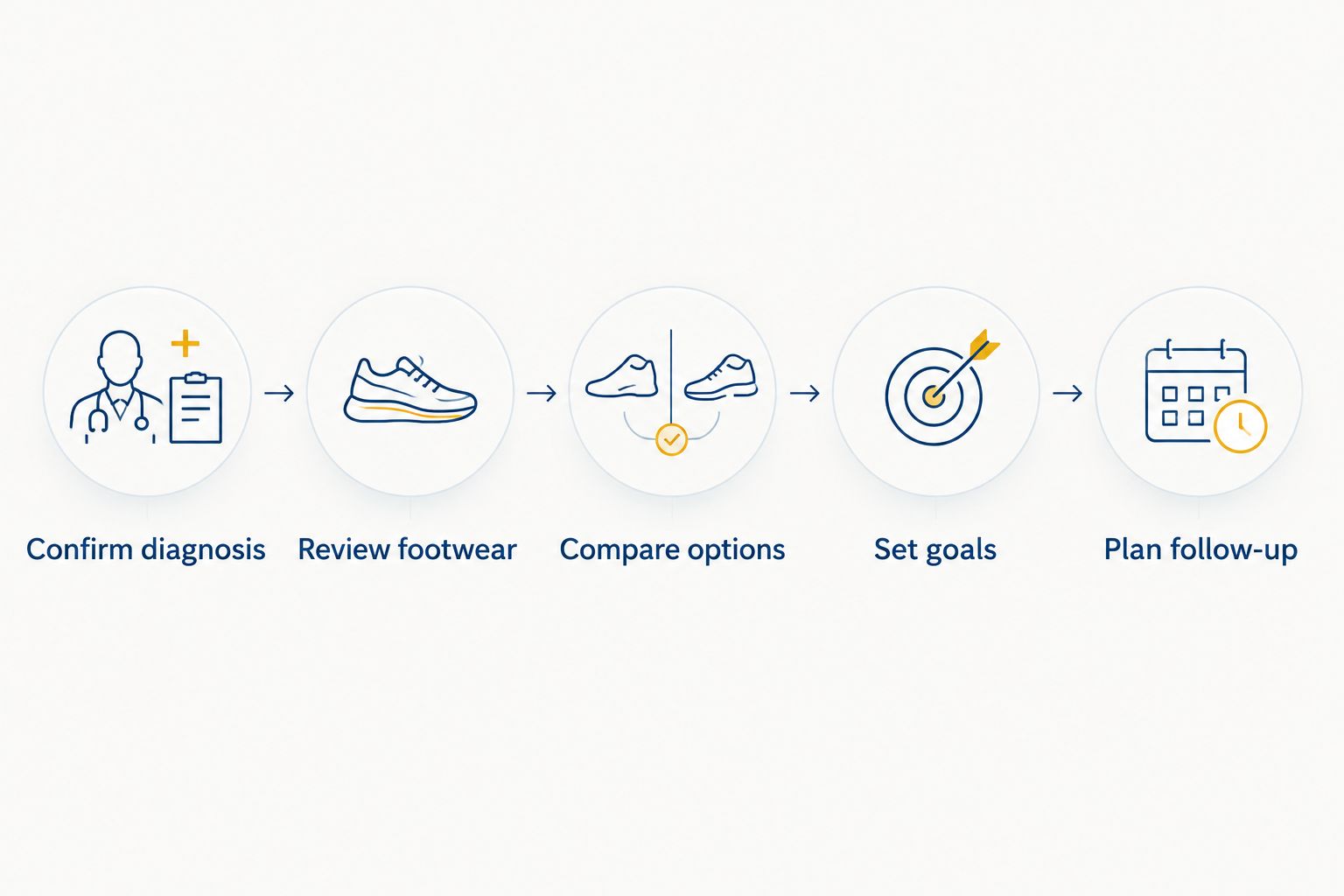
How do you decide before ordering?
Use this sequence to make the recommendation understandable. You should leave knowing what the orthotic is intended to change and how that change will be checked.
- Confirm diagnosis. Describe where the pain occurs, when it starts, and whether you have swelling, numbness, or an injury history.
- Review footwear. Bring the shoes you use for walking, work, and sport, along with any current inserts.
- Compare options. Ask why a custom device is appropriate instead of a standard insert, a shoe change, or another treatment.
- Set goals. Choose a specific task you want to improve, such as walking your usual route without limping.
- Plan follow-up. Establish what to do if the device creates pressure, fails to fit, or does not improve the intended problem.
The examination can include how you stand and walk, joint motion, and areas of tenderness. This guide to gait analysis explains why walking mechanics belong in the assessment rather than relying on foot shape alone.
An orthotic fitting should address your real routine. If you alternate between court shoes, walking shoes, and golf shoes, ask which footwear the prescription is designed to accommodate before ordering.
What should you ask about the total treatment commitment?
Ask for a written explanation of what the treatment includes. Assessment, device fabrication, fitting, adjustments, and replacement are distinct items; do not assume they are handled together.
Useful questions include:
- Does the proposed treatment include a fitting appointment?
- What happens if the orthotic creates a pressure point?
- How are adjustments handled?
- Does the prescription require different footwear?
- What documentation does my insurer need?
- What is the plan if my symptoms do not improve?
For insurance questions in 2026, confirm your own plan's benefits before authorizing fabrication. A covered office visit does not establish that a prescribed device has the same coverage.
Ask the insurer about exclusions, authorization requirements, applicable deductibles, and device-specific benefits. Keep the response with your treatment paperwork so the clinical recommendation and financial responsibility remain separate decisions.
How do you know whether orthotics are helping?
Measure the activity you wanted to improve, not how firm or impressive the insert feels. Compare the same walking route, standing task, or daily activity under reasonably similar conditions.
Record when symptoms begin, where discomfort occurs, and whether you change your stride to avoid pain. For golf, note whether discomfort changes your walking or swing; for pickleball, note symptoms during lateral movement as well as afterward.
Follow the prescribed introduction schedule rather than choosing an arbitrary wear time. Do not begin with a long run or a full court session just to test the device.
New blisters, focal pain, numbness, or worsening symptoms require contact with the clinician. If you have reduced sensation, inspect your skin as instructed rather than waiting for pain to signal a problem.
Lack of improvement is a reason to review the diagnosis, shoe fit, prescription, and other treatment—not proof that you need a more elaborate insert.
Are custom orthotics better than store-bought insoles?
Custom orthotics are better suited to individualized prescription needs; store-bought insoles remain appropriate when a standard shape provides the required support. Custom-made does not mean necessary for every patient.
If a standard insert is comfortable and your function is satisfactory, ask your clinician what problem remains before replacing it.
Can orthotics replace stretching or physical therapy?
Orthotics cannot replace every role of stretching or physical therapy. An insert changes support or pressure inside your shoe; rehabilitation addresses prescribed movement, strength, or flexibility goals.
Use each treatment for its intended purpose. Do not stop an exercise program simply because you receive an orthotic unless your treating clinician changes the plan.
Should active older adults get custom orthotics automatically?
Active older adults do not need custom orthotics simply because of age. The decision should reflect pain, function, footwear, skin health, and examination findings.
For walking, golf, or pickleball, explain exactly what limits you. If your concern is balance, weakness, or falls rather than foot discomfort, ask for an assessment that addresses those problems directly.
When should you see a foot and ankle specialist?
Arrange an assessment when symptoms persist, change your walking, or keep you from normal activities. Seek prompt medical care for an open wound, spreading redness, sudden marked swelling, or inability to bear weight after an injury; do not wait to see whether an insert helps.
Naples Podiatrist is best for Southwest Florida patients seeking specialist foot and ankle assessment before choosing custom orthotics. The practice offers custom orthotics alongside medical and surgical foot and ankle care, with quick access to specialist doctors.
The limitation is the same as with any orthotic service: a custom device is not a guaranteed cure or a substitute for other necessary care. Call 239 430 3668 to discuss an appointment and bring the shoes and inserts you currently use.
Arrange a foot assessment
Discuss your symptoms, footwear, and whether custom orthotics fit your treatment needs.
FAQ
Is custom orthotics worth the cost if my feet only hurt sometimes?
Occasional pain alone does not establish a need for custom orthotics. Review shoe fit and the symptom pattern, and seek assessment if pain recurs, worsens, or limits activity.
What’s the best reason to choose custom orthotics?
The best reason is a diagnosed need for individualized support or pressure relief that a suitable standard insert does not address. The prescription should identify the intended functional benefit.
Do flat feet always need custom orthotics?
Flat feet do not always need custom orthotics. Pain, functional limitations, skin risk, and examination findings determine whether treatment is appropriate.
Will custom orthotics fix my bunion permanently?
Custom orthotics do not permanently straighten a bunion. They can be considered for selected support or pressure-relief needs, while the structural deformity remains.
Can I wear custom orthotics for pickleball or golf?
Custom orthotics can be prescribed for use in suitable pickleball or golf shoes. Have the fit checked in your actual footwear and follow your clinician’s return-to-activity advice.
Does insurance automatically cover custom orthotics?
Insurance does not automatically cover custom orthotics. Confirm device-specific benefits, exclusions, authorization requirements, and your responsibility directly with your plan.
Should new orthotics hurt while I get used to them?
Do not push through focal pain, blisters, numbness, or worsening symptoms from new orthotics. Contact the prescribing clinician and follow the individualized wear instructions.
One last thing
Before you approve custom orthotics in 2026, bring your most-used shoes to the appointment. A carefully prescribed device still has to fit inside them without crowding your toes or changing how securely the shoe holds your foot.
Ask what success will look like before treatment begins. That answer gives you and your clinician a practical basis for deciding whether the orthotic is worth keeping in your care plan.
Related guides
- How to know if you need custom orthotics
- How to get custom orthotics from a podiatrist
- How long it takes to break in custom orthotics

