
 Fax: (239) 692-9436
 Tel: 239-430-3668
Bunion surgery is worth considering in 2026 when persistent pain limits walking, comfortable shoes, or activities despite appropriate nonsurgical treatment—not simply because a bump looks prominent. The trade-off is recovery that interrupts daily life, along with risks such as infection, stiffness, nerve irritation, incomplete pain relief, and recurrence.
- Is bunion surgery worth it? Persistent pain and lost function—not appearance—make the strongest case for surgery.
- Wider shoes and padding reduce pressure but do not permanently straighten an established bunion.
- Bunion surgery requires a procedure-specific recovery plan; smaller incisions do not eliminate bone healing.
- Naples Podiatrist offers specialist bunion care for Southwest Florida patients considering their treatment options.
Is bunion surgery worth it in 2026?
Bunion surgery earns its place when the expected improvement in pain and function outweighs the risks and disruption of recovery. A specialist examination helps establish whether the bunion actually explains your symptoms and whether correction addresses your goals.
Surgery is not the starting point for every painful bunion. Review whether you can treat bunions without surgery before deciding that an operation is your only option.
| Treatment approach | Best for | Main benefit | Main limitation |
|---|---|---|---|
| Wider shoes and pressure-relieving padding | Pain caused mainly by shoe rubbing | Reduces pressure without surgical recovery | Does not correct the underlying bone alignment |
| Orthotics when clinically appropriate | Symptoms associated with foot mechanics | Redistributes pressure and supports function | Does not permanently straighten the bunion |
| Bunion surgery | Persistent pain and activity limits despite appropriate nonsurgical care | Corrects structural problems contributing to symptoms | Requires healing and carries surgical risks |
The relevant comparison is not a painful foot versus an instantly normal foot. Compare your current limitations with the likely benefits, remaining limitations, and recovery demands of the specific operation proposed.
Why this matters
A bunion can change more than your shoe choices. Pain that cuts short grocery shopping, walking with friends, or a golf outing affects your independence and activity level.
For your 2026 decision, focus on the activities you want to regain rather than a photograph of someone else's result. An acceptable outcome for a casual walker is not necessarily the same outcome a runner or pickleball player expects.
Write down what hurts, when it hurts, and what you have stopped doing. Those details give your surgeon a more useful starting point than simply describing the bump as large or small.
When surgery has the strongest case
Persistent functional limitation is a stronger reason for surgery than cosmetic dissatisfaction. Consider a surgical discussion when suitable shoes and other appropriate measures no longer let you manage ordinary activities comfortably.
Examples include pain during routine walking, repeated irritation over the prominence, difficulty finding practical shoes, or interference with neighboring toes. These problems need examination; they do not automatically establish that surgery is the right treatment.
Your assessment should connect symptoms with findings. The surgeon examines alignment, joint movement, skin condition, circulation, sensation, and the way you walk, with weight-bearing X-rays when appropriate.
Naples Podiatrist is a fit for Southwest Florida adults seeking specialist bunion evaluation. The practice provides foot and ankle medical and surgical care; a consultation is an opportunity to assess options, not a commitment to an operation.
When waiting is reasonable
Waiting is reasonable when comfortable footwear controls symptoms and you can maintain the activities that matter to you. A visible bunion alone does not establish a medical need for correction.
Waiting also makes sense when you cannot safely follow postoperative restrictions. Discuss the obstacle directly: work demands, caregiving, stairs, or limited help at home can change the timing of elective surgery.
Do not assume that waiting means ignoring the foot. Reassessment is appropriate if pain, skin irritation, toe position, or walking ability changes.
What bunion surgery can—and cannot—do
Bunion surgery aims to improve alignment and relieve symptoms arising from the deformity. Depending on your foot, correction involves bone repositioning, joint procedures, and soft-tissue balancing rather than simply shaving away a bump.
A straighter toe is not a guarantee of a pain-free foot. Arthritis, nerve problems, or pain elsewhere in the forefoot can contribute to symptoms that bunion correction alone does not resolve.
Ask the surgeon to identify which symptoms the planned operation is intended to improve. Also ask which symptoms are unlikely to change.
Surgery does not promise unrestricted footwear choices. Continuing to squeeze the forefoot into narrow shoes can cause discomfort even after the alignment has improved.
What about minimally invasive surgery?
Minimally invasive bunion surgery uses smaller incisions for selected corrections. Suitability depends on the deformity, joint condition, planned correction, and the surgeon's assessment—not your preference for the smallest scar alone.
Smaller incisions do not remove the need for bone healing or follow-up. Ask what changes in the proposed recovery plan compared with an open approach, rather than assuming that minimally invasive means immediate unrestricted activity.
What if arthritis is also present?
Arthritis in the big-toe joint can change the treatment discussion. A procedure that improves alignment does not necessarily address a painful, damaged joint adequately.
When fusion is recommended, ask exactly which joint would be fused and why. Fusion removes motion at the treated joint, so understanding its functional consequences belongs in the decision—not after surgery.
Why the value of bunion surgery varies
The same operation does not offer the same trade-off to every patient. These factors shape whether the expected benefit justifies treatment:
- Pain and lost function: Difficulty with routine walking creates a different treatment need from occasional rubbing in a narrow shoe.
- Response to nonsurgical care: Relief from suitable footwear or padding supports continuing those measures; persistent symptoms justify reassessment.
- Alignment and joint health: The deformity and any arthritis influence the correction needed and the symptoms surgery can address.
- Healing risks: Circulation problems, diabetes, nicotine use, and other medical conditions require individualized assessment before elective surgery.
- Recovery support: Transportation, home access, work duties, and help with daily tasks determine whether you can follow restrictions safely.
- Activity goals: Comfortable household walking, golf, running, and pickleball require different levels of loading and movement.
Age alone does not answer whether surgery is worthwhile. For an older adult, medical health, safe mobility during recovery, and meaningful activity goals deserve direct attention.
How to make the decision with your surgeon
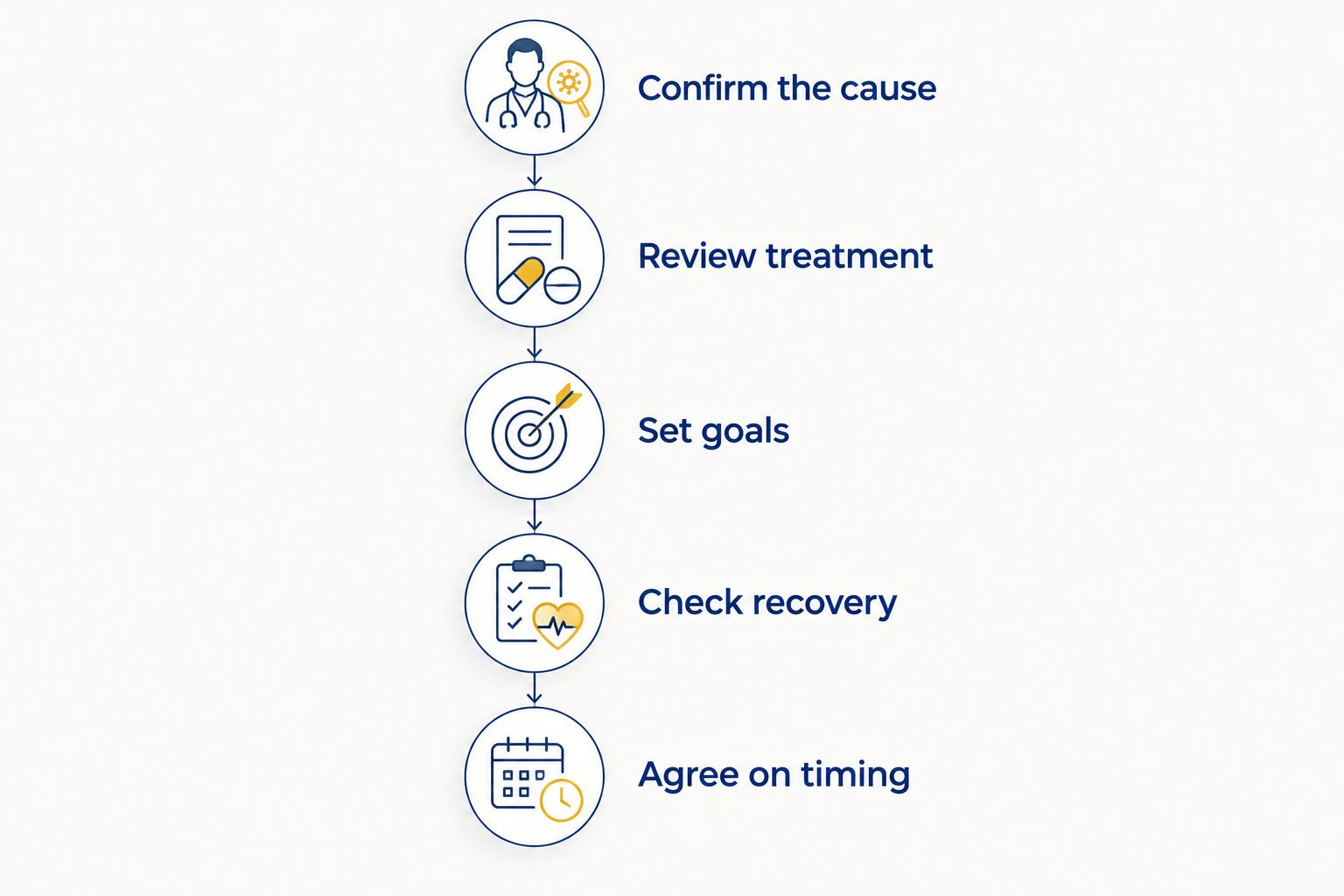
Use this sequence to turn a general question into an individual treatment decision. Bring your usual walking shoes and a list of treatments you have already tried.
- Confirm the cause. Point to the painful area and describe whether symptoms occur with shoe pressure, joint movement, walking, or rest.
- Review treatment. Explain which footwear changes, padding, orthotics, or other measures helped—and which did not.
- Set goals. Describe the daily task or activity you want to perform more comfortably.
- Check recovery. Ask about permitted weight bearing, protective footwear, driving, work, and help at home.
- Agree on timing. Schedule only after the benefits, risks, alternatives, and practical arrangements are clear.
At a Naples Podiatrist bunion consultation, explain whether pain is interrupting walking, golf, pickleball, or another priority. You can start with the practice's information about bunion treatment in Naples.
Discuss your bunion treatment options
Ask a foot and ankle specialist whether your symptoms call for nonsurgical care or a surgical evaluation.
What recovery needs to fit into your life?
Recovery is part of the treatment, not an inconvenience separate from it. Your plan depends on the correction performed, fixation, healing progress, and your medical circumstances.
Before choosing a surgery date in 2026, ask for written instructions covering weight bearing, wound care, bathing, elevation, follow-up visits, and medication use. Clarify whether you will need a surgical shoe, boot, crutches, or another mobility aid.
Walking is not the same as unrestricted activity
Permission to bear weight does not mean permission to walk all day, drive, or return to sport. Protected walking is different from pushing off forcefully through the big toe.
For pickleball, discuss lateral movement and rapid changes of direction. For golf, discuss uneven ground, walking the course, and pressure through the forefoot during a swing; for running, discuss repeated impact.
Driving and work need separate clearance
Driving depends on the operated foot, your vehicle, protective equipment, pain, medication, and the ability to brake safely. Do not use a calendar date alone to decide that you are ready.
Work restrictions also depend on the job. Seated work with opportunities to elevate the foot differs from a shift spent standing, lifting, or walking.
Plan help before the operation
Arrange transportation and review your route through the home. Discuss stairs, shower access, meal preparation, pet care, and nighttime bathroom trips before postoperative restrictions make those tasks harder.
If you travel between Southwest Florida and another home, coordinate follow-up before scheduling. Healing checks should not depend on an improvised travel plan.
What risks deserve a direct conversation?
Bunion surgery carries risks including infection, wound-healing problems, nerve irritation or numbness, stiffness, persistent pain, recurrence, and problems with bone healing or hardware. Blood clots are another potential complication that requires individualized risk assessment.
Ask which risks are most relevant to your medical history and planned correction. Discuss diabetes control, circulation, medications, and nicotine use without changing prescribed treatment on your own.
Know when to seek help after surgery. Contact the surgical team promptly for worsening redness, drainage, fever, uncontrolled pain, or concerns about the wound; seek emergency care for chest pain or shortness of breath.
Sudden marked foot redness, warmth, swelling, an open sore, or inability to bear weight also deserves assessment before any elective surgery discussion. Do not assume every new symptom comes from the bunion.
Will I regret bunion surgery?
Regret is a concern to discuss, but no surgeon can guarantee your satisfaction. The useful step is to identify mismatched expectations before you consent.
Ask what improvement is realistic, what discomfort or swelling to expect during healing, and what happens if symptoms persist. Compare that answer with your goals—not another patient's experience.
Is bunion surgery worth it if I can still walk?
Bunion surgery can merit consideration even if you can still walk, when walking is consistently painful or your activity has become restricted despite appropriate treatment. Being able to cross a room does not describe your ability to shop, exercise, or remain independent.
If you walk comfortably in suitable shoes and remain active, continued nonsurgical care is reasonable.
Should I schedule surgery before my next sports season?
Schedule surgery around a surgeon-approved recovery plan, not a promised return date for a tournament or trip. In 2026, as in any treatment decision, healing progress and clinical clearance determine safe activity progression.
Tell the surgeon about upcoming golf outings, pickleball events, running plans, and travel before selecting a date.
FAQ
Is bunion surgery worth it for an older adult?
Bunion surgery is worth considering for an older adult when persistent pain limits meaningful activity despite appropriate nonsurgical care. Medical health, circulation, healing risks, and safe recovery support matter more than age alone.
Can I avoid bunion surgery by wearing wider shoes?
Wider shoes can reduce pressure and make surgery unnecessary when they control symptoms adequately. They do not permanently correct an established bunion’s bone alignment.
Is minimally invasive bunion surgery better than open surgery?
Minimally invasive bunion surgery is not automatically better than open surgery for every foot. The appropriate approach depends on the deformity, joint condition, correction required, and surgeon’s assessment.
Will my bunion come back after surgery?
A bunion can recur after surgery. Ask your surgeon how your foot structure, planned correction, and postoperative care affect that risk.
Can I play pickleball or golf after bunion surgery?
Returning to pickleball or golf requires clearance based on your procedure, healing, and function. Permission for protected walking does not establish readiness for pivoting, forceful push-off, or walking a course.
Does a large bunion always need surgery?
A large bunion does not always need surgery. Pain, functional limits, skin problems, and response to nonsurgical care guide the treatment discussion.
What should I ask before agreeing to bunion surgery?
Ask which symptoms surgery should improve, why the proposed procedure fits your foot, and what recovery requires. Discuss complications, alternatives, driving, work, and what happens if pain persists.
One last thing
Bring a goal, not just a request to remove the bump. Write down the specific activity bunion pain stops you from doing and ask how the proposed treatment addresses it.
For a 2026 bunion decision, that question keeps the discussion focused on function. Naples Podiatrist provides specialist foot and ankle care; the right next step is an assessment that explains whether surgery fits your symptoms and circumstances.
Related guides
- Bunion surgery recovery time: week-by-week timeline
- How to prepare for foot or ankle surgery day
- Hallux rigidus: big-toe pain and stiffness explained

