
 Fax: (239) 692-9436
 Tel: 239-430-3668
Chilblains on cold feet clear up in 1 to 3 weeks with gradual rewarming, daily moisturizing, and dry, breathable socks — most cases in 2026 don't need a prescription at all. The mistake that stalls healing: warming a chilled foot too fast with hot water or a heating pad, which spikes the itching and swelling instead of calming it down.
- Chilblains treatment feet: gradual rewarming plus moisturizer clears mild cases in 1 to 3 weeks.
- Skip hot water and heating pads on chilled toes — fast rewarming worsens chilblains, not helps.
- Chilblains that blister, crack, or return every cold snap need a podiatrist, not more home care.
- Diabetics and people with Raynaud’s phenomenon face higher risk and heal slower once chilblains show up.
Why this matters
Chilblains (pernio) show up as red or purple, itchy, swollen patches on the toes after exposure to cool, damp air — not necessarily freezing temperatures. Southwest Florida homes swing hard between outdoor humidity and overcooled air conditioning each winter, and that swing alone is enough to trigger the same blood vessel spasm that causes chilblains up north.
Naples Podiatrist sees a jump in these cases across its Southwest Florida offices every time a January cold front rolls through, from snowbirds arriving from colder climates to lifelong residents stepping onto cold tile before sunrise. Anyone dealing with cold feet that won't warm up through the winter months is more prone to chilblains, since the underlying circulation pattern is the same. Older adults, people with diabetes, and anyone with Raynaud's phenomenon see chilblains more often and heal slower once they show up.
How to treat chilblains on cold feet
Treatment depends on how far the skin damage has gone. Mild chilblains respond to a short list of home steps done consistently for a week or two; chilblains that blister or keep coming back need a clinical exam rather than another round of home remedies.
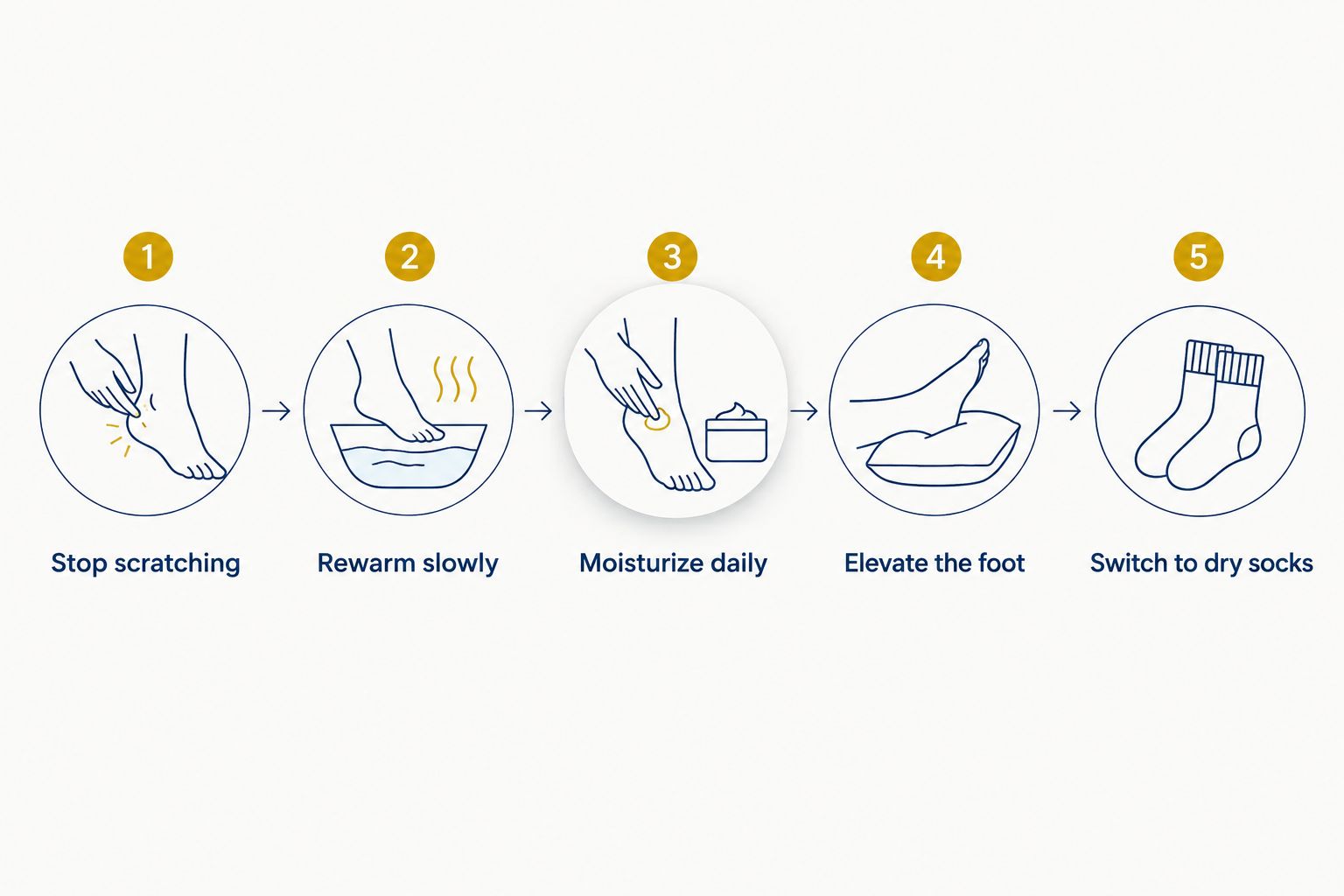
- Stop rubbing or scratching the affected toes — this breaks skin that's already thin and inflamed, and an open scratch on a chilblain heals far slower than the chilblain itself.
- Rewarm slowly at room temperature. No hot water, no heating pad, no fireplace — direct heat on a chilled foot is the single biggest reason chilblains get worse instead of better in the first few hours.
- Moisturize daily with a fragrance-free cream to stop the skin from cracking and to cut down on the itch that drives most people to scratch.
- Elevate the foot for 15-20 minutes at a time, a few times a day, to bring the swelling down faster.
- Switch to dry, breathable socks — wool or a wool blend beats cotton, which holds moisture against the skin and keeps the toes colder longer than they need to be.
- Use an over-the-counter hydrocortisone cream for severe itching or burning; a podiatrist can prescribe something stronger, including an oral vasodilator, if that doesn't settle things within a week.
| Mild chilblains | Persistent or recurrent chilblains | |
|---|---|---|
| Duration | Clears in 1-3 weeks | Lasts past 3 weeks or returns with every cold snap |
| Skin appearance | Red/purple patches, itching | Blistering, cracking, or open sores |
| Home care alone | Usually enough | Not enough |
| Typical next step | Rewarming, moisturizer, dry socks | Prescription vasodilator, podiatry exam |
| Best for | Otherwise healthy adults | Diabetics, Raynaud's patients, non-healing skin |
Mild chilblains that itch and discolor but stay intact respond to home care within 1 to 3 weeks; chilblains that blister, crack open, or return every winter need a podiatrist exam — especially for patients managing diabetes.
Mild chilblains: home care that works
Most chilblains in Southwest Florida show up after a January cold front, a barefoot walk on cold tile at dawn, or stepping off a boat into wet, chilled air. If the skin stays intact — just red, swollen, and itchy — the six steps above are enough on their own. Give it the full 1 to 3 weeks before expecting the discoloration to fade completely, and resist the urge to speed things up with heat.
Persistent or ulcerated chilblains: when to call a podiatrist
Chilblains that crack, ooze, or don't improve after 3 weeks of home care stop being a home problem. That's especially true for anyone with diabetes, where a small break in the skin on the foot can turn into a slow-healing wound. A podiatry exam for recurrent chilblains usually checks circulation in the toes and rules out an autoimmune or vascular cause behind the flare-ups. Naples Podiatrist runs same-day and urgent-care slots for exactly this — a quick specialist look before a minor skin change becomes something bigger — with a 24/7 line at 239-430-3668 that can get an appointment on the books before the office even opens.
Get cold-weather foot symptoms checked
Board-certified specialists at Naples Podiatrist treat chilblains and cold-related foot symptoms across Southwest Florida.
Why chilblains vary from person to person
Not everyone exposed to the same cold, damp conditions develops chilblains, and severity swings widely even within one household. A handful of factors drive most of the difference:
- Temperature swings, not just cold — moving from a warm house to a cool, damp porch repeatedly stresses small blood vessels more than steady cold does, which is why AC-heavy SWFL winters trigger chilblains just as reliably as a northern freeze.
- Poor peripheral circulation — reduced blood flow to the toes means slower rewarming and more vessel spasm. Anyone with signs of peripheral artery disease in the feet and legs is at higher risk for chilblains and slower healing once they appear.
- Tight or damp footwear — shoes that trap moisture against the skin keep toes colder for longer stretches of the day.
- Raynaud's phenomenon — the same vessel spasm that makes toes turn blue or white in the cold also sets up the conditions for chilblains.
- Diabetes and autoimmune conditions like lupus raise both the risk of chilblains and the risk of a minor skin break turning into a wound that won't close.
- Genetics and smoking — chilblains run in families independent of climate, and nicotine's vasoconstricting effect makes existing chilblains worse and slower to heal.
Preventing chilblains in a Southwest Florida winter
Naples doesn't see subzero temperatures, but the whiplash between a 55°F morning and an overcooled living room does the same thing to blood vessels that a true northern cold snap does. Keeping indoor temperature steady during a cold front matters more than most people assume — the same logic homeowners apply when picking furnaces for cold winters up north applies here on a smaller scale: fewer extreme swings between indoor and outdoor temperature means fewer vessel spasms triggering chilblains in the first place.
Beyond climate control, dry socks and shoes that fit without pinching do most of the preventive work day to day. Wearing socks indoors on tile floors during a cold snap, even at home, cuts down on the temperature swing the feet feel every time someone gets up. Anyone who's dealt with chilblains for more than one season in a row should bring it up at a routine visit in 2026 rather than waiting for the next flare to treat it the same way again.
Are chilblains the same as frostbite?
Chilblains are not frostbite. Chilblains form from repeated exposure to cool, damp air in the 30-60°F range and stay confined to the skin's surface, while frostbite requires freezing temperatures and can damage or kill deeper tissue. Chilblains resolve in 1 to 3 weeks with home care; frostbite is a medical emergency that needs immediate treatment, not a wait-and-see approach.
Can chilblains be a sign of diabetes or poor circulation?
Chilblains that recur every winter or show up alongside numbness can flag diabetes or reduced circulation in the feet. That combination is worth a podiatry visit in 2026 rather than repeated rounds of home treatment, since numbness hides how bad a skin break has actually gotten until it's already infected.
How long do chilblains last on the feet?
Chilblains last 1 to 3 weeks on the feet with gradual rewarming and consistent moisturizing. Cases that stretch past a month, or that reappear with every cold snap through the season, point to an underlying circulation or autoimmune issue that home care alone won't fix.
FAQ
What is the fastest way to treat chilblains on the feet?
Gradual rewarming at room temperature, daily moisturizing, and dry socks clear most chilblains in 1 to 3 weeks. There’s no faster fix — rushing the rewarming step is what makes chilblains linger longer.
Should I put chilblains in warm water?
No. Warm or hot water on chilled toes triggers a rebound reaction that increases swelling and burning. Room-temperature air is the safest way to rewarm skin affected by chilblains.
Can chilblains cause permanent damage to the feet?
Most chilblains heal completely within 1 to 3 weeks without lasting damage. Repeated, untreated cases that crack or ulcerate — especially in diabetic patients — can leave scarring or lead to a slow-healing wound.
Are chilblains contagious?
Chilblains are not contagious. They’re a vascular reaction to cold, damp air, not an infection, so they can’t spread between people.
What cream is best for chilblains?
A fragrance-free moisturizer prevents cracking, and over-the-counter hydrocortisone cream calms itching and inflammation. A podiatrist can prescribe a stronger topical or an oral vasodilator like nifedipine for chilblains that don’t respond within a week or two.
When should I see a podiatrist for chilblains?
See a podiatrist when chilblains blister, crack open, last past 3 weeks, or return every cold snap. Diabetics and anyone with numbness in the toes should get any cold-triggered skin change checked sooner rather than later.
Do compression socks help with chilblains?
Compression socks can support circulation but aren’t a primary chilblains treatment — dry, breathable, non-compressive socks matter more for day-to-day prevention. Ask a podiatrist before adding compression if poor circulation is also a concern.
Can chilblains happen in Florida?
Yes. Chilblains happen in Florida during winter cold fronts and from the temperature swing between humid outdoor air and overcooled indoor air conditioning, not just in freezing climates. Southwest Florida sees cases every cold snap season.
One last thing
Chilblains show up more in humid, coastal climates than in dry, colder ones — the moisture in the air, not just the temperature drop, is what drives the blood vessel spasm. That's part of why a mild Naples cold front can trigger chilblains just as easily as a harsher, drier winter up north, and why treating the humidity and temperature swing indoors matters as much as treating the skin itself. Naples Podiatrist recommends addressing that indoor swing directly once chilblains show up more than once in a season, rather than treating each flare as a one-off.
Related guides

