
 Fax: (239) 692-9436
 Tel: 239-430-3668
To stop your feet from falling asleep at night, change any position that presses on your legs or ankles, loosen tight bedding or socks, and gently move your ankles and toes. These steps address temporary pressure, not every cause of numbness. Repeated episodes, persistent loss of feeling, or symptoms with weakness, wounds, or color changes need medical assessment rather than another sleep-position adjustment.
- How to stop feet from falling asleep at night: remove pressure first; recurring numbness needs assessment.
- Peripheral neuropathy and nerve compression can cause nighttime tingling that sleep-position changes do not resolve.
- Naples Podiatrist offers specialist foot and ankle care for patients with recurring numbness.
- Sudden numbness with a cold, pale foot or new weakness needs emergency care.
How to stop feet from falling asleep at night
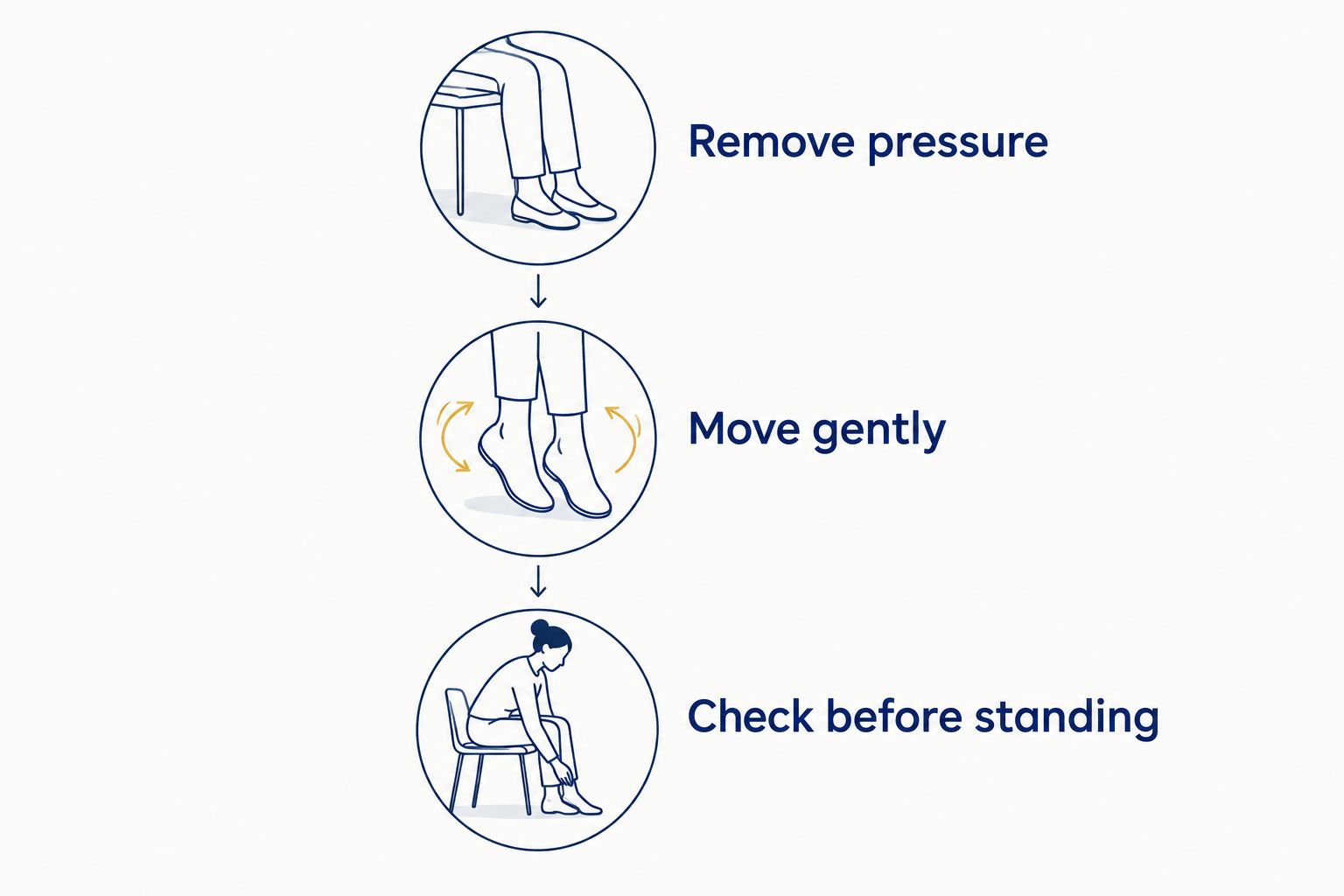
Remove pressure, move gently, and check whether normal feeling returns. If numbness continues after you reposition, or keeps waking you, arrange an examination. The guide to peripheral neuropathy symptoms and management explains one possible cause of recurring symptoms.
Use this sequence when you wake with tingling and have no emergency warning signs:
- Uncross your legs. Move a foot that is tucked underneath your body or pressed against the other ankle. Avoid resting the outside of your knee against a firm edge.
- Release external pressure. Loosen ordinary socks or tightly tucked covers. If you wear prescribed compression garments, a brace, or a postoperative boot, follow your clinician's instructions and report new numbness rather than changing the treatment yourself.
- Move gently. Wiggle your toes and slowly move your ankles through a comfortable range. Stop if movement causes pain or worsens tingling.
- Check before standing. Sit securely and make sure you can feel and control your feet. Do not walk on a numb foot to force it awake.
- Check the pattern. Note which foot and toes are affected, whether repositioning helps, and whether symptoms remain after you get out of bed.
Improvement after changing position supports pressure as a possible trigger; it does not prove that nerves and circulation are normal. Persistent or recurring symptoms deserve a closer look.
Why this matters
A foot that feels asleep has altered sensation. That affects more than comfort: reduced feeling makes it harder to notice a blister, a hot surface, or an unstable step during a nighttime bathroom trip.
This 2026 guide separates reasonable home adjustments from symptoms that need medical care. The goal is normal sensation and safe movement, not simply sleeping through the warning.
For older adults who enjoy pickleball, golf, running, or walking, recurring numbness also deserves attention before the next outing. Do not treat loss of feeling as a normal part of staying active or getting older.
Match the response to the symptom pattern
Sleep position is only part of the picture. Pressure on a nerve, peripheral neuropathy, a problem originating in the back, and reduced arterial blood flow require different responses.
Use this comparison to organize your observations, not to diagnose yourself.
| Approach | Best for | Benefit | Limitation |
|---|---|---|---|
| Repositioning and loosening ordinary bedding | Tingling that starts with a pressure-producing position | Removes an obvious source of compression | Does not treat an underlying nerve disorder |
| Gentle ankle and toe movement | Temporary tingling without injury or warning signs | Allows movement without immediately bearing weight | Worsening symptoms mean you should stop |
| Specialist foot and ankle assessment | Recurring or persistent foot numbness | Evaluates sensation, strength, skin, and circulation | Additional testing or referral can still be necessary |
| Emergency assessment | Sudden numbness with a cold, pale foot or new weakness | Addresses potentially time-sensitive causes | Home measures are not a substitute |
A symptom that disappears with repositioning is different from numbness that remains throughout the day. Neither the timing nor the location alone identifies the cause.
Temporary pressure during sleep
Sleeping with a leg crossed, a foot underneath you, or pressure against the outside of the knee can irritate nerves. Tingling that follows a particular position and eases after you move fits this pattern.
Best for this pattern: remove the pressure rather than force a stretch. The limitation is recurrence: repeatedly waking with the same symptoms still warrants discussion with a clinician.
Peripheral neuropathy
Peripheral neuropathy affects nerves outside the brain and spinal cord. Symptoms include numbness, burning, tingling, altered temperature sensation, or sensitivity to bedcovers; both feet can be involved.
Diabetes is one cause, but not the only cause. Vitamin deficiencies, certain medications, alcohol exposure, and other medical conditions also belong in the evaluation, so do not assume nighttime symptoms automatically mean diabetic nerve damage.
Local nerve compression or a back-related problem
Compression near the ankle, including tarsal tunnel syndrome, can cause tingling or burning into the sole. Nerve irritation originating in the lower back can also produce symptoms that extend into the leg or foot.
Tell your clinician about back pain, symptoms traveling down the leg, and any difficulty lifting the foot. New weakness changes the urgency of the problem.
Reduced arterial blood flow
Reduced blood flow can cause foot discomfort at rest, coolness, color changes, or wounds that do not heal. Tingling alone does not establish a circulation problem.
A suddenly cold, pale, painful, or numb foot is different from familiar positional pins and needles. Seek emergency care rather than testing another pillow arrangement.
Why nighttime foot numbness varies
The useful question is not just why symptoms happen at night, but what changes them. For your 2026 symptom record, focus on these details:
- Pressure location: A tucked foot, crossed legs, or pressure near the knee creates a different pattern from symptoms without an obvious position trigger.
- Underlying health: Diabetes, vitamin deficiency, and other conditions affect how a clinician evaluates nerve symptoms.
- Symptom distribution: One toe, the sole, one whole foot, or both feet provides different clues.
- Associated symptoms: Burning, back pain, weakness, coldness, wounds, and color changes change the next step.
- Response to movement: Symptoms that clear after pressure is removed differ from symptoms that remain despite repositioning.
- Daytime exposure: Tight shoes, prolonged pressure, an injury, or a recently fitted brace belongs in the history.
Bring these observations to your appointment. A clear pattern is more useful than describing every episode simply as poor circulation.
Set up your bed without adding pressure
There is no single sleeping position that treats every cause of foot numbness. Start with a position that avoids trapping a foot, pressing the ankles together, or holding the leg against a hard edge.
If you sleep on your side, a pillow between your legs can reduce direct contact between your knees and ankles. If you sleep on your back, keep covers loose enough that they do not hold your feet in an uncomfortable position. Neither adjustment is a treatment for persistent nerve damage.
Keep the route to the bathroom clear and use adequate lighting. If you wake numb, sit before standing and check that your foot responds normally.
Do not replace one pressure source with another. Tight wraps, rigid positioning devices, or extra padding secured firmly around the ankle can create new irritation.
What should you avoid when your feet feel numb?
Do not use heat, force, or a new supplement as a shortcut to diagnosis. Reduced sensation makes some familiar comfort measures unsafe.
- Avoid heating pads and hot-water bottles. A numb foot cannot reliably warn you that heat is damaging the skin.
- Avoid aggressive massage or stretching. Stop anything that increases pain, tingling, or weakness.
- Do not start compression socks just for numbness. Compression treats specific conditions and is not appropriate for every circulation problem.
- Do not start high-dose vitamin supplements without advice. Excess vitamin B6 can itself cause nerve damage.
- Do not stop a prescription medication on your own. Ask the prescriber to review whether medication effects belong in the evaluation.
For a 2026 bedtime routine, keep the approach simple: remove obvious pressure, protect the skin, and record recurring symptoms. Adding several remedies at once makes it harder to identify what actually changes the problem.
When is nighttime numbness an emergency?
Seek emergency care for sudden foot numbness with a cold, pale or blue foot, severe pain, or new weakness. These findings can indicate a time-sensitive circulation or nerve problem.
Call 911 for sudden numbness accompanied by facial drooping, arm weakness, speech difficulty, or other stroke symptoms. New loss of bladder or bowel control, numbness around the groin, or substantial leg weakness also requires emergency assessment.
Contact a clinician promptly for a new wound, spreading redness, drainage, or swelling, particularly if you have diabetes or reduced sensation. A newly red, hot, swollen foot also needs prompt attention even when pain is mild.
Do not wait for a routine podiatry appointment when emergency warning signs are present. Moving your toes or feeling temporary relief does not rule out a serious cause.
What happens at an appointment for recurring numbness?
A clinician reviews when symptoms began, their location, your medical history, medications, and whether you have weakness or balance changes. Examination can include skin inspection, sensation testing, strength testing, and assessment of foot pulses.
Depending on the findings, the next step can include blood tests, nerve testing, vascular testing, or referral. Not every patient needs every test, and a foot examination does not replace evaluation of a suspected spinal or broader medical cause.
Naples Podiatrist is best suited to Southwest Florida patients seeking quick access to specialist foot and ankle care. For recurring numbness without emergency signs, contact the practice to arrange an evaluation; call 239 430 3668 to discuss an appointment.
Bring your medication and supplement list, relevant footwear or braces, and notes about the episodes. For your 2026 visit, record the actual pattern rather than waiting until you can describe a perfect diagnosis.
Can diabetes make feet fall asleep at night?
Diabetes can cause peripheral neuropathy, including nighttime tingling, burning, and numbness. However, diabetes does not exclude another cause, such as local nerve compression or a circulation problem.
Check your feet daily for blisters, cuts, redness, and skin changes, including areas you cannot easily feel. Use a mirror or ask for help if you cannot see the soles; do not rely on pain to identify an injury.
Does walking make a numb foot wake up?
Walking is not the safest first response to a numb foot because reduced sensation and control increase the risk of a misstep. Start with seated, gentle movement and confirm that normal feeling and strength have returned before standing.
Do not walk barefoot to test sensation. Persistent numbness or difficulty controlling the foot needs assessment rather than repeated attempts to walk it off.
Should you elevate your feet for nighttime tingling?
Elevation is not a universal treatment for nighttime tingling. It can help some swelling problems, but it does not correct every nerve problem and can worsen rest discomfort associated with poor arterial blood flow.
If raising your foot causes pain, coldness, or color changes, stop and seek medical advice. Sudden severe symptoms require emergency assessment.
FAQ
What is the best way to stop feet from falling asleep at night?
Remove pressure from your legs and ankles, loosen ordinary tight bedding or socks, and move your toes and ankles gently. Recurring or persistent numbness needs assessment because sleep-position changes do not treat every cause.
Why do both my feet tingle when I lie down?
Tingling in both feet can occur with peripheral neuropathy or other nerve-related conditions. The timing alone does not identify the cause; report daytime symptoms, diabetes, medication use, and any weakness.
Is a foot falling asleep always poor circulation?
No, a foot falling asleep is not always poor circulation; temporary pressure on a nerve can cause pins and needles. A cold, pale or blue foot, severe pain, or sudden loss of sensation needs urgent assessment.
Should I wear compression socks to bed for numb feet?
Do not start compression socks at bedtime solely to treat numbness. Ask a clinician whether compression is appropriate, and follow existing instructions if the garments were prescribed.
Can I use a heating pad on tingling feet?
Avoid heating pads on numb feet because reduced sensation makes burns harder to detect. Remove pressure and seek assessment for persistent symptoms instead.
When should I see a podiatrist for nighttime numbness?
See a podiatrist when nighttime numbness recurs, persists after repositioning, affects balance, or occurs with skin changes. Naples Podiatrist provides specialist foot and ankle care; sudden weakness or a cold, pale foot requires emergency care instead.
Can I keep playing pickleball or golf with numb feet?
Do not play while your foot is numb or difficult to control. Recurring symptoms need assessment before you rely on that foot for balance, quick turns, or prolonged walking.
One last thing
Pain relief and restored sensation are not the same thing. A foot that stops hurting but remains numb still needs protection and assessment; lack of pain does not prove recovery.
Make that distinction part of your 2026 foot-care routine. Before returning to an activity, check that you can feel and control your foot—not simply that it is quieter.
Related guides
- Tarsal tunnel syndrome: causes, symptoms, and treatment
- How to check your feet daily with diabetes
- Peripheral arterial disease signs in your feet and legs