
 Fax: (239) 692-9436
 Tel: 239-430-3668
Your ingrown toenail removal cost in 2026 depends on the procedure your toe needs, where treatment takes place, and your insurance benefits; get an itemized estimate before agreeing to treatment. A procedure-only estimate does not necessarily include the examination, prescriptions, supplies, or follow-up visits, so ask what your total patient responsibility covers.
- Ingrown toenail removal cost depends on the procedure, billing setting, and your insurance benefits—not just nail removal.
- Compare partial nail removal with treatment of the nail root; they address different recurrence concerns.
- Naples Podiatrist serves Southwest Florida patients seeking specialist foot and ankle care.
- Spreading redness, drainage, or diabetes-related foot risks need medical attention, not repeated home cutting.
Why this matters
A quote for removing a painful nail edge is not automatically a quote for preventing that edge from growing back. Understanding the in-office ingrown toenail removal procedure helps you compare the same treatment rather than different services with similar names.
The financial question matters, but so does the condition of your toe. Do not delay assessment of a potentially infected toe while comparing estimates.
How much does ingrown toenail removal cost in 2026?
Your personal estimate needs to match the planned treatment and your payment method. For an insured patient, the amount billed for a procedure is different from the amount the insurer allows and the amount the patient owes.
For self-pay care, request the complete expected charge rather than the nail-removal component alone. Ask whether the estimate changes if the examination identifies a recurrent ingrown nail, infection, or another problem requiring treatment.
Use this breakdown when requesting an estimate in 2026:
| Component | What to clarify | Why it matters |
|---|---|---|
| Examination | Is the initial evaluation included or billed separately? | The clinician must assess the nail, surrounding skin, and relevant health risks. |
| Nail procedure | Is the plan partial removal, full removal, or treatment of the nail root? | These are different procedures, not interchangeable descriptions. |
| Local anesthesia | Is numbing included in the procedure estimate? | Ask rather than assuming every quoted service includes it. |
| Additional treatment | Are prescriptions or other medically necessary services separate? | Treatment beyond nail removal changes what the estimate covers. |
| Follow-up | Is the planned wound check included? | Your care does not end when the nail edge is removed. |
| Insurance responsibility | What deductible, copayment, or coinsurance applies? | Coverage does not mean you owe nothing. |
Compare itemized estimates for the same procedure—not headline figures for unspecified nail care. Keep the written estimate and ask which circumstances would change it.
Partial nail removal: treating the painful edge
Partial nail removal takes away the portion of nail pressing into the surrounding skin. It preserves the remaining nail and is an option when the problem involves a nail border rather than the entire nail.
Best for: Patients whose examination identifies a localized ingrown edge suitable for partial removal. The benefit is targeted treatment; the limitation is that removal alone does not stop that nail edge from growing again.
Ask whether the proposed procedure removes the edge temporarily or also treats its growth area. Those descriptions sound similar over the phone but mean different things for recurrence and aftercare.
A clinician should explain the reason for the recommended approach. Do not choose partial removal solely because it sounds less involved if the examination identifies a different problem.
Nail-root treatment: addressing recurrent ingrowth
Treatment of the nail root, called a matrixectomy, aims to prevent the treated nail border from regrowing. A podiatrist can discuss this approach when the same edge repeatedly becomes ingrown or when the clinical findings support it.
Best for: Patients with recurrent ingrowth who are appropriate candidates after assessment. The benefit is addressing regrowth at the troublesome border; the trade-off is a lasting change to the nail and a wound that requires aftercare.
Nail-root treatment is not a guarantee against every future nail problem. Ask about recurrence, expected nail appearance, drainage during healing, and the specific wound-care instructions for the technique being considered.
Your 2026 estimate should identify whether nail-root treatment is part of the planned procedure. A quote for removal alone is not a like-for-like comparison.
Full nail removal: when the entire nail needs attention
Full nail removal takes off the whole nail plate rather than just an edge. It is not automatically necessary for an ingrown toenail; the examination determines whether the problem warrants this approach.
Best for: Patients whose clinician identifies a reason to remove the entire nail. The benefit is access to the full affected nail area; the limitation is a larger exposed nail bed requiring protection during healing.
Removing the entire nail does not, by itself, mean the nail will never return. Preventing regrowth requires treatment of the growth area, so ask exactly what the proposed procedure includes.
How do the treatment options compare?
| Approach | Best for | Main benefit | Main limitation |
|---|---|---|---|
| Partial nail removal | A localized ingrown border | Removes the offending edge while preserving the rest of the nail | The edge can regrow and become ingrown again |
| Nail-root treatment | Recurrent ingrowth in an appropriate candidate | Aims to prevent regrowth of the treated border | Permanently changes the treated part of the nail and requires wound care |
| Full nail removal | A nail problem requiring whole-nail treatment | Removes the entire nail plate | Exposes a larger nail-bed area and does not necessarily prevent regrowth |
These options are clinical choices, not a ladder from basic to premium care. The right procedure is the one supported by your examination and treatment goals.
Why ingrown toenail removal cost varies
The treatment name alone does not tell you what your visit includes. These factors explain why estimates need individual confirmation:
- Procedure scope: Removing a nail border differs from removing the whole nail or treating the nail root.
- Extent of treatment: Tell the office which toes and nail borders are affected so the estimate reflects the planned work.
- Additional clinical needs: Infection, an open wound, or circulation concerns require assessment and can change the care plan.
- Billing setting: Confirm whether treatment is office-based and whether any separate facility billing applies.
- Insurance benefits: Network status, deductible requirements, and cost-sharing determine your personal responsibility.
- Included aftercare: Clarify how dressings, prescribed medications, wound checks, and unplanned reassessments are handled.
A low procedure-only quote is not proof of a lower total bill. Equally, a longer list of services does not establish that every service is necessary; ask the clinician to explain the medical reason for each proposed treatment.
How do you get an accurate estimate before treatment?
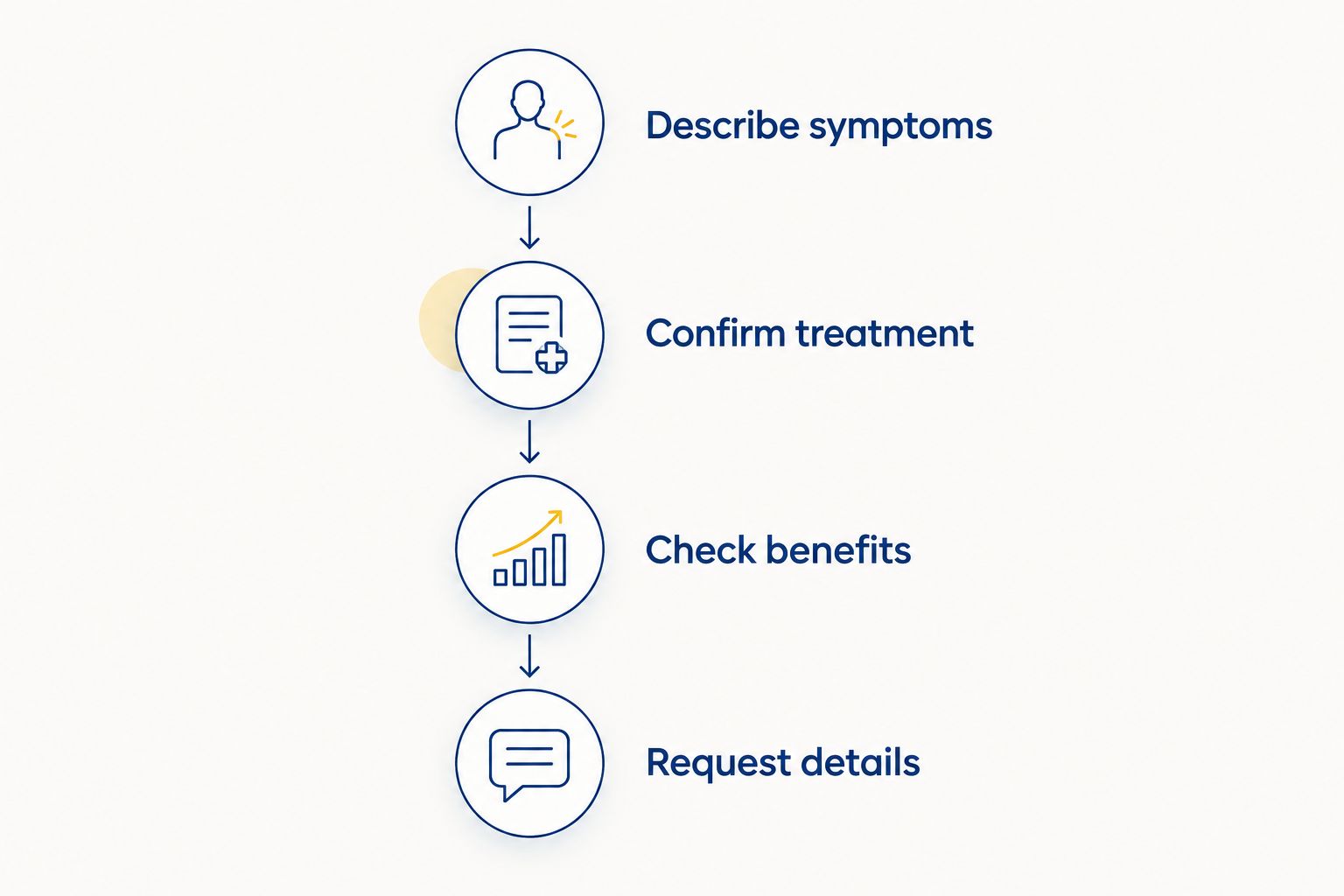
Use this sequence to connect the clinical plan with the financial estimate. For a visit in 2026, confirm current benefits rather than relying on an older explanation of coverage.
- Describe symptoms. Explain where the nail hurts, whether it has happened before, and whether you have redness, drainage, diabetes, or poor circulation. Mention previous nail procedures.
- Confirm treatment. Ask the clinician which procedure is recommended and whether the nail root will be treated. An estimate remains conditional until the toe is assessed.
- Check benefits. Give your insurer the planned procedure information and the treating clinician's details. Ask about network status, referrals, authorization requirements, and patient responsibility.
- Request details. Obtain an itemized estimate identifying included services, separately billed services, and follow-up arrangements. Ask whom to contact if the final bill differs.
Record the name of the person you speak with and keep any insurer reference information. An estimate helps you plan, but it is not a guarantee of claim payment or a substitute for your plan's coverage terms.
Does insurance cover ingrown toenail removal?
Insurance coverage depends on your plan and the medical reason for treatment. A painful ingrown nail requiring a procedure is not the same service as routine cosmetic nail trimming, so describe the actual problem when asking about benefits.
Ask your insurer whether the planned treatment is covered, whether the clinician is in network, and whether a referral or authorization is required. Confirm what you owe under your deductible and other cost-sharing rules.
For Medicare, distinguish medically necessary treatment from routine foot care, which has separate coverage rules. Do not assume that having diabetes automatically makes every nail service covered, or that a referral alone guarantees payment.
Confirm benefits with your insurer and billing details with the treating office. Neither conversation replaces the other.
What should you expect after nail removal?
Aftercare affects your daily routine even when the procedure takes place in an office. Ask for written instructions covering dressing changes, cleaning, footwear, activity, and the symptoms that require a call.
The distinction among ingrown toenail treatment options matters after treatment as well as before it: removing an edge and treating its growth area do not create identical aftercare needs. Follow the instructions for your actual procedure rather than a generic online schedule.
For pickleball, running, or golf, ask when your toe can tolerate shoe pressure and sport-specific movement. Walking around the house comfortably does not establish that a healing toe is ready for repeated court stops or a long round on foot.
Do not return to swimming while the wound remains open unless your clinician specifically clears it. Ask about pool, beach, and boating plans before treatment so wound protection is part of your recovery plan.
When should you stop comparing estimates and seek care?
Seek prompt medical assessment for pus, spreading redness, increasing warmth, worsening swelling, or pain that is getting worse. Fever, rapidly spreading redness, or feeling unwell requires urgent medical attention.
If you have diabetes, reduced sensation, or poor circulation, contact a clinician promptly about a nail-related wound or suspected infection. A toe that does not hurt much is not necessarily safe when sensation is impaired.
Do not dig under the nail, cut deeply into its corners, or attempt to remove an embedded edge yourself. Home cutting can injure the skin and leave a sharp nail fragment behind.
Antibiotics do not remove an embedded nail edge. A clinician decides whether infection requires medication and whether the nail itself needs treatment; do not use leftover antibiotics as a substitute for assessment.
Where can Southwest Florida patients seek specialist assessment?
Naples Podiatrist is best for Southwest Florida patients seeking specialist foot and ankle care. Patients considering ingrown toenail removal in Naples can request an assessment and ask for an estimate tied to the recommended procedure.
Specialist assessment connects the nail problem with relevant foot-health risks. The limitation of any advance estimate is that the examination can change the treatment plan; confirm the proposed care and financial details before proceeding.
For a 2026 appointment with Naples Podiatrist, bring your insurance information, medication list, and details of previous nail treatment. Mention blood-thinning medicines, but do not stop prescribed medication without instructions from the prescribing clinician.
Request an ingrown toenail assessment
Discuss the painful nail, treatment choices, and what to clarify before the procedure.
FAQ
How much will I pay for ingrown toenail removal in 2026?
Your payment depends on the planned procedure, the services included, and your insurance benefits. Request an itemized estimate and confirm your deductible, copayment, or coinsurance before treatment.
Does an ingrown toenail removal estimate include the first appointment?
Ask whether the examination is included or billed separately. Also clarify local anesthesia, prescriptions, supplies, and planned follow-up visits.
Is permanent ingrown toenail treatment the same as removing the nail?
No. Removing the nail and treating its growth area are different steps; nail-root treatment aims to prevent regrowth of the treated portion.
Will insurance pay for a painful ingrown toenail?
Coverage depends on your plan and the medical reason for treatment. Confirm the planned procedure, network status, referral requirements, and patient responsibility with your insurer.
Do I need antibiotics before an ingrown toenail procedure?
Not every ingrown toenail needs antibiotics. A clinician assesses whether infection requires medication and whether the embedded nail edge needs treatment.
Can I play pickleball or golf after toenail removal?
Return to pickleball or golf depends on your wound, footwear tolerance, and the procedure performed. Follow your clinician’s activity instructions rather than using pain relief alone as clearance.
Should I remove an ingrown toenail myself if I have diabetes?
Do not attempt to cut out an embedded nail if you have diabetes, reduced sensation, or poor circulation. Seek professional assessment, especially if the skin is broken, red, swollen, or draining.
One last thing
Ask this before consenting: Will this procedure remove the painful edge only, or also treat the part that makes it grow back? That distinction tells you more about the proposed care than an unexplained total—and helps you compare estimates accurately.
Related guides
- How to prevent ingrown toenails from coming back
- Diabetic nail care: why toenails matter
- What to bring to your podiatry visit

