
 Fax: (239) 692-9436
 Tel: 239-430-3668
Ingrown toenail healing time after removal is measured in weeks, not just the days it takes for soreness to improve. Removing one nail edge generally leaves a smaller wound than removing the whole nail, and treating the nail root to prevent regrowth changes the recovery process. This 2026 guide explains the healing milestones, daily care, and warning signs that need a call to your podiatrist.
- Ingrown toenail healing time after removal depends on wound size, nail-root treatment, circulation, and infection.
- NHS nail-surgery aftercare guidance commonly describes 4–6 weeks for partial removal and 10–12 weeks for total removal.
- Less pain does not mean the nail bed is ready for running, pickleball, swimming, or tight shoes.
- Naples Podiatrist provides specialist foot and ankle care for Southwest Florida patients.
How long does an ingrown toenail take to heal after removal?
Plan for several weeks of wound care, even if your toe becomes comfortable sooner. NHS patient guidance for nail surgery commonly gives healing estimates of 4–6 weeks after partial nail removal and 10–12 weeks after total nail removal. These are general aftercare estimates, not a deadline for your individual wound.
Your clinician's instructions take priority. The amount of nail removed, whether the root was treated, and your circulation all affect the timeline. If you are still deciding about treatment, the in-office ingrown toenail removal procedure guide explains the procedure separately from recovery.
| Procedure | General healing estimate | Best suited to | Benefit | Limitation |
|---|---|---|---|---|
| Partial nail removal | 4–6 weeks in NHS nail-surgery aftercare guidance | A problem limited to a nail edge, when clinically appropriate | Preserves the unaffected nail | The treated edge still needs dressings and protection |
| Total nail removal | 10–12 weeks in NHS nail-surgery aftercare guidance | Problems requiring removal of the whole nail, as determined by your clinician | Exposes and treats the entire affected nail area | Leaves a larger exposed nail bed |
These estimates refer to the wound healing, not a new toenail growing back. Root treatment can permanently stop regrowth in the treated area; removal without root treatment allows the nail to grow again.
Why this matters
Pain relief, wound closure, and nail regrowth are different milestones. Confusing them leads to an avoidable mistake: returning to normal activity while the toe still has an open or draining wound.
For your 2026 recovery plan, ask what your clinician means by healed. Comfortable walking does not automatically mean you can swim, wear snug golf shoes, or make quick changes of direction on a pickleball court.
Use wound condition and your clinician's clearance—not the calendar alone—to decide when to resume activity.
Partial nail removal: allow 4–6 weeks for wound healing
Partial removal takes away the troublesome side of the nail while leaving the rest in place. NHS nail-surgery aftercare guidance commonly describes 4–6 weeks for healing, although your procedure and health conditions change that estimate.
The main benefit is a smaller treatment area than whole-nail removal. The trade-off is continued care: the nail groove remains a healing wound, and pressure from footwear can irritate it.
Ask whether your clinician also treated the nail matrix, the tissue that produces the nail. Chemical treatment such as phenol is used to prevent the removed edge from returning, but it also creates a local wound that can drain during healing.
Do not interpret drainage alone as proof of infection. Look at the amount, appearance, and overall trend together with pain, redness, warmth, and swelling.
Total nail removal: allow 10–12 weeks for wound healing
Total removal exposes the nail bed across the whole width of the nail. NHS patient aftercare guidance commonly describes 10–12 weeks for healing after this procedure.
Whole-nail removal is not automatically the better treatment for a single ingrown edge. Your clinician selects the procedure based on the nail problem and surrounding tissue, rather than using the most extensive option by default.
The larger exposed area needs protection from rubbing, impact, and contamination. Footwear that felt roomy before the procedure can become uncomfortable once a dressing is in place.
If the entire nail root was permanently treated, do not expect a replacement nail. If the root was preserved, nail regrowth follows a much longer timeline than wound closure.
Why ingrown toenail healing time varies
The published estimates are planning guides. These factors explain why two people receiving nail surgery do not necessarily heal at the same pace:
- Extent of removal: An edge-only wound differs from an exposed whole nail bed.
- Nail-root treatment: Chemical or surgical matrix treatment changes the tissue that must heal and whether the nail returns.
- Infection and inflammation: An infected or heavily inflamed nail fold needs assessment alongside routine aftercare.
- Circulation and diabetes: Reduced blood flow and diabetes-related complications increase concern about delayed healing and infection.
- Pressure and activity: Tight shoes, repeated toe impact, and prolonged standing irritate the treatment area.
- Wound protection: Dressing problems, contamination, and picking at the nail groove interfere with recovery.
Tell your podiatrist about diabetes, numbness, circulation problems, smoking, and medicines that affect healing or bleeding. Do not stop prescribed medication on your own.
Age alone does not tell you whether a wound is healing safely. For older adults, the condition of the skin, circulation, sensation, and ability to manage dressings are more useful considerations.
What should normal healing look like?
A healing toe should show an improving overall trend. Early tenderness, localized swelling, and some drainage are compatible with recovery, particularly when the nail root has been chemically treated.
Improvement matters more than a single photograph. Compare the toe during dressing changes: is the redness staying near the procedure site, is drainage decreasing, and is walking becoming easier?
Pain improvement
Removing the nail edge eliminates the piece pressing into the skin, but the procedure leaves a wound. You can therefore feel relief from the original ingrown nail while still having tenderness from treatment.
Use pain medicine only as directed by your clinician or the medicine's label. Check with a clinician or pharmacist if you take blood thinners or have kidney disease, stomach ulcers, or other medication restrictions.
Wound closure
The wound needs to develop an intact surface, rather than simply feel less sore. A dressing that remains wet with drainage signals that the area still needs attention under your aftercare plan.
Do not scrape away healing tissue or dig into the nail groove to check it. That creates fresh injury.
Activity tolerance
Being able to walk across a room is different from completing a standing shift or playing a round of golf. Increase activity according to the wound's condition and the instructions you received, not a promise of recovery by a particular day.
How do you care for the toe after removal?
Your discharge instructions should specify dressing changes, cleaning, bathing, and follow-up. Keep those instructions accessible throughout your 2026 recovery; advice for someone else's procedure is not a substitute.
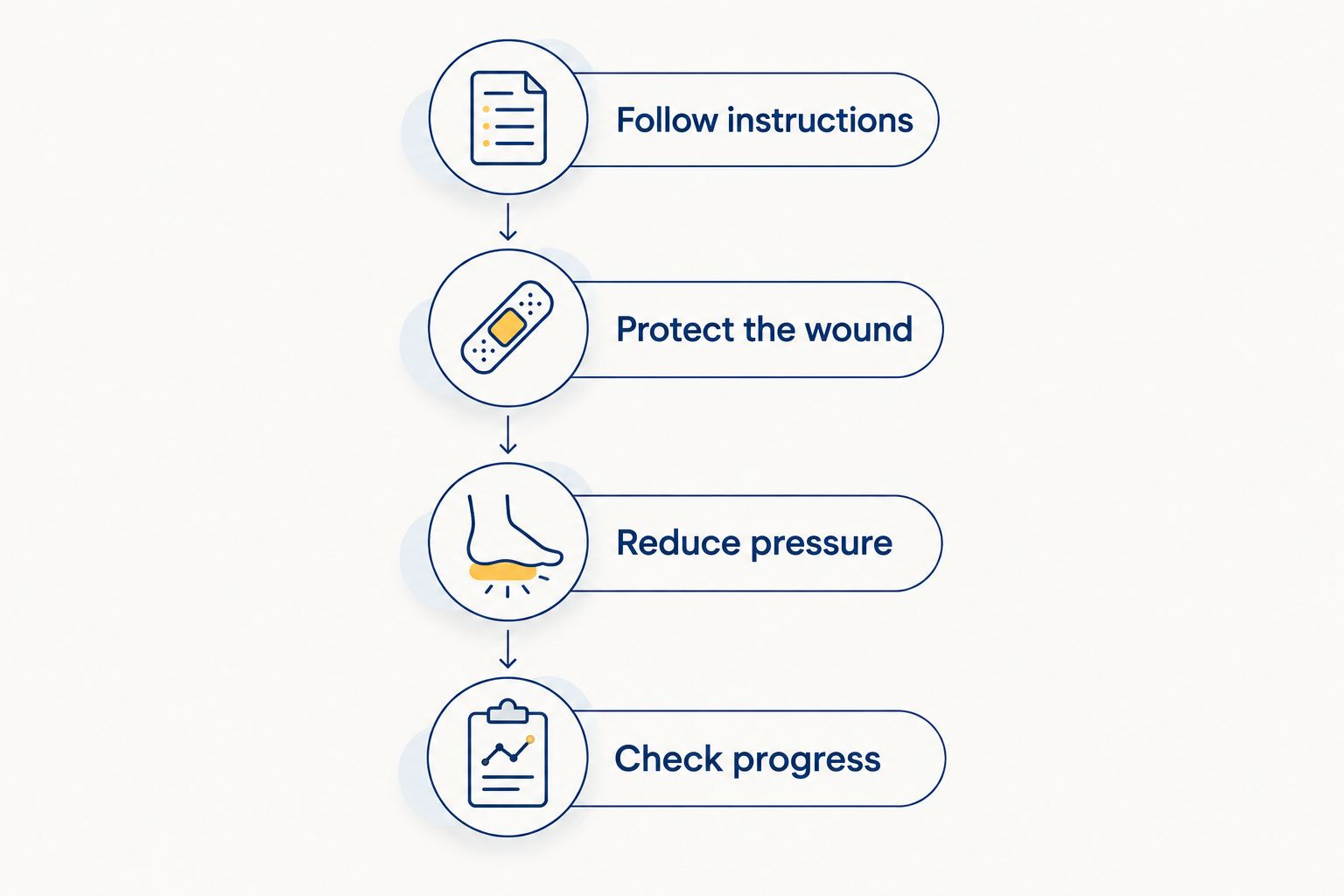
- Follow instructions. Leave the initial dressing in place for the period your clinician specifies. Ask what to do if it becomes soaked, slips, or feels too tight.
- Protect the wound. Wash your hands before dressing changes and use the prescribed cleaning method. Do not add peroxide, alcohol, ointments, or soaking products unless instructed.
- Reduce pressure. Choose footwear that accommodates the dressing without squeezing the toe. Avoid shoes that rub directly over the treated nail fold.
- Check progress. Inspect the toe during care and contact your clinician when symptoms worsen or the wound stops improving. Keep scheduled follow-up visits.
Avoid prolonged soaking or leaving a damp dressing against the skin unless your clinician has specifically directed that approach. Ask for clarification if your written instructions and verbal advice differ.
If you cannot reach or clearly see the toe, arrange help with inspection and dressings. This is particularly important when reduced sensation prevents pain from warning you about a problem.
When can you walk, drive, and return to sports?
Walking permission is not sports clearance. Your clinician determines weight-bearing instructions, and your return to activity depends on pain, footwear, wound protection, and the procedure performed.
For driving, you must be able to control the pedals and perform an emergency stop safely. Do not drive while numbness, a restrictive dressing, significant pain, or sedating medication affects control.
Running and pickleball repeatedly load the front of the foot. Golf also places pressure through the toes during walking and the swing, so riding in a cart does not remove every source of irritation.
For a 2026 return-to-sport plan, discuss these checkpoints:
- The wound is closed or your clinician has explicitly cleared activity with protection.
- Drainage has stopped or has been reviewed and addressed.
- Your sport shoe fits without squeezing the dressing or nail fold.
- Walking and sport-specific movement do not produce pain or renewed bleeding.
Avoid pools, hot tubs, and ocean water while the wound remains open unless your treating clinician gives different instructions. A waterproof covering does not turn an open surgical wound into healed skin.
When should you call about a possible infection?
Contact your treating clinician promptly for increasing pain, spreading redness, increasing warmth or swelling, pus, foul odor, or a wound that worsens after initially improving. Persistent bleeding also needs advice.
Seek urgent medical assessment for fever with worsening toe symptoms, rapidly spreading redness, red streaking, or feeling generally unwell. A newly cold, pale, blue, or black toe needs urgent evaluation rather than routine home care.
Diabetes, poor circulation, reduced sensation, or immune suppression lower the threshold for contacting your clinician. Do not wait for severe pain: numbness can hide the seriousness of a wound.
Naples Podiatrist provides specialist foot and ankle care for Southwest Florida patients who need an examination rather than more home treatment. Recovery advice remains individualized; an online guide cannot check circulation, identify infection, or confirm wound closure.
Get your healing toe checked
Discuss worsening symptoms or a slow-healing nail wound with a foot and ankle specialist.
Does drainage mean my toenail removal is not healing?
Drainage does not automatically mean failed healing. American Family Physician's clinical review of ingrown toenail management describes sterile drainage for 2–3 weeks after nail-matrix treatment, but persistent or increasing drainage still needs interpretation alongside other symptoms.
Do not use that timeframe to dismiss spreading redness, worsening pain, or pus. Call your clinician when the recovery pattern changes.
Will antibiotics make my toe heal faster?
Antibiotics are not routine healing accelerators after ingrown toenail removal. A clinician prescribes them when the examination supports an infection requiring treatment; they do not correct shoe pressure or replace wound care.
Do not take leftover antibiotics or use another person's prescription. If antibiotics were prescribed, follow the instructions and report worsening symptoms.
FAQ
How long does an ingrown toenail take to heal after partial removal?
Partial nail removal commonly takes 4–6 weeks to heal in NHS nail-surgery aftercare guidance. Nail-root treatment, infection, circulation, and pressure on the toe change the individual timeline.
How long does the toe take to heal after the whole nail is removed?
Total nail removal commonly takes 10–12 weeks to heal in NHS nail-surgery aftercare guidance. This describes wound healing, not the time needed for a replacement nail to grow.
Can I walk after having an ingrown toenail removed?
Follow your clinician’s weight-bearing instructions after ingrown toenail removal. Comfortable short walks do not establish that you are ready for prolonged standing, running, or pickleball.
Is yellow fluid normal after ingrown toenail surgery?
Yellowish fluid alone does not establish whether a nail-surgery wound is infected. Increasing drainage, pus, odor, spreading redness, or worsening pain needs prompt clinical advice.
Can I swim if I cover my toe after nail removal?
Avoid swimming with an open nail-surgery wound unless your treating clinician has specifically cleared it. A waterproof dressing does not establish that the wound is safe for pool or ocean exposure.
Will my toenail grow back after removal?
A toenail can grow back if its nail-producing matrix remains intact. Permanent matrix treatment is intended to prevent regrowth in the treated portion.
Who should I contact if my toe is not healing?
Contact the clinician who performed the procedure for a wound assessment. Naples Podiatrist is also an option for Southwest Florida patients seeking specialist foot and ankle evaluation; rapidly worsening symptoms require urgent medical assessment.
One last thing
Before returning to your regular shoes, try them with the dressing you actually wear—not with the toe uncovered. A shoe can fit your foot yet still compress a healing nail groove.
For recovery in 2026, treat comfort as one checkpoint, not proof of healing. Ask for separate instructions about stopping dressings, returning to sports, and preventing another ingrown nail.
Related guides
- How to prevent ingrown toenails from coming back
- Proper nail hygiene for foot health
- How to check your feet daily with diabetes

