
 Fax: (239) 692-9436
 Tel: 239-430-3668
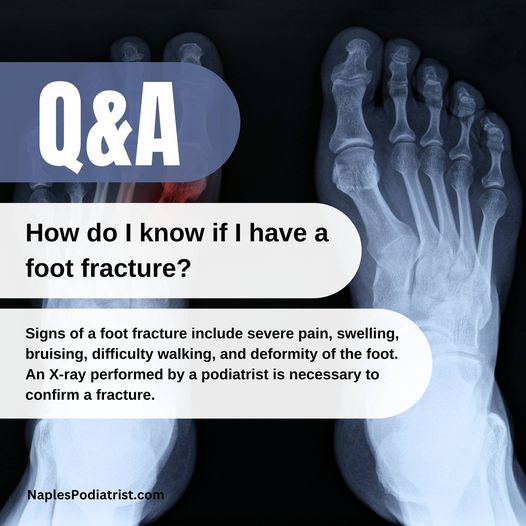
Foot fractures are common injuries that can happen to anyone, from athletes to those simply walking around the house. Knowing the signs of a foot fracture and seeking prompt medical attention can make a significant difference in your recovery. Here’s what you need to know to determine if you might have a foot fracture and what steps to take if you suspect one.
Common Causes of Foot Fractures
Foot fractures can occur due to various reasons, including:
– Accidents: A heavy object falling on your foot or a direct blow.
– Falls: Tripping or falling can lead to fractures, especially in the elderly.
– Sports Injuries: High-impact sports like running, basketball, and soccer.
– Overuse: Repetitive stress from activities like long-distance running.
Symptoms of a Foot Fracture
Recognizing the symptoms of a foot fracture is crucial. Here are some common signs to watch out for:
1. Pain: Intense, sharp pain at the time of injury, which may worsen with movement.
2. Swelling: Swelling in the affected area is a common symptom.
3. Bruising: Discoloration and bruising around the injured area.
4. Deformity: Visible deformity or abnormal shape of the foot.
5. Difficulty Bearing Weight: Inability to put weight on the injured foot.
6. Tenderness: Sensitivity to touch in the injured area.
7. Redness and Warmth: Inflammation and warmth around the fracture site.
Types of Foot Fractures
Understanding the type of fracture can help in identifying the severity of the injury. Common types include:
– Stress Fractures: Tiny cracks in the bone, often caused by repetitive stress.
– Avulsion Fractures: A small piece of bone is pulled away by a tendon or ligament.
– Comminuted Fractures: The bone is shattered into several pieces.
– Displaced Fractures: The bone breaks into two or more parts and moves out of alignment.
When to See a Podiatrist
If you experience any of the above symptoms, it’s essential to seek medical attention. A podiatrist can diagnose and treat foot fractures effectively. Here are some reasons to see a podiatrist:
– Persistent Pain: If the pain doesn’t improve with rest or over-the-counter pain relievers.
– Visible Deformity: Any noticeable deformity or abnormal shape of the foot.
– Inability to Bear Weight: Difficulty walking or standing on the affected foot.
– Numbness or Tingling: These sensations could indicate nerve damage.
– Worsening Symptoms: Increased swelling, redness, or warmth around the injury.
Diagnosis and Treatment
A podiatrist will conduct a thorough examination, which may include:
– Physical Exam:** Checking for tenderness, swelling, and deformity.
– **Imaging Tests:** X-rays, MRI, or CT scans to confirm the fracture and its severity.
### Treatment Options
Treatment depends on the type and severity of the fracture:
– Rest and Ice: Resting the foot and applying ice to reduce swelling.
– Immobilization: Using a cast, boot, or splint to keep the foot in place.
– Medication: Pain relievers to manage pain and inflammation.
– Physical Therapy: Exercises to restore strength and mobility.
– Surgery: In severe cases, surgical intervention may be required to align and stabilize the bones.
Preventing Foot Fractures
Preventive measures can help reduce the risk of foot fractures:
– Wear Proper Footwear: Choose shoes that provide adequate support and cushioning.
– Warm Up and Stretch: Properly warm up and stretch before engaging in physical activities.
– Gradual Increase in Activity: Avoid sudden increases in activity levels to prevent stress fractures.
– Maintain Bone Health: Ensure a diet rich in calcium and vitamin D to keep bones strong.
Foot fractures require prompt attention to ensure proper healing and prevent complications. If you suspect a foot fracture, don’t hesitate to contact a podiatrist. At Family Foot & Leg Center, we specialize in diagnosing and treating foot fractures, helping you get back on your feet as quickly as possible. Remember, early intervention is key to a speedy recovery.
For more information or to schedule a consultation, visit www.NaplesPodiatrist.com or contact us at (239) 430-3668 (FOOT)