
 Fax: (239) 692-9436
 Tel: 239-430-3668
Park rangers and tour guides’ foot care is the daily management of footwear, skin, and walking load to protect your feet and keep you working safely. This 2026 guide covers trail patrols, pavement tours, wet conditions, and long standing stops, where a minor pressure spot can become a problem far from an easy exit.
- Foot care for park rangers and tour guides starts with terrain-matched footwear, dry socks, and daily skin checks.
- Naples Podiatrist is best for Southwest Florida rangers and guides who need specialist foot and ankle assessment.
- Blister prevention and heel pain management require different approaches; padding does not treat every cause of pain.
- Stop walking through worsening pain, new numbness, or a wound showing signs of infection.
Why foot care matters for park rangers and tour guides
Your work combines movement with responsibility for other people. You cannot always stop a patrol, shorten a tour, or change shoes when discomfort starts. Plan protection before departure rather than relying on a treatment after the shift.
Uneven trails demand secure footing; paved tours add repeated loading and stationary narration stops. Wet socks create a different problem: prolonged moisture and friction against the skin. The shoes for museum docents and walking tour guides guide addresses footwear considerations for walking and standing routes.
Your 2026 foot-care plan should match your actual route, not just your job title. A ranger working a boardwalk needs a different footwear assessment from a guide crossing loose gravel, even when both spend the day walking.
Build a route-ready foot-care routine
Map your walking demands before choosing equipment
Start with a simple route note. Record the surfaces you cross, where you stand to speak, and whether water or sand enters your footwear. Include what you carry: a pack, field equipment, or tour supplies changes the demands of the outing.
Use 2 checkpoints per shift as a practical planning routine: before departure and after returning. This is an inspection schedule, not a medical threshold. Look for patterns across routes instead of assuming every sore foot needs the same solution.
Also identify an exit or handoff plan. A remote patrol needs a way to stop safely if you develop an injury; a walking tour needs someone who can take over the group.
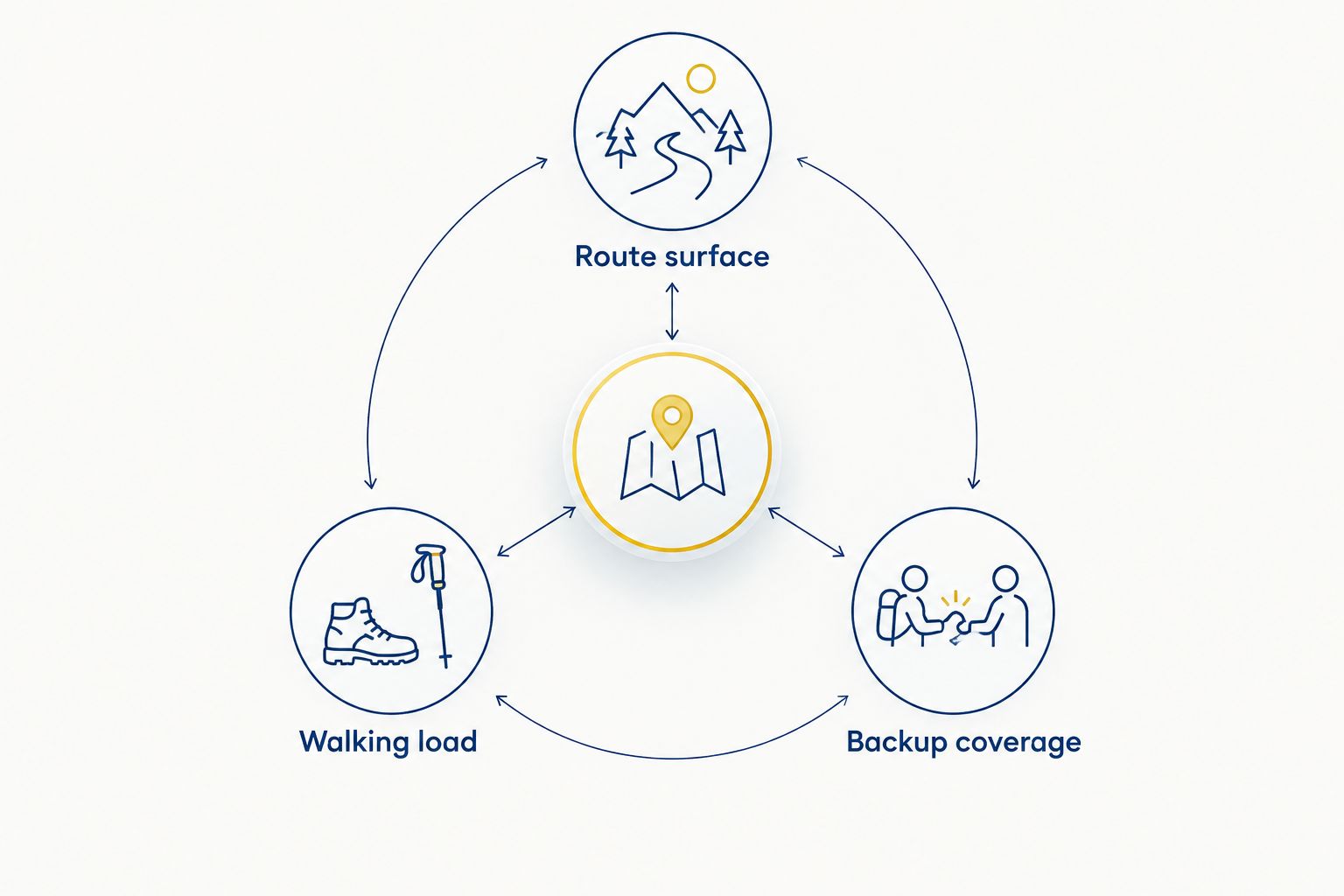
- Route surface: Note pavement, roots, gravel, sand, and wet boardwalks.
- Walking load: Record walking time, standing stops, and carried equipment.
- Backup coverage: Identify who can take over if walking becomes unsafe.
- Mark locations where you can sit, inspect a foot, or change socks.
Fit your footwear to the route and your feet
Check the shoes you already own before replacing them. Inspect tread, seams, heel lining, and areas where the sole has worn unevenly. A comfortable upper does not compensate for a slippery or damaged outsole.
Try footwear with your actual work socks and any prescribed inserts. Check both feet, walk, and test whether your toes contact the front when moving downhill. Your heel should stay secure without tight laces creating pressure across the top of your foot.
For your 2026 footwear review, separate trail protection from paved-route comfort. Boots offer coverage, but boot height alone does not prevent ankle injuries. A lighter walking shoe can suit pavement, yet lack the protection required by your employer or terrain.
- Check fit later in the day, when your feet have experienced normal activity.
- Choose enough toe room without allowing your foot to slide forward.
- Match outsole traction to the surfaces you actually encounter.
- Follow workplace footwear and protective-equipment requirements.
- Test new footwear on a shorter outing before assigning it to a full route.
Track symptoms and get the cause assessed
Write down where pain occurs and what brings it on. Note first-step heel pain, discomfort behind the heel, burning toes, or a tender spot over a bone. These descriptions help a clinician decide what to examine; they are not diagnoses.
Naples Podiatrist is best for Southwest Florida rangers and guides who need specialist foot and ankle assessment. For symptoms that keep returning, Naples Podiatrist provides access to podiatric medical and surgical care, including heel pain treatment, trauma care, and custom orthotics.
An examination offers a more direct path to diagnosis than repeatedly changing insoles. It does not guarantee that you need a device, procedure, or surgery. Bring your work footwear so the assessment includes the equipment you actually use.
- Mark the painful location rather than recording only that your feet hurt.
- Note whether symptoms begin during walking, afterward, or at rest.
- Record swelling, numbness, skin changes, and changes in your walking pattern.
- Arrange assessment when symptoms recur or make you alter your gait.
- Seek prompt care for focal bone pain or difficulty bearing weight.
Control moisture and protect friction points
Start with washing and careful drying, especially between the toes. Inspect your socks for rough seams and your shoes for sand, grit, or folded lining. Remove the source of rubbing rather than covering it indefinitely.
Pack 1 spare pair of socks as a practical starting point for a wet or sweaty route. Bring more when your work conditions require it. Change damp socks when you have a safe opportunity, and let footwear dry thoroughly between uses.
Protect a developing friction spot before it becomes an open wound. Avoid deliberately popping an intact blister. If it opens, gently clean it, cover it with a clean dressing, and reduce further rubbing; people with diabetes, poor circulation, or reduced sensation need earlier clinical advice.
- Choose socks that fit without bunching inside the shoe.
- Remove debris whenever you notice rubbing or pressure.
- Apply protective padding only to clean, dry, intact skin.
- Check dressings for wrinkles that create new pressure points.
- Keep open wounds out of seawater, brackish water, and floodwater.
Inspect skin and nails after every shift
Complete 1 skin check daily, including the soles, heels, spaces between toes, and nail edges. Use a mirror if you cannot comfortably see the bottom of your foot. Look for changes, not just pain.
This matters especially when sensation is reduced. A blister, puncture, or pressure injury can be present without the discomfort you expect. Persistent itching or peeling also deserves attention; sweat management alone does not treat every skin condition.
Make inspection part of removing your work shoes in 2026. Trim toenails straight across without digging into the corners. If diabetes, poor circulation, thick nails, or limited vision makes trimming unsafe, ask a clinician about appropriate nail care.
- Check for blisters, cuts, drainage, redness, and new swelling.
- Look inside footwear for sharp debris before wearing it again.
- Moisturize dry skin, but avoid leaving moisture between the toes.
- Do not cut calluses with blades or use acid removers on high-risk feet.
- Seek assessment for a changing dark nail streak or persistent skin lesion.
Manage walking load and recovery between routes
First, adjust what you can control without buying anything. Use seated breaks where duties allow, avoid unnecessary extra walking, and discuss temporary route changes when symptoms begin. Continuing until you limp is not a useful conditioning strategy.
Count recreation as part of your total activity. Running after a walking shift, playing pickleball on a day off, or walking a golf course adds loading rather than automatically providing recovery. Older guides and rangers should also consider balance and medication-related dizziness when planning activity.
Gentle movement and gradual conditioning belong in a prevention plan. Acute injury, focal tenderness, or worsening tendon pain needs assessment before you start aggressive stretching or strengthening.
- Build walking demands gradually when returning after time away.
- Use available seated breaks rather than standing through every pause.
- Reduce optional running or court activity when work symptoms increase.
- Practice balance exercises near a stable support when appropriate.
- Ask for a condition-specific exercise plan if pain persists.
Stop the route when warning signs appear
Know the difference between an equipment adjustment and a medical problem. A slipping sock calls for correction; a deformed ankle, spreading redness, or a suddenly cold and pale foot calls for urgent medical evaluation.
Do not finish a route by walking through a new limp or worsening pain. Arrange a safe handoff and reduce weight-bearing until assessed when an injury makes walking difficult. Remote location is a reason to plan escalation, not a reason to dismiss symptoms.
In your 2026 route protocol, distinguish a podiatry appointment from emergency care. Severe injury, signs of impaired circulation, or a possible serious infection require urgent evaluation rather than waiting for a routine visit.
- Stop for inability to bear weight, deformity, or a deep puncture wound.
- Seek prompt care for spreading redness, drainage, warmth, or fever.
- Treat a suddenly cold, pale, or blue foot as an emergency.
- Get urgent advice for a new red, hot, swollen foot with diabetes or neuropathy.
- Seek emergency care for leg swelling accompanied by chest pain or breathlessness.
Arrange a foot and ankle assessment
Discuss recurring pain, footwear pressure, or an injury that is affecting your patrols or tours.
Compare foot-care options for your work
Choose the option that addresses the problem, not the option with the most cushioning. Footwear manages fit and terrain; an insert changes support inside footwear; an examination investigates symptoms. None replaces the others in every situation.
| Option | Best for | Main benefit | Key limitation |
|---|---|---|---|
| Daily checks and route adjustments | Prevention and early detection | Identifies rubbing and reduces avoidable exposure | Does not diagnose persistent pain or treat infection |
| Well-fitted walking shoes | Paved tours and standing stops | Matches fit and cushioning to walking duties | Not suitable for every trail or protective-footwear requirement |
| Terrain-appropriate work boots | Patrols requiring coverage and protection | Provides a platform suited to job requirements | Added weight and heat; poor fit still creates pressure |
| Over-the-counter insoles | A trial of additional cushioning or support | Changes comfort inside an adequately fitting shoe | Can crowd footwear and does not establish a diagnosis |
| Prescribed custom orthotics | An assessed need for individualized support | Tailors the device to clinical findings | Requires evaluation and enough space in work footwear |
| Naples Podiatrist foot care | Recurring pain, injury, or high-risk foot concerns | Offers specialist assessment and treatment planning | Requires an appointment; not a substitute for emergency care |
Avoid stacking an insert over the original liner unless the footwear and device instructions support that setup. Reduced internal space can create toe pressure even when the insert feels comfortable under the arch.
Common mistakes park rangers and tour guides make
- Choosing for appearance rather than terrain. Uniform-compatible shoes still need secure fit and suitable traction. Check employer requirements before committing to footwear.
- Breaking in shoes during a full patrol. Test them on a shorter, controlled outing where you can stop. Repeated rubbing is a fit problem to address, not a requirement to endure.
- Treating every heel ache as plantar fasciitis. Tendon, nerve, bone, and other problems also cause pain around the heel. Location and examination determine the next step.
- Using pain relief to push through a limp. Reduced discomfort does not prove an injury has healed. Change the workload and get assessed rather than using medication to extend the route.
- Ignoring work load when planning sport. Pickleball, running, and golf belong in the same activity picture as patrols and tours. Adjust recreational activity when your feet are not recovering between shifts.
FAQ
What’s the best foot care for park rangers and tour guides?
The best starting routine combines terrain-matched footwear, daily skin checks, moisture control, and adjustments to walking load. Recurring pain, new numbness, or wounds need assessment rather than repeated equipment changes.
Are hiking boots better than walking shoes for tour guides?
Hiking boots are not automatically better than walking shoes for tour guides. Choose according to terrain, fit, weather exposure, and workplace protection requirements; paved routes and rugged patrols have different needs.
Should I keep walking if my heel hurts during a tour?
Do not keep pushing through heel pain that worsens or changes your walking pattern. Arrange a safe handoff, reduce loading, and seek assessment when pain persists, recurs, or makes weight-bearing difficult.
Do park rangers need custom orthotics?
Park rangers do not need custom orthotics solely because of their occupation. A clinician recommends them when symptoms, examination findings, and footwear requirements support an individualized device.
What should I do if I get a blister on patrol?
Reduce friction and protect the blister with a clean, suitable dressing. Avoid deliberately popping an intact blister, and seek earlier advice if you have diabetes, poor circulation, reduced sensation, or signs of infection.
How should I care for my feet if I have diabetes?
Check your feet daily, protect them with properly fitting footwear, and report new wounds or changes promptly. A newly red, hot, swollen foot needs urgent assessment even when it is not painful.
When should I book a podiatrist appointment for work-related foot pain?
Book an assessment when foot pain keeps returning, affects your gait, or limits your work. Naples Podiatrist foot care includes specialist assessment for foot and ankle conditions; severe injuries and emergency warning signs require urgent medical care.
One last thing
Bring the shoes you wore when symptoms started—not just your most comfortable pair—to your appointment. Include the socks and inserts you use on duty. An office examination cannot reproduce your entire route, but your actual equipment helps connect the symptoms to fit and pressure.
Keep your 2026 foot-care routine simple enough to repeat: check before departure, address rubbing early, inspect after work, and act when symptoms change.
Related guides
- Custom orthotics for hikers and trail walkers
- How to treat a blister from new shoes without infection
- Balance and ankle strength exercises for older adults

