
 Fax: (239) 692-9436
 Tel: 239-430-3668
Hotel front desk staff foot care is the daily management of footwear, standing habits, skin health, and symptoms to keep you comfortable and mobile at work. This 2026 guide to foot care for hotel front desk staff addresses a specific challenge: staying guest-ready in dress-code footwear while moving between prolonged standing and short walks.
- Foot care for hotel front desk staff starts with well-fitting work shoes, position changes, and daily skin checks.
- Naples Podiatrist is best for Southwest Florida hotel workers seeking specialist foot and ankle care.
- Standing fatigue, heel pain, and numbness need different responses; do not treat every symptom with another insole.
- New wounds, a hot swollen foot, or sudden one-sided leg swelling require prompt medical assessment.
Why foot care matters for hotel front desk staff
Front desk work combines appearance requirements with a standing workstation. You need shoes that look appropriate, allow your toes room, and remain secure when you turn, walk across the lobby, or escort a guest.
Standing in one place also differs from walking. Movement activates your calf muscles, which help return blood toward your heart; a fixed position offers less of that activity. A softer shoe alone does not solve an entire shift spent standing still.
For your 2026 work routine, address the shoe and the workstation together. The guide to foot pain from dress shoes explains another part of this problem: footwear selected for appearance can crowd or load painful areas.
Foot care should also protect your time outside work. Heel or ankle symptoms that interfere with pickleball, golf, or running deserve attention rather than becoming the accepted price of working at reception.
Build your front desk foot-care routine
1. Check both work shoes before changing anything else
Start with the shoes you already own. Examine 2 shoes, not just the more painful side, for worn tread, uneven compression, rough seams, and a lining that rubs your toes. Test them with your actual work socks.
A suitable work shoe holds your heel securely without squeezing the forefoot. Your toes need room to move. Try shoes later in the day, when swelling can affect fit, and do not accept rubbing as something you must endure until the shoe stretches.
For a 2026 uniform update, ask your manager which supportive styles meet the dress code before buying another pair. A plain appearance does not tell you whether a shoe fits properly.
- Check toe room while standing, not only while seated.
- Secure laces or straps without pressure across the top of your foot.
- Inspect the outsole for wear and suitability for your workplace surfaces.
- Remove debris and check for folded or damaged insoles.
- Reject shoes that pinch, slip, or cause immediate rubbing.
2. Change your position during natural service pauses
Use existing pauses first: between check-ins, while another colleague covers reception, or during an assigned break. Alternate standing with seated work where your duties and employer allow it. Brief walking and gentle ankle movement are useful alternatives to remaining fixed behind the desk.
Choose 3 shift checkpoints for a quick comfort check: arrival, your main break, and handover. This is an organizational reminder, not a medical treatment schedule. Notice whether discomfort appears only in one position or continues when you move.
Ask about an approved anti-fatigue mat if your station sits on a hard floor. A mat needs secure placement and suitable edges; adding cushioning must not create a trip hazard for staff or guests.
- Sit for suitable administrative tasks when permitted.
- Take brief walks during authorized service pauses.
- Move your ankles gently during seated breaks.
- Avoid leaning onto the same leg throughout the shift.
- Report curling mat edges or unstable workstation surfaces.
3. Identify the symptom before buying an insert
Write down where your foot hurts and when it starts. Heel pain with your first steps after rest, burning in the toes, and tenderness over a particular bone are different symptom patterns. None provides a diagnosis by itself.
Start with a simple phone note or paper log. Record the shoes worn, whether swelling occurred, and whether symptoms persisted after work. Bring your work shoes to an examination so the clinician can assess their fit and wear alongside your feet.
Naples Podiatrist is best for hotel workers in Southwest Florida seeking specialist foot and ankle care. For persistent foot-care problems, Naples Podiatrist offers podiatric medical and surgical care, including heel pain treatment and custom orthotics. An examination provides a more direct route to identifying the problem than repeated purchases, but it does not replace workplace changes.
- Mark the painful area on a simple foot sketch.
- Note symptoms before, during, and after your shift.
- Record numbness, tingling, swelling, or skin changes separately.
- Bring your work footwear and any inserts to the visit.
- Seek assessment when pain changes your walking or keeps returning.
4. Match cushioning and support to the problem
Check shoe fit before adding anything inside it. An insert occupies space; placing a thick device in an already tight dress shoe can increase pressure on the toes or the top of the foot.
An over-the-counter insole offers a way to try additional cushioning or support for uncomplicated discomfort. Custom orthotics are prescribed to address an individual clinical need, not simply because your job involves standing. Neither option guarantees relief from every cause of foot pain.
For hotel staff considering foot care at Naples Podiatrist, custom orthotics are one available treatment, not a prerequisite. Your diagnosis, footwear, and work demands determine whether an insert belongs in the plan. Stop using an insert that creates new rubbing, numbness, or pain.
- Confirm that the shoe has enough depth for the insert.
- Remove the original liner only when the shoe and insert allow it.
- Test comfort during a shorter period before a full work shift.
- Check your skin after wearing a new device.
- Request reassessment if symptoms worsen or shift location.
5. Inspect and clean your feet after work
Make 1 daily inspection part of taking off your uniform. Look at the soles, heels, between the toes, and around the nails. A mirror helps you see areas that are difficult to reach.
Wash your feet and dry carefully between the toes. Moisturize dry skin on the heels and soles, but avoid leaving moisturizer between the toes. Change damp socks and let shoes dry before wearing them again.
Diabetes, reduced sensation, and poor circulation change the safety of home foot care. A wound can be serious without being painful. Do not cut away calluses, use chemical corn removers, or attempt to drain a blister when you have these risk factors; contact your clinician for guidance.
- Check for blisters, cracks, redness, and drainage.
- Dry between each toe after washing.
- Replace damp socks rather than wearing them through the shift.
- Avoid digging into nail corners or cutting skin around a nail.
- Arrange prompt care for a new wound if you have diabetes.
6. Recover without forcing a painful foot
After work, reduce the activity that aggravates your symptoms. Gentle ankle movement and comfortable calf stretching can fit into a recovery routine, but sharp pain is a signal to stop. Do not stretch through a recent injury or use aggressive massage over a painful, swollen area.
Elevating your legs during rest can help with dependent swelling. Recurring swelling still needs assessment, particularly when it is new, unequal, or accompanied by pain. Ask a clinician before using compression if you have circulation problems or unexplained swelling.
Keep your 2026 activity plan connected to your work symptoms. If reception shifts leave you limping, adding a run or a pickleball match is not a useful test of toughness.
- Use gentle movement that does not increase pain.
- Rest from activities that reproduce the symptoms.
- Choose stable, comfortable footwear at home.
- Avoid direct heat on feet with reduced sensation.
- Discuss recurring swelling before selecting compression garments.
7. Escalate warning signs instead of finishing the shift
Do not label every painful or swollen foot as standing fatigue. Seek prompt assessment for inability to bear weight after an injury, increasing redness, drainage, or a hot swollen foot. With diabetes or neuropathy, a warm swollen foot needs urgent evaluation even when pain is mild.
Sudden one-sided leg swelling or calf pain needs urgent medical assessment. If it occurs with chest pain or shortness of breath, seek emergency care immediately. A suddenly cold, pale, or blue foot also requires emergency evaluation.
For non-emergency symptoms, discuss temporary changes in duties with your manager while arranging care. A standing-only assignment should not force you to ignore an injury or an open wound.
- Stop walking on a suspected significant injury.
- Report new wounds or signs of infection promptly.
- Do not massage a suddenly swollen, painful calf.
- Seek emergency care for breathing symptoms or sudden circulation changes.
- Request a clinical plan for safe work duties and return to activity.
Compare your foot-care options
The right 2026 option depends on the problem you are trying to solve. Start with fit and work habits for uncomplicated fatigue; seek diagnosis for recurring pain, neurological symptoms, wounds, or injury.
| Option | Best for | Main benefit | Key limitation |
|---|---|---|---|
| Better-fitting work shoes | Toe crowding, rubbing, or unstable footwear | Changes the interface between your foot and the floor | Does not diagnose or treat every source of pain |
| Position changes and seated breaks | Discomfort associated with remaining stationary | Reduces uninterrupted standing | Depends on duties and employer approval |
| Approved anti-fatigue mat | A fixed station on hard flooring | Adds a cushioned standing surface | Poor placement creates a trip hazard; it does not replace movement |
| Over-the-counter insole | Trying cushioning or support for uncomplicated discomfort | Offers a removable footwear adjustment | Can crowd the shoe and does not address every condition |
| Custom orthotics | A clinically identified need for individualized support | Tailors support to the assessed problem | Requires assessment and compatible shoes; not necessary for everyone |
| Specialist podiatric care | Persistent pain, injury, numbness, or skin problems | Establishes a diagnosis and treatment plan | Requires a visit; some conditions also need broader medical assessment |
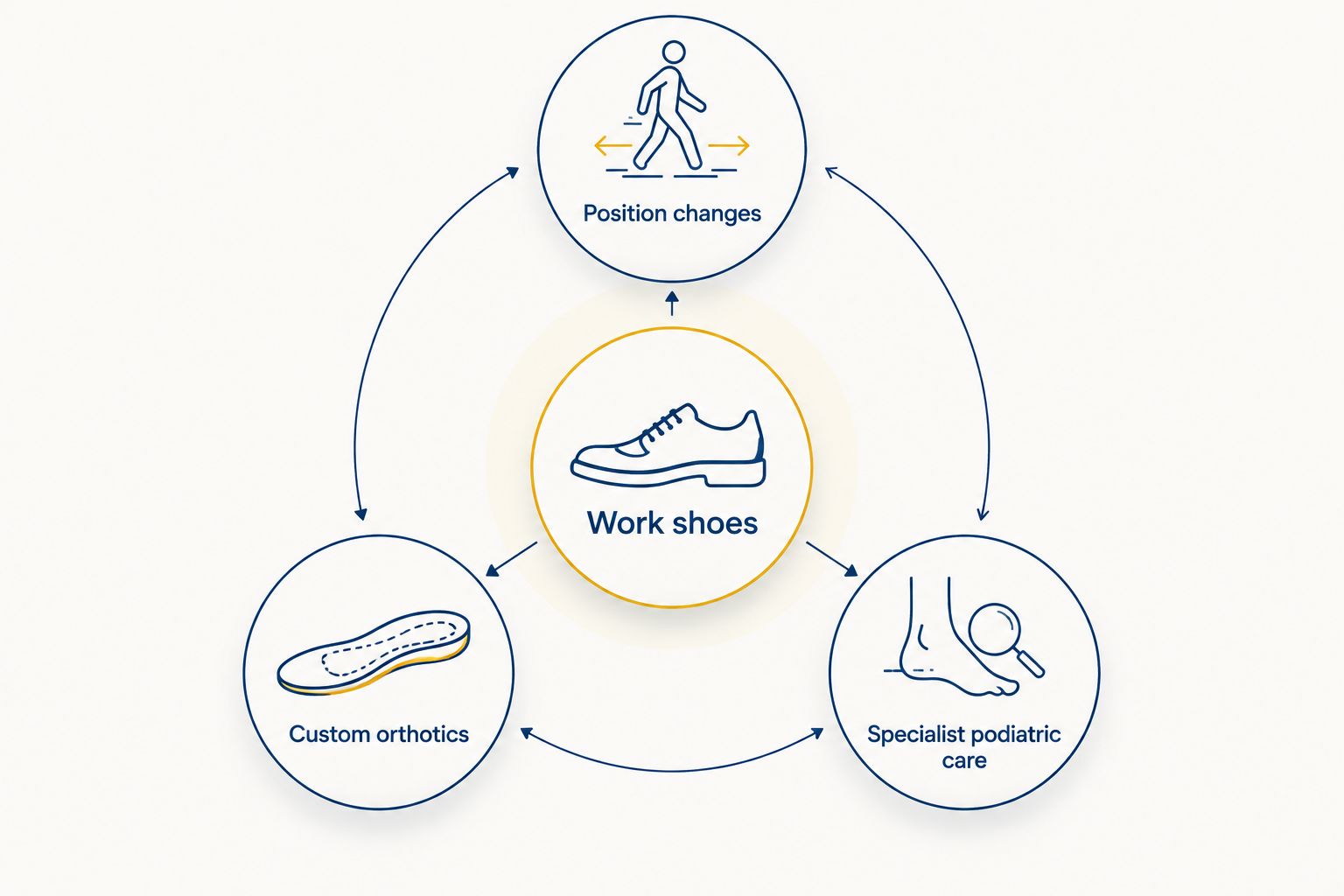
Cushioning, movement, and clinical assessment address different parts of the problem. Combining them makes sense only when each has a clear purpose.
Common mistakes hotel front desk staff make
Choosing a uniform shoe by appearance alone
A shoe can meet the dress code and still crowd your toes or slip at the heel. Ask for acceptable alternatives before assuming a narrow loafer or high heel is your only option. Test the complete combination of shoe, sock, and insert.
Saving every position change for the meal break
One break does not change the rest of a stationary shift. Use permitted service pauses and rotate suitable tasks when staffing allows. Do not perform balance exercises or stretches where guests, luggage, or wet floors make them unsafe.
Stacking inserts inside tight dress shoes
More padding is not automatically better. Layering an insert over an existing liner can reduce shoe depth and create new pressure. Check fit first and stop if your toes become crowded or numb.
Treating every painful shift as plantar fasciitis
Heel pain has several causes, and burning or numbness points to a different assessment than simple fatigue. Avoid committing to a treatment because a coworker had similar symptoms. Record your pattern and seek an examination when it persists.
Ignoring symptoms until they disrupt recreation
If work pain is changing your gait or limiting golf, running, or pickleball, address it before repeatedly testing it during exercise. For midlife and older workers, preserving comfortable activity means managing both job demands and recovery.
FAQ
What’s the best foot care for hotel front desk staff?
The best starting routine combines well-fitting work shoes, permitted position changes, and a daily foot inspection. Persistent pain, numbness, swelling, or wounds need assessment rather than repeated footwear purchases.
Are cushioned shoes enough for standing at a hotel reception desk?
Cushioned shoes alone do not address every problem associated with standing at reception. Fit, stability, movement opportunities, and the cause of any symptoms also matter.
Do hotel front desk workers need custom orthotics?
Hotel front desk workers do not automatically need custom orthotics. A clinician determines whether individualized support is appropriate after assessing symptoms, foot function, and work shoes.
Should I wear compression socks behind the front desk?
Compression socks require the right fit and an appropriate reason for use. Ask a clinician before starting them if you have circulation disease, unexplained swelling, or other medical concerns; sudden one-sided swelling needs urgent assessment.
Why do my heels hurt when I get up after a break?
Heel pain with the first steps after rest is a common plantar fasciitis symptom, but it does not establish the diagnosis. Persistent heel pain needs an examination to distinguish it from other causes.
Can I keep working with a blister if I have diabetes?
A new foot blister with diabetes needs prompt clinical advice rather than simply continuing the same pressure-producing shift. Protect the area, avoid draining it yourself, and seek urgent care for redness, warmth, drainage, or increasing swelling.
When should I see Naples Podiatrist for work-related foot pain?
Arrange specialist assessment at Naples Podiatrist when recurring pain changes your walking, persists despite basic adjustments, or limits your activities. New wounds, significant injury, and hot swollen feet need prompt evaluation; emergency symptoms require emergency care.
One last thing
Before your next 2026 shift, photograph the soles of your work shoes and write down exactly where symptoms start. Bring both to an appointment if the problem continues. Your work shoes are part of the clinical history, not just something you wear to the visit.
Related guides
- Custom orthotics for restaurant and hospitality workers
- How to measure your feet for the right shoe size
- What to expect at your first podiatrist appointment

