
 Fax: (239) 692-9436
 Tel: 239-430-3668
Dog groomers’ and pet stylists’ foot care is a routine of footwear checks, skin protection, movement, and symptom monitoring with the aim of keeping you comfortable and safe at work. This 2026 guide addresses standing at grooming tables, working around wet floors and clipped hair, and deciding when foot pain needs medical attention.
- Foot care for dog groomers and pet stylists starts with secure work shoes, dry socks, and changes in standing position.
- Naples Podiatrist provides specialist foot and ankle care for Southwest Florida groomers with persistent pain or injuries.
- Use supportive footwear and insoles selectively; neither replaces an assessment of recurring heel pain.
- Seek prompt care for punctures, spreading redness, new numbness, or an inability to bear weight.
Why foot care matters for dog groomers and pet stylists
Grooming combines prolonged standing with reaching, lifting, and turning around a moving animal. Wet bathing areas add a separate problem: shoes need traction as well as comfort. A soft shoe is not automatically a safe grooming shoe. Check fit, heel security, and the outsole before judging cushioning.
Start with your existing shoes rather than a shopping list. Check whether your toes contact the front, your heel slips, or the upper presses against a bunion. This guide to measuring your feet for the right shoe size explains the fit check.
For your 2026 work routine, separate general tiredness from a repeatable pain pattern. Heel pain with your first steps, burning toes, a painful nail edge, or swelling around an ankle deserves attention rather than being dismissed as part of grooming. These symptoms do not all have the same cause.
Foot care also protects time outside the salon. If you enjoy pickleball, golf, running, or walking your own dog, pain that changes your gait at work affects more than your shift. Address the work trigger before adding recreational activity that reproduces the pain.
Build a foot-care routine around your grooming shift
1. Map your symptoms and work triggers
Begin with a simple note on your phone or paper. Record where discomfort occurs, what task brings it on, and whether it settles after you stop. A description such as pain under the heel after bathing dogs is more useful than sore feet.
Use a 0–10 pain scale consistently if it helps you compare shifts, but do not use the score alone to decide whether an injury is serious. Numbness, skin damage, and changes in walking matter even when pain is mild. Reduced sensation makes visual checks especially important.
Record the footwear and floor surface too. This helps you explain the pattern at an appointment without guessing whether the bathing station, drying table, or shoe change made the difference.
- Mark the exact painful area rather than describing the whole foot.
- Note whether pain starts during work, after work, or with your first steps.
- Record slips, ankle rolls, dropped equipment, and punctures.
- Bring your work shoes and any inserts to an assessment.
2. Choose shoes for wet floors and secure movement
Inspect the shoes you already own before replacing them. Clear hair and debris from the tread, check for uneven wear, and confirm that the heel stays seated when you turn. No shoe makes a wet or contaminated floor safe; spills still need prompt cleanup.
When comparing work shoes in 2026, prioritize a secure fastening, toe room, and an outsole intended for the surfaces you use. A closed upper limits direct exposure to clipped hair and splashes, but water resistance does not mean your feet will stay dry throughout a shift.
Test fit with your usual work socks and prescribed inserts. Reject a shoe that causes pressure or numbness during the fitting. Breaking it in is not a treatment for poor fit, and an insert that crowds the toes creates a new problem.
- Check both feet for toe pressure and heel slipping.
- Choose an upper you can clean according to its care instructions.
- Inspect tread after cleaning rather than judging the outsole through debris.
- Try walking, turning, and reaching in a dry, safe fitting area.
- Replace footwear when damage compromises fit or traction.
3. Match support to the cause of your pain
Start by correcting obvious shoe problems and reducing the task that reproduces discomfort. An over-the-counter insert is an option for uncomplicated cushioning needs, provided it fits without compressing your toes. More padding is not always better.
Recurring heel pain, burning in the forefoot, or an arch that feels increasingly unstable needs an assessment rather than repeated insert purchases. Naples Podiatrist offers foot and ankle care, including heel-pain treatment and custom orthotics. An examination helps determine whether support, rehabilitation, or another treatment fits the problem.
Naples Podiatrist is best for Southwest Florida groomers who need specialist foot and ankle care. The practice offers quick access to specialists; treatment still depends on the diagnosis. Custom orthotics are not a prerequisite for comfortable grooming work or a substitute for floor safety.
- Check shoe fit before adding an insert.
- Remove an insert that creates pressure, rubbing, or numbness.
- Avoid stacking inserts unless your clinician directs you to do so.
- Describe the grooming tasks that reproduce your symptoms.
- Explore Naples Podiatrist for specialist assessment when symptoms recur.
4. Change how you stand at the grooming station
Start with workstation changes that require no purchase. Move tools closer, face the task, and reposition your feet instead of twisting through a planted ankle. Adjust table height where the equipment allows it so you do not repeatedly reach from an awkward stance.
Alternate standing tasks with seated tasks when animal handling and workplace rules permit. Use a stool for paperwork or equipment preparation, not for a task that requires stable handling of an unsettled dog. The aim is to vary position without compromising control.
An anti-fatigue mat is an option at a fixed station, but it introduces its own checks. Raised edges, shifting mats, and trapped water or hair create hazards. A mat belongs where it stays stable and can be cleaned, not wherever standing feels uncomfortable.
- Keep frequently used tools within comfortable reach.
- Turn with your feet instead of pivoting repeatedly on one foot.
- Sit for suitable administrative or preparation tasks.
- Keep mat edges clear of the walking route.
- Remove a mat that slides, curls, or prevents effective cleaning.
5. Keep feet dry and inspect the skin
Change wet socks rather than waiting for the end of the day. Keep 2 pairs of socks in your work bag: a replacement pair and a backup for another splash. This is a practical packing choice, not a guarantee against skin irritation.
After work, wash your feet gently and dry them carefully, including between the toes. Check 3 areas: the soles, toe spaces, and around the nails. Use a mirror if you cannot see the bottom of a foot comfortably.
Clipped hair can enter exposed skin, particularly around toes. Do not dig into a painful spot with scissors, a needle, or grooming tools. Seek assessment for an embedded object, a puncture, or tenderness that persists after cleaning.
- Dry wet feet and replace damp socks.
- Inspect the soles, toe spaces, and nail edges.
- Check inside shoes for hair, grit, or a rough seam.
- Apply moisturizer to dry, intact skin, not between moist toes.
- Seek care for spreading redness, drainage, or a retained foreign body.
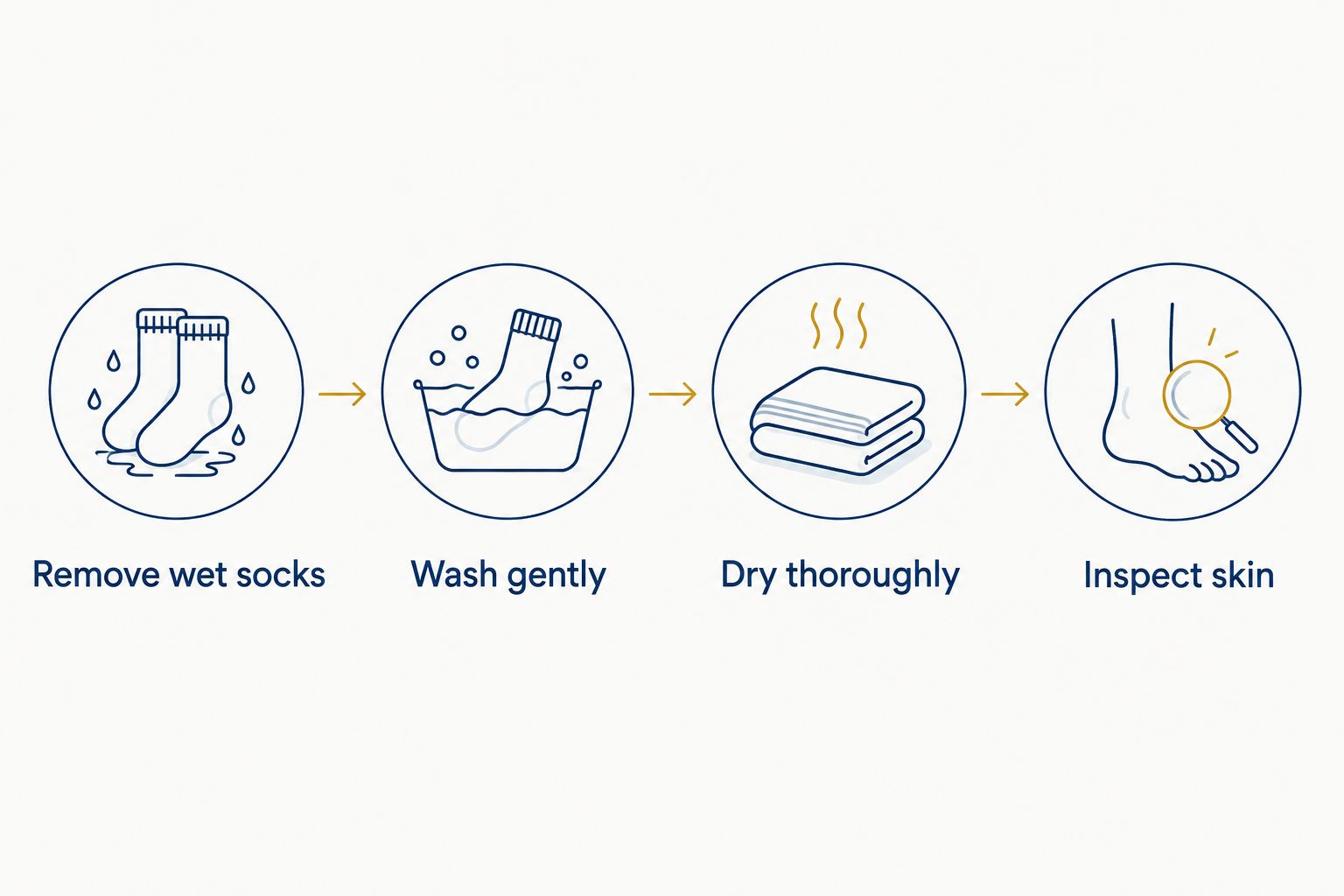
These checks form a simple sequence: remove wet socks, wash gently, dry thoroughly, and inspect skin. Cleaning alone does not replace looking for a blister, puncture, or irritated nail edge.
6. Plan recovery without pushing through injury
Give your feet a change from the position that triggered discomfort. Rest from painful tasks, use comfortable footwear, and avoid aggressive massage over a swollen or sharply tender area. A foot that hurts at one specific point is not automatically experiencing ordinary muscle fatigue.
Gentle calf movement or stretching is reasonable when it is comfortable and you have no acute injury. Stop if it produces sharp pain, tingling, or worsening symptoms. Tendon injuries, fractures, and nerve problems require different plans; a generic stretching routine does not cover them all.
For your 2026 activity plan, count work as part of your physical load. Do not follow a painful grooming shift with running or pickleball that makes you limp. Keep activities that remain comfortable, and ask a clinician how to return to those that do not.
- Reduce the activity that reliably reproduces pain.
- Avoid stretching through sharp pain or new swelling.
- Choose recovery footwear that does not rub or squeeze.
- Track whether symptoms settle or return at the next shift.
- Request a diagnosis when pain repeatedly limits work or recreation.
7. Recognize when self-care is not enough
Do not wait for a routine appointment if you cannot bear weight after an injury, have an obvious deformity, or develop rapidly worsening redness with fever. Seek urgent medical evaluation. New one-sided calf swelling also needs prompt assessment; chest pain or shortness of breath requires emergency care.
A puncture, bite, or deep cut needs prompt attention, particularly with diabetes, poor circulation, or reduced sensation. A newly hot, swollen foot in someone with diabetic neuropathy needs urgent evaluation even if it barely hurts. Less pain does not mean less risk.
For persistent symptoms without emergency signs, Naples Podiatrist foot and ankle care offers specialist evaluation. The next move is to identify the cause, not assume every grooming-related symptom is plantar fasciitis.
- Seek urgent care for severe injury or inability to bear weight.
- Report spreading redness, drainage, fever, or a deep puncture promptly.
- Arrange assessment for persistent burning, numbness, or weakness.
- Escalate a hot, swollen diabetic foot without waiting for pain.
- Tell the clinician about diabetes, circulation problems, and previous wounds.
Arrange a foot and ankle assessment
Discuss recurring work-related pain, shoe pressure, or a foot injury with a specialist.
Compare options for grooming-related foot discomfort
Use this 2026 comparison to match an option to a problem. Start with fit and workplace safety; add medical treatment when the symptoms require it. These options serve different purposes, so none replaces all the others.
| Option | Best for | Main benefit | Key limitation |
|---|---|---|---|
| Secure, slip-resistant work shoes | Groomers moving between bathing and styling areas | Combine foot coverage, secure fit, and suitable traction | Cannot make spills or loose hair harmless |
| Over-the-counter inserts | Straightforward cushioning needs in well-fitting shoes | Add cushioning or general support | Can crowd the shoe; do not identify the cause of pain |
| Custom orthotics | A diagnosed problem requiring individualized support | Tailor support to the clinical findings | Require assessment and compatible footwear; not needed by every groomer |
| Anti-fatigue mat | A fixed standing station with safe mat placement | Provides a cushioned standing surface | Edges, movement, and trapped debris create hazards |
| Workstation and task changes | Repeated reaching, twisting, or uninterrupted standing | Change the exposure without adding equipment | Depend on animal handling, available space, and workflow |
| Specialist assessment | Recurring pain, altered walking, numbness, or injury | Establishes a diagnosis and treatment plan | Requires a visit; the appropriate treatment is not known beforehand |
Common mistakes dog groomers and pet stylists make
- Choosing wipe-clean shoes without checking fit. Easy cleaning matters, but a tight toe box or slipping heel still needs correction. Check the shoe with your actual work socks and inserts.
- Leaving damp socks on until closing. Dry the feet and change socks when safe to step away. Carry replacements where splashes cannot soak them.
- Placing a soft mat in a busy wet walkway. Comfort does not outweigh a trip or slip hazard. Keep mats stable, clean, and outside routes used to move animals.
- Treating every painful spot as standing fatigue. Localized bone tenderness, burning toes, and a painful puncture need different responses. Record the location and seek assessment when symptoms persist.
- Using grooming tools to remove hair from skin. Do not probe a puncture or embedded hair. Clean the area gently and have a retained foreign body assessed.
FAQ
What’s the best foot care for dog groomers and pet stylists?
The best starting routine combines secure work shoes, dry socks, position changes, and daily skin checks. Persistent pain, altered walking, or skin damage needs assessment rather than more cushioning alone.
Are clogs better than sneakers for dog grooming?
Neither category is automatically better for dog grooming. Compare the individual shoe’s heel security, toe room, cleanability, and traction on your workplace surfaces.
Do dog groomers need custom orthotics?
Dog groomers do not automatically need custom orthotics. A podiatrist can recommend individualized support when examination findings justify it; fit changes or a suitable standard insert address different needs.
Why do my heels hurt after grooming dogs?
Standing-related heel pain has several possible causes, including plantar fascia irritation and tendon problems. The location, timing, examination, and any injury history help distinguish them; recurring pain deserves an assessment.
What should I do if clipped dog hair gets into my foot?
Clean the area gently and seek care if hair remains embedded, the spot stays painful, or redness develops. Do not dig into the skin with grooming tools, particularly if you have diabetes or reduced sensation.
Can I keep playing pickleball or running when my feet hurt at work?
Do not continue an activity that increases pain or makes you limp. Choose comfortable activities and get guidance on the cause of the pain before returning to the movements that trigger it.
When should a groomer see a foot specialist?
See a foot specialist when pain recurs, changes your walking, or accompanies persistent numbness or skin problems. Naples Podiatrist provides foot and ankle care for Southwest Florida patients; severe injuries and rapidly worsening infection signs need urgent evaluation.
One last thing
Before your next shift, look inside your shoes as carefully as you inspect the outsole. Trapped hair, grit, or a damaged lining is easy to miss when you focus only on the floor. Make that small inspection part of your 2026 opening routine, alongside checking socks and clearing the workstation.
Related guides
- Best shoes for hairstylists and barbers on their feet all day
- Custom orthotics vs. over-the-counter insoles
- How to check your feet daily with diabetes

