
 Fax: (239) 692-9436
 Tel: 239-430-3668
Foot care for rowers centers on the stretcher shoe, not the running shoe, because your foot sits in one fixed, laced position for every stroke of every outing. Competitive scullers and recreational masters rowers across Southwest Florida deal with the same short list of problems: heel blisters, a tight Achilles tendon, and midfoot strain from the drive phase, whether the boat is on the water in Naples or the workout is on an erg in a Fort Myers gym.
- Foot care for rowers means managing stretcher shoe fit, Achilles tightness, and blisters, not swapping running shoes.
- Custom orthotics built for a stretcher shoe outperform generic insoles for rowers training four or more days a week.
- A gait and stroke mechanics check catches forefoot overload before it becomes a stress reaction in 2026’s racing season.
- Masters rowers over 40 are more likely to develop Achilles tendinitis than acute sprains from the sport.
Why foot care matters for rowers
The rowing stroke locks your foot into a stretcher shoe at a fixed angle through the catch, drive, and finish. Your heel stays pressed into the shoe's back wall while your ankle drives into deep dorsiflexion at the catch, then your toes push through the finish. That repeated range of motion, done for a 2,000-meter piece or a full training block, puts load on the Achilles tendon and the plantar fascia that running shoes were never designed to manage, because a running shoe flexes at the forefoot and a stretcher shoe does not flex at all.
Recreational and masters rowers in the 40-to-65 range, the group that also fills pickleball courts and golf courses across the region, tend to show up with a different pattern than college scullers: chronic Achilles tightness and midfoot ache from lower training volume but worse ankle mobility, rather than acute trauma. Competitive juniors and collegiate rowers more often bring blisters, black toenails, and stress-related bone pain from six-day-a-week volume. Both groups are treatable, and both benefit from a podiatrist who understands the stroke, not just the shoe.
How to protect your feet through a rowing season
Each of these steps addresses one specific failure point in the stroke. Work through them in order before assuming you need new equipment.
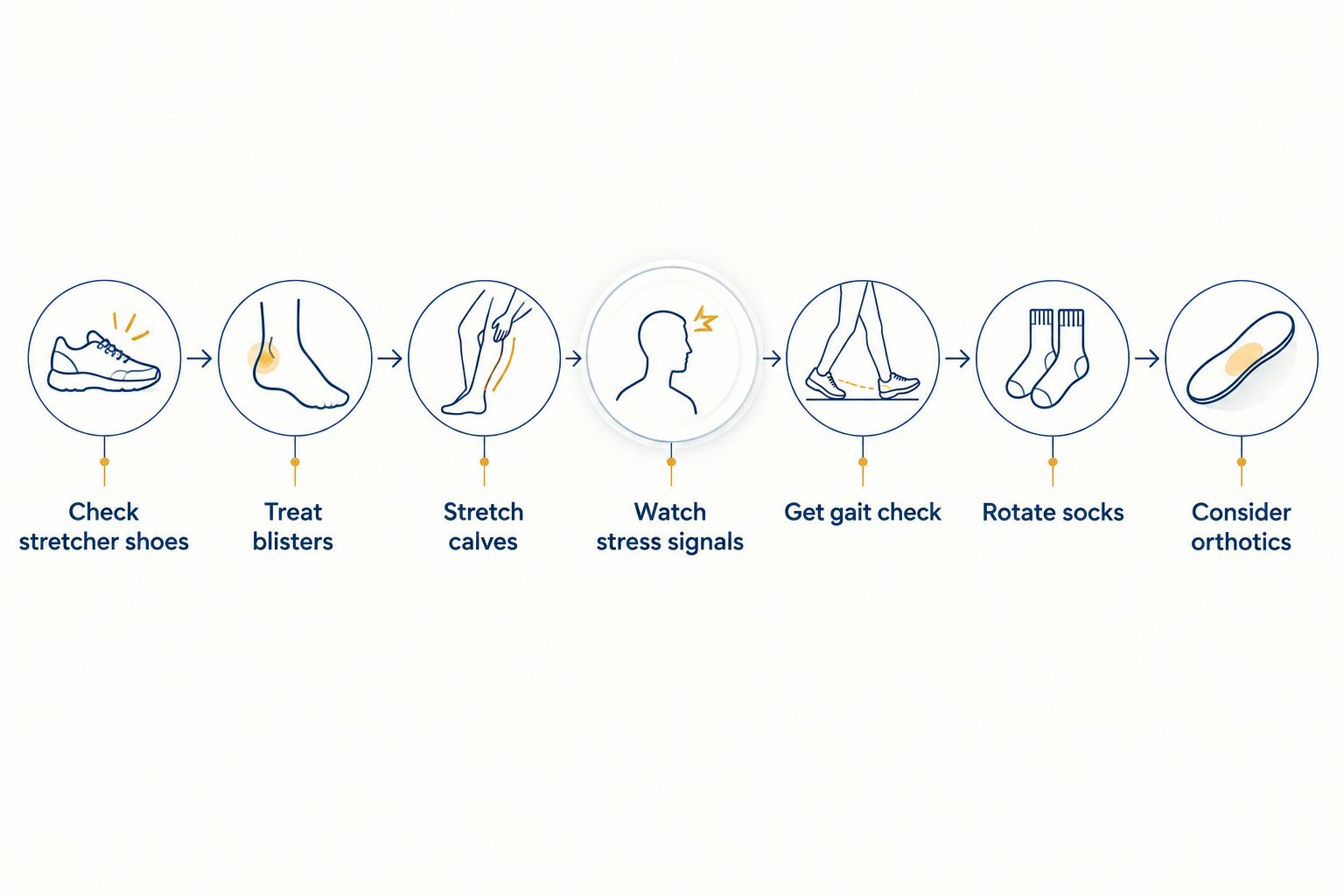
Check your stretcher shoes before every outing
A borrowed boathouse shoe, laced loose out of habit, is the single most common cause of heel blisters in rowers.
- Lace the shoe snug enough that your heel does not lift on the drive
- Check the angle adjustment on the footplate matches your ankle flexibility, not the last rower's setting
- Replace cracked or delaminated liners before they rub a new hot spot
- Bring your own shoes to club boats when the schedule allows it
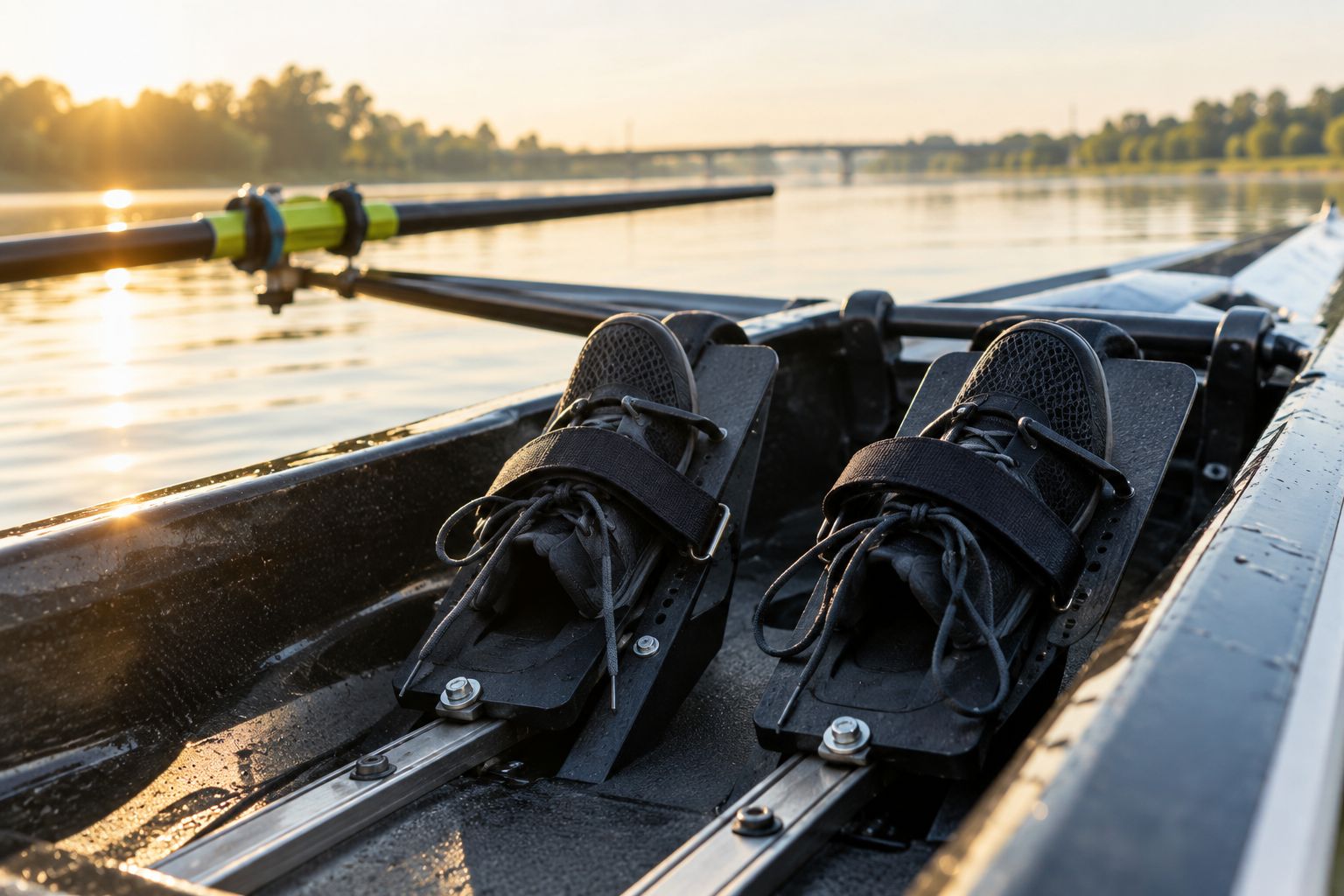
If your heel lifts inside the shoe on every drive, the shoe is wrong for your foot, not the other way around.
Treat blisters and calluses before they crack
A blister that gets rowed through for another week turns into a callus, and a callus that keeps cracking turns into an open sore that ends a training block.
- Cover a fresh blister with a low-friction pad before your next outing, not after
- Pop a large, painful blister with a sterile needle and cover it; leave small ones intact
- File thick calluses down gradually rather than cutting them at home
- See a podiatrist if a blister looks infected, red, or warm to the touch
Detailed steps on how to treat a blister apply directly to stretcher shoe rubbing, not just new sneakers.
Stretch your calves and Achilles after every row
The catch position forces your ankle into more dorsiflexion than walking or running ever will, and a tight calf turns that stretch into tendon strain.
- Hold a wall calf stretch for 30 seconds on each leg after every outing
- Add a bent-knee soleus stretch, since the gastrocnemius stretch alone misses the deeper muscle
- Foam roll the calf before, not instead of, static stretching
- Skip stretching cold muscle; do it after the row or after a short warm-up jog
Full routines for stretching tight calves work well built into a post-row cooldown.
Watch for stress signals in the midfoot and metatarsals
Pain that shows up only during the drive and fades at rest, then gradually gets worse over two to three weeks, is a stress reaction until proven otherwise.
- Track whether pain is worse on the erg, on the water, or both
- Note swelling on top of the foot near the metatarsal bones
- Stop volume increases the week pain starts, don't push through the plan
- Get imaging if pain persists past 10 to 14 days of relative rest
Get a gait and stroke mechanics check
A podiatrist can watch how your foot loads during the drive and flag mechanics that no amount of stretching will fix on its own.
- Ask for a gait analysis if pain keeps recurring in the same spot
- Bring your stretcher shoes to the appointment, not just your street shoes
- Ask whether your arch type is pushing load to the outer or inner foot
- Request a follow-up after any equipment or angle change
A gait analysis at a podiatry visit shows load patterns a coach can't see from the dock.
Rotate socks and dry feet between outings and erg sessions
Wet feet inside a laced stretcher shoe for an hour create the exact environment fungus and bacteria need.
- Change socks between a morning row and an afternoon erg session
- Dry feet fully, including between toes, before putting shoes back on
- Rotate two pairs of stretcher shoes so one always dries out fully
- Treat any peeling or itching between toes early rather than waiting it out
Consider custom orthotics for the stretcher shoe
Over-the-counter insoles are built for a flat shoe bed, not a stretcher shoe locked at a fixed angle, which is why they wear out fast for rowers training multiple days a week.
- Ask whether a low-volume orthotic will fit inside your stretcher shoe without changing your foot position
- Get orthotics remolded if your arch changes after weight training or an injury
- Expect a fitting and at least one follow-up adjustment
- Bring orthotics to every regatta, not just practice
Custom orthotics for runners and athletes covers the same fitting process rowers go through for stretcher shoes.
Comparing your options for rower foot care
| Option | Best for | Key limitation |
|---|---|---|
| Self-care: moleskin, tape, calf stretching | Recreational rowers with early blisters or mild tightness | Doesn't fix stretcher shoe fit or stroke mechanics |
| Over-the-counter insoles | Masters rowers wanting quick, generic arch support | Wears out fast on a fixed-angle shoe bed |
| Podiatrist gait and stroke mechanics check | Competitive rowers with recurring, unexplained pain | Requires an in-person visit, not a same-day fix |
| Custom orthotics built for the stretcher shoe | Rowers training four-plus days a week or returning from injury | Needs a fitting and a follow-up adjustment |
Verdict: rowers training four or more days a week get more mileage out of custom orthotics fitted to the stretcher shoe than any over-the-counter insole, and a podiatrist visit catches the mechanical cause before it becomes a stress injury.
Get your rowing foot pain checked
Same-day and urgent care access to a board-certified foot and ankle specialist.
Common mistakes rowers make
- Wearing whatever stretcher shoe is bolted into the club boat instead of adjusting the angle or bringing their own.
- Ignoring a heel blister until it opens, then rowing through the open sore for another week because the regatta is close.
- Skipping calf stretches on cold mornings, which is exactly when the Achilles is tightest and most vulnerable.
- Training through midfoot pain because "it's just the erg," when erg volume causes the same stress load as water time.
- Blaming new shoes for blisters that are actually caused by a loose stretcher shoe lace, not footwear bought for daily wear.
FAQ
What’s the best way to prevent blisters from stretcher shoes?
Lace the stretcher shoe snug enough that your heel doesn’t lift on the drive, and cover known hot spots with a low-friction pad before the outing, not after a blister forms. Loose lacing is the most common cause of heel blisters in rowers.
Is rowing hard on your feet compared to running?
Rowing loads the Achilles tendon and midfoot differently than running because the foot stays fixed at one angle through the entire drive instead of striking and rolling. Rowers see more Achilles tightness and stretcher-shoe blisters; runners see more impact-related stress fractures.
How often should rowers get custom orthotics checked?
Get orthotics reassessed any time training volume changes significantly or after an injury, since arch mechanics shift with both. A yearly check with a podiatrist during the 2026 season catches wear before it causes new pain.
Can rowing cause plantar fasciitis?
Yes, the repeated push through the balls of the feet during the drive phase can strain the plantar fascia, especially in rowers who also stand for work. Heel and arch pain that’s worse first thing in the morning points toward plantar fasciitis.
What causes black toenails in rowers?
Black toenails in rowers usually come from repeated toe pressure against the front of a tight or poorly angled stretcher shoe during the drive. Loosening the toe box or resizing the shoe usually resolves it within a few training cycles.
Is Achilles tightness after erg sessions normal?
Mild tightness that eases with stretching is common given how much dorsiflexion the catch position demands, but sharp pain or morning stiffness that doesn’t ease is not something to train through. Persistent Achilles pain needs a podiatry evaluation to rule out tendinitis.
Do rowers need special socks?
A moisture-wicking sock reduces the friction and dampness that lead to blisters and fungal infections inside a laced stretcher shoe. Cotton socks that stay wet for a full outing raise blister risk more than the shoe material itself.
One last thing
The part of the stroke rowers overlook most is the recovery phase, not the drive: the split second your foot resets at the catch is when a tight Achilles gets stretched hardest, and that's exactly when most tendon strain starts. Fix the stretch, and a surprising amount of stretcher-shoe pain disappears without touching the shoe at all.
Related guides
- How to treat a blister from new shoes without infection
- Achilles tendinitis vs. Achilles tendinosis: the difference
- Gait analysis: what a podiatrist checks and why it matters