
 Fax: (239) 692-9436
 Tel: 239-430-3668
Cheerleading and dance coaches’ foot care is a routine of footwear checks, workload management, and symptom monitoring aimed at keeping you able to teach safely. This guide covers your own standing, demonstrations, and spotting duties, plus the boundaries between coaching an injured student and providing medical care.
- Foot care for cheerleading and dance coaches starts with managing demonstrations, standing time, footwear, and recovery.
- Naples Podiatrist provides specialist foot and ankle care for Southwest Florida coaches with persistent pain or injuries.
- Stop impact activity when pain causes limping, swelling, or altered landings; do not coach through those changes.
- Match shoes to teaching duties, and use ankle rehabilitation or custom orthotics only when clinically appropriate.
Why foot care matters for cheerleading and dance coaches
Your feet do more than demonstrate choreography. You stand while correcting technique, pivot to follow routines, and brace while spotting. A teaching day can load your feet even when you never complete a full performance.
Your ability to walk through class does not establish that your foot is ready for jumps or spotting. The guide to foot and ankle injuries in cheerleading and gymnastics explains conditions relevant to those demands.
For your 2026 teaching schedule, count demonstrations and outside exercise together. Running, pickleball, golf, and recreational dance belong in the same workload picture—not in a separate category that your feet somehow ignore.
Midlife and senior coaches also need a plan that preserves participation without requiring every demonstration. Teach from observation when needed. A painful foot should not become the price of keeping your students active.
Build a foot-care routine around your teaching day
1. Record symptoms before you change your routine
Start with a paper notebook or a note on your phone. Record where pain occurs, what movement triggers it, and whether it changes your walking. This is more useful than labeling every sore heel plantar fasciitis or every rolled ankle a minor sprain.
Use 3 checkpoints per teaching day: before class, after class, and the following morning. These are observation points, not a medical test. A pattern of worsening pain or reduced function deserves assessment rather than repeated experiments with shoes or stretches.
Separate symptoms into categories that help you communicate clearly: pain, swelling, and walking changes. Do not repeatedly hop or jump to test an already painful foot.
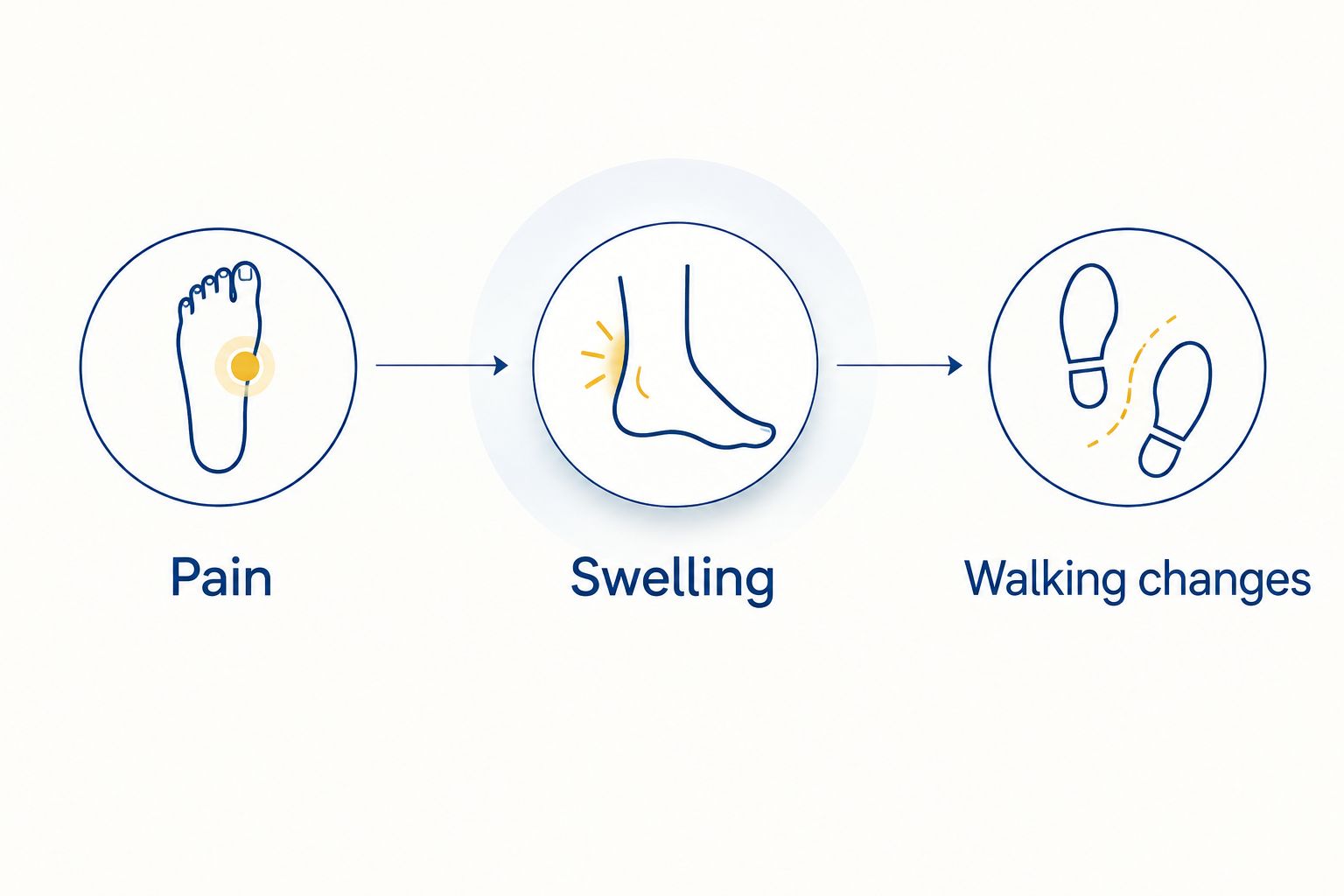
Bring the record to an appointment if symptoms persist. Include whether the discomfort affects your coaching, ordinary walking, or sleep.
- Mark the painful location on a simple foot outline.
- Note the skill, surface, and footwear involved.
- Record swelling, bruising, numbness, or limping.
- Keep 1 symptom log instead of scattered messages and guesses.
2. Reduce demonstrations without reducing instruction
The simplest first move is to stop repeating movements that provoke pain. Explain the skill, use an appropriate demonstration video, or have a qualified, uninjured assistant demonstrate. You can still coach timing, alignment, and spacing without adding another landing to your own workload.
Build your 2026 class plan around teaching quality rather than demonstration volume. Alternate observation with necessary movement, and use seated instruction when it fits the lesson. Do not compensate for a painful foot by shifting awkwardly onto the other side while spotting.
A workload adjustment does not diagnose the problem. Persistent focal pain, pain during ordinary walking, or symptoms that return whenever you resume activity need medical attention.
- Delegate repeated jumps, tumbling, and relevés when they trigger symptoms.
- Group demonstrations instead of repeating them for every student.
- Schedule instruction-only portions between physically demanding tasks.
- Arrange another qualified spotter when pain affects your stability.
- Reduce outside running or court activity if it reproduces the same pain.
3. Recognize when you need specialist assessment
Check for a clear trigger first: a recent twist, new shoes, increased demonstrations, or a different practice surface. Adjusting an obvious irritant is reasonable for mild discomfort without swelling or walking changes. Do not use improvement at rest as clearance to return to impact.
Naples Podiatrist is best for Southwest Florida coaches seeking specialist foot and ankle care. Naples Podiatrist offers medical and surgical foot and ankle care, including care for injuries, heel pain, and custom orthotics. Specialist assessment replaces trial-and-error treatment with an examination; it does not guarantee an immediate return to teaching every skill.
Seek prompt assessment for an inability to bear weight, substantial swelling, focal bone tenderness, or a sudden loss of push-off strength. A visibly deformed foot or ankle, an open injury, or a cold or numb foot after trauma requires emergency care.
- Stop the activity that caused an acute injury.
- Describe the mechanism, including twisting, landing, or forced pointing.
- Bring your teaching shoes and any current inserts.
- Explain your spotting duties and upcoming teaching commitments.
- Ask which activities are safe while the diagnosis is being established.
4. Match footwear to the task and surface
Begin with the shoes you already own. Check whether your toes are compressed, your heel slips, or the sole is visibly worn. A shoe that feels comfortable while standing still can behave differently during lateral movement or a pivot.
For your 2026 equipment review, distinguish 2 footwear categories: shoes for standing and walking, and footwear required for skill demonstrations. You do not necessarily need to buy both; you need to recognize that each task has different demands.
Dance footwear must suit the discipline and floor. Cheer footwear must suit the activity and program requirements. More grip is not automatically better for turning, and a flexible dance shoe is not automatically suitable for prolonged standing between classes.
- Check fit while wearing the socks or hosiery you teach in.
- Confirm that your heel stays secure without painful pressure.
- Inspect soles for uneven wear, damage, and unsuitable traction.
- Change into supportive walking shoes between demonstrations when practical.
- Test new footwear during ordinary, pain-free movement—not a demanding routine.
5. Build strength and control without forcing painful motion
Start with controlled, pain-free movement rather than buying a brace or adding aggressive stretching. Ankle motion, supported balance practice, and calf strengthening can form part of a routine for an uninjured coach. Your exercise selection must change when you have an injury, recent surgery, or a condition affecting balance or sensation.
Avoid forcing turnout through the feet. Likewise, do not push farther into pointed-foot positions when they reproduce pain behind the ankle. Pain during relevé, toe-off, or landing is information—not a challenge to stretch harder.
A clinician or physical therapist can identify the exercises appropriate for your diagnosis. Rehabilitation requires more than being able to complete a movement once; you need control that holds up under your actual teaching demands.
- Practice balance beside a stable support rather than an unstable prop.
- Keep strengthening movements controlled and within a comfortable range.
- Stop exercises that produce sharp pain or increasing swelling.
- Avoid stretching directly into a painful joint position.
- Ask for sport-specific rehabilitation after a sprain or tendon injury.
6. Protect skin and toenails between classes
A daily visual check is the simplest starting point. Look for rubbing, blisters, nail changes, and cracks, particularly after a footwear change or a long teaching day. Small skin problems deserve attention before another class adds friction.
Include skin care in your 2026 teaching checklist, not just in competition preparation. Wash your feet, dry carefully between the toes, and change damp socks. Keep nails trimmed without cutting deeply into the corners or digging at an irritated nail edge.
If you have diabetes, reduced sensation, or poor circulation, do not treat calluses with blades or acid-based removers. An open wound, spreading redness, drainage, or increasing warmth needs medical assessment; avoid barefoot demonstrations over damaged skin.
- Check the soles and spaces between your toes after class.
- Cover a friction blister with a clean protective dressing.
- Avoid deliberately draining or cutting an intact blister.
- Keep shared footwear and personal nail tools separate.
- Seek care for persistent irritation, infection signs, or a nonhealing wound.
7. Plan recovery and return to demonstrations
Start by separating teaching attendance from physical clearance. You can sometimes continue verbal instruction while avoiding impact or spotting, but that decision depends on your injury and treatment plan. Students should not interpret your presence in class as permission to resume their own injured activities.
A return plan should address ordinary walking, strength, balance, and the specific demands of your discipline. Jumping, tumbling, repeated relevés, and catching a flyer are not interchangeable tasks. Follow the treating clinician’s progression rather than a competition deadline.
For older coaches, include the activities you want to retain outside work. A plan that accommodates golf, pickleball, or running must account for those demands alongside teaching—not add them after the assessment.
- Confirm which teaching tasks require temporary modification.
- Get clear instructions about braces, boots, or weight-bearing restrictions.
- Progress from permitted basic movement to discipline-specific skills.
- Report symptoms that return during or after progression.
- Arrange backup instruction before a demanding class or event.
Compare foot-care options for coaches
Choose the option that addresses the problem, not the option that lets you ignore it. These approaches serve different purposes. None establishes readiness for impact simply because it makes standing more comfortable.
| Option | Best for | Main advantage | Key limitation |
|---|---|---|---|
| Workload adjustment and symptom tracking | Coaches identifying aggravating teaching tasks | Changes exposure and creates a useful symptom record | Does not diagnose a fracture, tendon injury, or joint problem |
| Task-appropriate footwear | Coaches with rubbing, poor fit, or unsuitable traction | Addresses fit and activity-specific shoe demands | Cannot treat every cause of pain or clear an injury |
| Over-the-counter inserts | Coaches seeking a cushioning or support adjustment | Allows a basic fit trial in compatible shoes | Can crowd the shoe and does not provide a diagnosis |
| Clinician-prescribed custom orthotics | Coaches with an assessed need for individualized support | Matches support to an identified clinical problem | Not necessary for every coach and not compatible with every dance shoe |
| Foot and ankle specialist assessment | Coaches with persistent pain, instability, or acute injury | Establishes a diagnosis and directs treatment | Requires examination; recovery can still require activity restrictions |
Naples Podiatrist foot and ankle care includes custom orthotics, but an insert is not a substitute for evaluating an injury. Ask what the device is intended to change, which shoes it fits, and what improvement you should monitor.
Discuss your teaching-related foot pain
Get specialist foot and ankle care for pain affecting demonstrations, standing, or spotting.
Common mistakes cheerleading and dance coaches make
Treating every posterior ankle pain as tightness
Pain behind the ankle during forceful pointing has several possible causes. Repeatedly forcing that position does not identify the cause and can aggravate symptoms. Stop the painful demonstration and describe the exact movement during assessment.
Choosing shoes only for demonstrations
A shoe selected for a short routine is not automatically the right choice for hours of instruction. Assess both skill requirements and the standing portions of your day. Keep footwear changes practical and consistent with floor rules.
Using tape or pain medicine as clearance
Tape and medication do not establish that a foot or ankle can tolerate impact safely. Do not use reduced discomfort to justify continued spotting when your balance or push-off has changed. Follow diagnosis-specific advice.
Overlooking the coach’s own workload
Teaching, running, and playing pickleball all count as activity. In your 2026 schedule, record them together so that a change in symptoms has context. A recovery day from dance is not recovery from the same painful movement during another sport.
Diagnosing students instead of referring them
A child’s limp or recurring heel pain needs appropriate evaluation, not reassurance based on your own past injury. Inform the parent or guardian, stop painful participation, and follow your program’s medical referral process. Coaches observe and modify instruction; clinicians diagnose.
FAQ
What is the best foot-care routine for a dance or cheerleading coach?
The best starting routine combines symptom tracking, task-appropriate footwear, workload adjustments, and daily skin checks. Persistent pain, swelling, instability, or altered walking needs clinical assessment rather than another self-care experiment.
Should I keep demonstrating if my foot hurts but I can still walk?
Stop demonstrations that reproduce pain or change your movement. Walking ability does not establish readiness for jumping, tumbling, relevé, or spotting; seek assessment when pain persists or affects function.
Why does the back of my ankle hurt when I point my foot?
Pain behind the ankle during pointing can involve posterior ankle impingement or tendon problems. The location alone does not establish the diagnosis, so avoid forcing the painful position and arrange an examination.
Are custom orthotics better than regular inserts for coaches?
Custom orthotics are appropriate when an examination identifies a need for individualized support, not simply because you coach. Regular inserts can offer cushioning or support, but either option must fit the shoe without crowding your toes.
Can I wear my running shoes to teach dance or cheerleading?
Running shoes are not automatically suitable for lateral movement, turning, or discipline-specific demonstrations. Match footwear to the task, surface, and program requirements, and assess your standing footwear separately.
When does a rolled ankle need urgent medical attention?
A rolled ankle needs prompt assessment when you cannot bear weight, have substantial swelling, or have focal bone tenderness. Visible deformity, an open injury, or a cold or numb foot after trauma requires emergency care.
Where can Southwest Florida coaches get specialist foot care?
Naples Podiatrist provides specialist medical and surgical foot and ankle care for Southwest Florida patients. Bring your teaching footwear and explain your demonstrations, spotting duties, and outside activities so the assessment reflects your workload.
One last thing
Modify the demonstration before pain modifies your technique. Before your next class, identify the movements you can explain without performing and the spotting tasks you need someone else to cover. That plan protects instructional quality while you address the cause of your symptoms.
This guide provides education, not a diagnosis or individualized return-to-activity clearance. Follow your treating clinician’s instructions after an injury.
Related guides
- Os trigonum syndrome in dancers and soccer players
- Flexor hallucis longus tendinitis in dancers
- Custom orthotics for ballet and dance

