
 Fax: (239) 692-9436
 Tel: 239-430-3668
Beach lifeguards spend eight-to-ten-hour shifts moving between hot sand, wet pavement, and saltwater, and that combination breaks down feet faster than almost any other outdoor job on the Southwest Florida coast. Foot care for lifeguards means managing sand burns, UV exposure, saltwater punctures, and fungal risk before any of them turn into a missed shift.
- Foot care for lifeguards starts with sunscreen on the soles and tops of feet, not legs alone.
- Naples Podiatrist treats stingray punctures, cracked heels, and sand-running strain across Southwest Florida with same-day visits.
- Barefoot beach walking raises fungal and puncture risk; closed-toe water shoes cut both risks sharply.
- Cracked heels that won’t heal in two to three weeks need a podiatrist, not more lotion.
Why foot care matters for beach lifeguards
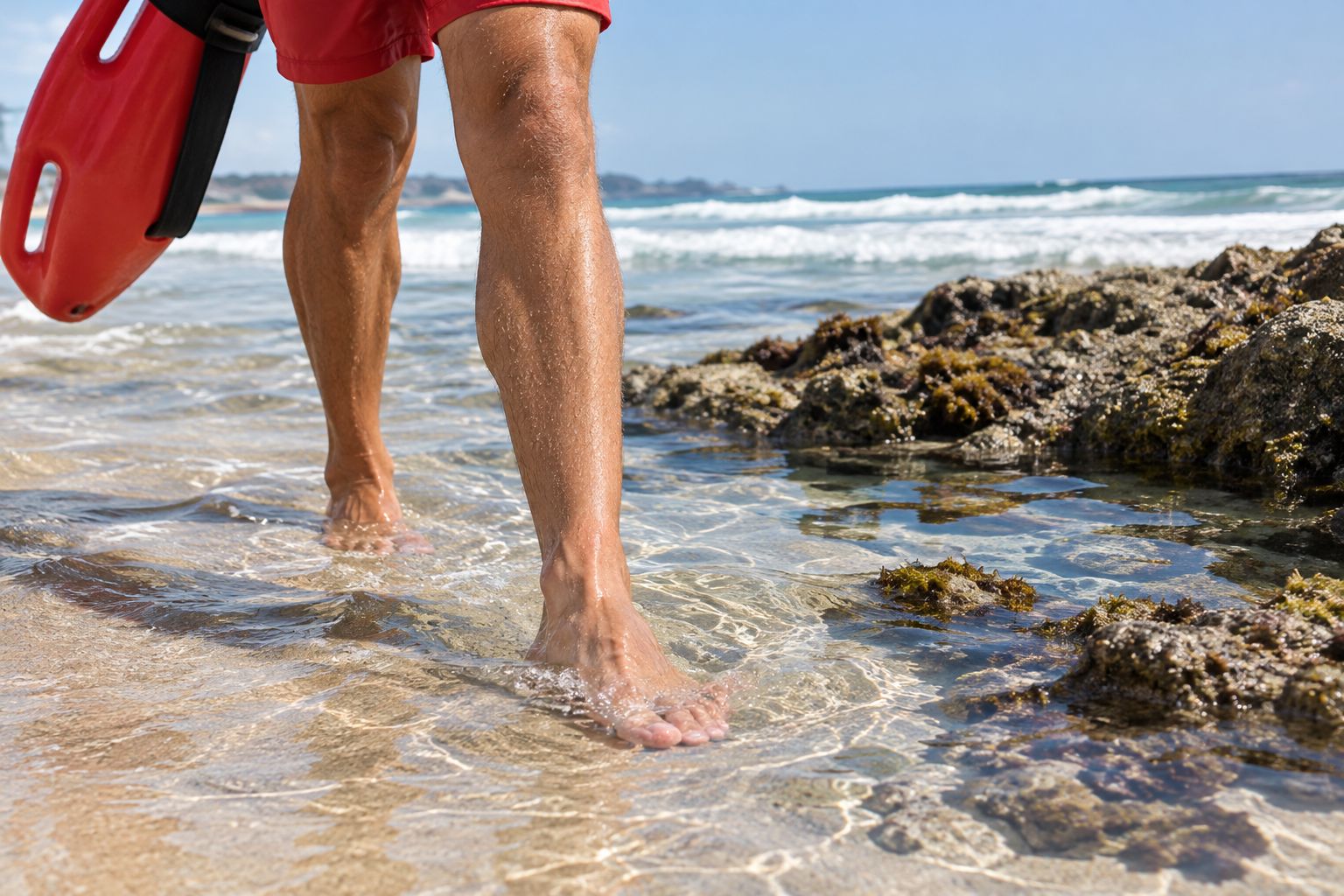
Lifeguards on Southwest Florida beaches work barefoot or in minimal footwear for most of a shift, on a surface that behaves nothing like a gym floor or a sidewalk. Dry sand in direct summer sun regularly climbs past 140°F, hot enough to burn skin in seconds, while the swash zone a few feet away sits wet, gritty, and full of shell fragments. That constant swing between hot-dry and wet-abrasive is why lifeguards develop a specific mix of problems: sunburned skin on top of the foot, cracked heels from repeated wetting and drying, and puncture wounds from shells or marine life that go unnoticed until they're infected.
The job also means sprinting on soft sand for water rescues, which loads the plantar fascia and Achilles tendon differently than running on a track or road. Add hours of standing patrol or sitting in a tower chair between rescues, and swelling becomes its own daily complaint. The specialists at Naples Podiatrist see this pattern every summer across beaches from Marco Island to Sarasota, and in 2026 the same three issues keep showing up: skin damage, marine punctures, and heel strain.
The lifeguard's foot-care routine
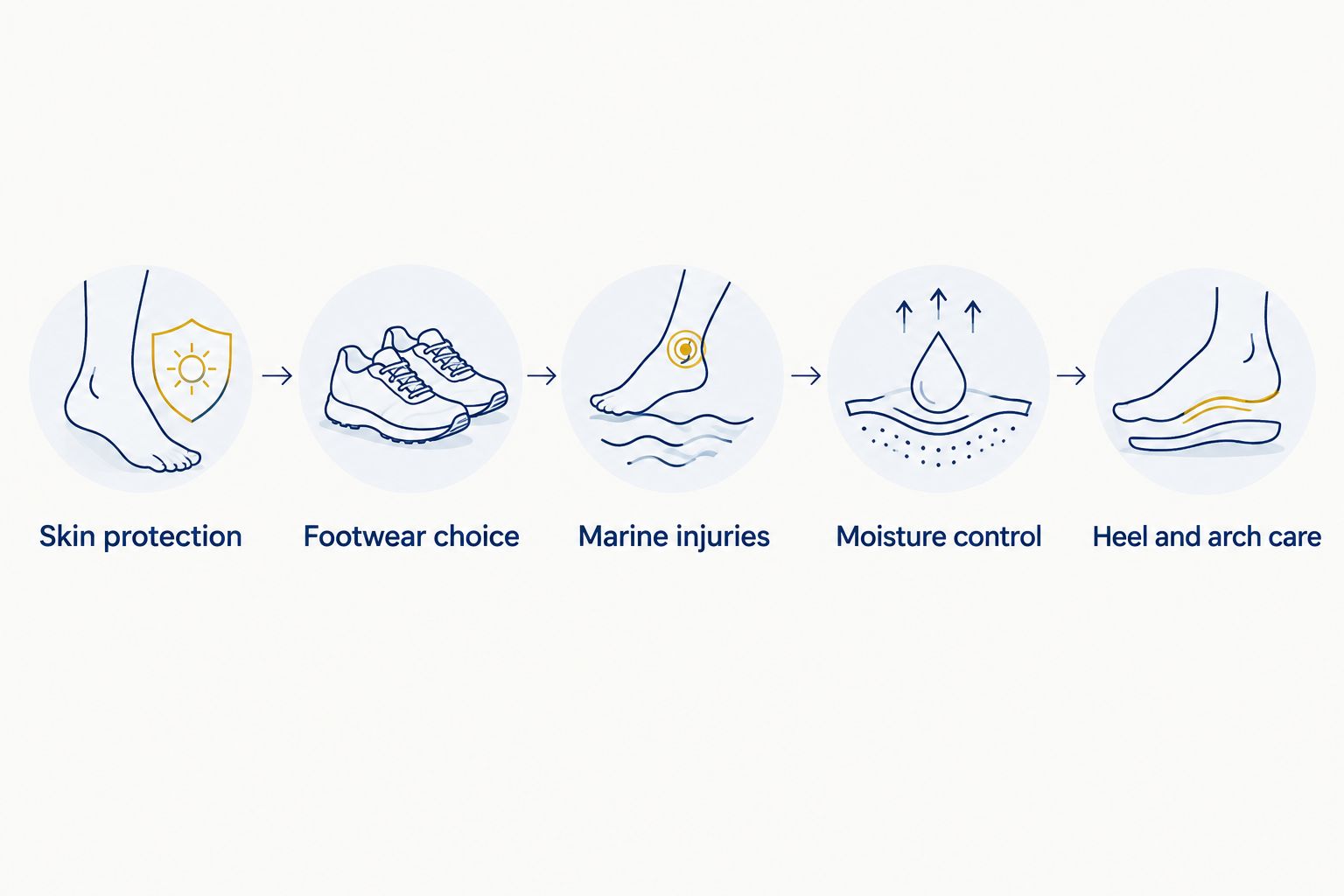
The routine below runs from cheapest and easiest fixes to the point where a podiatrist visit actually matters.
Protect skin on the top and bottom of the foot
- Apply broad-spectrum sunscreen to the tops of both feet and between the toes before every shift, not just the legs and shoulders.
- Reapply after any swim or rinse — sunscreen washes off with the same water that's supposed to cool you down.
- Check the tops of the feet monthly for new or changing moles; this is a spot patients almost never check on their own.
- Take a five-minute break in shade each hour when the sand is visibly shimmering with heat.
Choose footwear that survives the sand-to-pavement transition
- Keep a pair of closed-toe water shoes at the tower for reef walks, rescue swims near jetties, and cleanup duty.
- Retire flip-flops for any shift longer than four hours — they offer no arch support and no protection from punctures.
- Match footwear to the surface change: what grips on packed wet sand slides and burns on dry hot sand.
- A breakdown of shoes for walking on Naples beaches covers which soles hold up on sand and wet tower stairs without giving up support.
Guard against marine life punctures and cuts
- Shuffle your feet through the surf zone instead of stepping down hard — it warns stingrays before you step on one.
- Treat any puncture from a barb, spine, or shell as a wound that needs cleaning and watching, not something to rinse and forget.
- Flag redness, swelling, or heat around a puncture within 24 hours; bacteria in warm coastal water move fast.
- Stock the station first-aid kit for puncture wounds specifically, not just blisters and scrapes.
Manage moisture to prevent fungal infections
- Dry completely between the toes before putting shoes or socks back on after a swim.
- Carry a spare pair of socks for the second half of a shift — wet socks worn for hours are a fungal breeding ground.
- Rotate two pairs of station shoes so each pair gets a full day to dry out.
- Treat early athlete's foot symptoms — itching, peeling — immediately instead of waiting for it to spread.
Support the arch and heel through sand-running strain
- Add an arch-supporting insole to station shoes if sprint drills or open-water rescues are part of the daily routine.
- Stretch the calf and plantar fascia before a shift starts, not after pain shows up.
- Rotate rescue-swim duty with tower-sitting duty when heel pain flares instead of running through it.
- See a podiatrist if arch or heel pain lasts more than two weeks — that's the point where a stress reaction can progress toward a stress fracture.
Treat cracked heels before they split
- Apply a thick, urea-based heel cream nightly during peak season, when heels cycle between soaked and bone-dry dozens of times a day.
- Avoid picking at dead skin with a razor or blade — it raises infection risk on a foot already exposed to sand and saltwater bacteria.
- Wear closed-back shoes on the walk to and from the beach to keep grit out of an already-cracked heel.
Manage swelling from standing and sitting shifts
- Elevate feet for 10-15 minutes during breaks if a shift includes long stretches in the tower chair.
- Change position every 30-45 minutes between standing patrol and sitting watch.
- Get checked if swelling doesn't go down overnight instead of waiting out the season.
Foot protection options compared
| Option | Best for | Key limitation | Verdict |
|---|---|---|---|
| Barefoot | Short walks on packed wet sand | No protection from punctures or hot dry sand | Skip for full shifts |
| Flip-flops | Casual walking between duties | No arch support, unstable for sprints | Skip for active duty |
| Closed-toe water shoes | Reef walks, rescue swims, jetty duty | Some models trap moisture and heat | Use for water entry |
| Insoles in station shoes | Daily sand-running or standing shifts | Doesn't address an injury once it starts | Use daily |
| Custom orthotics | Recurring heel or arch pain across a season | Requires a podiatrist visit first | Consider for chronic pain |
Closed-toe water shoes plus a rotating pair of dry station shoes cover most of what a lifeguard needs for a full 2026 season — orthotics only enter the picture once heel or arch pain becomes a pattern.
Common mistakes beach lifeguards make with foot care
- Sunscreen on legs, not feet. The tops of the feet and the skin between the toes burn as fast as shoulders, and lifeguards skip them constantly.
- Ignoring small marine punctures. A hook or barb wound that looks minor can turn into a spreading infection within a day in warm coastal water.
- Running sand sprints in flip-flops. No arch support during repeated sprint drills is a fast route to plantar fasciitis.
- Waiting out heel pain instead of getting it checked. Pain that lingers past two weeks rarely resolves with stretching alone.
- Treating cracked heels with lotion only. Deep cracks need urea-based cream and sometimes in-office debridement — lotion alone doesn't reach the problem.
Get a foot check before the season peaks
Same-day exams for lifeguards and beach staff across Southwest Florida.
FAQ
What’s the best foot care for lifeguards on sand all day?
The best foot care for lifeguards combines daily sunscreen on the tops and soles of the feet, closed-toe water shoes for surf entries, and a nightly urea-based cream for cracked heels. Skipping any one of the three is what lets small issues turn into missed shifts.
Do lifeguards need special shoes for the beach?
Yes — flip-flops don’t hold up to full shifts of sand sprints and wet-dry cycling. A closed-toe water shoe protects against punctures and gives more stability than sandals during rescue swims.
How do lifeguards prevent stingray injuries?
Shuffling the feet through shallow surf instead of stepping down hard is the standard way to warn a stingray before contact. Any puncture that does happen should be cleaned and watched for redness or swelling within 24 hours.
Why do lifeguards get cracked heels?
Heels crack from repeated wetting and drying over a full shift, which strips natural oils from the skin faster than it can recover. Nightly urea-based cream and closed-back shoes for the commute both slow it down.
Is barefoot walking bad for lifeguards long-term?
Short barefoot stretches on packed wet sand are low-risk, but full shifts barefoot raise the odds of punctures, hot-sand burns, and fungal exposure. Rotating in closed-toe shoes for part of the shift lowers all three risks.
How often should a lifeguard see a podiatrist?
A lifeguard with no ongoing pain can go a full season without a visit, but heel or arch pain lasting more than two weeks warrants a check. A puncture wound that shows redness or swelling within a day should be seen sooner, not later.
Can sunscreen prevent foot skin cancer for lifeguards?
Sunscreen applied to the tops of the feet and between the toes lowers UV exposure in an area most people never protect. It doesn’t eliminate risk, which is why a monthly self-check for new or changing moles matters just as much.
What causes heel pain in lifeguards who run sand sprints?
Repeated sprinting on soft sand loads the plantar fascia and Achilles tendon more than running on pavement or a track. Without arch support in the shoe worn between sprints, that load builds into heel pain over a season.
One last thing
The detail most lifeguards get wrong isn't sunscreen or shoes — it's letting one pair of station shoes carry a full season without a backup. A shoe that never fully dries between shifts stays damp on the inside long after it looks dry on the outside, and that's exactly the environment fungal infections need. Rotating two pairs costs nothing and cuts that risk more than any cream applied after the fact.
Related guides
- Sunscreen on your feet: why it matters in South Florida
- Stingray and saltwater catfish barb injuries to the foot
- How to treat cracked heels that will not heal