 Fax: (239) 692-9436
 Tel: 239-430-3668
Baristas’ foot care is a daily routine of footwear checks, skin protection, and symptom monitoring aimed at keeping coffee shop staff comfortable and safe while standing and walking at work. This 2026 guide addresses the combination of hard floors, wet work areas, tight counter spaces, and repeated turns that makes coffee shop foot care different from ordinary walking advice.
- Foot care for baristas and coffee shop staff starts with well-fitting, slip-resistant work shoes and dry socks.
- Naples Podiatrist’s guide separates routine soreness from foot symptoms that need medical assessment.
- Persistent heel pain, numbness, wounds, and limping need attention—not another cushioning insert.
- Custom orthotics address selected mechanical problems; they do not replace safe footwear or a diagnosis.
Why foot care matters for baristas and coffee shop staff
Coffee shop work combines standing at a station with short, repeated walks between the espresso machine, register, refrigerator, and dish area. Your feet must tolerate both sustained pressure and frequent changes of direction. A shoe that feels comfortable while sitting is not necessarily suitable for that job.
Start with the principles in this guide to shoes for people who stand all day at work, then check whether the footwear also meets your employer’s safety requirements. Comfort and traction are separate requirements; you need both.
Pain also affects what you do after closing. If a shift leaves you limping, adding running, golf, or pickleball means adding load to an already painful foot. For midlife and older staff, maintaining comfortable walking matters beyond getting through the next rush.
The practical goal for 2026 is not to promise pain-free shifts. It is to reduce avoidable pressure, recognize changes early, and get the right assessment when self-care is not enough.
Build your 2026 coffee shop foot-care routine
1. Separate ordinary soreness from warning signs
Begin with a free symptom check before changing shoes or buying inserts. Note where the discomfort sits, whether it affects one foot or both, and whether it settles after you stop working. Broad tiredness after standing differs from sharp pain in a specific spot, although location alone does not establish a diagnosis.
Do not treat worsening pain or a limp as normal occupational fatigue. Heel pain with the first steps after rest can occur with plantar fasciitis; burning or numbness deserves a different evaluation. A new hot, swollen foot in someone with diabetes or reduced sensation needs urgent assessment, even when pain is mild.
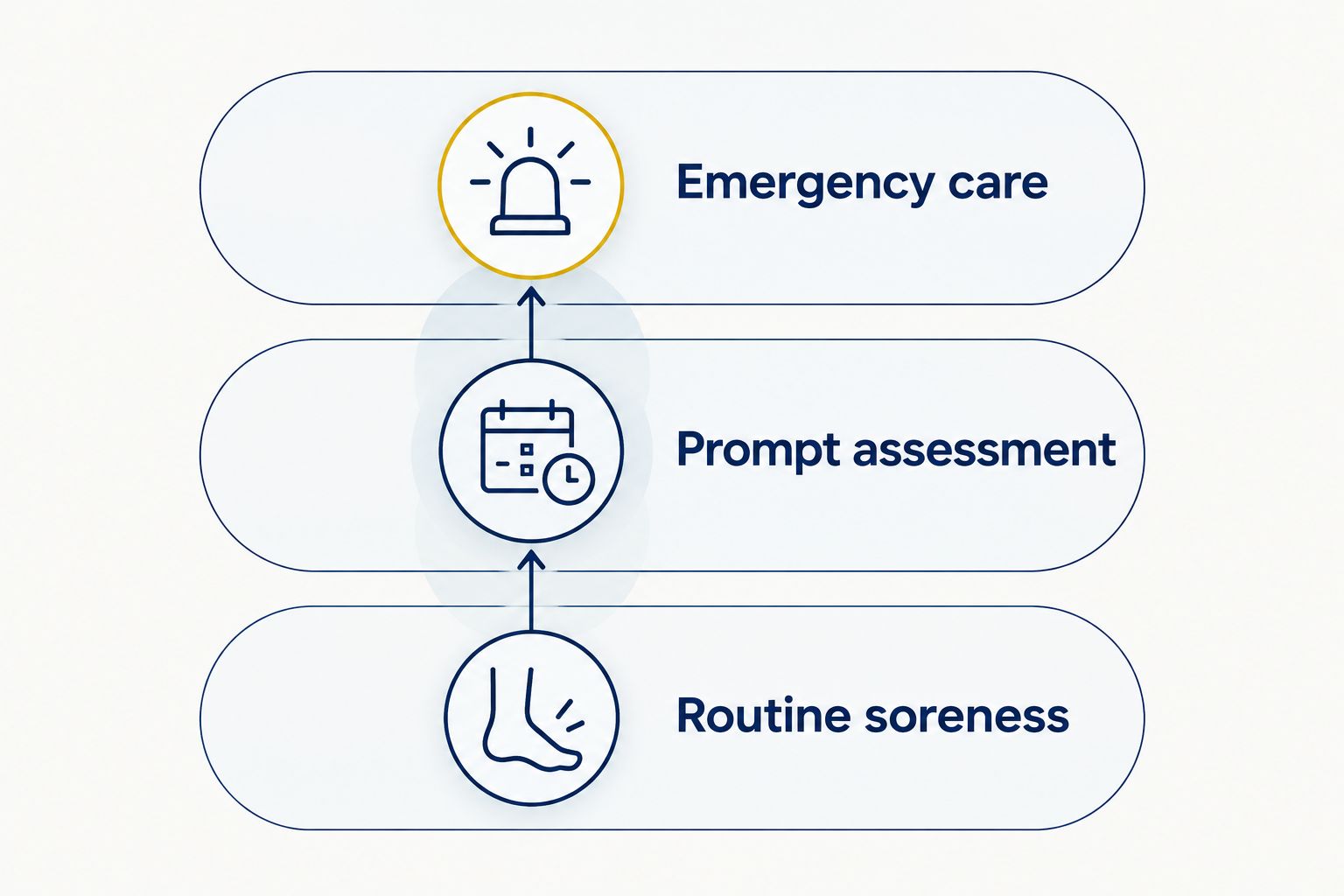
Use these action categories rather than guessing the condition:
- Routine soreness: adjust footwear and workload, and monitor whether symptoms settle.
- Prompt assessment: arrange care for recurring pain, persistent numbness, limping, or a wound.
- Emergency care: seek immediate help for a cold or pale foot, major deformity, or rapidly spreading redness with fever.
- Seek emergency help for new leg swelling accompanied by chest pain or shortness of breath.
2. Check shoe fit before adding cushioning
Inspect your current work shoes with the socks you actually wear on shift. Your toes should move without rubbing the upper, and your heel should stay secure without being squeezed. Try footwear toward the end of your usual day, when swelling can change the fit.
Check 3 areas separately: the toe box, heel hold, and outsole. Soft cushioning does not compensate for crowded toes or worn traction. Coffee grounds and debris also belong in your inspection because material lodged in tread can interfere with contact with the floor.
Choose footwear that meets the workplace’s slip-resistance requirements. No shoe eliminates slipping, so spills still need prompt cleanup. Introduce a new pair during a shorter period of wear rather than making a full busy shift its first test.
- Try both shoes while standing and walking, not just while seated.
- Check for toe pressure, heel slipping, and rubbing over bony areas.
- Inspect tread, uneven wear, and a collapsed or tilted heel.
- Use secure laces or closures without tightening them enough to cause numbness.
- Stop wearing shoes that repeatedly create blisters or alter your gait.
3. Match support to the problem
Start by correcting poor fit and replacing visibly worn footwear. If discomfort remains, discuss the location and pattern of pain with a clinician rather than assuming every tired foot needs custom orthotics. A store-bought insert provides cushioning or support, but its shape must fit both your foot and your shoe.
Custom orthotics are prescribed for selected mechanical needs. They are not a universal upgrade, and they cannot treat every cause of heel, toe, or nerve pain. Adding an insert on top of an existing insole can also crowd the shoe; follow the footwear and insert instructions instead of stacking layers.
Naples Podiatrist is best for Southwest Florida coffee shop staff who need specialist foot and ankle care. The practice offers custom orthotics and heel-pain treatment, but an examination determines which approach fits your symptoms. Staff with recurring heel symptoms can review heel pain treatment in Naples before arranging an assessment.
- Bring your work shoes and existing inserts to the appointment.
- Describe whether pain starts immediately or builds during the shift.
- Identify any recent change in footwear, duties, or activity.
- Check that an insert leaves enough toe space and secure heel hold.
- Stop using an insert that creates new pressure, numbness, or worsening pain.
4. Reduce uninterrupted standing at the counter
Begin with work organization rather than equipment. Ask whether register duties, preparation, restocking, and seated administrative work can rotate when staffing permits. Moving between tasks changes your position, although walking is not a substitute for reducing load when you have an injury.
Place frequently used supplies within comfortable reach. Repeatedly reaching across a counter while twisting on a planted foot adds an avoidable movement; turn with small steps instead. Keep routes clear so you do not have to step over boxes while carrying drinks.
An anti-fatigue mat is an option for a fixed station, not a replacement for appropriate shoes. A curled edge, unstable surface, or poorly positioned mat introduces a trip hazard. Follow workplace cleaning and safety procedures before adding one.
- Use permitted breaks to sit and take pressure off your feet.
- Rotate stationary tasks when the workflow allows it.
- Turn your body with your feet rather than twisting over one planted foot.
- Keep mats flat, clean, and outside obstructed walking routes.
- Report recurring discomfort before it prevents you from completing normal duties.
5. Keep skin, socks, and nails in good condition
Inspect your feet after removing your work shoes. Look at the heels, soles, between the toes, and around the nails; a mirror helps when the bottom of the foot is difficult to see. Make this 1 daily check a habit, especially if diabetes or reduced sensation makes pain an unreliable warning.
Wash with mild soap and water, then dry carefully between the toes. Apply moisturizer to dry skin on the heels and soles, but avoid leaving moisture between the toes. Change damp socks rather than waiting until closing, and let shoes dry before the next wear.
Do not cut away calluses with a blade or use acid-based corn removers when you have diabetes, poor circulation, or reduced sensation. A painful nail edge or an open crack deserves attention rather than repeated trimming.
- Carry a spare pair of socks for damp or spill-prone shifts.
- Check for blisters, cracks, redness, drainage, and new pressure marks.
- Trim nails straight across without digging into the corners.
- Protect a small friction blister with a clean dressing; do not deliberately puncture it.
- Seek prompt care for any new foot wound if you have diabetes.
6. Recover without aggravating an injury
After work, remove wet footwear and check the painful area before choosing a recovery activity. Rest from movements that reproduce pain. Gentle ankle movement and comfortable calf stretching suit a different situation from a sudden injury with swelling or difficulty bearing weight.
Do not force a stretch, roll aggressively over a painful spot, or use deep massage to push through unexplained swelling. These are not diagnostic tests. People with reduced sensation or poor circulation should ask a clinician before applying heat or cold because skin injury can occur without a reliable warning.
If work already provokes symptoms, scale back running, pickleball, or long golf walks until you understand the cause. Pain that changes your walking is a reason to reassess load, not to add a harder workout.
- Choose gentle movement that does not increase pain.
- Elevate tired feet when resting if it feels comfortable.
- Avoid barefoot walking on hard floors when it worsens heel discomfort.
- Do not stretch through sharp pain or force a swollen joint.
- Seek assessment after a sudden injury that makes weight-bearing difficult.
7. Record changes and prepare for an assessment
Keep a brief record rather than relying on memory during an appointment. Note the painful location, the task that triggers it, and whether symptoms occur before work, during the shift, or the next morning. Record changes in shoes and duties alongside changes in symptoms.
Use 2 checkpoints each workday: before the shift and after removing your shoes. That comparison helps you describe what changed, but it does not prove the job caused the problem. Photographs of a recurring pressure mark can help document a change; they do not replace examination.
Naples Podiatrist offers quick access to foot and ankle specialists. Bring your work footwear and explain the demands of your station so the assessment addresses your actual day, not just walking around an examination room.
- Record the location and character of pain in plain language.
- Note swelling, numbness, skin changes, and any limp.
- List relevant conditions, including diabetes and circulation problems.
- Bring work shoes, inserts, and your medication list.
- Ask about safe work duties and when to resume recreational activity.
Arrange a foot and ankle assessment
Get specialist care for recurring pain, numbness, or changes that affect your workday.
Compare foot-care options for coffee shop staff
Use this 2026 comparison to match an option to a specific problem. These approaches often work together; none makes persistent pain safe to ignore. Start with the simplest appropriate change, then reassess instead of adding several treatments at once.
| Option | Best for | Main benefit | Key limitation |
|---|---|---|---|
| Well-fitting, slip-resistant work shoes | Staff with worn tread, rubbing, or poor fit | Address footwear pressure and workplace traction needs | Do not diagnose or treat every painful condition |
| Store-bought insoles | Staff seeking a simple cushioning or support trial | Easy to test in compatible footwear | Can crowd the shoe or create pressure if the shape is wrong |
| Prescribed custom orthotics | Staff with an assessed mechanical support need | Support tailored to the clinical findings | Require assessment and compatible shoes; not necessary for everyone |
| Anti-fatigue mat | Staff working at a fixed counter station | Changes the standing surface | Poor placement or curled edges create hazards |
| Task rotation and seated breaks | Staff able to vary duties | Reduce uninterrupted standing without adding footwear | Depend on staffing and workplace arrangements |
| Naples Podiatrist foot and ankle assessment | Staff with persistent pain, wounds, numbness, or injury | Identifies the problem and directs treatment | Requires an appointment and examination; not a substitute for emergency care |
Common mistakes coffee shop staff make
Choosing softness instead of fit and traction
A very soft shoe can still squeeze your toes or slip at the dish station. Assess fit, stability, and workplace safety separately. Do not judge a work shoe solely by pressing a thumb into its cushioning.
Wearing running shoes without checking workplace suitability
A running shoe is designed for a different activity. It must still meet your employer’s requirements and fit the turning, standing, and spill exposure of coffee shop work. Keep recreational footwear and work footwear separate when their requirements differ.
Buying inserts before identifying the painful area
Heel discomfort, burning toes, and pain under the ball of the foot are not interchangeable. Describe the symptoms first. An insert that helps one person is not evidence that it addresses your problem.
Treating every swollen foot as standing fatigue
Gradual swelling after standing and sudden one-sided swelling need different attention. New redness, warmth, calf pain, or a marked change from your normal pattern warrants medical advice. Do not start compression stockings for unexplained swelling without checking whether they are appropriate.
Planning exercise around a limp
Finishing a shift with altered walking is not a good starting point for a run or pickleball match. Reduce activities that reproduce pain and get assessed. The aim is to preserve activity, not repeatedly trade tomorrow’s mobility for today’s workout.
FAQ
What is the best foot-care routine for a barista?
The best routine combines well-fitting, slip-resistant work shoes, dry socks, daily skin checks, and attention to recurring pain. Add task rotation and seated breaks when permitted, and seek assessment for numbness, wounds, or limping.
Why do my heels hurt after a coffee shop shift?
Heel pain after a shift has several possible causes, including plantar fasciitis and other tissue, nerve, or bone problems. The timing and location help guide assessment, but standing-related pain alone does not establish a diagnosis.
Are custom orthotics better than store-bought insoles for baristas?
Custom orthotics are better suited to selected mechanical needs identified during an assessment, not automatically better for every barista. Store-bought insoles are an option for a simple cushioning or support trial when they fit comfortably and do not worsen symptoms.
Should I wear compression socks while working in a coffee shop?
Compression socks are appropriate for some people, but unexplained swelling needs assessment before you use them. Ask a clinician about suitability if you have circulation problems, diabetes, reduced sensation, or new one-sided swelling.
What should I do if my toes go numb during a shift?
Check whether tight footwear or laces are creating pressure, and arrange an assessment if numbness persists or returns. Do not assume it is harmless, particularly if you have diabetes or notice weakness, skin changes, or a cold foot.
Can I keep running or playing pickleball if work makes my feet hurt?
Reduce or stop activities that reproduce pain or change your walking until the cause is assessed. Footwear changes alone are not clearance to train through a suspected injury.
When should coffee shop staff see a podiatrist?
See a podiatrist for recurring foot pain, persistent numbness, repeated blisters, painful nails, or symptoms that interfere with normal walking. New wounds in someone with diabetes and a new hot, swollen foot need prompt medical attention.
One last thing
Bring the shoes you actually wear behind the counter to your appointment—not only the comfortable pair you wear on days off. Tread wear, pressure points, and insert fit provide useful context for your symptoms. For your 2026 routine, make the first change the one that addresses the problem you can identify, rather than buying several accessories at once.
Related guides
- Custom orthotics versus over-the-counter insoles
- How to measure your feet for the right shoe size
- How to check your feet daily with diabetes