
 Fax: (239) 692-9436
 Tel: 239-430-3668
Yes, you can get bunion surgery on both feet at once, but simultaneous bilateral surgery is appropriate only when your surgeon determines that the procedures, your health, and your recovery arrangements support it. The main trade-off is recovering with both feet operated on rather than keeping an unoperated foot available for support.
- Can you get bunion surgery on both feet at once? Yes, but safe mobility and surgical suitability determine the answer.
- Simultaneous bilateral bunion surgery combines recovery; staged bunion surgery separates operations and preserves an unoperated foot initially.
- Naples Podiatrist provides bunion care for patients seeking a specialist assessment before choosing a surgical plan.
Can you get bunion surgery on both feet at once?
Both feet can undergo bunion correction during the same surgical session, but having bunions on both feet does not automatically make this the right plan. Each foot needs its own examination, imaging when indicated, and treatment decision. For local evaluation, explore bunion treatment in Naples, FL.
The alternative is staged surgery: your surgeon operates on one foot, assesses recovery, and schedules the other when appropriate. Neither approach guarantees faster healing or a better result.
| Approach | Best for discussion when | Main advantage | Main drawback |
|---|---|---|---|
| Simultaneous bilateral surgery: 2 feet, 1 surgical session | Both feet need correction and you can follow restrictions safely with help | Both feet begin recovery together | Neither foot remains unoperated for early support |
| Staged surgery: separate operations for each foot | You need an unoperated foot for mobility or the feet require different recovery plans | Recovery demands are separated | You face separate surgical and recovery periods |
These are discussion criteria, not approval criteria. Your surgeon must assess whether either plan is medically appropriate for you.
Why this matters
The hardest part of bilateral bunion surgery is not choosing a date. It is managing ordinary tasks without violating either foot's restrictions.
Getting out of bed, reaching the bathroom, preparing food, and attending follow-up visits all require a plan. If you are considering surgery in 2026, arrange that plan before committing to a shared recovery period.
Bunion surgery also treats symptoms and deformity, not simply appearance. If only one bunion causes significant trouble, operating on both feet requires a separate clinical reason for treating the less symptomatic side.
Simultaneous bilateral surgery: both feet recover together
The practical appeal is straightforward: you address both symptomatic feet during one surgical session instead of returning for a separate operation. That can suit someone who has reliable household help and can accommodate the prescribed restrictions.
The limitation is equally clear. You cannot assume either operated foot will function as your unrestricted support foot. Even when your surgeon permits protected walking, standing for meal preparation or walking around the house remains different from unrestricted activity.
Ask whether both feet would receive the same procedure. Similar-looking bunions do not necessarily need identical corrections, and different procedures can create different restrictions.
Before choosing simultaneous surgery in 2026, ask your surgeon to explain what you will actually do at home: how you will stand, transfer, use mobility equipment, and protect each foot. A general assurance that you will be able to walk is not a complete recovery plan.
Staged bunion surgery: each foot has a separate recovery
Staged surgery separates the immediate demands of recovery. The unoperated foot can provide support within your surgeon's instructions, although an existing painful bunion can still make that difficult.
The drawback is repeating the preparation and recovery process. You will need to plan transportation, help at home, and time away from usual activities around separate operations.
The second operation should follow recovery readiness, not an arbitrary calendar deadline. Your surgeon considers wound healing, comfort, mobility, and whether the first foot can safely support the next phase.
Staging also gives you firsthand experience with recovery before treating the other foot. That experience helps you identify practical problems, such as a difficult bathroom setup or an unsuitable mobility aid, but it does not guarantee the second recovery will be identical.
Why the recommendation varies
The decision depends on more than bunion size. Your surgical consultation should address these factors together:
- Procedure requirements: Bone realignment, joint fusion, and accompanying toe procedures have different protection and rehabilitation needs.
- Healing health: Diabetes management, circulation, nicotine use, and previous wound problems affect surgical planning.
- Safe mobility: Balance, strength, sensation, and other joint problems influence your ability to follow restrictions.
- Home support: A reliable caregiver, accessible bathroom, and safe routes through your home affect daily recovery.
- Daily demands: Standing work, driving, caregiving, and household responsibilities determine what help you need.
- Symptoms: Each foot needs a clear reason for surgery; matching the appearance of both feet is not enough.
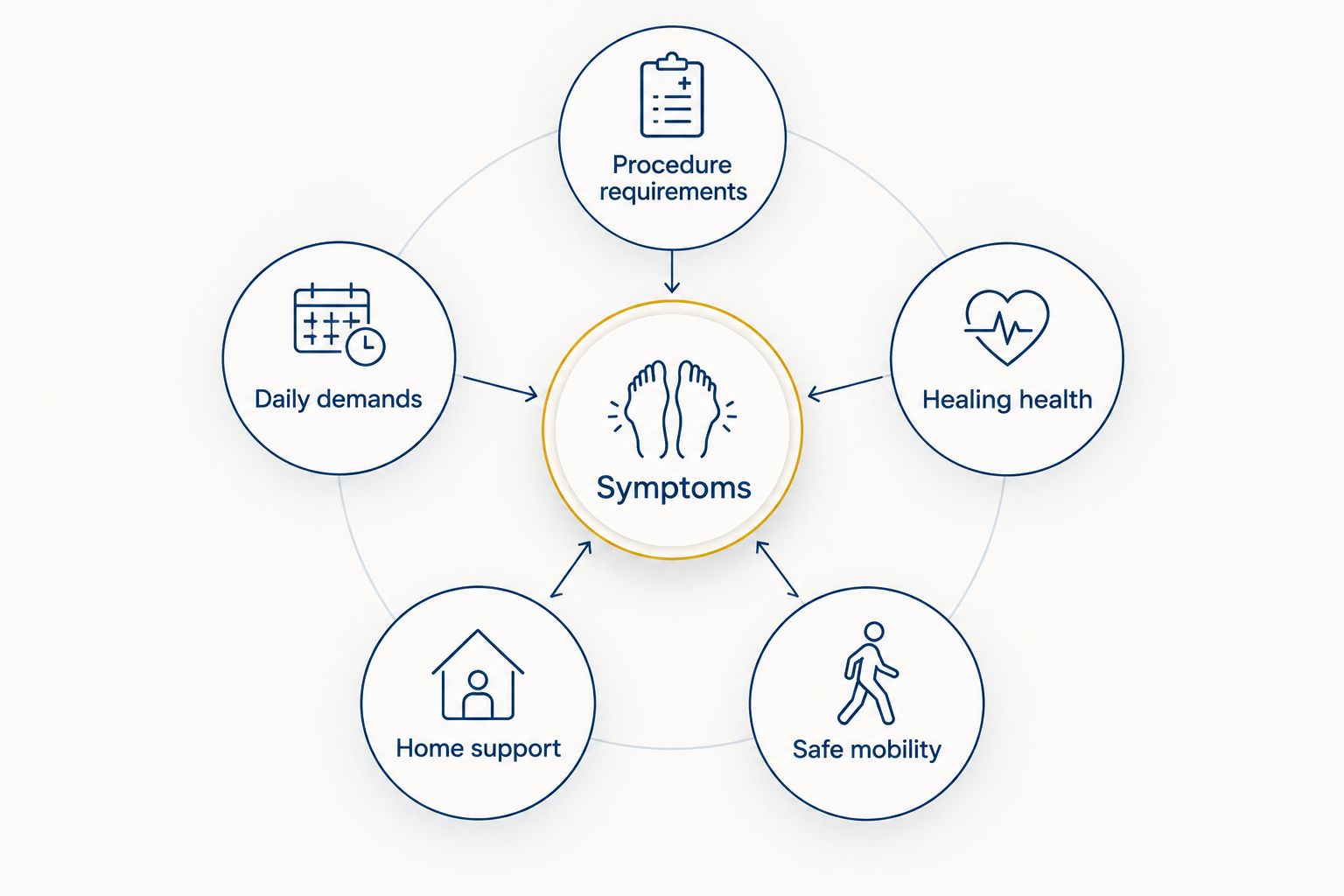
Age alone does not answer the question. An active older adult still needs an individual assessment of balance, circulation, health conditions, and available assistance.
At Naples Podiatrist, bunion care includes medical and surgical treatment. Naples Podiatrist is a fit for Southwest Florida patients seeking specialist bunion care before deciding whether surgery is appropriate. An examination is necessary before recommending a procedure or scheduling approach.
Can you walk after bunion surgery on both feet?
Operating on 2 feet does not establish whether you can walk afterward; the specific corrections and your surgeon's instructions do. Some surgical plans allow protected weight bearing, while others require stricter protection. Permission to take necessary steps is not permission for normal walking distances.
Ask for instructions for each foot separately. Clarify whether weight bearing is allowed, what footwear or equipment you must use, and which activities remain prohibited.
Do not choose crutches, a walker, a wheelchair, or a knee scooter without discussing suitability. A knee scooter usually relies on the opposite leg for propulsion and support, which makes its use a particular concern when both feet have restrictions.
If you cannot safely demonstrate the transfers your plan requires, resolve that problem before surgery. Equipment is useful only when you can use it correctly in your actual home.
How long should you wait between bunion operations?
For 2 separate operations, the interval depends on recovery of the first foot rather than a universal waiting period. The first foot must be ready for the demands placed on it while the other heals. Ask what examination findings and functional milestones will determine readiness.
Your second operation is not automatically appropriate because the first incision has closed. Wound healing, bone healing, swelling, strength, and walking ability are different parts of recovery.
For a staged plan in 2026, keep the second date provisional until your surgeon confirms that proceeding is appropriate. Avoid arranging travel or nonrefundable commitments around an assumed clearance date.
Does minimally invasive surgery make both feet easier to treat?
Minimally invasive techniques use smaller incisions, but incision size alone does not determine recovery restrictions. If the procedure involves cutting and repositioning bone, that bone still needs to heal.
The relevant question is whether the proposed correction allows you to recover safely with both feet treated. Ask about the procedure itself, its risks, and its protection requirements rather than choosing by the label alone.
Smaller incisions do not guarantee less pain, immediate unrestricted walking, or earlier sports clearance. Likewise, a different surgical approach is not automatically a reason to reject bilateral surgery; the full treatment plan matters.
Plan your home before choosing the surgical schedule
A realistic home plan can reveal whether simultaneous surgery is practical. Complete these steps with your surgical team and the person helping you:
- Confirm restrictions. Get clear instructions for each foot, including permitted standing, transfers, footwear, and mobility equipment.
- Practice transfers. Review getting into bed, rising from a chair, and reaching the toilet without breaking those restrictions.
- Check access. Identify stairs, narrow doorways, slippery flooring, loose rugs, and bathroom obstacles.
- Arrange help. Assign transportation, meals, shopping, pet care, and other necessary tasks to specific people.
- Confirm follow-up. Know how you will reach appointments and whom to contact about symptoms or equipment problems.
Use the guide on how to prepare for foot or ankle surgery day to organize additional questions for your team. Do not change medications or start supplements based on general online instructions.
If you split your time between Southwest Florida and another home, discuss travel and follow-up before scheduling surgery in 2026. Your recovery arrangements must cover the location where you will actually stay.
Discuss your bunion surgery options
Ask a foot and ankle specialist about surgical suitability and a safe recovery plan.
Returning to pickleball, golf, running, and driving
Being able to walk around your home does not establish readiness for sport or driving. Pickleball adds quick direction changes, golf requires weight transfer and rotation, and running repeatedly loads the forefoot.
Tell your surgeon which activity matters most to you. Ask what healing findings, strength, balance, footwear tolerance, and movement abilities you need before returning.
Driving needs separate clearance because you must control the pedals and respond safely in an emergency. Operated feet, protective footwear, pain, and sedating medication all affect that decision.
For your 2026 activity calendar, use milestones rather than a promised return date. Discuss a gradual progression instead of using a tournament, golf outing, or race as the deadline for healing.
Know which symptoms need urgent attention
After either surgical approach, follow your discharge instructions and contact your surgical team about worsening redness, drainage, fever, uncontrolled pain, or new numbness. New pale, blue, or cold toes also require urgent assessment.
New calf pain or swelling needs prompt medical evaluation. Chest pain or shortness of breath requires emergency care; do not wait for a routine office callback.
Before surgery, confirm the team's after-hours contact instructions. Keep them where you and your caregiver can find them without searching through messages.
FAQ
Is it better to have bunion surgery on both feet at the same time?
Neither simultaneous nor staged bunion surgery is better for everyone. Simultaneous surgery combines recovery demands, while staged surgery separates them; your health, procedures, and safe mobility determine suitability.
Can I stay home alone after surgery on both bunions?
Do not assume you can recover alone after bilateral bunion surgery. Confirm your supervision needs, mobility restrictions, and help with essential tasks before scheduling.
Will both feet need the same bunion operation?
Both feet do not necessarily need the same bunion operation. Your surgeon assesses alignment, joint condition, symptoms, and any accompanying problems in each foot separately.
Can I use a knee scooter after bunion surgery on both feet?
A knee scooter is not automatically suitable after bilateral bunion surgery because the opposite leg usually provides propulsion and support. Your surgical team should select equipment that fits both feet’s restrictions and your balance.
Can someone with diabetes have both bunions corrected together?
Diabetes requires an individualized surgical assessment rather than an automatic yes or no. Blood sugar management, circulation, sensation, skin condition, and other health factors affect the plan.
Does surgery on both feet mean I heal twice as fast?
Surgery on both feet does not make either foot heal faster. It overlaps the recovery periods while placing the immediate care and mobility demands together.
Should I operate on a bunion that does not hurt while treating the painful foot?
An asymptomatic bunion does not automatically need surgery because the other foot is being treated. Ask your surgeon whether that foot has a clinical reason for correction rather than choosing surgery for symmetry alone.
One last thing
Before agreeing to bilateral surgery, ask a practical question: How will I get from bed to the bathroom while following the restrictions on both feet? If the answer is unclear, the recovery plan needs more work.
Bring that question, your medication list, and your activity goals to a Naples Podiatrist consultation. Choosing a surgical schedule starts with knowing how you will protect the correction afterward.
Related guides
- Bunion surgery recovery time: week-by-week timeline
- Can you treat bunions without surgery?
- How to tell if a bunion needs surgery