
 Fax: (239) 692-9436
 Tel: 239-430-3668
Postpone a salon pedicure if you have suspected or confirmed toenail fungus until a clinician has assessed the nail and advised you about returning. A pedicure does not treat the infection, and trimming, filing, or cutting surrounding skin can cause injury and contaminate shared tools.
- Can you get a pedicure with toenail fungus? Postpone salon care and get the nail evaluated first.
- Naples Podiatrist is a suitable choice for Southwest Florida patients who need specialist foot and ankle assessment.
- Nail polish hides discoloration; it does not treat a fungal nail infection.
- Diabetes, poor circulation, numbness, or broken skin make professional guidance especially important.
Can you get a pedicure with toenail fungus?
A salon pedicure is not the right next step for an unexplained thick, yellow, crumbly, or lifting toenail. First establish what is causing the change. Fungus, repeated shoe pressure, psoriasis, and other nail disorders can look similar, but they require different care.
For your 2026 pedicure plans, choose care according to the condition of your nails and skin—not whether a salon agrees to perform the service. Start with these proper nail hygiene guidelines and use the comparison below to decide what comes next.
| Care option | Best for | Benefit | Limitation or risk |
|---|---|---|---|
| Salon pedicure | Cosmetic care after a clinician advises that returning is appropriate | Improves grooming and appearance | Does not diagnose or treat fungus; tools and skin injury create infection concerns |
| Gentle home care | Keeping an evaluated nail clean and manageable when self-care is safe | Avoids shared equipment and allows regular inspection | Aggressive clipping can injure skin; unsuitable when you cannot see, feel, or reach your feet safely |
| Podiatric evaluation | Suspected infection, painful thick nails, diabetes, or uncertain nail changes | Establishes the diagnosis and guides treatment and trimming | Requires an appointment; appearance does not improve immediately after treatment begins |
A salon's willingness to work on the nail is not medical clearance. Tell the salon about the suspected infection rather than covering the nail and hoping it goes unnoticed.
Why this matters
A fungal nail infection is more than a cosmetic problem when the nail becomes thick, uncomfortable, or difficult to trim. Pressure inside shoes can make walking, golf, running, or pickleball less comfortable. Cutting too deeply to make the nail look normal adds another problem: damaged skin.
Fungi can spread through contaminated nail-care equipment and contact with infected material. A clean-looking workstation does not establish how reusable instruments were processed. Bringing your own tools removes one shared-equipment concern, but it does not make treatment of an infected or injured nail appropriate in a salon.
The practical goal is simple: keep your skin intact while you identify and treat the nail problem. Cosmetic improvement comes after that decision, not instead of it.
What should you do before your next pedicure?
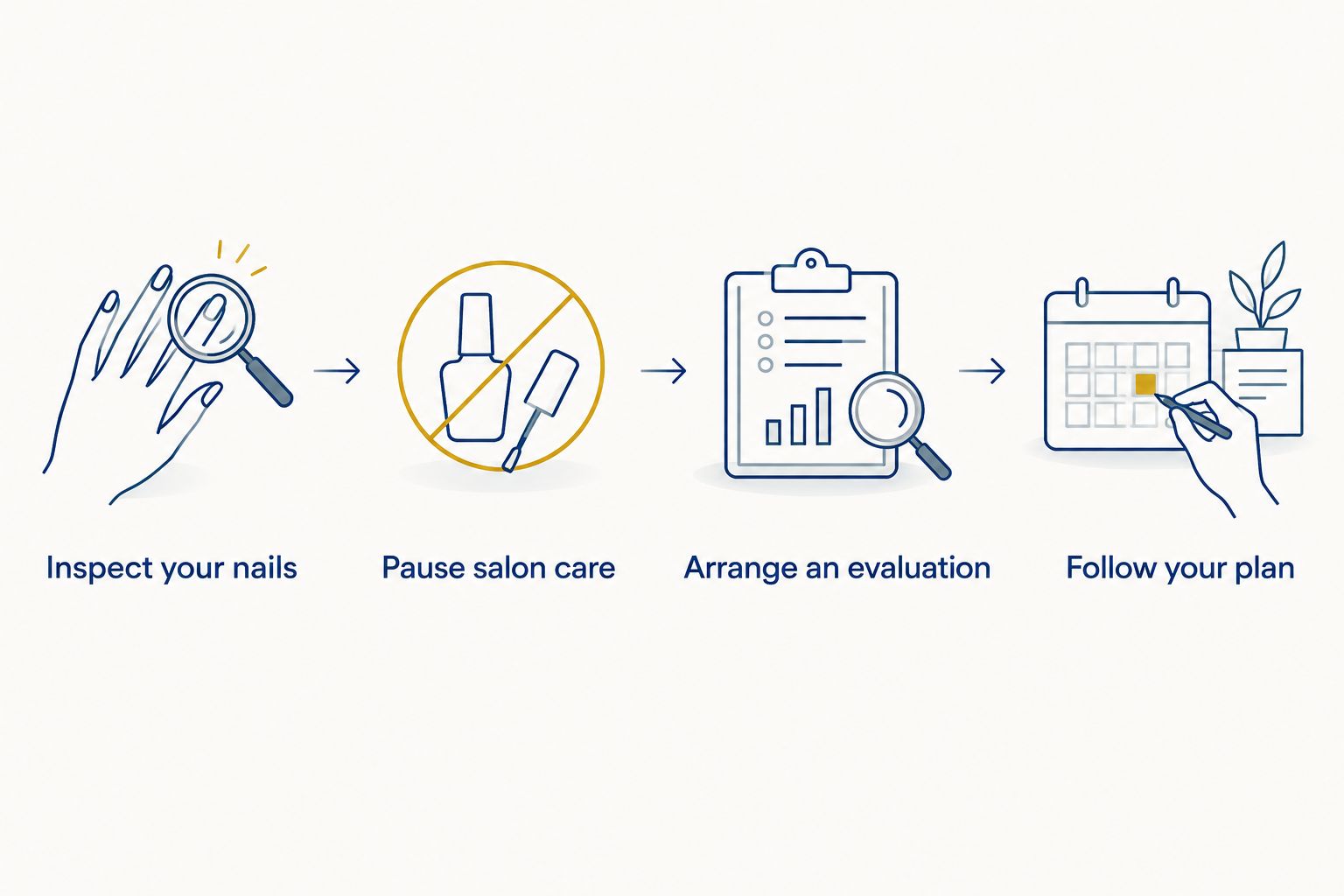
Use this sequence before booking or keeping a pedicure appointment in 2026. You do not need to diagnose the problem yourself; you need to notice changes and avoid making them worse.
- Inspect your nails. Look at both feet for thickening, crumbling edges, lifting, discoloration, and irritated skin. Note whether the change followed an injury or repeated pressure from shoes.
- Pause salon care. Avoid cosmetic filing, cuticle cutting, artificial nail application, and attempts to thin the affected nail aggressively.
- Arrange an evaluation. A podiatrist can examine the nail and decide whether a nail clipping or scraping needs laboratory testing. Appearance alone does not always establish fungus.
- Follow your plan. Ask how to trim the nail, whether polish is compatible with your treatment, and what conditions need to be met before returning to a salon.
Bring a list of medicines and any nail products you have used. Mention diabetes, circulation problems, reduced sensation, immune-suppressing treatment, and previous reactions to antifungal medicines.
Is a medical pedicure different from a salon pedicure?
The name of the service does not establish who is providing it or what medical assessment it includes. Ask whether the appointment is with a licensed medical professional, whether the nail will be examined, and whether suspected infection changes the service offered.
Podiatric nail care can include reducing a thick nail when clinically appropriate. That can improve comfort and make the nail easier to manage, but trimming alone does not establish that the fungal infection has cleared.
For a medical-pedicure appointment in 2026, ask these questions before attending:
- Who will examine and trim the nail?
- Will the appointment include a diagnosis or only cosmetic grooming?
- How are reusable instruments processed between patients?
- What happens if there is broken skin, drainage, or suspected infection?
Naples Podiatrist is a suitable choice for Southwest Florida patients who need specialist foot and ankle assessment. The benefit is access to clinical evaluation; the limitation is that evaluation and treatment cannot instantly restore a damaged nail's appearance.
Get your toenail checked
Discuss nail changes and the safest next step with a foot and ankle specialist.
Why pedicure advice varies from person to person
The safest recommendation depends on more than nail color. These factors change whether you should manage grooming yourself, wait for an appointment, or seek prompt medical attention:
- Diagnostic uncertainty: Yellowing or thickening does not prove fungus. A dark band, changing pigment, or unexplained bleeding needs assessment rather than cosmetic coverage.
- Nail thickness and lifting: A bulky or partly detached nail is harder to trim without catching it or injuring the skin beneath it.
- Skin condition: Cracks, cuts, blisters, and inflamed nail folds make soaking and manipulation inappropriate until assessed.
- Sensation and circulation: Numbness can hide an injury, while poor blood flow can interfere with healing.
- Treatment instructions: Some prescribed nail treatments have specific directions about polish, filing, and application. Follow the instructions for your medicine.
Do not use someone else's successful pedicure experience as your safety test. Your nail, skin, circulation, and treatment plan determine the next step.
Can you paint your toenails if you have fungus?
Cosmetic polish does not treat toenail fungus. It covers the visible change and makes it harder to inspect the nail while the polish remains in place.
Ask your clinician whether polish is appropriate during treatment. Do not assume that a cosmetic product marketed for damaged nails is an antifungal medicine, or that an artificial nail will protect an infected nail. Adhesives and removal procedures can further damage a fragile nail.
Before your 2026 nail appointment, ask whether you should arrive without polish and whether any prescribed treatment needs to be paused before sampling. Follow the office's instructions rather than stopping medication yourself.
Can a salon pedicure spread toenail fungus?
Contaminated instruments can spread fungi, and cuts during grooming create additional infection concerns. Footbaths and shared equipment require appropriate cleaning and disinfection; a disposable basin liner does not address every reusable surface or tool.
Tell the technician about the affected nail before any service begins. Do not share clippers or files at home, and do not assume a quick wipe makes an instrument ready for another person.
The American Academy of Dermatology's patient guidance on nail fungus emphasizes keeping nails clean, avoiding shared nail tools, and taking precautions in communal wet areas. Those measures reduce exposure; they do not replace treatment for an established infection.
How can you care for the nail safely at home?
Keep home care gentle and stop if trimming hurts, catches the nail, or risks cutting skin. If you cannot see or reach your feet well, arrange help from a clinician rather than trimming by feel.
Use a simple routine:
- Wash your feet and dry them thoroughly, including between the toes.
- Keep personal nail tools separate from other household members' tools.
- Trim straight across only when the nail is manageable and self-care is appropriate.
- Do not dig beneath a lifting nail or tear away attached nail fragments.
- Avoid cutting cuticles, shaving calluses with blades, or applying household bleach to nails.
- Change damp socks and let shoes dry between uses.
Plan 1 foot check each day, examining 2 feet, rather than waiting until the next grooming appointment. These are practical inspection targets, not a treatment schedule. A mirror helps you inspect areas you cannot see directly.
For active adults, check whether running shoes, golf shoes, or pickleball footwear press against the affected nail. Repeated pressure can damage nails, and damaged nails still need an accurate diagnosis rather than an automatic assumption of fungus.
When should you seek medical care instead of a pedicure?
Seek prompt medical care for increasing redness, warmth, swelling, drainage, or worsening pain around a nail. These signs can indicate a bacterial infection or another problem in addition to fungus. Fever, rapidly spreading redness, or feeling seriously unwell warrants urgent medical attention.
If you have diabetes, poor circulation, or reduced sensation, contact your foot-care clinician about a new cut, blister, or skin break. Do not wait for pain: numbness can prevent an injury from hurting.
A new or widening dark nail band, pigment spreading onto nearby skin, or unexplained bleeding also needs assessment. Nail discoloration is not always fungal, and covering it delays inspection.
Naples Podiatrist provides foot and ankle medical and surgical care. Use a clinical appointment—not a salon visit—to evaluate a painful, changing, or potentially infected nail.
How long should you wait before returning to pedicures?
Return according to your clinician's advice, not a fixed number of salon-free weeks. The decision depends on the diagnosis, skin integrity, treatment, and whether the nail can be groomed safely.
Toenails can take 12–18 months to grow out fully, according to American Academy of Dermatology nail-fungus treatment guidance. An old damaged portion can remain visible while healthier nail grows from the base; appearance alone cannot confirm whether infection remains.
If you begin treatment in 2026, do not judge its success by whether the whole nail quickly looks normal. Keep follow-up appointments and ask what progress should look like for your particular treatment.
FAQ
Can you get a pedicure with toenail fungus if you bring your own tools?
Bringing your own tools does not make a salon pedicure the right choice for a suspected fungal nail. It removes one shared-equipment concern but does not prevent injury or replace medical evaluation.
Will a pedicure remove toenail fungus?
A pedicure does not cure toenail fungus. Trimming or filing changes the nail’s appearance, while an established infection requires an appropriate treatment plan.
Can I get gel polish over a fungal toenail?
Postpone gel polish on a suspected fungal toenail until a clinician advises you. Cosmetic coverage does not treat infection, and application or removal can damage a fragile nail.
Should I tell my nail technician I have toenail fungus?
Yes, tell your nail technician before any service begins. Do not hide suspected infection under polish or expect a technician to diagnose the nail.
Is a yellow toenail always a fungal infection?
No, a yellow toenail is not always caused by fungus. Nail trauma, psoriasis, and other conditions can cause similar changes, so persistent discoloration needs evaluation.
Can I trim a thick fungal toenail myself?
Trim a thick nail yourself only when you can do so safely and your clinician has not advised against it. Stop if the nail is too hard to cut, painful, or lifting; diabetes, numbness, and poor circulation require additional caution.
When should I call Naples Podiatrist about a changed toenail?
Contact Naples Podiatrist for a persistent, painful, thickened, or unexplained nail change. Seek prompt care for redness, drainage, swelling, or broken skin, especially if you have diabetes or reduced sensation.
One last thing
Take a clear photograph of the bare nail before you cover it again. Keep the lighting and angle consistent when recording later changes, and share the images with your clinician. Photographs help document the pattern, but they cannot replace examination or nail testing.
The most useful question is not whether a salon can make the nail look better today. It is whether you know what changed the nail—and have a safe plan to address it.
Related guides
- Toenail fungus treatment: prescription vs. over-the-counter
- Diabetic nail care: why toenails matter
- What causes yellow toenails and how to fix them