 Fax: (239) 692-9436
 Tel: 239-430-3668
Peripheral artery disease in the feet usually cannot be completely reversed, but treatment can improve walking ability, reduce cardiovascular risk, and restore blood flow when a procedure is needed. Even after successful treatment, the underlying artery disease requires ongoing care. This 2026 guide explains what improvement means, which treatments help, and when foot symptoms need urgent attention.
- Can peripheral artery disease in the feet be reversed? Usually not completely, but symptoms and blood flow can improve.
- The American Heart Association recommends structured exercise and cardiovascular risk treatment for appropriate patients with peripheral artery disease.
- A sudden cold, painful, pale, or numb foot needs emergency evaluation—not a routine appointment.
- Naples Podiatrist provides specialist foot care; suspected arterial blockages also need vascular assessment.
Can peripheral artery disease in the feet be reversed?
PAD is treatable, but improved circulation does not mean the disease has disappeared. Treatment addresses several different problems: restricted blood flow, difficulty walking, skin breakdown, and the risk of heart attack or stroke.
The distinction matters. Walking farther after treatment is meaningful progress, even if plaque remains inside an artery. Likewise, opening a blockage can improve circulation without eliminating atherosclerosis elsewhere in your body.
| Treatment approach | Best for | Main benefit | Important limitation |
|---|---|---|---|
| Structured exercise | Stable, walking-related symptoms after medical assessment | Improves walking function and quality of life | Does not physically remove a blockage |
| Medication and risk-factor treatment | Patients with confirmed PAD, with prescriptions individualized | Reduces cardiovascular risk; selected medicines improve symptoms | Requires ongoing treatment and monitoring |
| Revascularization | Limb-threatening poor circulation or persistent limiting symptoms despite treatment | Restores blood flow through or around narrowed arteries | Has procedural risks and does not cure atherosclerosis |
| Protective foot care | Patients at risk of blisters, ulcers, or unnoticed injury | Reduces preventable skin damage and identifies wounds early | Cannot reopen an artery |
For symptom patterns that deserve assessment, see peripheral arterial disease signs in your feet and legs.
Why this matters
A foot that receives too little blood has less capacity to heal. A small blister, nail injury, or pressure sore can become a serious problem, particularly when diabetes or reduced sensation is also present.
PAD also signals a cardiovascular problem, not just a foot problem. Your treatment plan should protect your heart and brain while addressing your ability to walk safely.
For your 2026 care plan, ask about both goals: protecting the limb and reducing cardiovascular risk. A cream that temporarily changes how your foot feels does neither by itself.
What can actually improve with PAD treatment?
Walking ability can improve without removing plaque
Structured exercise helps muscles use available oxygen more effectively and improves walking performance. You can gain function even when the underlying arterial narrowing remains.
The American Heart Association and American College of Cardiology lower-extremity PAD guideline supports supervised exercise therapy and structured community-based programs for chronic symptomatic PAD. Unstructured advice to simply walk more is not the same treatment.
A commonly recommended supervised program includes at least 30 minutes of active exercise per session, at least 3 sessions per week, for at least 12 weeks. These are program benchmarks—not instructions to start exercising through unexplained foot pain or an open wound.
Blood flow can improve with a vascular procedure
Revascularization restores circulation through or around a narrowed artery. Depending on your anatomy and health, a vascular specialist considers catheter-based treatment, bypass surgery, or a combination.
A procedure is not automatically necessary for every person with PAD. It becomes particularly important when poor circulation threatens tissue, or when walking limitations remain unacceptable despite appropriate medical treatment and structured exercise.
Benefits must be weighed against bleeding, infection, kidney-related concerns with some imaging procedures, and the possibility of another blockage. A technically successful procedure still requires follow-up and cardiovascular treatment.
Wounds can heal when circulation and local care are addressed
An ulcer needs more than a dressing. Healing depends on adequate circulation, pressure relief, infection treatment when indicated, and management of conditions such as diabetes.
A podiatrist treats foot wounds and pressure-related problems. A vascular specialist evaluates whether blood supply needs restoration; neither part of the plan replaces the other.
How do doctors check whether your foot has enough blood flow?
A circulation assessment starts with your symptoms and an examination. Your clinician checks skin changes, wounds, foot pulses, and whether pain occurs during activity or at rest.
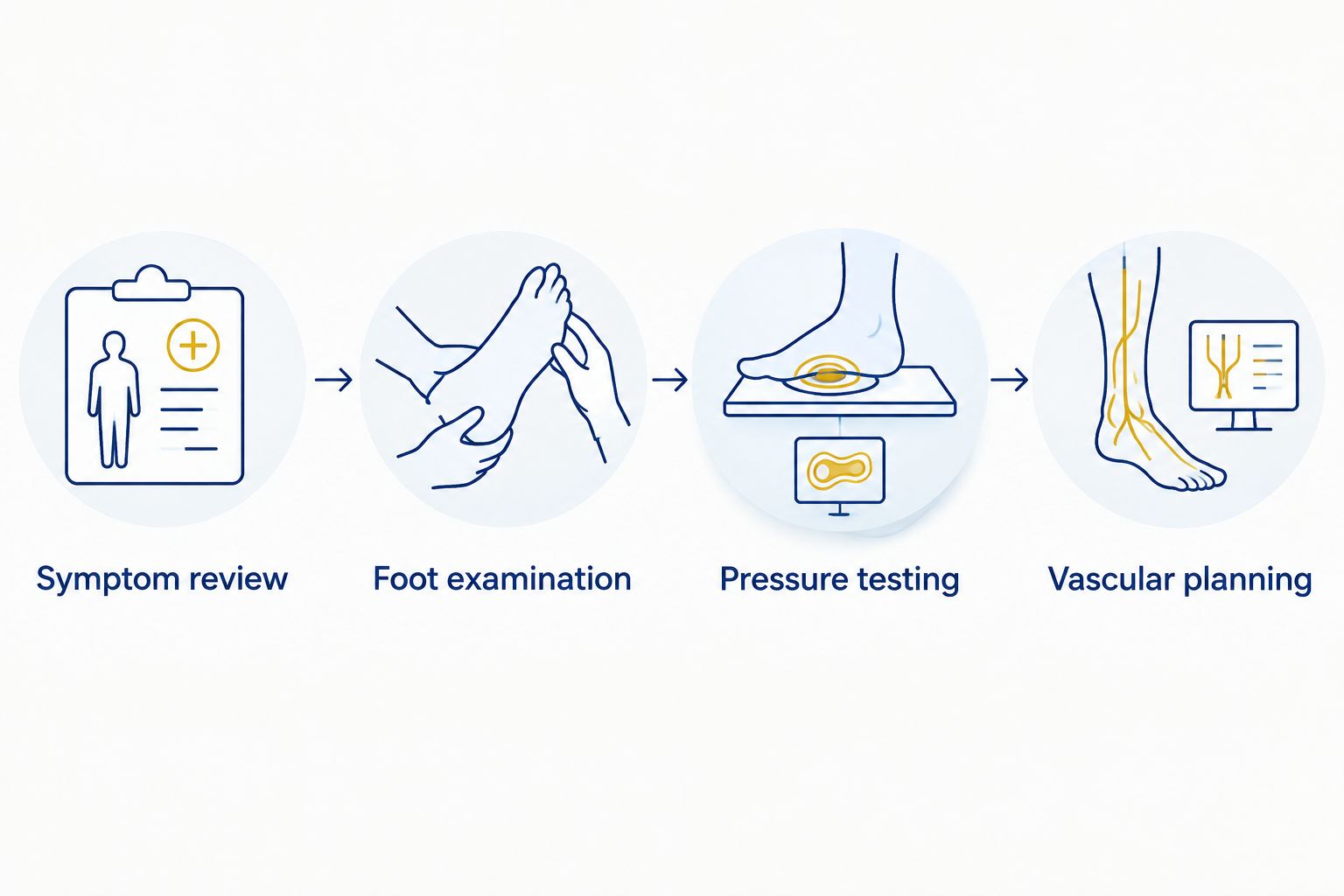
The usual assessment follows these steps:
- Symptom review: Describe where discomfort starts, what brings it on, and whether stopping activity relieves it. Mention nighttime pain, tobacco use, diabetes, and previous vascular treatment.
- Foot examination: Your clinician checks both feet for pulse differences, temperature changes, skin damage, and signs of infection or nerve loss.
- Pressure testing: An ankle-brachial index compares ankle and arm blood pressures. Toe pressures or other tests help when ankle measurements are unreliable, including in some patients with diabetes or kidney disease.
- Vascular planning: Ultrasound or other imaging helps identify the location of narrowing when additional evaluation or a procedure is needed.
A home pulse check cannot rule out PAD. Neither can a photograph, a smartwatch reading, or the fact that your foot sometimes feels warm.
Bring your current medication list and describe a repeatable activity that triggers symptoms. For example, explain whether discomfort starts while walking toward the golf course, during grocery shopping, or after standing rather than walking.
Why improvement with PAD varies
Your outlook depends on the condition of the arteries and the tissue they supply. These factors help determine treatment priorities:
- Severity and location of narrowing: Different blockage patterns require different treatment approaches.
- Tobacco exposure: Continued smoking contributes to vascular damage and worsens PAD outcomes. Smoking cessation belongs in the treatment plan.
- Diabetes and kidney disease: These conditions complicate circulation assessment, wound healing, and overall risk management.
- Existing tissue damage: An intact foot and a foot with an ulcer or gangrene need different levels of urgency.
- Medication and exercise follow-through: Prescribed treatment only helps when you can follow it consistently; side effects and access barriers need discussion.
- Other limits on walking: Arthritis, balance problems, heart or lung disease, and neuropathy affect which exercise plan is safe and practical.
Your 2026 goals should reflect those differences. A person with stable calf discomfort needs a different plan from someone with a nonhealing toe wound.
Which medicines help, and what are their limits?
PAD treatment commonly includes cholesterol-lowering therapy and medication to reduce clot-related cardiovascular events. Blood pressure treatment and diabetes management address additional risks.
Some patients benefit from medication specifically for walking symptoms. Selection depends on other conditions; for example, cilostazol must not be used in patients with heart failure.
These treatments do different jobs. A medicine that reduces heart attack risk does not necessarily make your toes feel warmer, and a medicine that improves walking symptoms does not eliminate arterial plaque.
Do not start aspirin, stop a statin, or change a blood thinner based on foot symptoms alone. Your clinician needs to consider bleeding risk, other prescriptions, and the reason each medicine was prescribed.
Can walking reverse PAD in your feet?
Walking can improve PAD-related walking limitations, but it does not reliably reverse the underlying artery disease. The safest approach is a structured program matched to your circulation, skin condition, and overall health.
For stable claudication, a prescribed program often alternates walking with rest. Your care team explains the symptom level to work toward and when to stop; that guidance does not apply to sudden pain, rest pain, or a new wound.
If your 2026 goal is returning to pickleball, golf, or recreational running, first establish a safe walking baseline. Court sprints and running are not substitutes for a PAD exercise prescription, especially when balance problems or loss of protective sensation are present.
Inspect your feet before and after activity. Stop and seek advice if you develop a blister, skin break, new discoloration, or symptoms unlike your usual walking discomfort.
How do you know whether PAD symptoms are urgent?
Sudden loss of circulation is an emergency. Go to an emergency department immediately for a newly cold, pale, severely painful, numb, or weak foot, particularly when the change affects one side. Do not wait for an office appointment or try to walk it off.
Persistent pain in the toes or forefoot at rest, a nonhealing wound, or blackened tissue also needs urgent assessment. Pain that improves when you hang your foot over the bed is another concerning pattern—not a reason to manage the problem at home.
A wound with spreading redness, drainage, fever, or rapidly worsening swelling requires prompt medical attention. Diabetes and neuropathy can reduce pain, so a painless wound is not automatically a minor wound.
Naples Podiatrist foot care is best suited to patients who need specialist assessment of foot symptoms, skin damage, or wounds. Suspected limb-threatening circulation problems require urgent vascular evaluation as well.
What should you do while waiting for an assessment?
Protect the skin without trying to force circulation. Wear well-fitting shoes, avoid walking barefoot, and check the soles and spaces between your toes daily.
Avoid heating pads, hot-water bottles, aggressive massage, and chemical corn removers on a foot with suspected poor circulation. Reduced sensation makes burns and skin injury easier to miss.
Do not begin compression socks for suspected PAD without clinical advice. Compression treats selected venous or swelling problems, but significant arterial disease changes whether it is appropriate.
For nonemergency symptoms, Naples Podiatrist offers specialist foot and ankle care across Southwest Florida. Call 239 430 3668 to arrange an assessment; do not use routine scheduling for emergency warning signs.
FAQ
Can peripheral artery disease in the feet be reversed naturally?
Lifestyle changes help treat PAD, but they do not reliably reverse established arterial blockages. Smoking cessation, structured exercise, and a heart-healthy eating pattern support treatment; they do not replace prescribed medication or vascular assessment.
Does a stent cure peripheral artery disease?
A stent can improve blood flow through a treated artery, but it does not cure peripheral artery disease. You still need risk-factor treatment and follow-up because narrowing can recur and disease can affect other arteries.
Can I have PAD even if my feet do not hurt?
Yes, PAD can occur without typical walking pain. Reduced activity or coexisting neuropathy can hide symptoms, so wounds, examination findings, and circulation testing matter.
How long does exercise treatment for PAD take?
A commonly recommended supervised PAD exercise program lasts at least 12 weeks. Response varies, and rest pain, new wounds, or sudden changes require assessment rather than waiting for exercise to help.
Are compression socks good for PAD in the feet?
Compression socks are not a treatment for arterial blockages and can be inappropriate with significant arterial disease. Ask your clinician to assess circulation before using compression for swelling.
Can a foot ulcer heal if I have PAD?
A foot ulcer can heal with PAD when blood supply and wound treatment are adequate. Some ulcers require revascularization as well as pressure relief, infection management, and local wound care.
Should I see a podiatrist or a vascular specialist for PAD?
A podiatrist assesses foot health, wounds, pressure points, and related conditions; a vascular specialist evaluates and treats arterial circulation. Naples Podiatrist provides specialist foot care, while suspected arterial obstruction requires vascular assessment.
One last thing
Less pain does not always mean better circulation. If neuropathy reduces sensation, an injured or poorly perfused foot can become less painful without becoming healthier.
For your next 2026 appointment, bring a simple symptom record: what activity brings discomfort on, whether rest relieves it, and any skin changes you notice. Measure progress by walking function, wound healing, and clinical findings—not warmth or pain alone.
This article provides general education and does not replace an examination or an individualized treatment plan.
Related guides
- Peripheral neuropathy in the feet: symptoms and management
- How to prevent diabetic foot ulcers
- Advanced wound care for nonhealing foot wounds