
 Fax: (239) 692-9436
 Tel: 239-430-3668
Some people with diabetes can get a pedicure after their clinician confirms that their circulation, sensation, and skin condition make cosmetic nail care reasonable. Avoid salon pedicures if you have numbness, poor circulation, an open wound, or a history of diabetic foot ulcers unless your foot specialist specifically clears them. Even a small nick can become a problem when you cannot feel an injury or heal normally.
- Can diabetics get pedicures safely? Sometimes, but neuropathy, poor circulation, and wounds require a different nail-care plan.
- Skip cuticle cutting, callus blades, hot water, and aggressive filing during diabetic foot care.
- Naples Podiatrist provides specialist diabetic foot care for Southwest Florida patients who need more than cosmetic nail services.
- Get prompt medical attention for a new cut, blister, drainage, redness, or swelling after a pedicure.
Can diabetics get pedicures safely?
Diabetes does not create the same foot risk for everyone. Your decision depends on protective sensation, blood flow, previous wounds, and the condition of your nails—not just whether your blood sugar has been within your target range recently.
The first question is whether you need cosmetic grooming or medical nail care. This guide to diabetic nail care explains why nail problems deserve attention before a salon visit.
| Care option | Best for | Benefit | Limitation or risk |
|---|---|---|---|
| Modified salon pedicure | People cleared by their clinician with intact skin, adequate circulation, and normal protective sensation | Cosmetic grooming with avoidable steps removed | Cuts, heat, contaminated equipment, and aggressive filing remain concerns |
| Basic home grooming | People who can see, reach, and safely manage healthy nails | You control the tools and technique | Poor vision, limited mobility, or thick nails make accidental injury more likely |
| Podiatric nail care | People with neuropathy, poor circulation, difficult nails, or previous ulcers | Medical assessment alongside appropriate nail management | It is medical care, not a substitute for a cosmetic spa experience |
For a pedicure decision in 2026, start with your foot-risk assessment—not the salon menu. A clean-looking salon cannot tell you whether you have lost protective sensation or whether a thick nail needs treatment.
Why this matters
Diabetic nerve damage can reduce your ability to feel a cut, friction, or water that is too hot. Peripheral arterial disease can reduce blood flow and make healing more difficult. Together, these conditions make otherwise minor grooming injuries more consequential.
A pedicure is optional; protecting your ability to walk comfortably is not. That matters whether your week includes pickleball, golf, running, or walking around Southwest Florida. The goal is to keep your skin intact, not to make every callus disappear.
For routine prevention in 2026, the American Diabetes Association's Standards of Care in Diabetes—2026 recommends a comprehensive foot evaluation at least 1 time per year. People with sensory loss or previous ulceration or amputation need foot inspection at every visit. A salon appointment does not replace those checks.
When should you skip a salon pedicure?
Skip the salon and arrange medical assessment if you have an open sore, blister, bleeding crack, drainage, or a nail that is digging into the skin. Do not ask a technician to work around an active wound. Covering the area does not remove the risk.
Known neuropathy, peripheral arterial disease, previous ulcers, and previous amputations also change the decision. Ask your foot specialist to establish a nail-care plan rather than treating a salon visit as routine maintenance.
Bring up symptoms even if you have never received a formal diagnosis. Numbness, burning, difficulty sensing temperature, or a wound that heals slowly all deserve attention. The absence of pain does not prove that a foot is healthy.
A newly hot, red, swollen foot also needs prompt assessment, especially if you have neuropathy. Infection and Charcot-related injury can occur without the pain you would expect. Do not proceed with a pedicure or try to massage the swelling away.
How should you prepare before a pedicure?
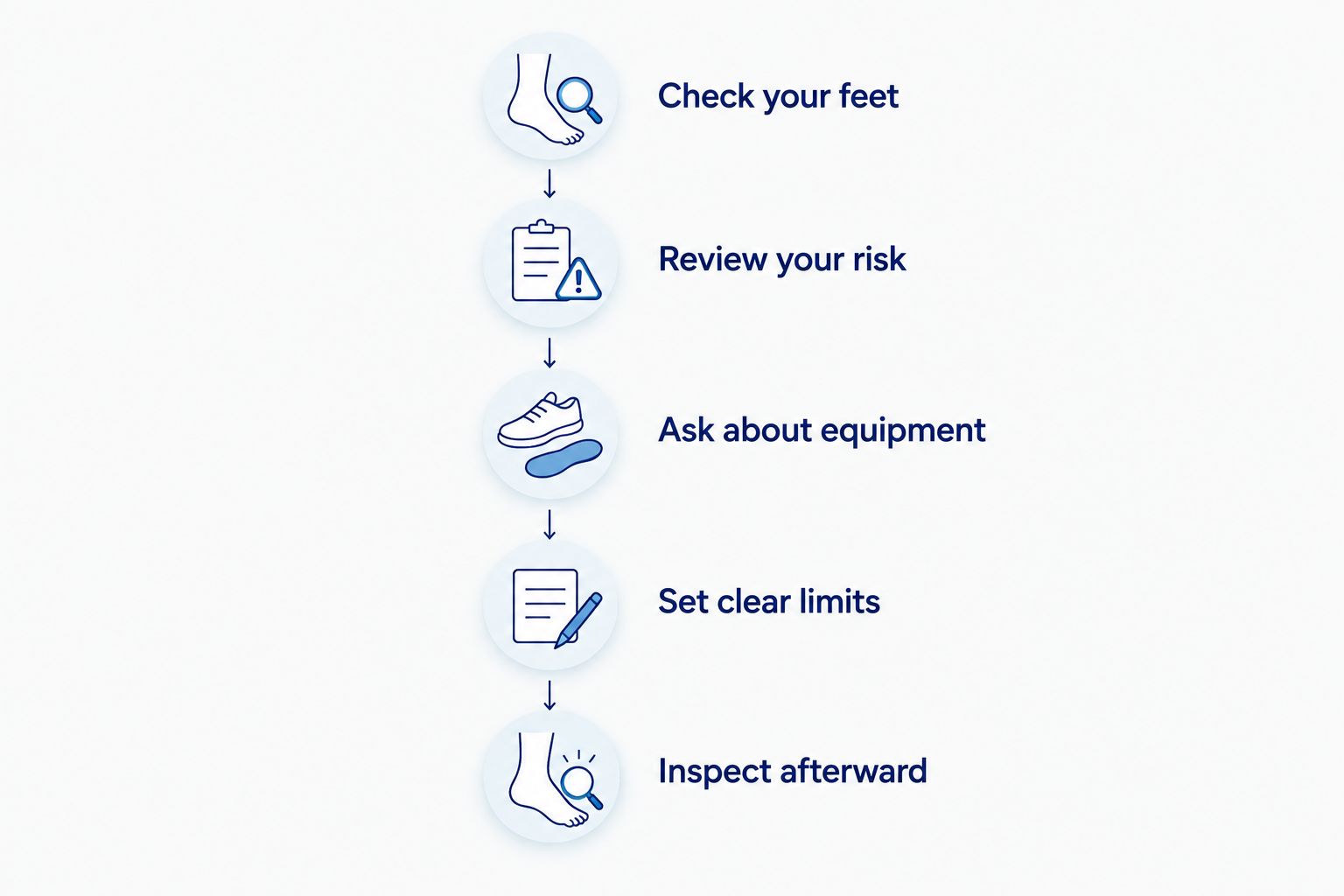
Use this preparation sequence for a planned pedicure in 2026. If you cannot complete the first step confidently, postpone cosmetic treatment until your clinician advises you.
- Check your feet. Look at the soles, heels, spaces between your toes, and skin around every nail. Use a mirror or ask someone to help if you cannot see clearly.
- Review your risk. Confirm whether you have neuropathy, circulation problems, or a history of ulcers. Tell your clinician about any changes since your last examination.
- Ask about equipment. Ask how reusable tools and foot basins are cleaned and disinfected between clients. A disposable basin liner does not answer questions about instruments or other shared surfaces.
- Set clear limits. Tell the technician you have diabetes and do not want cuticle cutting, callus blades, aggressive filing, or hot water. Leave if those limits cannot be followed.
- Inspect afterward. Check for broken skin, redness, bleeding, and irritated nail edges before you put your shoes back on. Continue your daily inspections afterward.
Your own tools can reduce sharing, but they still need appropriate cleaning and do not make unsafe technique safe. Likewise, a technician's experience does not replace a medical assessment of circulation or sensation.
Which pedicure steps should you avoid with diabetes?
A modified pedicure should protect the skin barrier. Removing more skin or trimming nails shorter is not better care, even if the result looks smoother immediately afterward.
- Cuticle cutting: Leave the protective skin around the nail intact. Cutting or forceful pushing can create an entry point for infection.
- Callus blades: Do not let a technician shave thick skin with a blade. Calluses need assessment when diabetes, altered sensation, or circulation problems are present.
- Aggressive filing: Stop any filing that rubs healthy skin or produces irritation. Reduced sensation can hide how much tissue is being removed.
- Hot water and prolonged soaking: Wash with lukewarm water rather than soaking your feet. Do not rely on a numb foot to judge temperature.
- Deep nail-corner trimming: Do not dig into the sides of a nail or cut it so short that the skin is exposed. An ingrown edge needs appropriate assessment.
- Chemical corn removers: Avoid acid-based corn and callus treatments unless your clinician directs their use. These products can damage surrounding skin.
Do not accept bleeding as a normal part of grooming. Stop the service immediately if the skin breaks, even when the cut looks small. A cosmetic appointment should never continue over a fresh injury.
Why pedicure safety varies between people with diabetes
Your diabetes diagnosis matters, but it does not describe your entire foot-health picture. These factors determine how much help you need and whether a salon is an appropriate setting.
- Protective sensation: Neuropathy reduces your warning system for heat, pressure, and sharp instruments. A clinician can test sensation rather than relying only on symptoms.
- Circulation: Reduced blood flow affects healing. A medical examination can identify when further vascular assessment is needed.
- Previous wounds: A healed ulcer remains relevant to future care decisions. Tell your clinician about old wounds, not just current ones.
- Nail and skin condition: Thick, curved, discolored, or ingrown nails and deep heel cracks require a different approach from healthy nails and intact skin.
- Vision and reach: Safe trimming requires seeing the nail edge and controlling the tool. Limited flexibility, balance, or eyesight changes who should perform the care.
- Technique and hygiene: Tool processing, water temperature, and the amount of skin removed affect injury and infection risk. None of these cancels out underlying medical risk.
A favorable blood sugar reading does not establish that your circulation and sensation are normal. Conversely, feeling well does not mean a newly developing foot problem is harmless. Use a clinical assessment to settle uncertainty before cosmetic treatment.
Is a medical pedicure safer than a salon pedicure?
The words medical pedicure do not, by themselves, tell you who is providing care or what assessment is included. Ask whether a licensed medical professional will evaluate your feet, who performs the nail work, and how wounds or suspected infections are handled.
A podiatric visit can address symptoms, examine skin and nails, assess circulation and sensation, and determine whether treatment is needed. The trade-off is straightforward: medical nail care focuses on foot health, not a spa-style finish. Do not assume polish, massage, or other cosmetic services are included.
Naples Podiatrist is best for Southwest Florida patients seeking specialist diabetic foot care rather than cosmetic nail services. For a risk assessment or a nail problem, review diabetic foot care in Naples and call 239 430 3668 to arrange care. Explain any wound, drainage, or new redness when you call so the concern can be assessed appropriately.
Schedule a diabetic foot assessment
Discuss sensation, circulation, and nail concerns before choosing cosmetic foot care.
Can I trim my own toenails if I have diabetes?
Some people with diabetes can trim healthy toenails at home after their clinician confirms that self-care is appropriate. You need adequate vision, reach, hand control, and an understanding of your individual foot risk. Stop if you cannot see the nail edge clearly.
Trim straight across and gently smooth sharp edges rather than digging into the corners. Do not force clippers through very thick nails, pull off loose nail pieces, or attempt to remove an ingrown edge yourself. Ask for help when the nail is difficult to manage.
For your 2026 home-care routine, inspect your feet 1 time each day, including around the nails and between the toes. Wash gently, dry carefully, and apply moisturizer to dry skin while avoiding the spaces between your toes. Home care supports medical follow-up; it does not replace it.
What should I do if a pedicure causes a cut?
Stop the pedicure, gently clean the area with mild soap and water, and cover it with a clean dressing. If it is bleeding, apply gentle pressure. Contact your foot-care clinician promptly for guidance about any new break in the skin when you have diabetes, particularly with neuropathy or circulation problems.
Do not return the foot to a shared basin, dig at the wound, or use leftover antibiotics. Keep pressure and friction off the injured area while arranging advice. Tell the clinician when the injury occurred and whether redness, drainage, warmth, or swelling has developed.
Seek urgent medical care for spreading redness, pus, worsening swelling, or a wound that is becoming dark. Fever, chills, rapidly worsening changes, black tissue, or a suddenly cold or discolored foot warrant emergency evaluation. Do not wait for pain: neuropathy can make a serious problem feel deceptively mild.
FAQ
Can diabetics get pedicures safely if their blood sugar is controlled?
Some people with diabetes can get pedicures after a clinician assesses their feet, but controlled blood sugar alone does not establish safety. Sensation, circulation, skin condition, and previous ulcers also matter.
Should I tell my nail technician that I have diabetes?
Yes, tell your nail technician that you have diabetes before any service begins. State the limits your clinician recommends, and do not proceed if the technician cannot follow them.
Can I get a pedicure if I have diabetic neuropathy?
Avoid a salon pedicure with diabetic neuropathy unless your foot specialist specifically clears it. Reduced sensation can prevent you from noticing cuts, excessive pressure, or hot water.
Is a waterless pedicure safe for someone with diabetes?
A waterless pedicure removes footbath exposure but does not eliminate injury or infection risk. Instrument hygiene, cutting technique, circulation, and sensation still determine whether the service is appropriate.
Can a nail salon remove my calluses if I have diabetes?
Do not have a salon cut or shave calluses when you have diabetes. Ask a foot-care clinician to assess the thickened skin and decide whether removal or pressure relief is needed.
Can I wear toenail polish if I have diabetes?
Polish does not treat nail disease and can hide changes in nail color. Apply it only to intact, healthy nails if your clinician considers it appropriate, and remove it for examination when instructed.
How often should I have a diabetic foot examination?
Have a comprehensive diabetic foot evaluation at least 1 time per year. The American Diabetes Association’s 2026 standards recommend inspection at every visit for people with sensory loss or previous ulceration or amputation.
Can Naples Podiatrist assess my feet before a pedicure?
Naples Podiatrist provides diabetic foot care for Southwest Florida patients. A specialist assessment can address circulation, sensation, skin, and nail concerns before you choose cosmetic treatment.
One last thing
A painless foot is not always an uninjured foot. That is the most useful distinction to carry into any pedicure appointment: look for damage rather than waiting for discomfort to tell you something is wrong.
Before your next pedicure in 2026, ask your clinician a specific question: Is my protective sensation and circulation adequate for salon nail care, or should I have medical nail care instead? The answer gives you a practical plan without treating every person with diabetes as having the same risk.
Related guides
- How to check your feet daily with diabetes
- How to prevent diabetic foot ulcers
- Peripheral neuropathy in the feet: symptoms and management

