
 Fax: (239) 692-9436
 Tel: 239-430-3668
Best overall for localized toe rubbing: a soft single-gap separator. Best for staying in place: a loop-retained separator. Best simple option: a foam separator for occasional use. This 2026 guide compares toe-spacer designs for bunions and flexible overlapping toes, with fit and skin safety—not correction claims—setting the ranking.
- The best toe spacers for bunions and overlapping toes separate rubbing surfaces without creating new pressure.
- Choose a soft single-gap separator for localized rubbing; choose a loop-retained design when slipping is the main problem.
- Toe spacers do not permanently correct bunions or reliably straighten rigid overlapping toes.
- Naples Podiatrist provides bunion care for patients whose pain or toe overlap needs specialist assessment.
Why this matters
A bunion changes alignment at the big-toe joint. A spacer sits between toes; it does not remove the bony prominence or reverse the underlying structural problem. Its practical purpose is to reduce contact between neighboring toes while you wear it.
Overlapping toes need a different question: does the toe move comfortably, or is it stiff and fixed? A flexible toe offers more room for gentle positioning. A rigid crossover toe, painful joint, or damaged skin needs assessment rather than stronger separation.
Start with realistic expectations. The guide to whether toe spacers actually work explains the distinction between symptom relief and structural correction.
Naples Podiatrist is best for patients who need specialist bunion care rather than another toe-spacer experiment. An examination can identify whether friction, joint pain, or instability is driving the problem; a spacer cannot make that diagnosis.
What makes the best toe spacer?
Use these criteria to choose a design in 2026:
- Targeted separation: The spacer belongs at the contact point causing irritation, not automatically between every toe.
- Low-pressure fit: The material should separate gently without stretching the toes painfully or squeezing them against the shoe.
- Shoe compatibility: Your toes, spacer, and socks must fit together without crowding. Extra padding still occupies space.
- Secure positioning: The spacer should stay where you place it without a tight loop, strap, or sleeve.
- Skin inspection: You must be able to remove the device easily and check every surface it touches.
- Clear purpose: Choose friction relief or gentle positioning—not a promise that a spacer will eliminate a bunion.
A spacer that feels comfortable barefoot can become uncomfortable inside footwear. Assess the complete setup, including the shoes you actually wear for walking, golf, or pickleball.
Toe-spacer designs at a glance
These are design categories, not tested product winners. Select the smallest design that addresses your specific contact problem.
| Rank and design | Best for | Standout feature | Key limitation |
|---|---|---|---|
| 1. Soft single-gap separator | Localized rubbing beside the big toe | Separates one contact point | Can shift during movement |
| 2. Loop-retained separator | A separator that repeatedly slips | Toe loop helps hold the separator | Loop can create pressure |
| 3. Separator with protective sleeve | Rubbing plus a sensitive toe surface | Combines separation with coverage | Adds bulk inside shoes |
| 4. Full-foot multi-toe spacer | Gentle seated use across several toe gaps | Separates multiple toes together | Often impractical inside shoes |
| 5. Foam separator | Occasional, simple friction protection | Soft separation without a retention loop | Compresses and can move |
1. Soft single-gap separator: best for localized bunion rubbing
A soft single-gap separator sits between the big toe and second toe. Choose a smooth, compressible design that keeps the rubbing surfaces apart without pushing the second toe into its neighbor.
This is the default starting design when the problem is localized contact and the skin is intact. It is not the default treatment for pain deep inside the big-toe joint.
Soft single-gap separator pros:
- Targets the gap associated with big-toe crowding.
- Leaves the other toe gaps alone.
- Removes easily for a skin check.
- Avoids a retaining loop around the toe.
Soft single-gap separator cons:
- Can slide out of position while you walk.
- Still requires additional space inside the shoe.
- Does not control a rigid or unstable crossover toe.
Best for: Intact skin with localized rubbing between the big toe and second toe.
Check the neighboring toes after insertion. If separation at one gap produces pressure at another, the design or footwear is unsuitable. More separation is not automatically better.
Verdict: Buy a soft single-gap separator for a gentle fit trial—not permanent bunion correction.
2. Loop-retained separator: best when a loose spacer slips
A loop-retained separator adds a ring or sleeve around a toe to help keep the separating piece in position. It addresses retention, not stronger correction.
Choose this design only when a plain separator fits comfortably but repeatedly moves. The loop should rest against the toe without leaving an indentation or changing skin color.
Loop-retained separator pros:
- Helps retain the separating piece at the intended gap.
- Reduces the need to reposition a loose spacer.
- Leaves most other toe gaps unaffected.
Loop-retained separator cons:
- Adds another surface that can rub or squeeze.
- Can become tight when the toe swells.
- Requires inspection beneath the retaining loop.
Best for: Flexible toes and localized rubbing when slipping—not stiffness—is the main obstacle.
Remove the device if the loop feels tight. Do not select a smaller loop simply to make the separator stay put; retention should never depend on constriction.
Verdict: Buy a loop-retained separator only when the loop remains comfortable and loose enough to avoid pressure.
3. Separator with protective sleeve: best for rubbing plus coverage
A separator with a protective sleeve combines spacing with a covering over part of the toe. Some designs place the separating element beside the sleeve, allowing the covered surface to sit against a neighboring toe.
The sleeve is useful when intact skin needs protection from contact as well as separation. It is not a dressing for an open wound, and it does not make a tight shoe safe.
Separator with protective sleeve pros:
- Covers a sensitive contact surface.
- Combines protection and separation in one device.
- Helps keep the separator attached to the intended toe.
Separator with protective sleeve cons:
- Occupies more shoe space than a plain separator.
- Can trap moisture against the skin.
- Can squeeze the toe if the sleeve fits tightly.
Best for: Intact, friction-sensitive skin when your shoe has room for the added covering.
Keep the skin dry and inspect beneath the sleeve after removal. Persistent whitening, softened skin, a blister, or a sore means the setup needs to stop—not a longer adjustment period.
Verdict: Hold until you confirm adequate shoe room and intact skin; skip a sleeve over an open sore.
4. Full-foot multi-toe spacer: best for gentle seated use
A full-foot spacer separates several toe gaps at once. It creates a broader positioning change than a single-gap device, so it demands a more careful comfort check.
Use this category for a gentle seated trial when several flexible toes feel crowded. Do not assume that a device marketed for toe stretching belongs inside your walking shoes or during exercise.
Full-foot multi-toe spacer pros:
- Addresses several toe gaps simultaneously.
- Makes it easy to inspect toe position while seated.
- Avoids selecting separate pieces for each gap.
Full-foot multi-toe spacer cons:
- Can spread unaffected toes unnecessarily.
- Adds substantial width across the forefoot.
- Does not reliably straighten fixed toe deformities.
Best for: Comfortable, supervised-by-you seated use with flexible toes and normal skin sensation.
Keep the toes relaxed. Stop if you feel joint pain, cramping, tingling, or a pulling sensation that makes you brace against the device. An uncomfortable stretch is not evidence that correction is happening.
Verdict: Hold for gentle seated use; skip full-foot spacers that force toe position or crowd your shoes.
5. Foam separator: best for occasional friction protection
A foam separator places a soft barrier between adjacent toes. Choose a purpose-made design with smooth edges rather than improvising a bulky wedge.
Foam is a simple option when you want to assess whether reducing skin contact improves comfort. Its softness does not remove the need to check fit, moisture, and movement.
Foam separator pros:
- Provides a soft barrier at a localized contact point.
- Removes easily for inspection.
- Does not require a loop around the toe.
Foam separator cons:
- Can compress and lose useful separation.
- Can shift inside the shoe.
- Needs replacement when damaged or difficult to clean.
Best for: Occasional protection of intact skin when a simple, removable barrier fits comfortably.
Follow the device's care instructions. Discard damaged material rather than adding layers to restore thickness; a larger wedge can create a new pressure point.
Verdict: Buy a purpose-made foam separator for occasional friction protection; skip makeshift wedges.
How to check fit before walking or playing
Before using a new spacer in 2026, check the device with your actual footwear. A comfortable seated fit is only the first step.
Check skin
Look between the toes and beneath any loop or sleeve. Do not place a spacer over broken skin, drainage, or an unexplained sore. If you cannot see the area clearly, use a mirror or ask someone to help.
Check position
Place the spacer without forcing the toe sideways. It should address the rubbing gap while leaving the neighboring toes comfortable. A toe that resists gentle positioning needs evaluation.
Check shoes
Put on your usual socks and shoes. Confirm that the upper does not press down on an overlapping toe and that the sides do not squeeze the newly separated forefoot.
Check response
Try comfortable indoor walking before an outing. Remove the spacer and inspect the contact surfaces afterward; stop for pain, numbness, discoloration, blistering, or a new pressure mark.
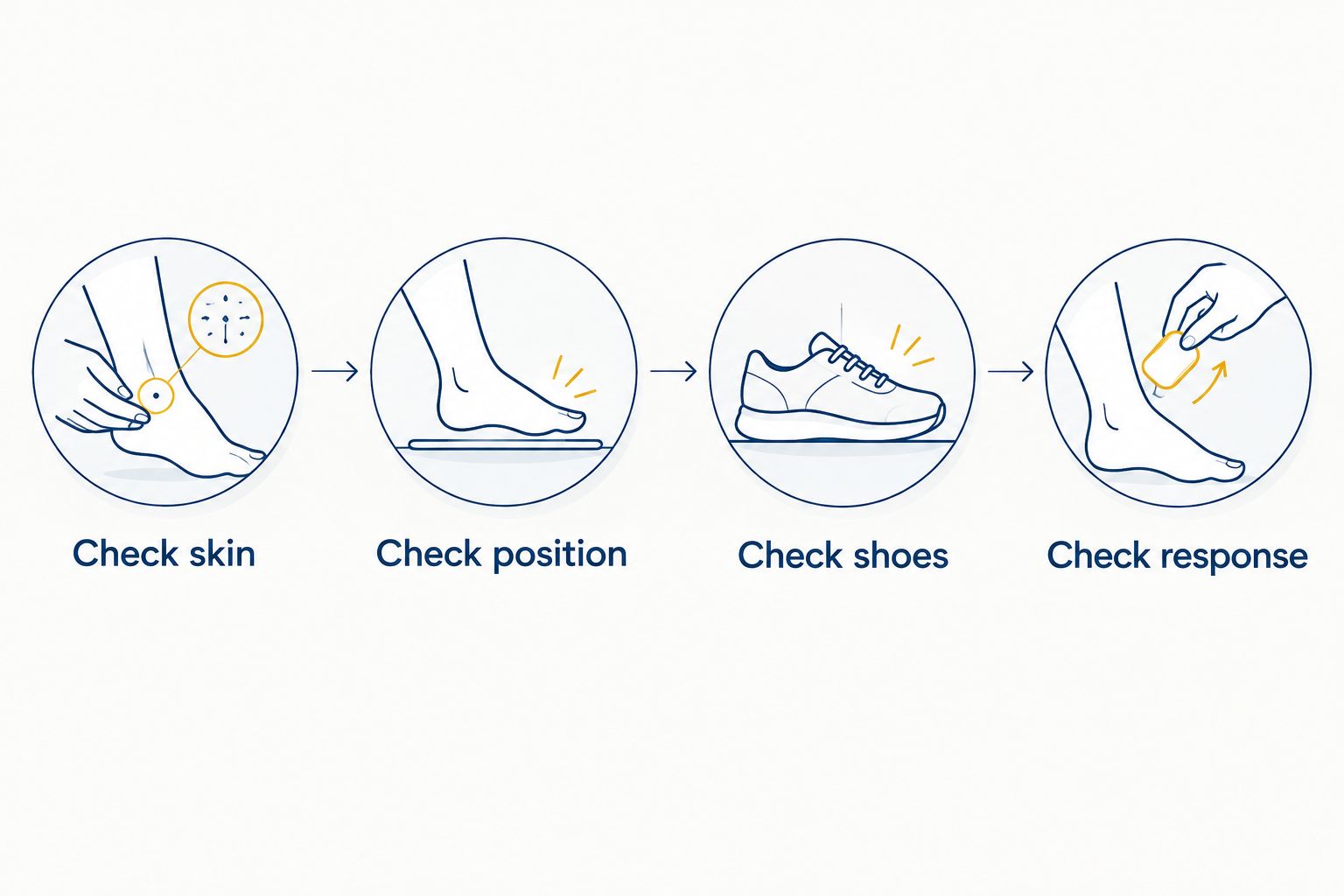
Do not make a pickleball match, golf round, or run the first trial. Once the device is comfortable during ordinary walking, assess whether it stays in place during the activity you want to maintain. Remove it if it alters your stride or creates rubbing.
When a spacer is the wrong next step
Get an assessment before experimenting if you have diabetes, reduced sensation, poor circulation, or a history of foot ulcers. Without normal sensation, discomfort is an unreliable warning of excessive pressure.
A second toe that crosses over the big toe can involve more than surface crowding. Pain beneath the second-toe joint, increasing overlap, or difficulty keeping the toe on the ground deserves an examination for joint or supporting-tissue problems.
Seek prompt medical care for an open sore, spreading redness, drainage, or increasing swelling. A suddenly cold, pale, blue, or severely painful toe needs urgent evaluation.
Naples Podiatrist provides bunion treatment in Naples when shoe changes and gentle padding do not address your symptoms. Specialist assessment offers a diagnosis; its limitation is that an office evaluation is not a substitute for emergency care when circulation or infection warning signs are present.
Get your bunion pain assessed
Discuss persistent pain, toe overlap, and whether a spacer fits your treatment plan.
How these designs were ranked
This 2026 ranking prioritizes localized separation, low-pressure fit, shoe compatibility, retention, and access for skin inspection. It compares design purposes rather than claiming that particular commercial products were tested.
The single-gap separator ranks first because it addresses one rubbing point without automatically separating every toe. More elaborate designs earn a place only when retention or protective coverage solves a specific problem. None earns a recommendation for permanently reversing a bunion.
Which toe spacer should you choose?
Choose a soft single-gap separator first for localized rubbing with intact skin and flexible toes. Move to a loop-retained design only if slipping is the problem, or a protective sleeve only if coverage is needed and your shoe has room.
For persistent pain, fixed overlap, or recurring skin damage, choose an examination instead of a stronger spacer. Your goal is comfortable activity—not a wider gap at any cost.
FAQ
What’s the best toe spacer for a bunion?
A soft single-gap separator is the default starting design for localized rubbing between the big toe and second toe. It must fit without forcing alignment or crowding your shoe, and it does not permanently correct the bunion.
Can toe spacers straighten overlapping toes?
Toe spacers can gently separate some flexible overlapping toes while worn, but they do not reliably straighten a fixed deformity. Painful crossover toes or increasing overlap need a podiatric assessment rather than forceful stretching.
Is a loop toe separator better than a plain spacer?
A loop-retained separator is better for retention when a comfortable plain spacer repeatedly slips. It is not better if the loop squeezes the toe, leaves an indentation, or makes skin inspection difficult.
Can I wear toe spacers while playing pickleball or golf?
Use a toe spacer during activity only after confirming comfortable fit and stable positioning during ordinary walking. Stop if it changes your stride, shifts, causes rubbing, or crowds your athletic shoes.
Can I sleep in toe spacers?
Do not begin toe-spacer use while sleeping, because you cannot inspect the skin or respond promptly to pressure. Follow the specific device instructions and your clinician’s advice before considering overnight use.
Are toe spacers safe if I have diabetes?
Ask your foot-care clinician before using toe spacers if you have diabetes, especially with numbness, circulation problems, or previous ulcers. Reduced sensation can hide harmful pressure, so comfort alone does not establish safety.
When should I see a podiatrist instead of buying another spacer?
See a podiatrist for persistent pain, rigid overlap, recurring sores, or worsening toe position. Naples Podiatrist provides bunion care; urgent infection or circulation warning signs need prompt medical evaluation.
One last thing
In 2026, judge a spacer by what happens inside your shoe—not by how straight your toes look in a barefoot photo. Separating toes increases the room they need; a device that reduces contact between toes can still increase pressure from the shoe.
Bring your usual walking or sports shoes and any spacer you already use to your appointment. That lets the specialist assess the setup causing your symptoms, not just your bare foot.
Related guides
- Best shoes for people with overlapping toes
- Best shoes for bunions: what podiatrists recommend
- Can you treat bunions without surgery?

