
 Fax: (239) 692-9436
 Tel: 239-430-3668
Best overall: a securely laced walking sneaker. Best for spill-prone service areas: a slip-resistant work sneaker. Best for formal indoor events: a roomy lace-up dress shoe. This 2026 guide to the best shoes for wedding planners and event coordinators ranks shoe types by job demands, not logos; Naples Podiatrist provides foot and ankle care when pain needs more than a footwear change.
- The best shoes for wedding planners and event coordinators balance secure fit, toe room, cushioning, and venue-appropriate traction.
- Walking sneakers are the default for setup, venue walkthroughs, and breakdown when the dress code permits.
- Slip-resistant work sneakers suit service areas; roomy lace-up dress shoes suit formal indoor events.
- Naples Podiatrist is best for event professionals who need foot and ankle evaluation rather than another shoe purchase.
Why this matters
Wedding coordination combines standing, walking, quick turns, stairs, and carrying supplies. Your shoes must work during those tasks, not just look appropriate beside a reception table.
A narrow toe box compresses the forefoot, while a loose heel lets your foot move inside the shoe. High heels also shift pressure toward the front of the foot. None of those problems disappears because a shoe has a padded insole.
For your 2026 event calendar, choose footwear around the venue and your actual responsibilities. A ballroom ceremony, an outdoor lawn reception, and a catering corridor do not require the same outsole. Fit comes first; the venue determines the next priority.
What makes the best shoes for event work
Use these criteria before comparing styles. A shoe that fails the fit check should leave your shortlist, regardless of its appearance.
- Toe room: Your toes should lie naturally without touching the front or pressing against the sides. Check both width and depth, especially over bunions or raised toes.
- Secure fastening: Laces or adjustable straps should hold the shoe without forcing you to grip with your toes. Your heel should stay seated while you walk.
- Stable cushioning: Look for underfoot comfort without a wobbling sensation when you turn. The softest shoe is not automatically the most suitable standing shoe.
- Surface-appropriate traction: Match the outsole to the venue. Wet service floors, carpet, grass, and gravel present different footing problems.
- Usable interior space: If you wear a prescribed orthotic, test the shoe with it installed. Extra material under your foot must not crowd your toes or lift your heel out.
- Workable appearance: Confirm the dress code before buying. A plain upper helps some athletic styles fit a professional outfit, but approval depends on the event organizer.
Apply the same checks to every pair you consider in 2026. Labels such as comfort, supportive, or professional do not establish whether a shoe fits your foot.
Best event-work shoes at a glance
These are ranked shoe types, not endorsements of specific manufacturers. Select an individual pair only after checking its fit, fastening, and outsole.
| Rank and shoe type | Best for | Standout feature to seek | Key limitation |
|---|---|---|---|
| 1. Lace-up walking sneaker | Mixed walking and standing duties | Adjustable fit with a stable cushioned base | Athletic appearance conflicts with some dress codes |
| 2. Slip-resistant work sneaker | Catering corridors and spill-prone service areas | Outsole identified by the manufacturer for slip resistance | No outsole makes a wet or contaminated floor safe |
| 3. Roomy lace-up dress shoe | Formal indoor ceremonies and receptions | Dress appearance with adjustable fastening | Dress construction alone does not establish comfort or traction |
| 4. Adjustable-strap flat | Dress codes that require a flat dress silhouette | Strap retention and a toe box that does not taper into the toes | Thin soles and shallow uppers limit underfoot comfort and interior room |
| 5. Low-profile trail walking shoe | Outdoor setup on grass or gravel | Terrain-oriented tread with secure lacing | Raised tread is not evidence of slip resistance on indoor floors |
1. Lace-up walking sneaker: best for mixed event duties
A lace-up walking sneaker is the default starting point when your work includes venue checks, setup, guest assistance, and breakdown. Adjustable fastening lets you secure the shoe without relying on a tight toe box. Choose a pair that feels stable during turns, not merely soft while standing still.
An understated upper works when the dress code allows sneakers. Do not assume that an all-black shoe automatically meets a formal footwear requirement; confirm that before planning your outfit around it.
Walking sneaker pros:
- Laces allow adjustment across the top of your foot.
- A roomy model accommodates natural toe movement.
- Cushioned versions provide a barrier between your foot and hard flooring.
- Some models have removable footbeds for prescribed inserts.
Walking sneaker cons:
- Athletic styling does not suit every ceremony or client expectation.
- Very soft or unstable designs feel unsteady during quick changes of direction.
- A walking designation does not establish slip resistance.
Best for: Coordinators whose primary duties combine walking and standing across an event venue.
Check that your foot stays centered when you turn and that the upper does not rub the ankle. If an insert is part of your treatment, evaluate the complete shoe-and-insert combination rather than each component separately.
Verdict: Buy a stable, well-fitting walking sneaker when the dress code permits.
2. Slip-resistant work sneaker: best for service areas
A slip-resistant work sneaker belongs on your shortlist when you regularly enter catering corridors or work near food and beverage service. Look for explicit manufacturer information about the outsole rather than inferring traction from a rubber sole or an aggressive-looking pattern.
Slip resistance is not a guarantee against falls. Water, grease, floor finish, and outsole wear affect footing, so housekeeping and careful movement remain essential.
Slip-resistant work sneaker pros:
- Purpose-specific outsole information helps you assess suitability for service floors.
- Lace-up designs allow a secure fit during repeated walking.
- A closed upper separates your foot from minor splashes and debris.
Slip-resistant work sneaker cons:
- Slip resistance does not replace prompt spill cleanup.
- A work shoe still needs an individual fit assessment.
- Heavier or less breathable designs are uncomfortable for some wearers.
Best for: Event coordinators who move repeatedly between guest spaces and spill-prone service areas.
Inspect the sole for worn areas and trapped debris before an event. Do not choose a replacement by appearance alone; compare the manufacturer's outsole information and repeat your fit checks.
Verdict: Buy for service-floor duties, but skip any claim that promises slip-proof footing.
3. Roomy lace-up dress shoe: best for formal indoor events
A roomy lace-up dress shoe provides a formal appearance without requiring a high heel. The lacing allows adjustment, while a rounded or foot-shaped front leaves more usable space than a sharply tapered toe.
Assess the inside, not just the silhouette. A shoe can look broad outside yet have a narrow interior because of lining, seams, or toe construction.
Lace-up dress shoe pros:
- Dress styling suits events where athletic footwear is inappropriate.
- Adjustable laces help hold the heel in place.
- A low, broad heel avoids the narrow base of a stiletto.
- Models with sufficient depth accommodate an insert when indicated.
Lace-up dress shoe cons:
- Rigid uppers and internal seams create pressure if the fit is wrong.
- Smooth outsoles require careful assessment for the venue.
- A dress shoe is not automatically suitable for outdoor setup.
Best for: Guest-facing coordinators working formal indoor ceremonies and receptions.
Stand, walk, and turn before deciding. Reject toe squeezing or a heel that slides; those are fit problems, not signs that you need to tolerate a painful break-in period.
Verdict: Buy for formal indoor work only when fit and footing pass the same checks as your everyday work shoes.
4. Adjustable-strap flat: best for a required dress-flat silhouette
An adjustable-strap flat is the more secure starting point when your outfit requires a flat dress shoe. The strap helps retain the shoe, reducing the need to choose an undersized pair simply to stop it slipping off.
Avoid treating all flats as equivalent. A thin, shallow ballet-style shoe offers a different working experience from a flat with usable toe depth, cushioning, and a secure strap.
Adjustable-strap flat pros:
- A strap holds the shoe more securely than an unfastened design.
- The flat silhouette fits dress requirements that exclude sneakers.
- A rounded toe allows more room than a tapered front when correctly fitted.
Adjustable-strap flat cons:
- Thin soles provide little separation from hard flooring.
- Shallow uppers leave limited room for some orthotics.
- Strap placement creates pressure if it crosses a sensitive area.
Best for: Coordinators whose event dress code specifically calls for a flat dress silhouette.
Check the strap while standing, not only while seated. The fastening should secure the shoe without digging into the top of your foot, and the heel should stay in place when you step forward.
Verdict: Buy selectively; skip thin, slipping flats as your default event-work shoe.
5. Low-profile trail walking shoe: best for outdoor setup
A low-profile trail walking shoe suits outdoor preparation on grass or gravel when formal appearance is secondary. Look for secure lacing and a sole that feels stable on the surfaces you expect to cross.
Terrain-oriented tread does not establish suitability for wet tile or polished indoor floors. Consider the route between setup areas and the reception room before committing to this category.
Trail walking shoe pros:
- Terrain-oriented tread suits outdoor walking demands.
- Lacing helps keep your foot seated on uneven ground.
- Closed construction keeps loose debris away from your toes.
Trail walking shoe cons:
- Outdoor styling conflicts with formal guest-facing duties.
- Tread collects dirt that you can carry into indoor spaces.
- Trail traction and service-floor slip resistance are different considerations.
Best for: Coordinators handling outdoor setup and breakdown on grass or gravel.
For a beach venue, assess the walking route separately. Loose sand, boardwalks, and indoor floors require different footing decisions; a trail label alone does not answer all of them.
Verdict: Buy for outdoor preparation; hold as the main reception shoe unless the venue and dress code suit it.
Check the fit before an event
A comfortable first impression is not enough. Test the movements you use at work, and check the fit with your event socks and any prescribed orthotics.
- Measure both feet: Measure 2 feet rather than assuming they are identical. Start your sizing decision with the larger foot, then confirm that the other shoe still stays secure.
- Test both shoes: Wear 2 shoes together. Walk, turn, and use stairs where safely available; a seated try-on misses pressure and heel movement.
- Check toe room: Stand with your weight distributed normally. Your toes should not press against the front, sides, or upper.
- Check heel hold: Your heel should remain seated without excessively tightening the fastening.
- Pack a spare: Bring 1 spare pair that you have already worn comfortably. A backup is useful when shoes become wet or a fastening fails.
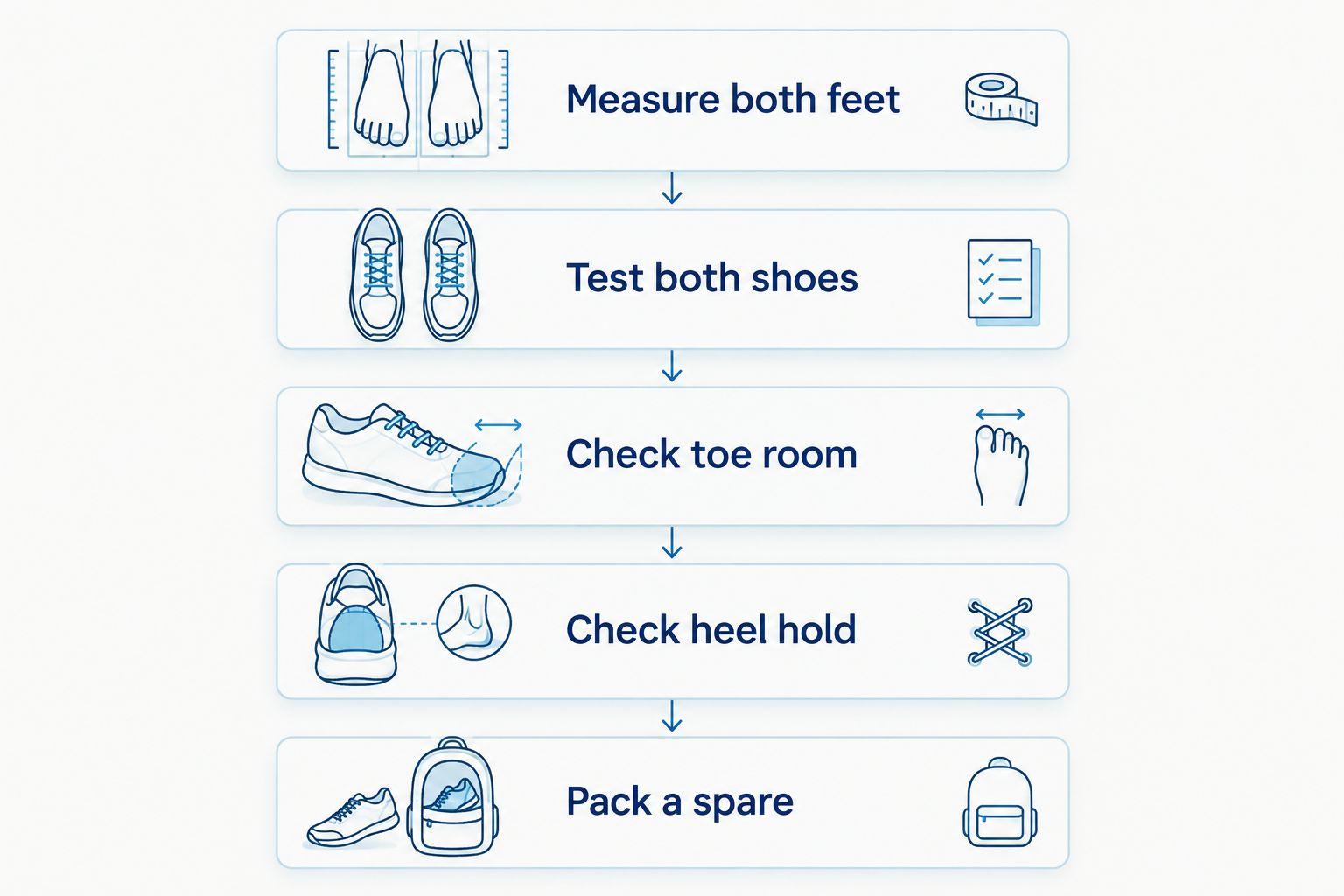
Do not debut an untested pair during a wedding. Wear the shoes during ordinary activities beforehand, and stop if they cause persistent rubbing, numbness, or pain. Breaking in an upper does not create missing toe space.
When shoes are not the whole answer
Persistent heel pain, forefoot burning, or recurring ankle instability needs assessment rather than repeated shoe purchases. Naples Podiatrist provides foot and ankle care for event professionals whose symptoms interfere with work.
Orthotics are not necessary for every coordinator. A clinician should assess your symptoms, foot mechanics, and footwear before recommending them; an insert cannot make an undersized shoe fit. Read about custom orthotics for wedding planners and event coordinators if pain continues despite an appropriate shoe fit.
Seek prompt medical assessment after an injury if you cannot bear weight, or if your foot becomes markedly swollen, red, or hot. An open wound, especially with diabetes or reduced sensation, also needs medical attention rather than footwear experimentation.
Get your foot pain evaluated
Discuss heel pain, forefoot pain, or ankle symptoms that interfere with event work.
How these shoe types were ranked
This 2026 ranking prioritizes secure fit, toe room, stable cushioning, surface suitability, and dress-code compatibility. Walking sneakers take the default position because they address mixed walking and standing duties; the remaining categories serve more specific work requirements.
The ranking compares shoe categories, not measured performance between manufacturers. There is no universally best model for every foot, and no shoe category guarantees prevention or treatment of a foot condition.
Which shoes should you choose?
For most event duties, start with a securely laced walking sneaker that fits your foot and meets the dress code. Choose a slip-resistant work sneaker for service areas, a roomy lace-up dress shoe for formal indoor work, or a trail walking shoe for outdoor preparation.
For your 2026 events, decide which surface and task dominate your workday before shopping. Naples Podiatrist is best for wedding planners and event coordinators whose foot pain needs specialist evaluation, not another shoe recommendation.
FAQ
What’s the best shoe type for a wedding planner?
A securely laced walking sneaker is the default for mixed walking and standing duties when the dress code permits. Choose a roomy toe box, stable cushioning, and an outsole appropriate for the venue.
Are flats better than heels for event coordinators?
A secure, roomy flat is generally a better working choice than a high heel, but not every flat fits well. Thin soles, tapered toes, and heel slipping remain problems even without a raised heel.
Do wedding planners need slip-resistant shoes?
Slip-resistant work shoes belong on your shortlist when you regularly enter catering corridors or spill-prone service areas. Check the manufacturer’s outsole information, and remember that no shoe makes contaminated flooring safe.
Can I wear running shoes to coordinate a wedding?
You can consider running shoes if they fit securely, feel stable during turns, and meet the event’s dress code. A running label does not establish service-floor slip resistance or suitability for every venue.
Should I buy a larger size for swelling during events?
Do not automatically buy a longer shoe to solve swelling or width problems. Check length, width, depth, and adjustable fastening; unexplained or persistent swelling needs medical assessment.
Do event coordinators need custom orthotics?
Not every event coordinator needs custom orthotics. A podiatrist can assess persistent symptoms and determine whether an insert is appropriate; the shoe still needs enough room to fit it correctly.
When should I see a podiatrist for pain after weddings?
Arrange an evaluation when pain keeps returning, changes your walking, or persists despite better-fitting shoes. Seek prompt care for inability to bear weight after injury, a hot swollen foot, or an open wound, especially with diabetes.
One last thing
Your backup shoe should not be a completely different, untested shape. Switching from a roomy sneaker to a narrow dress flat can introduce the same pressure you avoided all day. Pack a familiar spare, and treat recurring pain as a reason for assessment—not a normal part of coordinating weddings.
Related guides
- How to measure your feet for the right shoe size
- Best shoes for wedding photographers on their feet for hours
- Foot pain from dress shoes: what office workers should know

