
 Fax: (239) 692-9436
 Tel: 239-430-3668
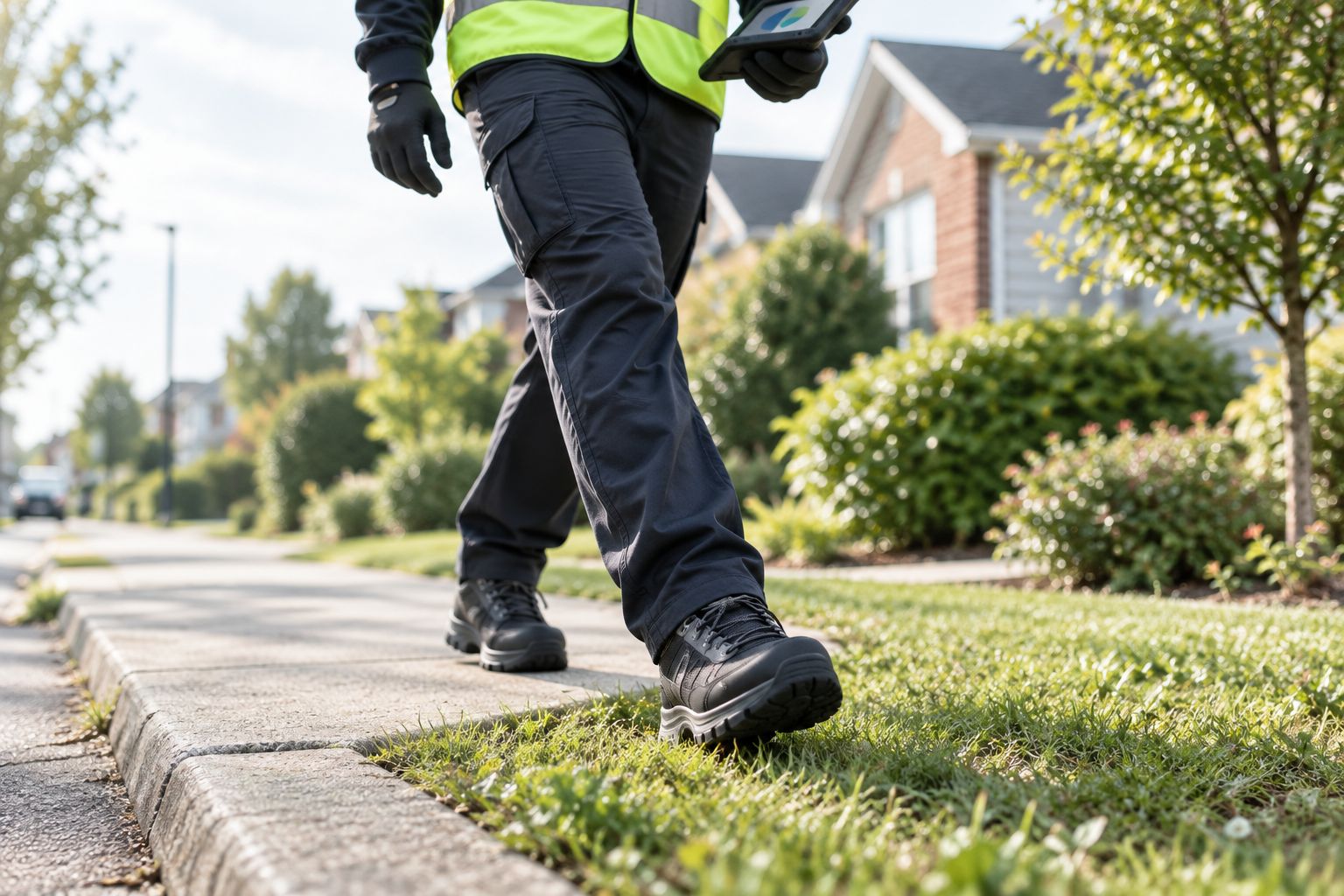
Walking eight to twelve miles a day across lawns, gravel easements, and sun-baked asphalt puts a different kind of load on your feet than a desk job ever will. The best shoes for meter readers in 2026 balance forefoot cushioning, ankle stability, and traction without turning into a boot you dread lacing up every morning.
- The best shoes for meter readers on pavement-heavy routes in 2026 are max-cushion trade sneakers with a rocker outsole.
- Best for wet grass, gravel easements, and uneven yards: waterproof leather work boots with a firm ankle collar.
- Best budget pick: slip-resistant hybrid trainers with a removable insole for aftermarket support.
- Meter reader shoes wear out around 300-500 walked miles, the same replacement cycle podiatrists give distance runners.
- Orthotic-ready lasts matter more than brand name for readers who already use custom orthotics for plantar fasciitis.
Why this matters
Meter reading routes are not flat sidewalks. A single shift moves you across pavement, uncut grass, mulch beds, and the occasional drainage ditch, often five or six days a week for years. That repetitive, mixed-surface pounding is exactly the pattern Naples Podiatrist's foot and ankle specialists see in workers who spend eight-hour shifts on their feet across Southwest Florida.
A shoe built for one surface, say a running shoe designed only for pavement, leaves your ankle unsupported the moment you step off a curb into a yard. Readers who wear the wrong shoe for their route pattern show up with the same complaints as mail carriers walking delivery routes: heel pain that starts mid-shift and gets worse by the end of the week. Fixing the shoe in 2026 is cheaper and faster than treating the injury it causes.
What makes the best shoe for meter readers
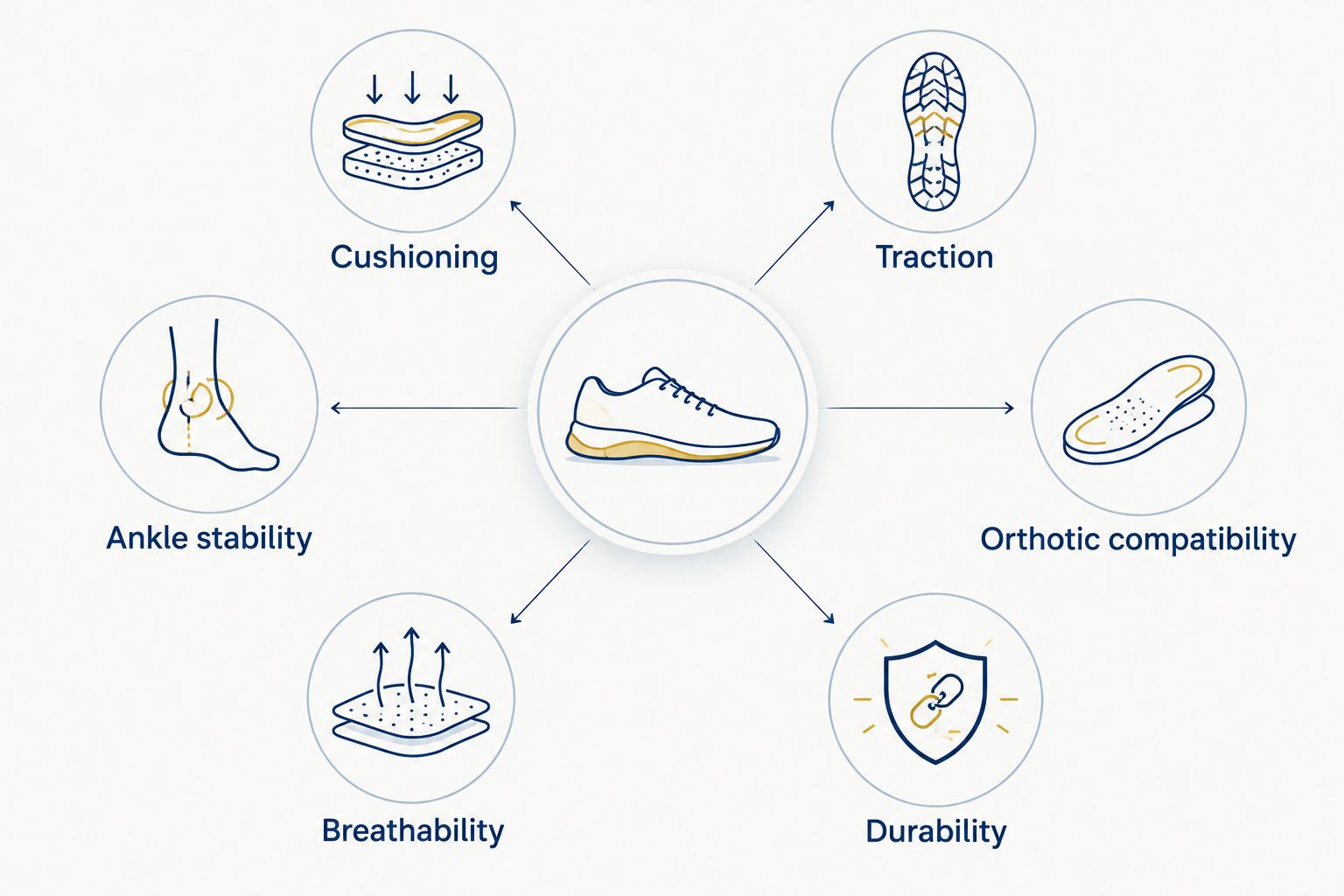
Six things separate a shoe that survives a route from one that causes a limp by Thursday:
- Forefoot and heel cushioning — absorbs the repeated impact of 8-12 miles of daily walking
- Traction and slip resistance — handles wet grass, mulch, and painted curbs without a slide
- Ankle and midfoot stability — controls rolls on uneven yards, easements, and drainage ditches
- Orthotic compatibility — a removable stock insole and a deep enough toe box for a custom device
- Breathability and weight — keeps feet cooler and drier through Florida humidity
- Durability under daily mileage — holds its cushioning past the first few months of a five-day route
Readers who already use custom orthotics for plantar fasciitis should treat orthotic compatibility as a requirement, not a nice-to-have. A shoe that cannot hold the device properly cancels out the reason you bought the orthotic in the first place.
At a glance: best shoes for meter readers in 2026
| Shoe type | Best for | Standout feature | Key limitation |
|---|---|---|---|
| Max-cushion trade sneakers | Pavement-heavy suburban routes | Rocker sole cuts forefoot pressure | Less ankle support on uneven ground |
| Waterproof leather work boots | Wet grass, easements, drainage ditches | Ankle collar limits rolls on turf | Heavier, longer break-in period |
| Slip-resistant hybrid trainers | Budget-conscious readers on mixed terrain | Removable insole accepts orthotics | Cushioning wears faster than premium foam |
| Orthotic-ready walking shoes | Readers already using custom orthotics | Deep, removable stock insole | Narrower selection in wide widths |
| Lightweight mesh trainers | Hot, humid Florida routes | Breathable upper cuts foot sweat | Less structure for a heavy meter bag |
| Stability trainers, firm heel counters | Flat feet or overpronation on the route | Rigid heel counter controls rearfoot motion | Stiffer ride, longer break-in |
1. Max-Cushion Trade Sneakers: Best Shoe for Meter Readers on Pavement-Heavy Routes
Max-cushion trade sneakers pack a thick, soft midsole under a rocker-shaped outsole that rolls your foot forward instead of forcing a flat push-off. On routes that are mostly sidewalk and driveway, that rocker shape cuts the load on the ball of the foot with every step, mile after mile.
Max-cushion sneakers pros:
- Softest ride of any category here for pure pavement mileage
- Rocker sole reduces forefoot strain over an 8-12 mile shift
- Widely available in wide and extra-wide widths
Max-cushion sneakers cons:
- Soft midsoles offer less lateral control on grass or gravel
- Rocker shape takes a week or two to adjust to
Best for: meter readers whose routes stay mostly on sidewalks and paved driveways. Verdict: Buy.
2. Waterproof Leather Work Boots: Best Shoe for Meter Readers Working Wet Yards and Easements
Waterproof leather work boots trade cushioning for structure. A firm ankle collar and a stiffer sole keep your foot from rolling when you step into a hidden dip behind a fence or a soaked drainage easement after a Florida afternoon storm.
They do the same job for meter readers that work boots for foot and ankle support do for construction and trades crews: protect the joint first, worry about comfort second.
Work boots pros:
- Ankle support cuts sprain risk on uneven, hidden terrain
- Waterproof leather keeps feet dry through wet grass and rain
- Durable outsole holds up to gravel and mulch beds
Work boots cons:
- Heavier than a sneaker, which adds fatigue on long shifts
- Break-in period runs longer, often two to three weeks
- Less breathable in Southwest Florida summer heat
Best for: readers with routes that include unmaintained yards, ditches, or wooded easements. Verdict: Buy.
3. Slip-Resistant Hybrid Trainers: Best Budget Shoe for Meter Readers on Mixed Terrain
Slip-resistant hybrid trainers look like a sneaker but use a firmer, grippier outsole compound borrowed from restaurant and warehouse shoes. They split the difference between a max-cushion sneaker and a work boot without the specialty price tag of either.
Hybrid trainers pros:
- Grippier outsole than a standard running shoe on wet grass and mulch
- Removable insole accepts an orthotic without buying a specialty last
- Lighter than a boot, easier on a full 8-hour route
Hybrid trainers cons:
- Cushioning breaks down faster than premium foam midsoles
- Minimal ankle support compared to a boot
- Sizing runs inconsistent across brands
Best for: meter readers who want one shoe that handles sidewalks, lawns, and light gravel adequately. Verdict: Buy.
4. Orthotic-Ready Walking Shoes: Best Shoe for Meter Readers Who Already Wear Custom Orthotics
Orthotic-ready walking shoes ship with a removable, low-profile stock insole and a deeper heel cup built to make room for a custom device. If a podiatrist has already fitted you for orthotics, the shoe matters less than whether it can actually hold the insert flat and stable.
Pair this shoe category with insoles built for metatarsalgia relief if the ball of your foot is the main complaint rather than the heel or arch.
Orthotic-ready shoes pros:
- Deep enough to hold a rigid or semi-rigid orthotic flat
- Reduces the bulky-shoe problem that comes with adding an insert to a shallow sneaker
- Available from most major walking shoe brands
Orthotic-ready shoes cons:
- Fewer style and width options than mainstream sneakers
- Stock insole is nearly useless once removed, so the orthotic does all the work
Best for: readers already using or being fitted for custom orthotics. Verdict: Buy.
5. Lightweight Mesh Trainers: Best Shoe for Meter Readers Working Florida Heat and Humidity
Lightweight mesh trainers trade some structure for airflow. In Naples, Fort Myers, and Cape Coral summers, a shoe that traps heat and sweat all shift raises the odds of blisters, athlete's foot, and skin breakdown between the toes.
Mesh trainers pros:
- Breathable upper keeps feet noticeably cooler and drier
- Lightest option on this list, which matters over an 8-hour shift
- Dries fast after a rain-soaked morning route
Mesh trainers cons:
- Mesh uppers offer almost no water resistance
- Less structure for readers carrying a heavy meter bag or tools
Best for: summer routes in high heat and humidity where sweat management matters more than waterproofing. Verdict: Hold unless your route runs mostly dry pavement, then pair with a boot for rainy season.
6. Stability Trainers with Firm Heel Counters: Best Shoe for Meter Readers with Flat Feet or Overpronation
Stability trainers build a rigid piece of plastic or dense foam into the heel counter to stop the rearfoot from rolling inward with every step. For a meter reader whose foot pronates on uneven yards, that control adds up over thousands of steps a shift.
Stability trainers pros:
- Firm heel counter limits excess inward roll
- Reduces arch and heel strain for flat-footed walkers
- Pairs well with a mild over-the-counter arch support
Stability trainers cons:
- Stiffer ride than a neutral cushioned sneaker
- Longer break-in period, often 1-2 weeks
Best for: meter readers with diagnosed flat feet or overpronation. Verdict: Buy if a gait check confirms overpronation; Skip if your arch is neutral or high.
How we ranked these
Each category above is scored against the same six criteria: cushioning, traction, ankle stability, orthotic compatibility, breathability, and durability under daily mileage. No single shoe wins on all six, which is why the list splits by route type and foot type instead of naming one universal winner. These recommendations reflect what Naples Podiatrist's clinicians observe across patients working delivery, utility, and field-service routes in Naples, Fort Myers, and Cape Coral. A reader walking dry suburban sidewalks in 2026 needs a different shoe than one covering wooded easements after a summer storm.
Get Your Feet Checked Before Your Next Shift
Naples Podiatrist sees workers on their feet all day, from Marco Island to Sarasota.
Which shoe should you choose?
If your route is mostly sidewalk and driveway, max-cushion trade sneakers with a rocker sole are the default pick for 2026. Switch to waterproof leather work boots the moment your route regularly crosses wet yards, ditches, or unmaintained easements, because the ankle support matters more than the extra weight.
If heel or arch pain has already started, do not guess at a shoe. A proper foot measurement and gait check tells you whether you are dealing with a shoe problem or a mechanical one that needs an orthotic. Naples Podiatrist sees meter readers and other Southwest Florida workers who spend their whole shift on their feet, from Marco Island up through Sarasota.
FAQ
What’s the best shoe for meter readers who walk 8-12 miles a day?
Max-cushion trade sneakers with a rocker sole are the best default for meter readers in 2026 on pavement-heavy routes. Switch to a waterproof work boot for routes that regularly cross wet grass or uneven easements.
Are work boots better than sneakers for meter reading routes?
It depends on terrain, not personal preference. Boots win for wet, uneven yards and drainage ditches; sneakers win for pavement and driveways where ankle support matters less.
How often should meter readers replace their work shoes?
Most shoes lose meaningful cushioning around 300-500 walked miles, the same benchmark podiatrists use for distance runners. A reader walking 10 miles a day hits that mark in roughly six to eight weeks.
Can I wear custom orthotics in a work boot?
Yes, as long as the boot has a removable stock insole and a deep enough heel cup to hold the device flat. Orthotic-ready boots and walking shoes are built specifically for this.
What causes heel pain in meter readers?
Repetitive walking across mixed surfaces in worn-out or poorly supportive shoes is the most common driver of heel pain in this job. Left untreated, it commonly progresses to plantar fasciitis.
Do slip-resistant shoes prevent falls on wet grass?
Slip-resistant outsole compounds reduce slip risk on wet grass and mulch but do not eliminate it entirely. Ankle-supportive boots add a second layer of protection if a slip does happen.
Is a stability shoe necessary if I don’t have flat feet?
No. Stability trainers with firm heel counters only help readers with diagnosed overpronation or flat feet; a neutral cushioned shoe works better for a neutral arch.
When should a meter reader see a podiatrist about foot pain?
See a podiatrist if heel or arch pain lasts more than two weeks despite a shoe change, or if pain starts limiting your ability to finish a route. Naples Podiatrist offers same-day access for exactly this kind of work-related foot pain.
One last thing
Rotating two pairs of shoes across your workweek does more for foot health than any single shoe on this list. Midsole foam needs roughly 24 hours to fully rebound after a shift's worth of compression, so alternating pairs day to day extends the life of both and keeps cushioning more consistent through the week. If you change only one habit in 2026, make it that one.
Related guides
- Custom orthotics for plantar fasciitis
- Best insoles for metatarsalgia relief
- How to measure your feet for the right shoe size

