 Fax: (239) 692-9436
 Tel: 239-430-3668
Umpires and referees spend three to four hours a shift on their feet, pivoting on turf, dirt, and grass, often in the kind of heat and humidity Southwest Florida turns up every spring and fall. Pick the wrong shoe and a single bad game turns into a season of heel pain. This guide ranks five shoes for umpires and referees standing on fields in 2026, based on stability, cushioning durability, and the traction demands specific to officiating rather than general athletic performance.
- New Balance 990v6 wins overall for umpires and referees who need stability across back-to-back games.
- New Balance 4040v7 Turf is the pick for baseball and softball umpires working synthetic infields.
- Brooks Addiction Walker 2 fits referees with flat feet or overpronation who stand more than they run.
- ASICS Gel-Nimbus 26 suits soccer and lacrosse referees who cover real distance during a match.
- New Balance 608v6 is the budget stability pick for officials replacing shoes every season.
Why This Matters
Officiating is a standing-and-pivoting job for most sports, not a running job, and that changes what a shoe needs to do. An umpire behind the plate holds a crouched stance for nine innings. A soccer or lacrosse referee logs real mileage, up to 7 miles over a match, chasing play. A football official sprints in short bursts, then stands still through the huddle.
Feet under sustained load without much motion swell more than feet in constant motion, because walking's pumping action, the one that normally moves fluid out of the lower leg, doesn't happen the same way in a fixed stance. That's the same mechanism behind swelling in people who stand all day at work, and it's why a shoe that fits fine in the store can feel a half size small by the fourth inning.
Cushioning that degrades unevenly compounds the problem. A stability shoe that has lost its midsole support by mile 300 stops correcting overpronation and starts contributing to it. Naples Podiatrist's board-certified podiatrists see this pattern most in officials working multiple games a week through a Southwest Florida season that runs from spring travel ball into fall high school football.
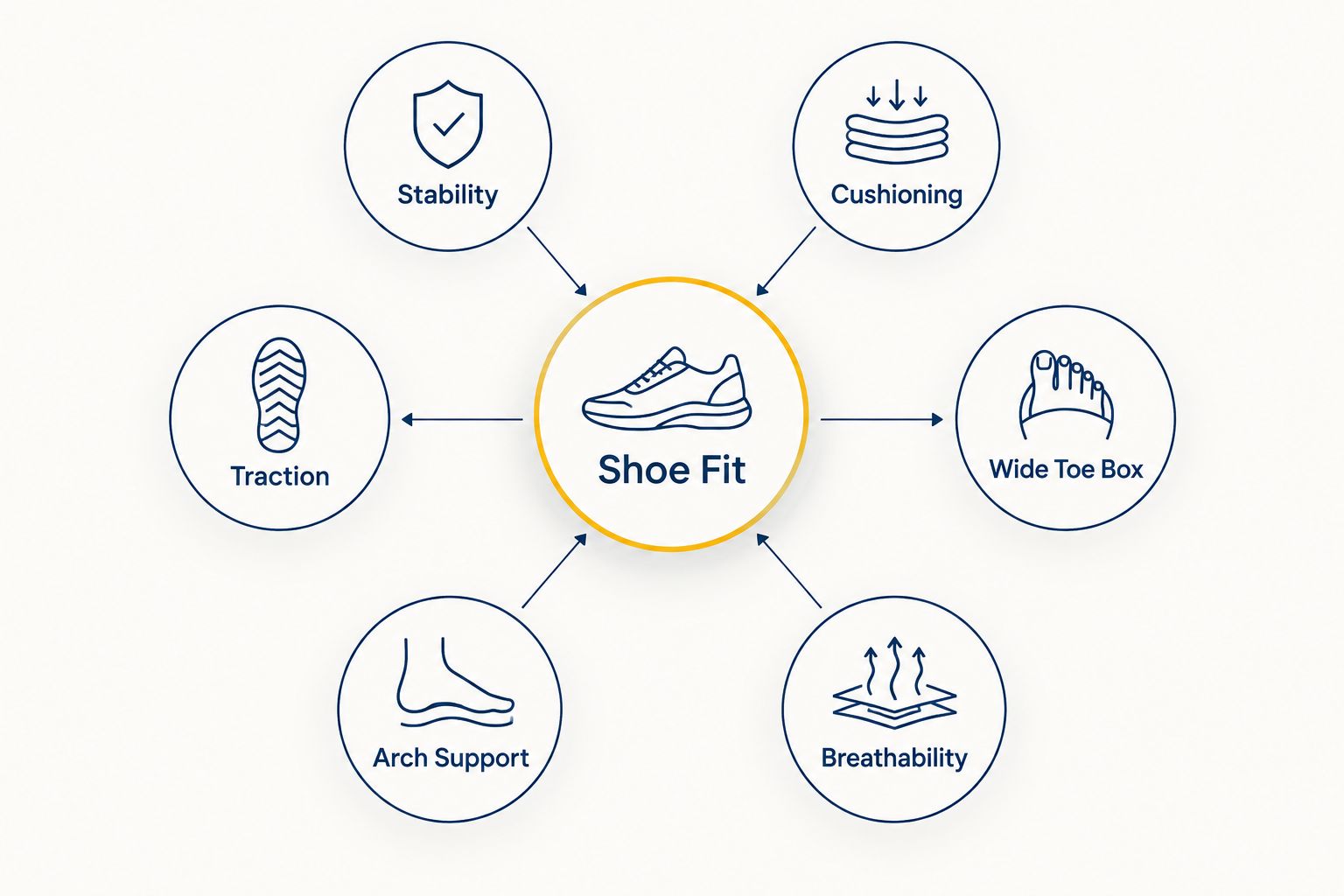
What Makes the Best Shoes for Umpires and Referees
- Torsional stability that resists twisting when you plant and pivot to make a call
- Cushioning that survives full shifts — most foam midsoles hold their support for roughly 300 to 500 miles before compressing
- Sport-specific traction — turf outsoles for synthetic infields, multi-directional lugs for grass, flat soles for hardcourt
- True-to-width sizing with a wide toe box, since feet swell during a 3 to 4 hour shift on your feet
- Arch support matched to foot type — flat, neutral, or high arch changes which shoe helps and which one hurts
- Breathability, because Southwest Florida field-level heat regularly pushes past 90°F and trapped moisture invites blisters and fungal issues
Best Shoes for Umpires and Referees at a Glance
| Shoe | Best For | Standout Feature | Key Limitation |
|---|---|---|---|
| New Balance 990v6 | Officials working multiple games a week | Dual-density foam with a supportive medial post | Runs narrow through the midfoot for some wide feet |
| New Balance 4040v7 Turf | Baseball and softball umpires on synthetic infields | Turf-specific outsole with lateral traction pods | Loses grip once you step onto grass or dirt |
| Brooks Addiction Walker 2 | Referees with flat feet or overpronation | Full-length firm medial post for motion control | Stiff, heavy ride for officials who like flexibility |
| ASICS Gel-Nimbus 26 | Soccer, lacrosse, and field hockey referees who run the match | High cushioning with a smooth, quick-turnover ride | Less side-to-side stability than a true stability shoe |
| New Balance 608v6 | Officials replacing shoes every season on a budget | Stability geometry at a lower-tier build | Cushioning breaks down faster than the 990 line |
1. New Balance 990v6: Best Overall Shoe for Umpires and Referees Working Multiple Games a Week
The New Balance 990v6 is a stability shoe built on a dual-density foam midsole with a firmer medial post under the arch. That construction resists the inward roll that builds up over a long shift of standing and short pivots, which is a big reason it shows up on more podiatrist recommendation lists than almost any other athletic shoe. It comes in multiple width options, which matters once feet swell over a 3 to 4 hour game.
New Balance 990v6 pros:
- Dual-density midsole holds its support longer than single-density foam
- Wide-width options available for feet that swell during a shift
- Structured heel counter locks the foot in place during pivots
New Balance 990v6 cons:
- Runs narrow through the midfoot for some wide feet despite width options
- Heavier than a straight running shoe, noticeable in sprint-heavy sports
- Needs a week or two of break-in before the foam settles
Best for: officials working three or more games a week who need consistent stability. New Balance 990v6 verdict: Buy.
2. New Balance 4040v7 Turf: Best Shoe for Baseball and Softball Umpires on Synthetic Infields
Built for infield play on synthetic turf, the New Balance 4040v7 Turf uses a low-profile outsole with traction pods instead of cleats, giving umpires grip without punching through the surface the way molded cleats do. It sits lower to the ground than a stability walking shoe, which helps with the quick lateral shuffles behind the plate or in the field.
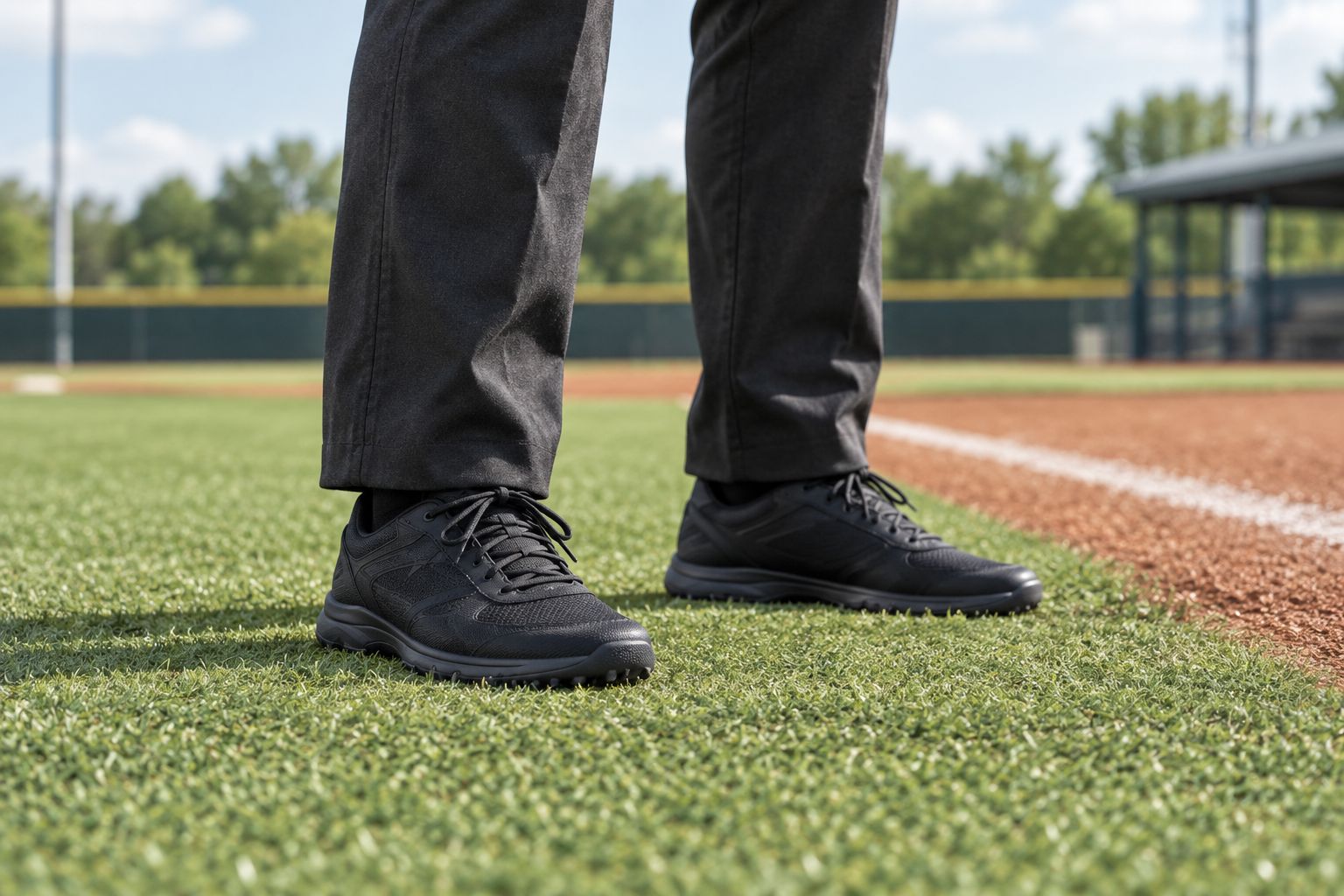
New Balance 4040v7 Turf pros:
- Turf-specific traction pattern grips synthetic infields without digging in
- Low stack height improves ground feel for quick calls and shuffles
- Reinforced toe box holds up to repeated crouching and kneeling
New Balance 4040v7 Turf cons:
- Traction pattern loses grip on grass or dirt outfields
- Less cushioning than a dedicated walking shoe for all-day standing
- Narrow performance fit that runs small for some officials
Best for: baseball and softball umpires who work primarily on synthetic turf infields. New Balance 4040v7 Turf verdict: Buy for turf-only assignments; skip if most of your games are on grass or dirt.
3. Brooks Addiction Walker 2: Best Motion-Control Shoe for Referees With Flat Feet or Overpronation
The Brooks Addiction Walker 2 is a motion-control walking shoe with a firm medial post running the full length of the midsole, built for feet that roll inward enough that a standard stability shoe doesn't correct it. Officials with flat feet who spend more time standing still than sprinting, and who could also look at running shoes for overpronation for their off-field training, tend to notice the difference immediately.
Brooks Addiction Walker 2 pros:
- Full-length medial post gives stronger correction than most stability shoes
- Leather upper holds its shape better than mesh over repeated wear
- Removable insole leaves room for a custom orthotic
Brooks Addiction Walker 2 cons:
- Feels stiff and heavy to officials who prefer a flexible ride
- Overkill correction for referees with a neutral or high arch
- Not built for sports requiring quick sprints, given its walking-shoe design
Best for: referees and umpires with diagnosed flat feet or moderate-to-severe overpronation. Brooks Addiction Walker 2 verdict: Buy if you overpronate; skip if your arch is neutral or high.
4. ASICS Gel-Nimbus 26: Best High-Mileage Cushion Shoe for Soccer, Lacrosse, and Field Hockey Referees
Soccer referees can cover up to 7 miles over the course of a match, closer to a distance runner's workload than a stationary official's. The ASICS Gel-Nimbus 26 is a max-cushion neutral running shoe built for that kind of mileage, with a soft compression-molded midsole that absorbs impact on turf and grass without the stiffness of a walking shoe. Officials logging that kind of mileage across a 2026 season are also good candidates for custom orthotics built for runners and athletes fitted to the shoe itself.
ASICS Gel-Nimbus 26 pros:
- Cushioning built for sustained running mileage, not just standing
- Smooth heel-to-toe transition suits the stop-start pace of match officiating
- Breathable engineered mesh upper handles Florida field heat
ASICS Gel-Nimbus 26 cons:
- Less side-to-side stability than a true motion-control shoe
- Neutral design doesn't correct significant overpronation
- Softer foam compresses faster for officials who also stand for long stretches between matches
Best for: soccer, lacrosse, and field hockey referees who run more than they stand. ASICS Gel-Nimbus 26 verdict: Buy.
5. New Balance 608v6: Best Budget-Friendly Stability Shoe for Officials on a Tighter Gear Budget
The New Balance 608v6 uses the same stability-shoe geometry as the 990 line, a firmer medial post and a structured heel, built on single-density foam instead of the 990's dual-density setup. That makes it a lower-tier option for officials who replace shoes every season anyway and don't need the 990's longer-lasting foam.
New Balance 608v6 pros:
- Same motion-control geometry as pricier stability shoes
- Lighter than the 990v6, preferred by some referees in faster-paced sports
- Wide-width options available
New Balance 608v6 cons:
- Single-density foam breaks down faster than the 990's dual-density midsole
- Less durable outsole under heavy turf or dirt use
- Shorter cushioning window before it needs replacing
Best for: officials on a seasonal budget who replace shoes annually anyway. New Balance 608v6 verdict: Buy if you replace shoes every season; hold if you want one shoe to last multiple seasons.
How We Ranked These Shoes
Every shoe on this list was measured against the six criteria above, not general athletic performance. A shoe with elite running scores but no lateral stability drops for anyone doing heavy pivoting. A max-cushion shoe with poor traction drops for turf work. Rankings favor stability and traction over raw cushioning because officiating is a standing-and-pivoting job first, even for the high-mileage sports.
“If your arches ache by the fourth inning, the shoe already failed you before you did.”
Get Your Feet Checked Before Next Season
Naples Podiatrist sees officials across Southwest Florida for heel pain, flat feet, and orthotic fittings.
Which Shoe Should You Choose?
Most officials should start with the New Balance 990v6 — it covers the stability and cushioning demands of standing through back-to-back games without a sport-specific tradeoff. Baseball and softball umpires working turf infields get more from the New Balance 4040v7 Turf's low-profile traction. Referees who run several miles a match, especially in soccer or lacrosse, get more support from the ASICS Gel-Nimbus 26's running-specific cushioning.
If your feet swell, ache, or go numb by the third or fourth inning regardless of which shoe you're in, that's a sign the shoe isn't the whole problem. A podiatrist at Naples Podiatrist can check for flat feet, plantar fasciitis, or a mechanical gait issue a shoe alone won't fix in 2026 or any other season.
FAQ
What’s the best shoe for umpires standing through a full game?
The New Balance 990v6 is the best overall shoe for umpires standing through a full game because of its dual-density stability midsole and wide-width options. It holds its support better over a 3 to 4 hour shift than most single-density athletic shoes.
Is a turf shoe or a walking shoe better for baseball umpires?
A turf shoe like the New Balance 4040v7 Turf works better for umpires on synthetic infields because its low-profile traction grips the surface without cleats punching through it. A walking shoe like the New Balance 990v6 works better for umpires who spend more time on dirt, grass, or walking between fields.
How much arch support do referees need?
The right amount of arch support depends on foot type, not preference. Flat feet generally need a motion-control shoe like the Brooks Addiction Walker 2, while neutral or high arches do better in a stability or cushioned neutral shoe like the ASICS Gel-Nimbus 26.
Can custom orthotics fit inside umpire and referee shoes?
Most stability and walking shoes on this list, including the New Balance 990v6 and Brooks Addiction Walker 2, use a removable insole that leaves room for a custom orthotic. Turf-specific shoes with a lower-volume fit sometimes need a half size up to accommodate one.
Should umpires and referees size up their shoes?
Many officials do better going a half size up from their street shoe size because feet swell during a long standing shift. Trying shoes on later in the day, after feet have already swelled some, gives a more accurate fit.
How often should officials replace their shoes?
Most cushioned midsoles lose meaningful support somewhere between 300 and 500 miles of use, and officials working several games a week can hit that mark within a single season. Visible tread wear on one side of the outsole is another sign it’s time to replace them.
Do compression socks help referees who stand for hours?
Compression socks can reduce the swelling and fatigue that build up during long standing shifts by supporting venous return in the lower leg. They don’t replace a properly fitted shoe, but many officials use both together.
What shoe features actually prevent plantar fasciitis in officials?
A firm heel counter, a supportive midsole that doesn’t collapse under sustained standing, and adequate arch support are the features most linked to lower plantar fasciitis risk in people on their feet for long shifts. Flat-soled turf shoes worn for standing rather than turf work tend to make existing heel pain worse.
One Last Thing
The detail most officials miss: the shoe that feels best walking into the store isn't necessarily the shoe that feels best in the fourth quarter or the ninth inning. Feet swell during a shift, and a shoe with no room to expand starts squeezing exactly when you need circulation the most. Try shoes on in the afternoon, after your feet have already swollen some, and size for that foot, not the morning one.
Related Guides
- Foot and ankle pain from pickleball: causes and prevention
- How to choose the right insole for your foot type