
 Fax: (239) 692-9436
 Tel: 239-430-3668
Standing for eight-plus hours on a concrete or thin-carpeted convention floor punishes feet faster than almost any other job, and the shoes you pick before the show floor opens decide whether you're limping by hour six. Best overall for trade shows: cushioned athletic sneakers with rocker soles and firm arch support. Best for chronic heel or arch pain: shoes fitted with custom orthotics. Best for swelling and circulation: compression socks paired with supportive sneakers. Best for wide feet, bunions, or hammertoes: a wide toe-box walking shoe. Best for business-casual show floors: a structured leather walking shoe with a cushioned midsole.
- Cushioned rocker-sole sneakers are the best shoes for trade shows and conventions in 2026 for most exhibitors and attendees.
- Custom orthotics inside a supportive sneaker fix chronic heel and arch pain that generic cushioning cannot.
- Compression socks plus supportive sneakers cut afternoon swelling on multi-day show schedules.
- Wide toe-box shoes matter more at conventions than at a desk job because bunions and hammertoes worsen under repetitive standing.
- A podiatrist visit before a multi-day trade show catches problems that shoe shopping alone will not fix.
Why this matters
A trade show floor is not a normal workday. You're on your feet for 8 to 10 hours, walking a booth perimeter hundreds of times, standing still during pitches, and doing it again the next day with zero recovery time. That combination of prolonged standing and low-level walking is exactly what triggers plantar fasciitis flare-ups, ankle swelling, and burning forefoot pain, and it can push someone who already has shoes for people who stand all day at work figured out for their regular job into new territory once the flooring changes to bare concrete under thin carpet tile.
Podiatrists across Southwest Florida see a predictable spike in heel and arch complaints after big convention weeks in Naples, Fort Myers, and Sarasota. The shoe matters, but so does what's inside it and what's on the leg above it.
What makes the best shoes for trade shows
- Arch support that matches your foot type — flat, neutral, or high arch, not a generic insole
- A rocker or curved sole that reduces the pressure spike each time your heel strikes concrete
- A toe box wide enough that toes aren't compressed after hour four
- Cushioned midsole foam rated for all-day wear, not just short runs
- A secure heel counter so the shoe doesn't shift as you pivot at a booth all day
- Breathable upper material since Florida convention centers run warm even with AC
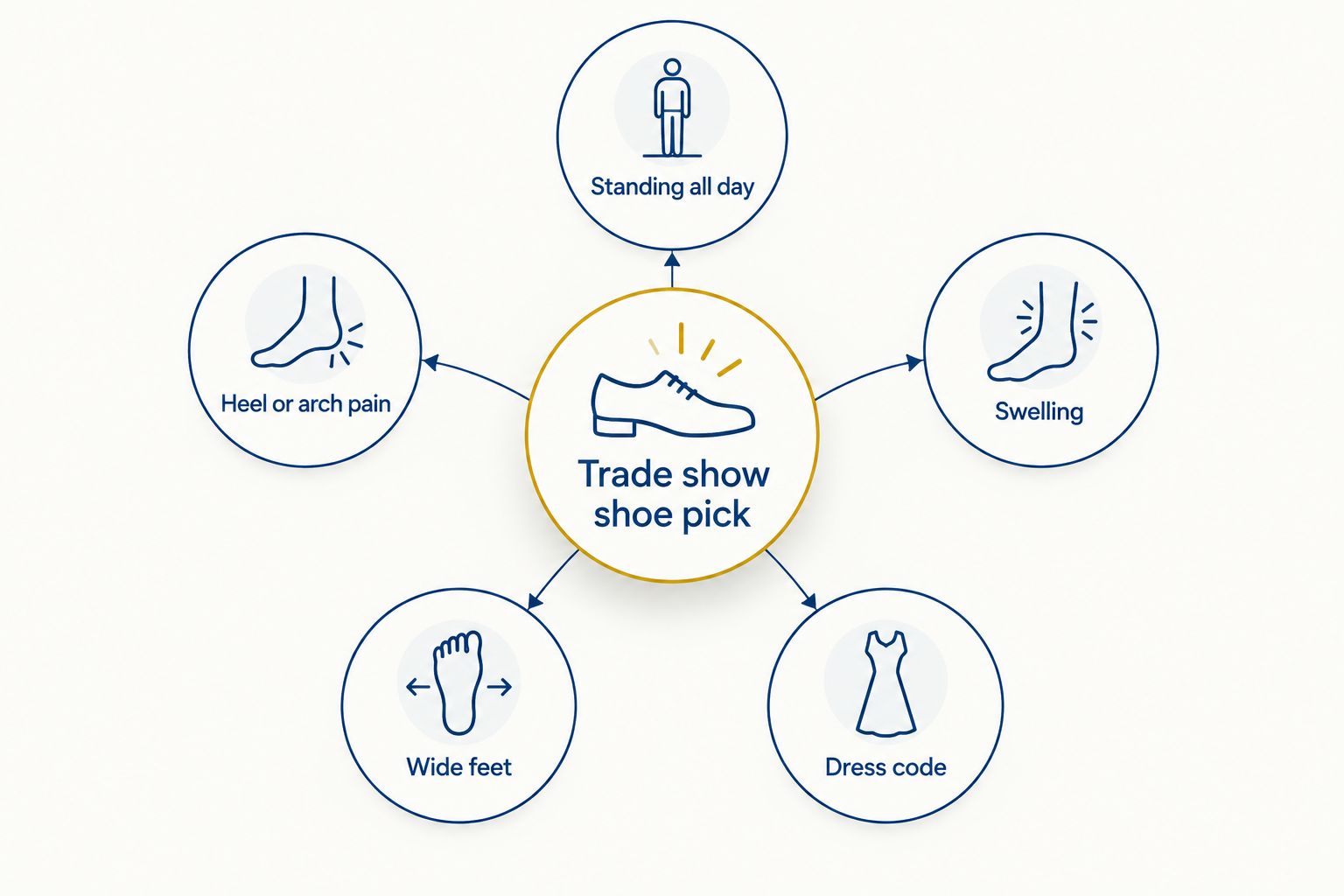
Best shoes for trade shows and conventions: at a glance
| Pick | Best for | Standout feature | Key limitation |
|---|---|---|---|
| Cushioned rocker-sole sneakers | All-day standing and walking | Rocker sole reduces heel-strike pressure | Not dressy enough for some booth uniforms |
| Shoes with custom orthotics | Chronic heel or arch pain | Corrects the specific foot mechanics causing pain | Requires a fitting, not an off-the-shelf fix |
| Compression socks + supportive sneakers | Swelling and circulation | Keeps fluid from pooling in the lower leg | Socks alone don't fix a bad shoe |
| Wide toe-box walking shoes | Bunions, hammertoes, wide feet | Extra width prevents rubbing and nerve pain | Can look bulky under slacks |
| Structured leather walking shoes | Business-casual show floors | Cushioned midsole hidden under a dress-casual upper | Less breathable than mesh sneakers |
1. Cushioned rocker-sole sneakers: best for all-day standing and walking
This is the default answer for anyone asking what the best shoes for trade shows are, because most exhibitors do a mix of standing still at a table and walking the floor between sessions. A rocker sole rolls your foot through each step instead of forcing a flat heel strike on hard flooring, which is what wears out feet by mid-afternoon.
Cushioned rocker-sole sneakers pros:
- Handle both standing and walking without a shoe change
- Widely available in neutral, stability, and wide-fit versions
- Cushioned foam holds up across a 3- or 4-day show schedule
Cushioned rocker-sole sneakers cons:
- Look too casual for some formal booth dress codes
- A poor-fitting rocker sole can feel unstable on stairs or escalators
Best for: exhibitors and attendees on a general convention floor with no pre-existing foot condition. Verdict: Buy.
2. Shoes with custom orthotics: best for chronic heel or arch pain
If you already deal with heel pain, plantar fasciitis, or a collapsed arch, a stock insole inside a nice sneaker won't fix the mechanics causing the pain. A podiatrist-fitted orthotic built for your specific foot shape redistributes pressure away from the sore spot instead of just cushioning around it.
Shoes with custom orthotics pros:
- Targets the actual mechanical cause of chronic pain
- Can be moved between multiple shoes, not locked into one pair
- Backed by a podiatric evaluation rather than guesswork
Shoes with custom orthotics cons:
- Needs a fitting appointment ahead of the show, not a same-day purchase
- Overkill for someone with no existing heel or arch symptoms
Best for: anyone with a plantar fasciitis history or a diagnosed arch problem working a multi-day show. Verdict: Buy.
3. Compression socks with supportive sneakers: best for swelling and circulation
Standing still for long pitch sessions is worse for circulation than walking, because the calf muscle pump that pushes blood back up the leg barely fires. Graduated compression socks worn under a supportive sneaker keep ankles from puffing up by the end of day two.
Compression socks with supportive sneakers pros:
- Noticeably reduces end-of-day ankle and foot swelling
- Works alongside any shoe on this list, not a standalone fix
- Useful for the flight or long drive to the show too
Compression socks with supportive sneakers cons:
- Compression alone does nothing if the shoe itself lacks support
- Some people find the tighter fit uncomfortable in Florida heat
Best for: attendees with a history of leg or ankle swelling, or anyone flying into Naples or Fort Myers before a multi-day event. Verdict: Buy.
4. Wide toe-box walking shoes: best for bunions, hammertoes, and wide feet
A narrow toe box that's tolerable for a two-hour dinner becomes a problem after ten hours on a show floor. Repetitive standing and walking in a shoe that squeezes the forefoot accelerates bunion and hammertoe pain rather than causing it outright.
Wide toe-box walking shoes pros:
- Prevents rubbing and nerve irritation across a multi-day event
- Reduces pressure on an existing bunion or hammertoe
- Available in athletic and walking-shoe styles, not just orthopedic looks
Wide toe-box walking shoes cons:
- Bulkier profile than a standard-width sneaker
- Harder to find in dressier styles
Best for: anyone with diagnosed bunions, hammertoes, or a foot that's genuinely wide rather than just swollen. Verdict: Buy.
5. Structured leather walking shoes: best for business-casual show floors
Some booth staff and executives can't wear a sneaker on the floor no matter how many miles they'll log. A structured leather walking shoe hides a cushioned midsole and a firmer heel counter under a dressier upper, closing most of the gap with an athletic shoe.
Structured leather walking shoes pros:
- Meets business-casual dress codes without sacrificing all cushioning
- Durable enough for repeat use across multiple shows in 2026
- Available in both slip-on and lace-up styles
Structured leather walking shoes cons:
- Less breathable than mesh sneakers in a warm exhibit hall
- Still not as forgiving as a true athletic shoe for 10-hour days
Best for: exhibitors under a strict dress code who still need to survive a full show day standing. Verdict: Hold — fine if required, not the first choice when a dress code allows sneakers.
How we ranked these
Each pick was weighed against the six criteria above: arch support, sole design, toe box width, midsole cushioning, heel stability, and breathability. Items further down the list solve narrower problems — dress code, specific foot deformities — which is why their sections are shorter than the top picks.
Get your feet checked before the next show
Naples Podiatrist offers same-day appointments across Southwest Florida.
Which shoes should you choose for a trade show in 2026?
If you have no existing foot condition, cushioned rocker-sole sneakers are the default pick for standing and walking a convention floor. If you've had heel pain or arch collapse before, don't wait for the show to trigger it again — get fitted for custom orthotics ahead of time. Swelling, wide feet, and dress codes are the exceptions that push you toward one of the other four picks, and none of them are wrong choices when they match the actual problem you're solving.
FAQ
What’s the best shoe for standing all day at trade shows?
A cushioned athletic sneaker with a rocker sole and firm arch support handles most trade show days best in 2026. It manages both prolonged standing and the walking between booths that a purely standing-focused shoe can’t handle.
Are compression socks worth it for trade show workers?
Yes, compression socks reduce ankle and foot swelling that builds up from hours of standing still. They work best paired with a supportive shoe, not as a standalone fix.
How do I stop my feet from swelling at a convention?
Wear graduated compression socks, choose a supportive sneaker over a flat dress shoe, and change position every hour instead of standing locked in one spot. Elevating feet for even a few minutes at breaks helps too.
Do custom orthotics help with all-day standing?
Custom orthotics correct the foot mechanics causing chronic heel or arch pain, which generic cushioned insoles don’t address. They’re worth the fitting appointment if you already have a history of plantar fasciitis or arch collapse.
What shoe features matter most for concrete convention floors?
Arch support matched to your foot type, a rocker or curved sole, and a cushioned midsole matter most on concrete under thin carpet tile. A secure heel counter also prevents the shoe from shifting as you pivot at a booth all day.
When should I see a podiatrist for trade show foot pain?
See a podiatrist if heel or arch pain lasts more than a few days after a show, or if swelling doesn’t resolve overnight. Board-certified podiatrists across Naples, Fort Myers, Cape Coral, and Sarasota offer same-day evaluations for exactly this kind of flare-up.
How often should I replace trade show shoes?
Replace a heavily used pair every 300 to 500 miles of walking, which for a frequent exhibitor can mean once or twice a year. Compressed, flattened midsole foam loses its cushioning well before the upper looks worn out.
Is a wide toe-box shoe necessary if I don’t have bunions?
No, a standard-width shoe is fine if your foot is a normal width and you have no existing forefoot pain. Wide toe-box shoes matter most for people with bunions, hammertoes, or feet that are genuinely wide rather than just swollen by the end of the day.
One last thing
The shoe change matters less than most exhibitors think if the foot problem underneath it never gets diagnosed — a rocker-sole sneaker will mask a mild case of plantar fasciitis for a day or two, then the pain comes back worse once the show ends and the adrenaline wears off. Booking a foot and ankle evaluation before a multi-day trade show, not after, is the move that actually prevents the flare-up instead of just padding around it.
Related guides

