
 Fax: (239) 692-9436
 Tel: 239-430-3668
Bocce looks gentle until an unstable shoe rolls an ankle mid-throw. The best shoes for bocce ball in 2026 come down to five features — lateral stability, a wide toe box, a low flat sole, a locked-down heel, and traction that matches the court surface — not the logo on the side.
- Stability walking shoes with a wide toe box are the best overall shoes for bocce ball for most retirees in 2026.
- Lateral-support court shoes fit players managing ankle instability or a prior sprain.
- Orthotic-compatible slip-ons work best for bunions, hammertoes, or a custom orthotic.
- Minimalist low-profile trainers suit players who want ground feel but have no neuropathy.
- Closed-toe sandals are the only sandal option worth considering for short, casual bocce sessions.
Why This Matters
Bocce rewards a stable base more than most people realize. The underhand throw shifts weight onto one leg while the other foot pivots on a soft or slightly uneven surface, and that lateral load is exactly where a flexible sole or a worn-out heel counter causes a slip.
Older adults account for a disproportionate share of fall-related injuries nationally, and a lawn or court game played in the wrong shoe adds risk that a proper shoe removes. If a retiree already has a bunion, hammertoe, or diabetic foot, the wrong shoe compounds a condition instead of protecting it. Getting shoes that prevent falls in seniors right for bocce specifically means matching the shoe to the throw, not just to comfort at rest.
What Makes the Best Bocce Shoe
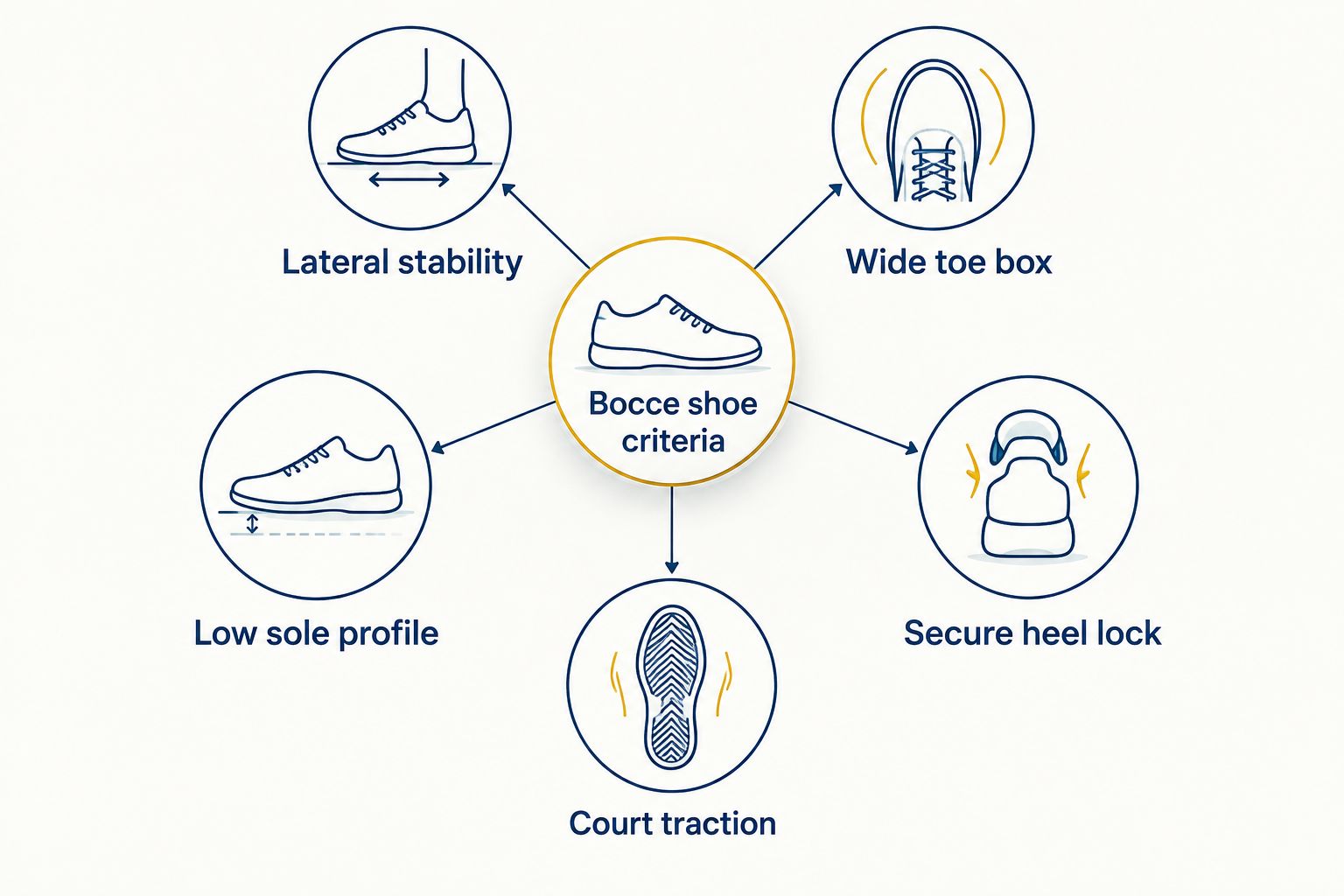
- Lateral stability for the underhand throwing stance, where weight shifts sideways before release
- Wide toe box so bunions and hammertoes are not compressed during the push-off
- Low, flat sole profile that keeps the center of gravity close to the court surface
- Secure heel lock to stop the foot sliding inside the shoe mid-swing
- Traction matched to the court — crushed shell, clay, or synthetic turf each grip differently
- Cushioning without added height, since a thick stacked sole raises fall risk on soft ground
Best Shoes for Bocce Ball at a Glance
| Shoe Type | Best For | Standout Feature | Key Limitation |
|---|---|---|---|
| Stability walking shoes | Most retirees, general play | Wide base, firm heel counter | Less lateral flex than a true court shoe |
| Lateral-support court shoes | Ankle instability or prior sprain | Reinforced side panels | Runs narrower in the forefoot |
| Low-profile minimalist trainers | Players who want ground feel | Thin, flexible sole for balance feedback | Not built for standing neuropathy |
| Orthotic-compatible slip-ons | Bunions, hammertoes, custom orthotics | Removable insole, deep toe box | Heel hold is looser than a laced shoe |
| Closed-toe sandals | Short, casual sessions | Ventilated, easy on-off | Minimal ankle and heel support |
1. Stability Walking Shoes: Best Overall Shoe for Bocce Ball
A stability walking shoe pairs a wide, flat sole with a reinforced heel counter, which is exactly what the bocce throw asks for. These shoes are built for the repeated forward-and-side motion of a walking gait, and that same motion covers most of what happens on a bocce court over a two-hour game in 2026.
Stability walking shoes pros:
- Wide base reduces tip-over risk during the throw
- Firm heel counter locks the foot in place
- Widely available in wide and extra-wide widths for bunions
Stability walking shoes cons:
- Less side-to-side flex than a dedicated court shoe
- Heavier than a minimalist trainer, which can fatigue some players over a long league night
Best for: retirees playing bocce regularly with no specific foot condition beyond general age-related instability. Verdict: Buy.
2. Lateral-Support Court Shoes: Best for Ankle Instability
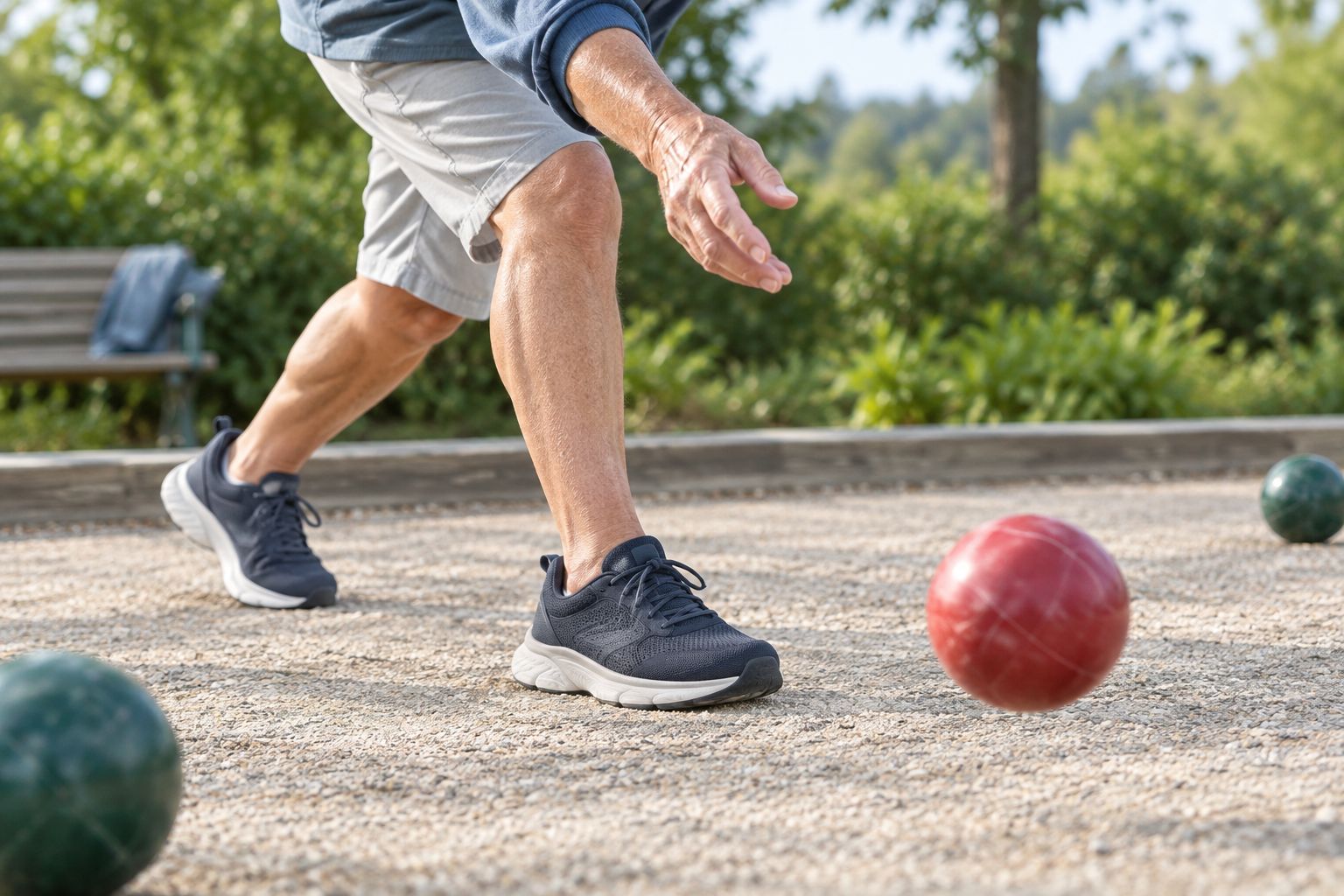
Court shoes built for pickleball or tennis add reinforced side panels specifically to resist the lateral loading a lunging throw creates. Anyone who has rolled an ankle in the last two years, or who describes their ankle as "loose," benefits more from this category than from a standard walking shoe.
Lateral-support court shoes pros:
- Reinforced sidewalls resist rolling during a pivot
- Non-marking rubber outsoles grip synthetic turf and hard court surfaces well
- Often paired well with a custom orthotic for pickleball players, which fits the same lateral-motion demand
Lateral-support court shoes cons:
- Narrower forefoot fit than a walking shoe, which can crowd bunions
- Stiffer sole reduces comfort on long grass or dirt courts
Best for: retirees managing a history of ankle sprains or chronic ankle instability. Verdict: Buy.
3. Low-Profile Minimalist Trainers: Best for Balance and Ground Feel
A thin, flexible sole increases proprioceptive feedback — the foot senses the surface directly instead of through inches of foam. For a player with intact sensation and good balance, this can sharpen footing on an uneven lawn court.
Minimalist trainers pros:
- Improves ground feel and balance awareness
- Lightweight, low fatigue over a long game
- Flexible sole moves with a natural throwing pivot
Minimalist trainers cons:
- Little to no cushioning for players with arthritis or metatarsalgia
- Unsafe for anyone with peripheral neuropathy, since reduced sensation plus reduced sole feedback removes the safety margin entirely
Best for: players with normal foot sensation who want more court feel and have no standing balance disorder. Verdict: Hold — check with a foot and ankle specialist before switching if you have any numbness or tingling.
4. Orthotic-Compatible Slip-Ons: Best for Bunions, Hammertoes, and Orthotics
Slip-on walking shoes with a removable factory insole let a retiree drop in a custom orthotic without buying a size up. The deep, wide toe box also matters directly for anyone with a bunion or hammertoe, since compression under a bocce throw's push-off is where pain flares.
Orthotic-compatible slip-ons pros:
- Deep toe box accommodates bunions and hammertoes without pinching
- Removable insole fits a custom orthotic device
- Easy on-off, useful for anyone with limited hip or knee flexibility
Orthotic-compatible slip-ons cons:
- Heel hold is looser than a laced shoe, which matters during a hard pivot
- Not ideal for players with significant ankle instability on top of a forefoot condition
Best for: retirees already wearing custom orthotics or managing bunions, hammertoes, or hallux rigidus. Verdict: Buy.
5. Closed-Toe Sandals: Best for Short, Casual Sessions
A closed-toe sandal with an adjustable strap system and a molded footbed works for a casual, short bocce session in warm weather — but it is the shoe on this list with the least ankle and heel protection, and it belongs at the bottom of the ranking for a reason.
Closed-toe sandals pros:
- Ventilated, comfortable in Southwest Florida heat
- Quick on-off between games
Closed-toe sandals cons:
- Minimal heel lock increases slip risk during a lateral throw
- Not appropriate for anyone with a history of falls or ankle sprains
- Straps can loosen mid-game on soft courts
Best for: short, low-intensity bocce sessions where a player is not throwing repeatedly or moving laterally. Verdict: Wait — fine for a backyard toss, not for league play.
How This Ranking Was Built
Each shoe type is scored against the same six criteria: lateral stability, toe box width, sole profile, heel lock, surface-appropriate traction, and cushioning that does not add fall-risk height. The ranking favors the throw mechanics specific to bocce over general walking comfort, which is why a stability shoe outranks a plain running shoe even though both look similar on a shelf.
Which Bocce Shoe Should You Choose?
For most retirees stepping onto a bocce court in 2026, a stability walking shoe with a wide toe box is the safest default. Anyone with a prior ankle sprain should move to a lateral-support court shoe instead, and anyone with a bunion, hammertoe, or a custom orthotic should go straight to an orthotic-compatible slip-on. Skip minimalist trainers if there is any numbness in the feet, and treat closed-toe sandals as a backyard-only option, not a league shoe.
Get Your Feet Checked Before Bocce Season
Board-certified foot and ankle specialists across Southwest Florida offer same-day visits.
FAQ
What is the best shoe for playing bocce ball as a retiree?
A stability walking shoe with a wide toe box and a firm heel counter is the best shoe for bocce ball for most retirees in 2026. It supports the lateral weight shift of the underhand throw without adding the extra height that raises fall risk.
Are pickleball shoes good for bocce ball?
Yes, pickleball and other court shoes with reinforced side panels work well for bocce, especially for players with a history of ankle sprains. The lateral support built for quick pickleball footwork transfers directly to the bocce throwing pivot.
Do you need special shoes for bocce ball?
You do not need a bocce-specific shoe, but you do need a shoe with a low, flat sole and a locked heel. Regular street shoes with worn tread or a thick stacked sole increase slip risk on crushed shell or clay courts.
Can sandals or flip-flops cause foot pain during bocce?
Yes, sandals and flip-flops offer minimal heel lock and no lateral support, which increases strain on the arch and ankle during a repeated throwing motion. Closed-toe sandals with a strap system are a safer alternative for short, casual sessions.
How much ankle support do retirees actually need for lawn games?
Retirees with a prior ankle sprain or a diagnosis of chronic ankle instability need a reinforced court shoe rather than a standard walking shoe. Those without a history of ankle problems generally do fine in a stability walking shoe.
Is minimalist or barefoot-style footwear safe for bocce ball?
Minimalist shoes are safe for players with intact foot sensation and good balance, since the thin sole improves ground feel. They are not appropriate for anyone with peripheral neuropathy or diabetic nerve damage, where reduced sensation removes the safety margin.
How often should retirees replace bocce or walking shoes?
Replace a walking or court shoe once the outsole tread flattens or the heel counter feels loose, which for regular players is often within a single bocce season. A compressed midsole no longer absorbs the lateral load the throw creates, even if the shoe still looks fine.
One Last Thing
The moment most bocce-related foot and ankle injuries happen is not the throw itself — it is the recovery step right after, when a player pivots back onto the throwing foot to watch the ball land. That is the exact motion a worn heel counter or a floppy sandal strap fails on, so check the back of the shoe, not just the front, before buying.
Related Guides
- Best walking shoes for seniors with foot pain
- Balance and ankle strength exercises for older adults
- How to measure your feet for the right shoe size

