
 Fax: (239) 692-9436
 Tel: 239-430-3668
Best overall: a slip-resistant, low-cut work shoe that fits your foot and meets your employer’s requirements. Best for wet outdoor routes: a waterproof work boot. Best when protective footwear is required: a boot with the specified toe protection. These are the best shoes for pest control technicians in 2026 because the right choice depends on your worksite, not a single footwear brand.
- The best shoes for pest control technicians in 2026 are slip-resistant, low-cut work shoes for mixed routes.
- Choose waterproof work boots for wet outdoor work, but do not treat waterproofing as chemical protection.
- Follow your employer’s protective-toe requirements before choosing a lighter shoe.
- Naples Podiatrist recommends checking fit and persistent foot pain rather than relying on cushioning alone.
Why this matters
A pest control route can take you from a customer’s tile floor to a damp lawn, an attic ladder, and a crawlspace. Each setting asks something different of your shoes. A thick boot can feel awkward when you squat or work in a confined space; a soft athletic shoe can leave you without the protection required at a particular job site.
In 2026, start with the hazards on your actual route. Ask your employer what footwear the job requires, then assess grip, fit, flexibility, and weather protection. Do not assume a shoe is suitable for pesticide handling because its upper is waterproof. The product label, safety data sheet, and workplace procedures determine what protective equipment you need.
Fit comes before cushioning. Your toes should have room to move, your heel should stay secure, and the shoe should not press against the top or sides of your foot when you squat. Use this guide to measuring your feet for the right shoe size before choosing a style. If pain persists despite a well-fitting pair, Naples Podiatrist provides foot and ankle care across Southwest Florida.
What makes the best pest control shoe in 2026?
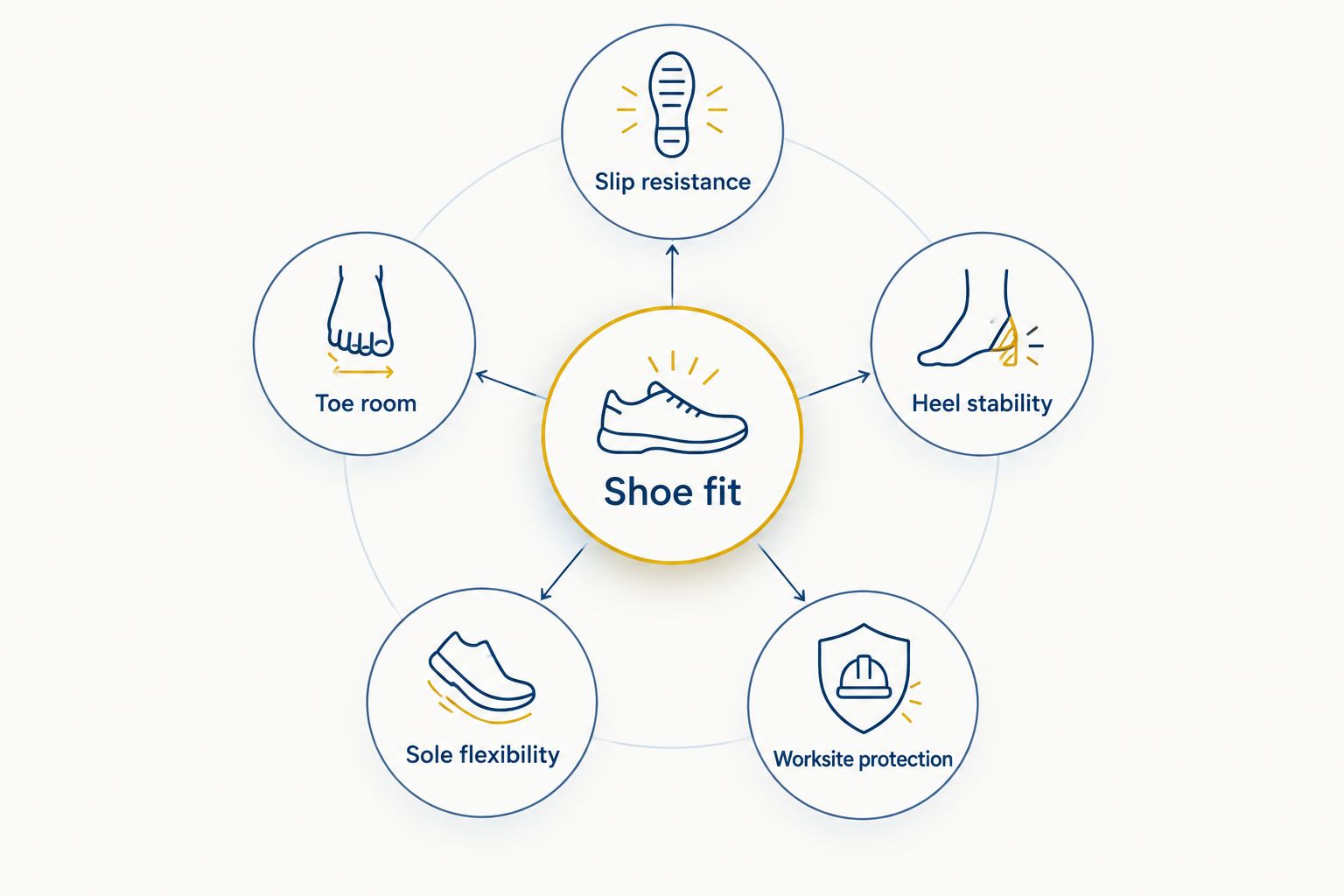
Use these criteria to judge any pair. The first question is whether it meets your workplace rules; comfort cannot compensate for missing required protection.
- Slip resistance: Look for an outsole intended for the surfaces you encounter, then check its condition regularly. A worn tread does not provide the grip you bought the shoe for. No outsole prevents every slip.
- Toe room: Your toes should not rub when walking, climbing, or crouching. A wide label alone does not guarantee the right fit; try the shoes with the socks you wear to work.
- Heel stability: The back of the shoe should hold your heel without rubbing. If your foot slides forward on a slope or ladder, reassess the fit.
- Sole flexibility: You need enough movement to crouch and walk naturally, but a shoe that folds easily through the middle can lack the support you need during a long route.
- Worksite protection: Match toe protection, upper coverage, and any other required features to employer instructions and the task. Waterproofing, puncture resistance, and chemical protection are separate properties.
- Insole space: If you use orthotics, check whether the factory insole comes out and whether the replacement leaves enough room for your foot.
Shoe fit is a balance, not a contest to find the softest sole. Test a candidate by walking, squatting, and checking heel movement. Then confirm that its stated protective features match the work you will perform.
Best shoes for pest control technicians at a glance
| Shoe type | Best for | Standout feature to look for | Key limitation |
|---|---|---|---|
| Slip-resistant low-cut work shoe | Mixed indoor and outdoor routes | Grip with less bulk around the ankle | Less coverage on wet or debris-filled sites |
| Waterproof work boot | Wet lawns and muddy ground | Upper that keeps water out | Can be bulky in confined spaces |
| Protective-toe work boot | Sites with protective-toe rules | Toe protection that meets the stated requirement | Extra bulk when crouching |
| Orthotic-compatible work shoe | Workers who already use orthotics | Removable insole and enough depth | Fit still needs checking with the orthotic inserted |
| Breathable indoor work shoe | Predominantly dry indoor visits | Airflow and a flexible fit | Poor choice for wet or protection-required tasks |
1. Slip-resistant low-cut work shoe: best for mixed routes
A low-cut work shoe is the default for technicians who regularly move between interiors, vehicles, and outdoor paths. Look for an outsole suited to the surfaces on your route and a secure fit when you crouch. Its lower profile can be easier to manage in confined areas than a bulky boot, provided your employer permits it.
Slip-resistant low-cut work shoe pros:
- Gives you an option for both indoor walking and routine outdoor movement.
- Leaves more ankle movement for squatting and climbing than a tall boot.
- Comes in designs with removable insoles if you need that feature.
Slip-resistant low-cut work shoe cons:
- Offers less upper coverage in wet grass or muddy areas.
- Does not satisfy a protective-toe rule unless the specific shoe has approved protection.
Best for: technicians whose routes combine indoor and outdoor visits without a standing boot requirement. Verdict: Buy if the specific pair fits securely and meets your employer’s rules; otherwise, move to the protective footwear your work requires.
2. Waterproof work boot: best for wet outdoor routes
A waterproof boot addresses a clear problem: water entering your footwear while you cross wet lawns or muddy ground. Check the upper, closure, and outsole rather than trusting the word waterproof on its own. You still need a secure fit and grip on the surfaces where you work.
Waterproof work boot pros:
- Provides more coverage against water and mud than a low-cut shoe.
- Suits routes where wet ground is a regular part of the job.
- Gives you an alternative to wearing damp footwear through later visits.
Waterproof work boot cons:
- Can feel cumbersome when you crouch or work in a tight space.
- Waterproofing does not establish suitability for pesticide exposure.
Best for: technicians who spend much of their route on wet outdoor ground. Verdict: Buy when water protection is a routine need, but verify any chemical-related protective requirements separately. If ankle support is also a concern, compare the features in this guide to work boots for foot and ankle support.
3. Protective-toe work boot: best for required protection
If your employer or a customer site specifies protective-toe footwear, that rule decides this category. Check the exact requirement and the boot’s markings before buying. A boot that looks sturdy is not proof that it meets a stated standard.
Protective-toe work boot pros:
- Can satisfy a protective-toe requirement when its rating matches the rule.
- Covers more of the foot than a lightweight indoor shoe.
- Gives you a dedicated option for sites where ordinary footwear is not permitted.
Protective-toe work boot cons:
- A heavier or stiffer design can make repeated crouching uncomfortable.
- A protective toe does not automatically mean the boot is waterproof, slip-resistant, or appropriate for chemical exposure.
Best for: technicians assigned to sites with protective-toe requirements. Verdict: Buy the boot that meets the exact requirement and fits your foot; skip an unrated substitute, regardless of how protective it looks.
4. Orthotic-compatible work shoe: best if you use orthotics
If you already wear prescribed orthotics, choose the shoe around them. A removable factory insole creates space, but you must also check depth, heel fit, and toe room after inserting the orthotic. Bring the device when you try on footwear rather than assuming your usual size will work.
Orthotic-compatible work shoe pros:
- Accommodates an existing orthotic when the insole and shoe depth allow it.
- Lets you compare work shoes without abandoning your prescribed device.
- Makes fit problems easier to identify before you wear the pair on a route.
Orthotic-compatible work shoe cons:
- Removable insoles do not guarantee a good fit with every orthotic.
- Orthotic compatibility says nothing about waterproofing or required protective features.
Best for: technicians who already use orthotics and need work footwear that accommodates them. Verdict: Buy only after trying the shoe with your orthotics in place. If you are considering an insert because of new pain, read the comparison of custom orthotics and over-the-counter insoles rather than guessing which device fits the problem. Naples Podiatrist foot and ankle care includes custom orthotics for patients who need an individual assessment.
5. Breathable indoor work shoe: best for dry indoor visits
A breathable, flexible work shoe is a narrow pick for technicians whose assignments are predominantly indoors. It should still have an outsole appropriate for the floors you visit and a secure fit when you squat or use stairs. Do not let a light feel substitute for a required safety feature.
Breathable indoor work shoe pros:
- Offers a less bulky option for dry indoor movement.
- Allows you to prioritize toe room and secure heel fit.
- Can suit frequent transitions between walking and crouching.
Breathable indoor work shoe cons:
- Does not address wet lawns or muddy ground.
- Cannot replace footwear required for hazards at another site.
Best for: technicians assigned mainly to dry indoor work where lighter footwear is permitted. Verdict: Buy for that specific route; skip it as your only pair if your work regularly includes wet ground or protection-required sites.
How these options were ranked
This 2026 ranking compares shoe types against the tasks in a pest control route. Mixed-site usefulness puts the slip-resistant low-cut work shoe first. Wet-ground coverage, required toe protection, orthotic fit, and dry indoor comfort each earn a separate place because none of them solves every footwear problem.
These are category recommendations, not claims that a particular manufacturer’s shoe passed a worksite test. Check the specifications of the pair you plan to wear and follow your employer’s footwear requirements. If a shoe causes rubbing, numbness, or pain during a short fitting, do not assume it will improve during a full route.
Get persistent foot pain checked
Naples Podiatrist provides specialist foot and ankle care across Southwest Florida.
Which shoe should you choose in 2026?
Choose a slip-resistant low-cut work shoe for a mixed route if your employer permits it. It is the most useful starting point when you alternate between buildings, vehicles, and outdoor paths. Make the waterproof boot your first choice if wet ground is routine; choose a correctly rated protective-toe boot when the site requires one.
Already wearing orthotics? Take them to the fitting and judge the shoe with them inside. Mostly indoors? A breathable work shoe is reasonable only if it still meets the rules for every site you visit. If no single pair suits all assignments, choose footwear for each assignment rather than expecting one shoe to do every job.
FAQ
What are the best shoes for pest control technicians in 2026?
A slip-resistant, low-cut work shoe is the best starting point for a mixed indoor and outdoor route in 2026. Choose a boot instead when wet conditions or workplace protection rules call for one.
Should pest control technicians wear boots or low-cut shoes?
Wear the footwear that meets your employer’s requirements and matches the site. Low-cut work shoes suit many mixed routes, while boots provide more coverage for wet ground or specified hazards.
Do pest control technicians need protective-toe shoes?
Protective-toe requirements depend on the employer and worksite. Check the exact rule and the footwear’s markings; an ordinary boot is not a substitute for a specified protective rating.
Are waterproof boots suitable for pesticide work?
Waterproofing alone does not establish protection against pesticides. Follow the pesticide label, safety data sheet, and workplace procedures for the protective footwear required during handling or application.
What shoes work best for crawlspaces?
Choose permitted footwear that fits securely and lets you crouch without your heel slipping. Do not trade away a required protective feature simply to get a thinner or more flexible shoe.
Can I wear orthotics in work shoes?
Yes, if the shoe has enough space for the orthotic without crowding your foot. Try the shoes with your orthotics inserted and check toe room and heel fit before using them at work.
When should a technician see a podiatrist for foot pain?
Seek a foot and ankle assessment when pain persists, worsens, or changes how you walk. Get prompt medical attention for a wound, marked swelling, or an injury that makes it difficult to bear weight.
One last thing
Check the shoes you already own before shopping in 2026. Worn tread, a collapsing heel, or toes pressed against the front can each undermine an otherwise sensible footwear choice. Try any replacement with your work socks and orthotics, then repeat the squat and walking movements your route demands.
If changing shoes does not settle persistent pain, do not keep buying softer insoles. Naples Podiatrist provides foot and ankle care at nine Southwest Florida locations serving patients from the Marco Island area to Sarasota. A specialist can assess the cause of the pain and help you decide whether footwear, orthotics, or another treatment belongs in the plan.
Related guides

