
 Fax: (239) 692-9436
 Tel: 239-430-3668
Best overall: a slip-resistant lace-up work shoe with a secure heel and enough room for your toes. Best for wet cleanup: a water-resistant work shoe. Best for a wider forefoot: a wide-fit slip-resistant work shoe. The best shoes for bartenders and bar staff in 2026 depend on your floor, your workplace rules, and where your feet hurt—not a single shoe brand.
- The best shoes for bartenders and bar staff are slip-resistant lace-up work shoes for most shifts.
- Choose a water-resistant work shoe for wet cleanup, or a wide-fit shoe when standard toe boxes pinch.
- Naples Podiatrist helps bar staff assess persistent foot pain and whether shoe fit or orthotics need attention.
- Test shoes on the surfaces you work on; no outsole makes a wet floor risk-free.
Why this matters
A bartender needs a shoe that stays on during quick turns, grips the workplace floor, and remains comfortable through standing and walking. Those needs are different from choosing a soft shoe for a short errand. Cushioning alone cannot fix a loose heel, crowded toes, or an outsole that fails on a wet surface.
If pain persists despite changing shoes, the problem deserves more than another footwear purchase. Naples Podiatrist provides foot and ankle care, including custom orthotics for bartenders and bar staff. An assessment can separate a fit problem from a condition that needs treatment.
What makes the best shoes for bartenders and bar staff?
Use these criteria before comparing shoe styles in 2026:
- Slip resistance: Choose an outsole intended for workplace slip resistance, then follow your employer's footwear requirements. Grip still depends on the floor and what is spilled on it.
- Secure fit: A closed heel and adjustable closure help keep the shoe attached when you pivot or carry items. A shoe that slips at the heel is not fixed by tighter toes.
- Toe space: Your toes should rest without pressing into the front or sides. Try the shoe with the socks you wear at work.
- Stable support: A shoe should feel controlled when you turn, not merely soft when you stand still. Excessive heel movement is a reason to try a different fit.
- Cleanability: Choose an upper you can clean according to its care instructions, especially if spills are part of your shift.
- Workplace compatibility: Check your dress code, required coverage, and any specified slip-resistance standard before buying.
Do not treat a printed slip-resistant claim as permission to ignore spills. The shoe is one part of workplace safety; prompt cleanup and your employer's procedures still matter. For foot comfort, fit is just as important as the category printed on the box.
At a glance: which work shoe fits your shift?
The rows below rank shoe types, not tested models or endorsements. Start with the first row unless a specific fit need or workplace requirement points you elsewhere.
| Shoe type | Best for | Standout feature | Key limitation |
|---|---|---|---|
| Slip-resistant lace-up work shoe | Most bartenders | Adjustable, secure fit | Laces need regular checking |
| Water-resistant slip-resistant work shoe | Wet cleanup duties | Upper better suited to splashes | Can feel less breathable |
| Wide-fit slip-resistant work shoe | Crowded toes | More forefoot room | Wide does not mean secure everywhere |
| Orthotic-ready slip-resistant work shoe | Prescribed orthotic users | Space for a removable insole | Fit must be checked with the orthotic |
| Slip-resistant work clog with a secure heel | Workers permitted to wear clogs | Easy-to-clean design | Less adjustable than a lace-up shoe |
1. Slip-resistant lace-up work shoe: best for most bartenders
A closed, lace-up work shoe is the default choice for a bartender who moves between the bar, service area, and storage. Look for a slip-resistant outsole and a heel that stays put when you walk and turn. The laces let you adjust the shoe across the top of your foot without squeezing your toes to hold it on.
Slip-resistant lace-up work shoe pros:
- Adjustable closure helps control heel movement.
- Closed design keeps the foot covered.
- Available as a practical starting point when you do not have a specific fit requirement.
Slip-resistant lace-up work shoe cons:
- Laces can loosen or get wet and need attention during a shift.
- A narrow toe box still causes pressure, regardless of how well the shoe grips.
- A soft-feeling sole is not proof that the shoe supports your foot comfortably through work.
Best for: Bar staff seeking a default work-shoe type in 2026. Try it on, walk, stop, and turn. If your heel lifts or your toes press against the front, change the fit rather than assuming the shoe will solve the problem after more shifts.
Verdict: Buy if the shoe meets workplace rules and stays secure without toe pressure. Otherwise, keep looking.
2. Water-resistant work shoe: best for wet cleanup duties
A water-resistant, slip-resistant work shoe suits bar staff who regularly handle splashes or cleanup. Focus on both the upper and the outsole: an upper that resists splashes does not automatically grip a wet floor. Check how the shoe feels once your work socks are inside it.
Water-resistant work shoe pros:
- A practical upper choice when spills reach your shoes.
- Usually easier to wipe down than absorbent fabric.
- Closed coverage keeps the shoe suited to many service-area dress codes.
Water-resistant work shoe cons:
- A less breathable upper can leave feet feeling damp.
- Water resistance is not the same as waterproofing.
- Grip varies by outsole and floor; the upper tells you nothing about traction.
Best for: Bartenders whose main footwear complaint is repeated splashes, not toe pain or a slipping heel. If moisture collects inside the shoe, reassess your socks and how the shoe fits rather than simply choosing a heavier upper.
Verdict: Buy for frequent wet cleanup when the outsole and fit also meet your needs. Skip a pair chosen solely because its upper repels water.
3. Wide-fit work shoe: best for crowded toes
A wide-fit slip-resistant work shoe gives a crowded forefoot more room without abandoning workplace traction. It is a better starting point than buying a longer shoe solely to escape pressure at the sides. Length and width solve different fit problems.
Wide-fit work shoe pros:
- More space for toes that press against a standard-width shoe.
- Less reason to overtighten the shoe to compensate for poor fit.
- Can accommodate a broader forefoot while retaining a work-appropriate outsole.
Wide-fit work shoe cons:
- An overly wide heel can slip even when the toe area feels good.
- The wide label does not tell you the shape or depth of the toe box.
- A wider shoe will not diagnose persistent numbness or focal pain.
Best for: Staff who feel side pressure at the forefoot but can keep the heel secure in a wider fit. If you notice a new blister, inspect where the shoe rubs before wearing it for another full shift.
Verdict: Buy when the toes have room and the heel remains stable. Hold if widening the shoe creates heel movement.
4. Orthotic-ready work shoe: best for prescribed orthotic users
An orthotic-ready slip-resistant work shoe has a removable insole and enough interior room to fit the orthotic you actually wear. Try the complete setup together. A shoe that fits without an insert can become tight across the top of your foot once you put one in.
Orthotic-ready work shoe pros:
- Removable insole makes fitting an orthotic more practical.
- Adjustable closure helps accommodate changes in shoe volume.
- Lets you check work-shoe traction and prescribed support in the same pair.
Orthotic-ready work shoe cons:
- A removable insole does not guarantee that every orthotic will fit.
- A bulky insert can lift your heel out of the shoe.
- An orthotic does not replace a proper diagnosis for worsening pain.
Best for: Bartenders already using orthotics or following a clinician's recommendation. Naples Podiatrist offers custom orthotics, but the right shoe still has to fit around the device. Bring your orthotics when trying on work shoes; assess toe room and heel hold with them in place.
Verdict: Buy only after checking the shoe with your actual orthotics. Wait if the insert makes the shoe tight or unstable.
5. Slip-resistant work clog: best where clogs are permitted
A work clog with a secure heel is an option for bar staff whose dress code permits it. The appeal is straightforward cleaning and a design without laces. The drawback is fit: fewer adjustment points make it harder to correct a loose heel or pressure across the top of the foot.
Slip-resistant work clog pros:
- No laces to loosen during a shift.
- A cleanable surface suits messy work areas.
- A closed-front option when allowed by workplace rules.
Slip-resistant work clog cons:
- Less adjustable than a lace-up work shoe.
- A loose heel feels less secure during quick direction changes.
- Not every clog offers the heel coverage your employer requires.
Best for: Staff permitted to wear clogs who find a pair that holds the heel securely. A backless clog is not interchangeable with a secure-heel design when your job involves fast turns.
Verdict: Hold until you confirm the dress code and test the fit while walking and turning. Skip a clog that slides off your heel.
How these shoe types were ranked
This 2026 ranking puts secure fit and workplace traction ahead of convenience. A lace-up work shoe takes the default slot because you can adjust how it holds your foot. The other shoe types earn a place only when they solve a distinct problem: splashes, forefoot crowding, orthotic fit, or a permitted clog preference.
This is not a model-by-model wear test. No shoe type guarantees relief from heel pain, nerve symptoms, or swelling. If a shoe fails the basic fit and traction checks, its position in the table does not make it the right choice for you.
Fit-check your shoes before the next shift
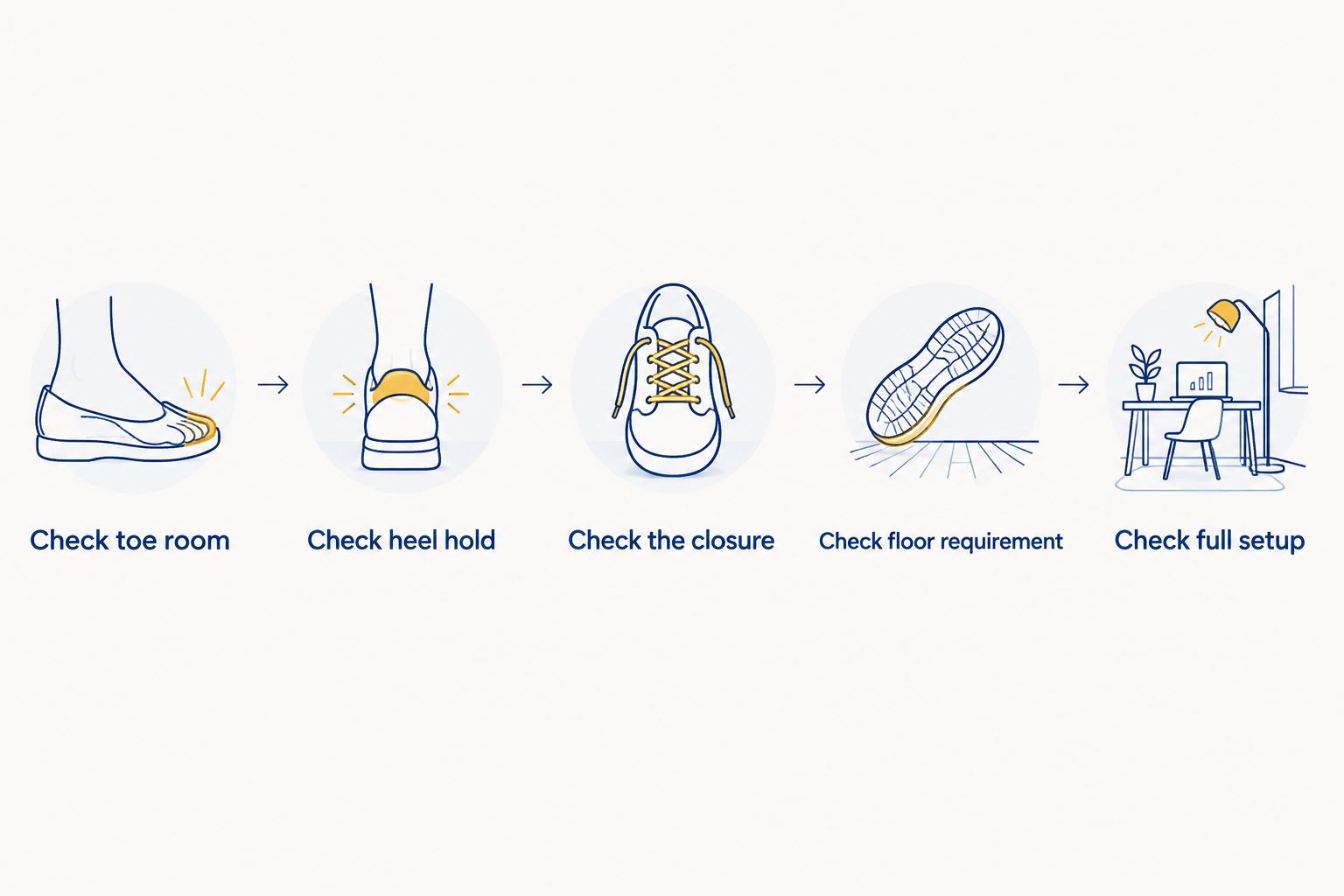
When you try on work shoes in 2026, use the socks and orthotics you expect to wear at work. Stand, walk, stop, and pivot. Check these points in order:
- Check toe room. Your toes should not press into the front or rub against the sides when you stand.
- Check heel hold. Your heel should stay in place without requiring you to grip the shoe with your toes.
- Check the closure. Tighten it enough to secure your foot without pressure or tingling across the top.
- Check the floor requirement. Confirm that the shoe meets your employer's rules for coverage and slip resistance.
- Check the full setup. Repeat the fit check with any insert or orthotic in place.
A shoe that feels tight at the start of a shift is not a good bet for a long one. Replace the pair with a better-fitting option rather than relying on pain to tell you when the fit has failed.
When the problem is not the shoe
Persistent or worsening foot pain needs an assessment, not a longer shoe list. Heel pain, pain beneath the forefoot, or tingling can have different causes and need different care. Naples Podiatrist provides access to foot and ankle specialists for people across Southwest Florida, from Marco Island to Sarasota.
Swelling deserves its own fit check. If your ankles swell, avoid turning a snug shoe into a tighter one with thick socks or an insert. The discussion of compression socks for swollen ankles belongs alongside shoe fit, not in place of finding out why swelling is happening. Seek medical attention for sudden, significant, or one-sided swelling rather than treating it as an ordinary footwear issue.
Foot pain after work can also affect the activities you want to keep doing. If your shift leaves you unable to walk comfortably, run, golf, or play pickleball, describe both your work duties and those activities at your appointment. That gives the clinician a clearer picture than naming a shoe brand alone.
Which shoes for bartenders and bar staff should you choose?
Choose a slip-resistant lace-up work shoe as the default in 2026. Move to a water-resistant version if splashes are your main concern, a wide fit if your toes are crowded, or an orthotic-ready shoe if you wear an insert. Consider a secure-heel clog only when your workplace allows it and the fit passes the same walking and turning checks.
Naples Podiatrist is a foot and ankle practice, not a shoe brand. Its role is to help you identify why your feet hurt when a sensible shoe change has not solved the problem. The practice has 9 Southwest Florida locations and offers foot and ankle medical and surgical care.
FAQ
What are the best shoes for bartenders and bar staff in 2026?
A slip-resistant lace-up work shoe is the best starting point for most bartenders and bar staff in 2026. Confirm your workplace requirements, then check toe room and heel hold before choosing a pair.
Are clogs better than sneakers for bartenders?
Neither style is better for every bartender. A secure-heel clog can work where permitted, while a lace-up work shoe offers more fit adjustment; either needs a suitable slip-resistant outsole.
Do bartenders need slip-resistant shoes?
Bartenders should follow their employer’s footwear requirements and prioritize an outsole suited to their work floor. No shoe eliminates the risk from a spill.
Should bar staff buy a bigger size for sore toes?
Not automatically. If pressure is at the sides of the forefoot, check width and toe-box shape; extra length can leave the heel loose.
Can orthotics fit in bartender work shoes?
Orthotics can fit in work shoes with adequate interior room and a removable insole. Try the shoes with your actual orthotics and check that your toes and heel still fit securely.
Are water-resistant shoes enough for a wet bar floor?
No. A water-resistant upper addresses splashes, while the outsole and workplace cleanup practices address slipping; assess both separately.
When should a bartender see a podiatrist for foot pain?
See a podiatrist when foot pain persists, worsens, or affects walking and activities outside work. Numbness, a wound, or significant swelling also calls for medical assessment rather than another shoe purchase.
One last thing
The most comfortable shoe in a store is not necessarily the one that holds your foot securely during a turn. In 2026, make heel hold your final check after toe room and workplace traction. If both shoes pass but pain continues, stop shopping by symptom alone and have your foot and ankle evaluated.
Related guides
- How to measure your feet for the right shoe size
- Best shoes for chefs and kitchen staff on hard floors
- Best shoes for hairstylists and barbers on their feet all day
- Best shoes for plantar fasciitis relief

