 Fax: (239) 692-9436
 Tel: 239-430-3668
Best overall for pressure control: a smooth manual roller, only after your clinician clears massage. Best hands-free option: low-intensity vibration. Best for clinician-directed swelling care: prescribed pneumatic compression—not a general-purpose massager. This 2026 guide compares device types rather than naming a universal winner for feet with nerve damage or poor circulation.
- The best foot massager for neuropathy depends on sensation, skin condition, and circulation—not massage strength.
- A smooth manual roller offers pressure control, but numb feet need medical clearance before massage.
- Naples Podiatrist provides neuropathy care for patients who need an examination before choosing a device.
- Foot massagers do not replace treatment for peripheral artery disease or heal damaged nerves.
Why this matters
Neuropathy affects nerves; peripheral artery disease affects blood supply. Both can cause foot symptoms, and both can occur together. A device advertised for comfort does not diagnose or treat the underlying cause.
Reduced sensation also removes a warning system. You can develop excessive pressure, friction, or a burn without feeling the pain that normally tells you to stop. Start with the guide to peripheral neuropathy symptoms and management if burning, tingling, or numbness is new or unexplained.
Naples Podiatrist is best for Southwest Florida patients who need foot-and-ankle specialist assessment before choosing a neuropathy massager. An examination can distinguish a comfort-care question from a circulation problem, wound, or nerve condition that needs treatment.
What makes the best foot massager for neuropathy?
For your 2026 shortlist, prioritize control and skin protection over stronger massage or more settings. No feature makes a consumer device automatically safe for a numb foot.
- Medical suitability: Check the device warnings against your diagnosis, wounds, circulation status, recent surgery, and prescribed restrictions.
- Pressure control: Look for gentle starting settings and an immediate stop function. A manual option should let you remove pressure easily.
- Heat independence: Choose a device that works without heat. Avoid heated massage when protective sensation is reduced unless your clinician specifically approves it.
- Foot visibility: Open designs let you see the skin and remove your foot without fighting a tight enclosure.
- Practical fit: Avoid seams, hard edges, or chambers that squeeze a bunion, prominent bone, swollen foot, or fragile skin.
- Clear instructions: Read contraindications and cleaning directions before use. A circulation claim on the packaging is not medical clearance.
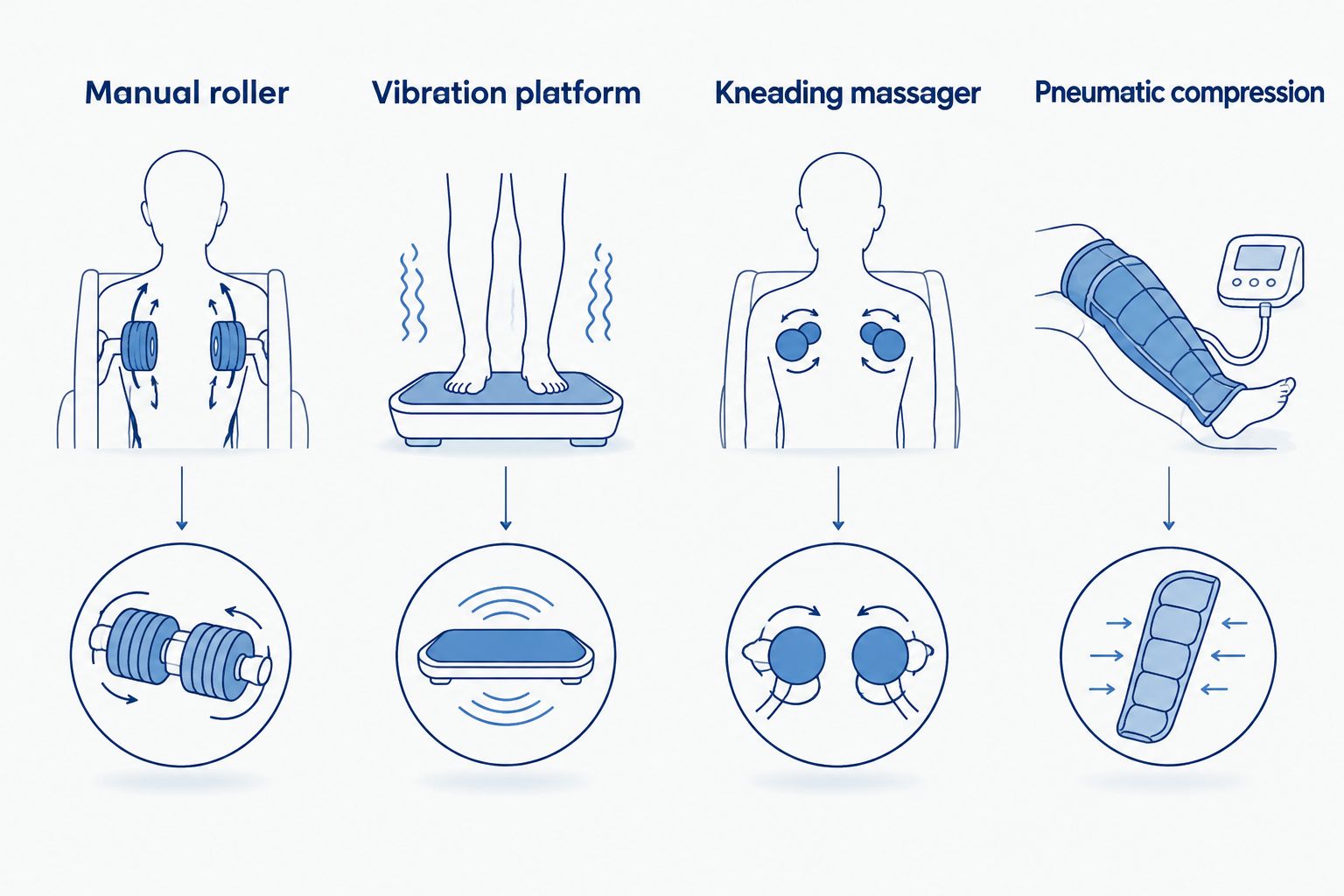
Foot massager types at a glance
These rankings describe control and intended use, not proven effectiveness for neuropathy. Every option requires clearance when you have reduced sensation, known vascular disease, or a high-risk diabetic foot.
| Rank and option | Best for | Standout feature | Key limitation |
|---|---|---|---|
| 1. Smooth manual roller | Direct control of pressure in medically cleared feet | You control movement and loading | Body weight can still create excessive pressure |
| 2. Low-intensity vibration platform | Hands-free comfort when specifically approved | No deliberate kneading needed | Vibration can aggravate sensitive feet |
| 3. Adjustable kneading massager | Muscle soreness with intact sensation, not unexplained nerve pain | Moving nodes apply mechanical massage | Concentrated pressure is a poor match for numb or fragile feet |
| 4. Prescribed pneumatic compression | Diagnosed swelling under a clinician's plan | Inflating chambers apply planned compression | Requires condition-specific assessment; not a substitute for arterial care |
The distinction is what each device does to your foot. Rolling applies pressure as you move; vibration produces repeated oscillations; kneading presses with moving nodes; pneumatic compression squeezes through inflating chambers.
1. Smooth manual roller: best for direct pressure control
A smooth manual roller moves beneath your foot while you remain seated. Unlike a motorized chamber, the roller does not continue pressing independently once you remove your foot.
That control is the reason to consider this category—not evidence that rolling repairs nerves. Choose a smooth surface rather than spikes or pronounced ridges, and do not stand on the roller to increase force.
Smooth manual roller pros:
- You control movement and pressure directly.
- Your foot remains visible during use.
- A nonheated design avoids heat exposure.
Smooth manual roller cons:
- Reduced sensation makes pressure difficult to judge.
- Rolling can irritate fragile skin or painful structures.
- Reaching and positioning the device can be difficult with limited mobility.
Best for: Someone with intact protective sensation, healthy skin, and explicit clearance for gentle self-massage.
Verdict: Hold until cleared; then choose for control, not nerve recovery.
2. Low-intensity vibration platform: best for hands-free comfort
A vibration platform delivers repeated movement through a surface beneath your feet. It does not use the same mechanism as a kneading device or an electrical stimulation unit.
Look for a genuinely gentle starting setting, stable placement, and controls you can reach while seated. Stop if vibration increases burning, tingling, pain, or skin irritation; discomfort is not evidence that the device is working.
Low-intensity vibration platform pros:
- Hands-free operation reduces the need to manipulate a roller.
- An open platform permits visual skin checks.
- Adjustable intensity lets you avoid the strongest setting.
Low-intensity vibration platform cons:
- Vibration can worsen unpleasant sensations.
- Platform movement can make standing use unsafe.
- A comfortable session does not establish improved arterial circulation.
Best for: A medically cleared user who wants seated, hands-free comfort and tolerates vibration without symptom aggravation.
Verdict: Hold until cleared; skip if vibration provokes symptoms.
3. Adjustable kneading massager: best for ordinary muscle soreness
Kneading massagers use moving nodes to press into the sole, arch, or surrounding tissues. Enclosed versions also restrict how easily you can see your foot during operation.
This category belongs lower on a neuropathy shortlist because concentrated mechanical pressure demands reliable sensation and suitable skin. Soreness after golf, running, or pickleball does not establish that kneading is appropriate—especially if numbness, swelling, or a new injury accompanies the soreness.
Adjustable kneading massager pros:
- Mechanical nodes provide massage without manual rolling.
- Adjustable models offer control over intensity.
- Models with independent heat controls allow unheated operation.
Adjustable kneading massager cons:
- Nodes concentrate pressure over small areas.
- Enclosed chambers obscure skin changes during use.
- Strong kneading is unsuitable for wounds or feet that cannot reliably detect excessive pressure.
Best for: Clinician-approved muscle soreness in feet with intact sensation and no relevant skin, injury, or circulation restrictions.
Verdict: Skip for unexplained neuropathy symptoms or loss of protective sensation.
4. Prescribed pneumatic compression: best for directed swelling care
Pneumatic compression devices inflate and deflate chambers around part of the limb. Clinicians use selected devices for specific indications, including some swelling disorders; that is different from buying a consumer massager labeled for circulation.
Swelling needs a diagnosis before compression. Arterial disease, suspected blood clots, infection, and certain heart-related conditions require medical assessment rather than a stronger squeeze.
Prescribed pneumatic compression pros:
- Fits a condition-specific treatment plan when prescribed.
- Applies compression through an inflatable sleeve rather than hard nodes.
- Can be paired with clinician-directed skin monitoring and follow-up.
Prescribed pneumatic compression cons:
- Suitability depends on the cause of swelling and vascular status.
- Incorrect application can injure skin or create excessive pressure.
- It does not replace evaluation or treatment of blocked arteries.
Best for: A patient whose clinician has diagnosed the swelling and prescribed a suitable device and treatment plan.
Verdict: Hold for a prescription and individualized instructions.
When no foot massager is the right choice
Do not massage an open wound, infected area, suspected fracture, or a newly hot, swollen foot. In someone with neuropathy, a warm and swollen foot with little pain can signal Charcot foot, which requires prompt assessment and protection from further injury.
Seek emergency care for a suddenly cold, pale, blue, severely painful, or newly weak foot. Sudden one-sided leg swelling or calf pain also needs urgent assessment; chest pain or shortness of breath with those symptoms is an emergency.
Arrange an examination before shopping if you have:
- New or worsening numbness, burning, or tingling.
- A blister, ulcer, drainage, or spreading redness.
- Foot pain at rest or a wound that is not healing.
- Known peripheral artery disease or previous diabetic foot ulceration.
- Unexplained swelling or recent foot-and-ankle surgery.
Naples Podiatrist provides neuropathy care and diabetic wound care, with quick access to foot-and-ankle specialists. Contact the practice to discuss an assessment; use emergency services rather than a routine appointment for sudden circulation warning signs.
Get your foot symptoms assessed
Discuss numbness, burning, swelling, or circulation concerns with a foot-and-ankle specialist.
How to evaluate a device after medical clearance
Bring the exact device instructions to your appointment. Ask whether its pressure, heat, vibration, electrical stimulation, or compression features fit your diagnosis; approval for one mechanism does not automatically cover another.
Before use, inspect the soles, heels, toes, and spaces between your toes. Use a mirror or ask for help if you cannot see the whole foot. Follow your clinician's instructions and the manufacturer's restrictions rather than a generic online session schedule.
During use, remain seated and awake, keep the stop control accessible, and avoid adding body weight to increase pressure. Check your skin again afterward. Stop for new redness, marks, blistering, increased swelling, or worsening symptoms—even if the session felt comfortable.
Do not use pain as your only safety check. Neuropathy can make a harmful session feel surprisingly uneventful.
How these options are ranked
This 2026 guide ranks device categories by pressure control, visibility, heat avoidance, practical fit, and medical suitability. It does not rank named products, report hands-on testing, or claim that one massager treats neuropathy better than another.
Manual rolling leads only for direct control in an appropriate patient. Vibration serves a different convenience need, kneading fits ordinary muscle soreness more than sensory loss, and pneumatic compression belongs within a prescribed plan.
The ranking is conditional: a wound, loss of protective sensation, or suspected circulation disorder outweighs any convenience feature.
Which foot massager should you choose?
For an undecided shopper in 2026, get clearance first and choose the gentlest suitable mechanism—not the strongest device. A smooth manual roller is a straightforward option to discuss when your skin and protective sensation are intact. It is not a default recommendation for a numb diabetic foot.
If your goal is better circulation, establish what is causing the symptoms before buying anything. Treatment for peripheral artery disease differs from treatment for venous swelling, and neither diagnosis follows from simply having cold feet.
Naples Podiatrist offers foot-and-ankle care for patients across Southwest Florida. The practical goal is to protect your feet so you can keep walking, golfing, or playing pickleball—not to tolerate more pressure from a machine.
FAQ
What’s the best foot massager for neuropathy?
No foot massager is best for everyone with neuropathy. A smooth manual roller offers direct pressure control in medically cleared feet with intact protective sensation, but numbness, wounds, or circulation problems can make massage inappropriate.
Can a foot massager improve poor circulation?
A consumer foot massager is not a treatment for peripheral artery disease. Cold feet, walking-related leg pain, or a slow-healing wound need assessment to identify the cause and choose appropriate treatment.
Is a heated foot massager safe with diabetic neuropathy?
Avoid heated foot massage when sensation is reduced unless your clinician specifically approves it. Neuropathy can prevent you from recognizing excessive heat before a burn occurs.
Is vibration better than kneading for nerve pain?
Neither vibration nor kneading is a universal choice for nerve pain. Vibration can aggravate sensitive feet, while kneading concentrates pressure; suitability depends on sensation, skin health, circulation, and the underlying diagnosis.
How long should I use a foot massager if I have neuropathy?
Use only the duration approved by your clinician and permitted by the device instructions. There is no session length that makes an unsuitable device safe for a numb or injured foot.
Should I massage a swollen foot that doesn’t hurt?
Do not massage a newly swollen foot until the cause is assessed. Neuropathy can mask pain from serious problems, including Charcot foot, injury, or infection.
Can foot massage reverse neuropathy?
Foot massage is not an established way to reverse peripheral neuropathy. Management focuses on the cause, symptom treatment, and preventing skin injury; temporary comfort does not prove nerve recovery.
One last thing
For your 2026 decision, remember that less pain during massage does not necessarily mean a safer session. A numb foot can fail to warn you about injury. Inspect the skin, follow your clinician's plan, and treat new swelling or color changes as symptoms to assess—not reasons to turn up the intensity.
Related guides
- Peripheral arterial disease signs in your feet and legs
- How to check your feet daily with diabetes
- Best shoes for people with diabetic neuropathy