
 Fax: (239) 692-9436
 Tel: 239-430-3668
Best overall for thick, dry heels: a urea cream. Best for sensitive, dry skin: a fragrance-free ceramide cream. Best simple overnight option: plain petrolatum ointment. This 2026 guide compares the best foot creams for cracked heels and dry skin by ingredient, skin condition, and safety—not by packaging claims.
- The best foot creams for cracked heels and dry skin include urea for thick skin and ceramides for sensitivity.
- Plain petrolatum ointment helps seal moisture into dry heels overnight; it does not remove thick callus.
- Naples Podiatrist provides specialist foot care for patients whose heel cracks need more than moisturizer.
- Bleeding, drainage, spreading redness, or diabetes with an open crack calls for medical assessment, not stronger exfoliation.
If your heel keeps splitting despite regular moisturizing, read how to treat cracked heels that will not heal. A recurring fissure needs attention to pressure, skin thickness, and the reason it is not closing.
Why this matters
A dry heel and an open heel wound are different problems. Moisturizer helps dry skin stay flexible, but a deep fissure can bleed, become infected, and make walking painful.
Thick skin around the heel rim is especially prone to splitting as the heel bears weight. Open-backed shoes and repeated friction can add to the problem. For pickleball, golf, running, and everyday walking, skin care belongs alongside properly fitting footwear.
Naples Podiatrist foot care is best for patients whose cracked heels are painful, recurrent, or complicated by diabetes. If you have diabetes, reduced sensation, or poor circulation, arrange assessment before using exfoliating treatments on damaged skin. The diabetic foot care guide for Naples explains the broader care needs that moisturizer alone does not address.
What makes the best foot cream for cracked heels?
Choose by the problem you see, not by the strongest ingredient on the shelf. These criteria guide the 2026 ranking:
- Moisture retention: Glycerin and urea attract water; petrolatum reduces moisture loss.
- Callus softening: Urea and lactic acid help soften rough, thickened skin.
- Barrier support: Ceramides help support the skin barrier when dryness comes with sensitivity.
- Low irritation: Fragrance-free formulas avoid an unnecessary source of irritation.
- Skin integrity: A product intended for intact skin is not automatically suitable for bleeding fissures.
- Practical use: Choose a texture you will apply consistently without leaving your feet slippery during activity.
The American Academy of Dermatology's undated cracked-heel patient guidance recommends moisturizers containing 10%–25% urea, alpha hydroxy acid, or salicylic acid. It also recommends applying moisturizer within 5 minutes of bathing and using plain petroleum jelly before bed. Those recommendations concern dry, cracked heels; they do not replace assessment of an infected or high-risk foot wound.
Best foot creams at a glance
These are ingredient-based options, not interchangeable treatments. Check the current label because a formula can combine several ingredients, including fragrance or exfoliating acids.
| Rank and option | Best for | Standout feature | Key limitation |
|---|---|---|---|
| 1. Urea cream | Thick, dry heel skin | Hydrates and softens hardened skin | Can sting damaged skin |
| 2. Fragrance-free ceramide cream | Sensitive skin with ordinary dryness | Supports the skin barrier | Does not strongly reduce thick callus |
| 3. Plain petrolatum ointment | Overnight moisture sealing | Reduces water loss without exfoliating acids | Greasy and does not remove callus |
| 4. Lactic acid cream | Rough, intact skin needing exfoliation | Combines moisture support with surface exfoliation | Can irritate fissures or inflamed skin |
| 5. Glycerin-rich cream | Routine maintenance of mildly dry feet | Attracts water into the outer skin layer | Often insufficient for thick, cracked heels |
1. Urea cream: best foot cream for thick, dry heels
Urea cream is the default choice when your heel feels hard, rough, and dry but does not have a deep, bleeding opening. Urea attracts moisture and, at higher concentrations, helps loosen thickened surface skin. That combination targets both dryness and the rigid heel rim that contributes to cracking.
For a 2026 shopping decision, look for a clearly stated urea concentration rather than a vague heel-repair claim. The 10%–25% urea range in dermatology guidance is a useful label check, not a reason to select the strongest formula automatically. Follow the product directions and keep it out of open wounds unless your clinician specifically directs otherwise.
Urea cream pros:
- Addresses moisture loss and hardened skin together.
- Suits localized roughness around an intact heel rim.
- Offers a stated concentration you can check on the label.
Urea cream cons:
- Can sting fissured, irritated, or recently abraded skin.
- Does not correct shoe pressure or treat infection.
Best for: Adults with thick, dry heel skin and no open wound.
Verdict: Buy for intact, callused heels; hold if the crack is open or bleeding.
2. Fragrance-free ceramide cream: best for sensitive dry feet
A fragrance-free ceramide cream is a better fit when your feet feel dry and easily irritated without a thick callus rim. Ceramides are lipids found in the skin barrier. A cream containing them supports barrier care without requiring an exfoliating acid.
Look at the entire ingredient list. A ceramide formula can still contain fragrance or other ingredients that irritate your skin. Persistent itching, redness, or scaling needs a diagnosis rather than repeated changes of moisturizer.
Fragrance-free ceramide cream pros:
- Supports the skin barrier in a daily moisturizing routine.
- Avoids fragrance when the label explicitly states fragrance-free.
- Suits broader dry areas rather than only hardened heels.
Fragrance-free ceramide cream cons:
- Does not substantially exfoliate a thick heel callus.
- Cannot treat an undiagnosed fungal infection or inflammatory rash.
Best for: Sensitive feet with mild dryness and intact skin.
Verdict: Buy for barrier-focused care; skip as the only treatment for heavy callus.
3. Plain petrolatum ointment: best for overnight moisture sealing
Plain petrolatum, also called petroleum jelly, forms a protective layer that reduces water loss. It is an ointment rather than a cream, but it belongs in this comparison because moisture sealing is useful for dry heels. Apply it before bed and use clean socks to keep it from spreading onto bedding.
Petrolatum does not dissolve hardened skin. If your heel has a substantial callus rim, moisture sealing alone does not address that thickness. Use it for uncomplicated dryness, not as a substitute for wound evaluation.
Plain petrolatum ointment pros:
- Reduces moisture loss from the skin.
- Avoids exfoliating acids when the product is plain petrolatum.
- Fits a simple bedtime routine.
Plain petrolatum ointment cons:
- Leaves a greasy layer that can make bare feet slippery.
- Does not exfoliate or treat athlete's foot.
Best for: Dry, intact heels needing overnight moisture retention.
Verdict: Buy for bedtime use; skip application immediately before barefoot walking.
4. Lactic acid cream: best for rough, intact skin
Lactic acid is an alpha hydroxy acid that helps loosen surface skin cells. It is useful when rough texture remains a problem and the skin is intact. It is not the first choice for tender, inflamed heels or fissures that expose raw tissue.
Read directions carefully and avoid combining lactic acid with aggressive filing or another exfoliating product. More exfoliation is not the goal. The goal is softer skin without creating irritation that makes walking uncomfortable.
Lactic acid cream pros:
- Targets rough surface texture.
- Combines exfoliation with moisturizing ingredients in a cream.
- Provides an alternative ingredient approach to urea.
Lactic acid cream cons:
- Can sting cracked or inflamed skin.
- Requires care when other exfoliating treatments are already in use.
Best for: Rough, intact heel skin in someone who tolerates exfoliating acids.
Verdict: Buy for targeted exfoliation; skip on open, painful fissures.
5. Glycerin-rich cream: best for daily maintenance
Glycerin is a humectant: it attracts water into the outer layer of skin. A glycerin-rich cream suits mild dryness and ongoing care after your heels are comfortable again. Its other ingredients determine how much moisture sealing and barrier support the formula provides.
This is a maintenance option, not a complete answer to deep cracks. Choose a fragrance-free formula if you have sensitive skin, and check for added acids before assuming the cream is gentle.
Glycerin-rich cream pros:
- Supports everyday hydration.
- Fits routine care for mildly dry feet.
- Can be combined with barrier-supporting ingredients within one formula.
Glycerin-rich cream cons:
- Does not necessarily soften thick callus enough on its own.
- Added fragrance or acids can change its tolerability.
Best for: Mild dryness and maintenance after heel roughness improves.
Verdict: Buy for upkeep; skip as the sole response to persistent deep cracking.
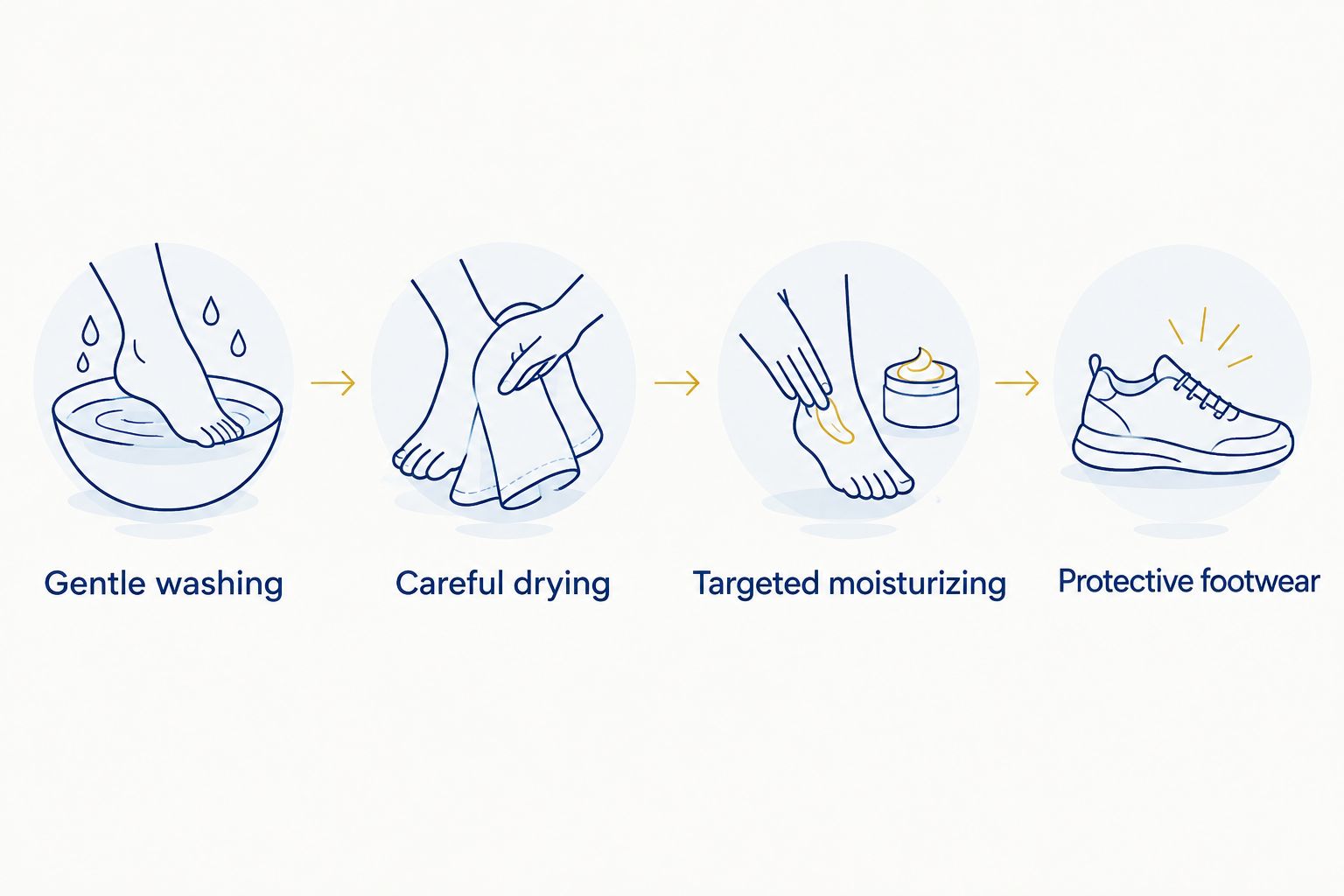
How to use heel moisturizer safely
For your 2026 heel-care routine, separate moisturizing from wound care. These steps apply to ordinary dryness on intact skin; open cracks, infection signs, or high-risk feet need an individualized plan.
Gentle washing
Use lukewarm water and a gentle cleanser. Avoid long, hot soaks, which can worsen dryness. Do not use a razor, blade, or scissors to remove the heel rim.
Careful drying
Pat your feet dry, including between the toes. Inspect the heel in good light before applying anything. A mirror helps if you cannot see the bottom of your foot comfortably.
Targeted moisturizing
Apply your chosen moisturizer to dry areas within 5 minutes of bathing. Keep moisturizer out of the spaces between your toes, where trapped moisture encourages skin breakdown. Follow the label rather than layering several exfoliating formulas.
Protective footwear
Wear clean socks and shoes that fit without rubbing the heel. Put greasy ointment on at bedtime rather than before golf, pickleball, or a run. Do not exercise through a painful, bleeding fissure.
Check your heels daily for new splits, drainage, or redness. If a product causes burning or a rash, stop using it. Do not mistake irritation for proof that an exfoliating cream is working.
When cracked heels need a specialist
Arrange prompt assessment for a deep or bleeding fissure, repeated reopening, increasing pain, or a crack that is not healing. If you have diabetes, neuropathy, or poor circulation, contact your foot-care clinician promptly about any open skin rather than waiting for pain.
Seek urgent medical care for spreading redness, warmth, swelling, pus, fever, or feeling unwell. A cold, pale, blue, or black foot also needs urgent assessment. Reduced sensation can hide the seriousness of a wound.
Naples Podiatrist provides foot and ankle specialist care, including diabetic wound care and advanced wound care. An examination can distinguish uncomplicated dryness from fungal infection, inflammatory skin disease, pressure-related callus, or impaired healing.
Get your cracked heels assessed
Ask a foot and ankle specialist about painful, recurrent, or non-healing heel cracks.
How these options are ranked
This 2026 guide ranks ingredient categories by moisture retention, callus softening, barrier support, irritation risk, and practical use. It is not a head-to-head product trial or a claim that every formula with the same ingredient performs identically.
Naples Podiatrist foot care addresses a different need from a moisturizer: diagnosis and treatment when the skin problem persists or carries medical risk. No cream earns a recommendation for an infected wound merely because it works well on dry skin.
Which foot cream should you choose?
Choose urea cream for thick, intact heel skin; choose fragrance-free ceramide cream for sensitive dryness. Plain petrolatum is the simple overnight moisture-sealing option. Reserve lactic acid for intact rough skin, and use glycerin-rich cream for mild dryness or maintenance.
For the undecided reader in 2026, inspect the heel first. If it is dry and hard, urea is the default; if it is open, bleeding, draining, or increasingly painful, assessment is the next move—not a stronger cream.
FAQ
What’s the best foot cream for cracked heels and dry skin?
A urea cream is the best default for thick, dry heel skin that is intact. A fragrance-free ceramide cream better suits sensitive dryness, while an open or bleeding fissure needs assessment rather than stronger exfoliation.
Is urea cream better than petroleum jelly for cracked heels?
Urea cream is better for softening thick heel skin; petroleum jelly is better suited to sealing in moisture without exfoliation. Neither treats infection or corrects repeated pressure from poorly fitting shoes.
What strength of urea should I look for?
The American Academy of Dermatology’s cracked-heel guidance recommends moisturizers containing 10%–25% urea. Follow the label, and ask your clinician before using exfoliating products if you have diabetes, reduced sensation, poor circulation, or open skin.
Can I put heel cream on a bleeding crack?
Do not put exfoliating heel cream into a bleeding crack unless your clinician specifically directs it. A bleeding fissure needs wound assessment, especially if you have diabetes or impaired circulation.
Can people with diabetes use foot moisturizer?
People with diabetes can use moisturizer on dry, intact skin as part of their foot-care plan. Keep it out of the spaces between the toes, inspect your feet daily, and contact your clinician promptly about any open crack.
Why are my heels still cracked after using cream?
Persistent cracking means moisture alone is not addressing the full problem. Thick callus, repeated pressure, fungal infection, inflammatory skin disease, or impaired healing can require a different treatment.
Should I use a foot peel for deep heel cracks?
Skip an exfoliating foot peel on deep, open, or painful heel cracks. Chemical exfoliation can irritate damaged skin; patients with diabetes, neuropathy, or poor circulation should get professional advice before using these treatments.
When should I see a podiatrist for cracked heels?
See a podiatrist for painful, recurrent, bleeding, or non-healing heel cracks. Naples Podiatrist provides specialist foot care; spreading redness, drainage, fever, or a discolored foot requires urgent medical attention.
One last thing
The strongest cream is not always the best cream. A heel that repeatedly splits in the same place needs a check of pressure and skin thickness, not an endless increase in exfoliation.
Bring your usual walking or sports shoes and the cream you are using to your appointment. That gives the clinician concrete information about both your footwear and your current skin-care routine.
Related guides
- How to treat foot and toe eczema
- Athlete's foot treatment: home remedies versus prescription options
- Peripheral neuropathy in the feet: symptoms and management

