
 Fax: (239) 692-9436
 Tel: 239-430-3668
Pregnancy swelling in the feet and ankles usually starts in the second trimester and peaks in the third, and the compression sock you choose decides whether that swelling settles by bedtime or keeps climbing. This guide ranks the compression sock categories that actually work for pregnant patients in Southwest Florida in 2026, from mild daily wear to firm prescription-grade compression.
- 15-20 mmHg graduated knee-high socks are the best compression socks for pregnancy swelling for most patients in 2026.
- 20-30 mmHg over-the-calf compression socks work better for nurses, retail staff, and anyone standing a full shift.
- Basic 8-15 mmHg drugstore socks are the budget pick for mild, early-pregnancy ankle puffiness.
- Skip 30-40 mmHg firm compression unless a doctor has already diagnosed DVT risk or advanced varicose veins.
- Sudden one-leg swelling with calf pain needs same-day evaluation, not a tighter sock.
Why this matters
Blood volume rises roughly 40-50% during a normal pregnancy, and a growing uterus presses on the pelvic veins that return blood from the legs. That combination slows venous return, and fluid pools in the lowest point available: your feet and ankles. Progesterone also relaxes vein walls, which is part of why foot pain during pregnancy so often shows up alongside visible swelling rather than on its own.
Compression socks do not cure the underlying cause — they help the calf muscle push fluid back up against gravity instead of letting it settle. Graduated compression, tighter at the ankle and looser toward the knee, is the mechanism that matters. A sock that squeezes evenly top to bottom does not do this job, no matter how tight it feels.
For active patients still walking the beach, working a pickleball rotation, or standing through a retail shift in 2026, the right compression category is different from what a mostly-seated office worker needs. That is the split this ranking is built around.
What makes the best compression socks for pregnancy swelling
- Graduated compression construction — tighter at the ankle, progressively looser up the leg, not uniform squeeze
- mmHg range matched to activity level — mild for occasional puffiness, moderate for full shifts on your feet
- Sock height matched to where swelling concentrates — ankle-only versus full calf versus thigh-high
- Toe design for Florida heat — closed toe traps warmth, open toe breathes better in summer months
- Ease of application over a growing belly — some designs are far easier to pull on in the third trimester
- Medical-grade labeling versus fashion "compression-look" socks — only medical-grade sizing delivers a true graduated gradient
Compression socks for pregnancy swelling at a glance
| Category | Best for | Standout feature | Key limitation |
|---|---|---|---|
| 15-20 mmHg graduated knee-high | Daily swelling, most trimesters | Balanced squeeze without doctor sign-off | Not enough for all-day standing jobs |
| 20-30 mmHg over-the-calf | Full shifts on your feet | Stronger push against gravity | Harder to pull on solo in the third trimester |
| Open-toe lightweight | Florida heat, hot afternoons | Breathable, cooler on skin | Less warmth retention in air conditioning |
| Maternity compression leggings | Whole-leg and lower-back support | Covers thigh and lower back in one piece | Bulkier under regular clothing |
| 8-15 mmHg mild compression | Early or occasional puffiness | Lowest cost entry point | Too light once swelling becomes daily |
| 30-40 mmHg firm compression | Doctor-diagnosed DVT risk or varicose veins | Strongest venous return support | Requires a prescription-level fitting |
1. 15-20 mmHg graduated knee-high socks: best compression socks for pregnancy swelling overall
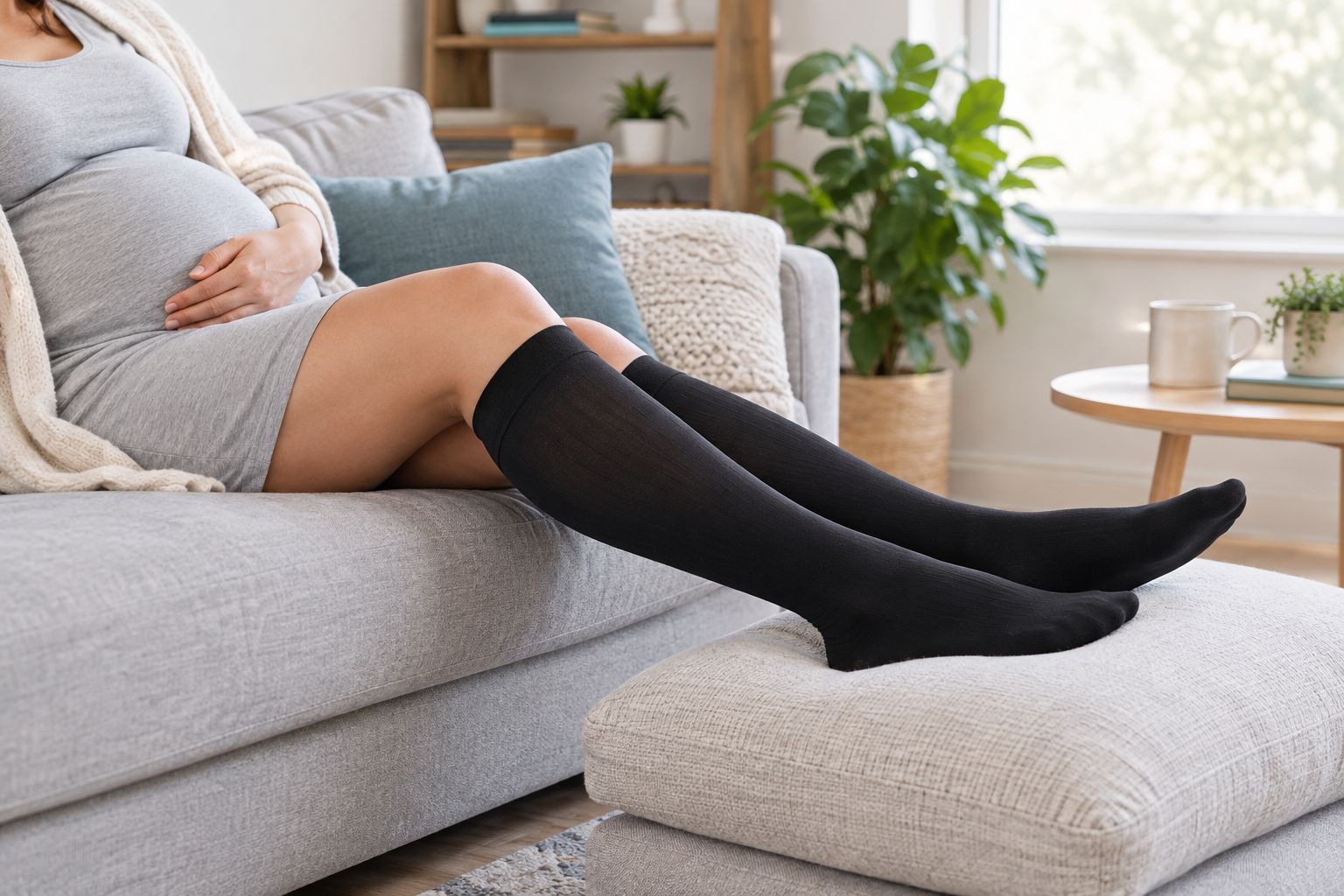
This is the range most obstetric and podiatric guidance defaults to for everyday pregnancy swelling in 2026. The graduated squeeze runs from the ankle up through the calf, giving the calf muscle pump enough resistance to move fluid without cutting off circulation.
15-20 mmHg compression socks pros:
- Works for most pregnant patients without a prescription
- Fits under regular shoes and most maternity pants
- Comfortable enough for a full waking day
15-20 mmHg compression socks cons:
- Not strong enough for patients on their feet 8+ hours straight
- Some brands run small over swollen calves late in pregnancy
Best for: general pregnancy swelling, second and third trimester. Verdict: Buy.
2. 20-30 mmHg over-the-calf compression socks: best for all-day standing shifts
Nurses, teachers, hotel staff, and anyone logging a full shift on hard floors need more push than the mild range provides. Moderate compression in this range is still available without a prescription in most cases, but it runs firmer and takes more effort to put on.
20-30 mmHg compression socks pros:
- Noticeably reduces end-of-shift ankle swelling for standing jobs
- Holds up through 8-12 hour workdays
- Doubles as travel compression for long car rides across Florida
20-30 mmHg compression socks cons:
- Harder to pull on over a large belly without help or a donning aid
- Can feel too tight for patients who are mostly seated
Best for: standing or walking jobs through a full shift. Verdict: Buy.
3. Open-toe lightweight compression socks: best for Florida heat and third-trimester swelling
Swelling gets worse in hot weather because heat dilates blood vessels near the skin, working against the compression instead of with it. Open-toe, lighter-weave compression socks trade some coverage for breathability, which matters on 90-degree Naples afternoons.
Open-toe compression socks pros:
- Cooler on skin during Southwest Florida summers
- Leaves toes free for sandal-style shoes late in pregnancy
- Lighter fabric is easier to pull on over swollen feet
Open-toe compression socks cons:
- Less warmth retention indoors under air conditioning
- Toe box exposure means less protection walking on hot pavement
Best for: hot climates and swollen feet that no longer fit closed-toe designs. Verdict: Buy.
4. Maternity compression leggings: best for whole-leg and lower-back support
These cover the thigh and sometimes the lower back in one piece, targeting swelling that extends above the knee along with the round-ligament and lower-back discomfort common in the third trimester.
Maternity compression legging pros:
- Addresses thigh swelling that knee-high socks miss
- Some designs add light lower-back support
- One garment instead of layering socks under pants
Maternity compression legging cons:
- Bulkier and warmer than a sock under regular clothing
- Harder to size correctly as belly and leg measurements change monthly
Best for: swelling that reaches the thigh or comes with lower-back strain. Verdict: Hold unless swelling has moved past the knee.
5. 8-15 mmHg mild compression socks: best budget option for early swelling
This is the entry-level range, often labeled "support socks" rather than medical compression. It suits occasional puffiness early in pregnancy before daily swelling sets in.
8-15 mmHg compression socks pros:
- Lowest-cost entry into graduated compression
- Easy to pull on, minimal break-in
- Fine for occasional evening puffiness
8-15 mmHg compression socks cons:
- Too light once swelling becomes a daily third-trimester issue
- Not enough support for standing jobs
Best for: first and early second trimester, occasional puffiness only. Verdict: Hold, step up as swelling increases.
6. 30-40 mmHg firm compression socks: best for doctor-diagnosed DVT risk or varicose veins
This range is prescription-grade in most cases and is not a starting point for general pregnancy swelling. It belongs to patients with a diagnosed clotting risk, significant varicose veins, or a history of deep vein thrombosis.
30-40 mmHg compression socks pros:
- Strongest venous return support available in a sock
- Appropriate for medically diagnosed circulation problems
30-40 mmHg compression socks cons:
- Requires a proper fitting, not a self-selected size
- Too restrictive for patients without a diagnosed need
Best for: patients with a documented DVT or varicose vein diagnosis. Verdict: Wait for a doctor's direction before buying.
How this ranking was built
Each category was scored against the criteria above: graduated construction, mmHg range fit, sock height, toe design for Florida heat, ease of donning over a growing belly, and medical-grade labeling. The categories that scored well on most criteria for the average pregnant patient rank higher; niche categories like firm compression rank lower because they only fit a specific diagnosis, not general swelling.
Which compression socks should you choose in 2026?
For most pregnant patients dealing with everyday ankle and foot swelling, 15-20 mmHg graduated knee-high compression socks are the right default. Step up to 20-30 mmHg if you are standing through a full shift, and switch to open-toe lightweight styles once Florida summer heat makes closed-toe socks uncomfortable. Save firm 30-40 mmHg compression for a diagnosis, not a guess — that range needs a fitting, not a shopping decision. If swelling is asymmetric, sudden, or paired with calf pain, that is not a sock problem; that needs a same-day evaluation. Patients dealing with structural foot pain alongside swelling often benefit from custom orthotics for pregnancy-related foot pain in addition to compression.
Talk to a foot and ankle specialist today
Same-day access across Southwest Florida, phone answered 24/7.
FAQ
What’s the best compression sock for pregnancy swelling?
15-20 mmHg graduated knee-high compression socks work best for most pregnant patients in 2026. Step up to 20-30 mmHg only if you’re standing through a full shift.
Are 20-30 mmHg compression socks safe during pregnancy?
Yes, 20-30 mmHg moderate compression is generally safe for pregnant patients without a diagnosed circulation problem. Check with your OB first if you have low blood pressure or a history of poor circulation.
When should you start wearing compression socks in pregnancy?
Most patients start once daily ankle or foot swelling appears, usually in the second trimester. Starting mild compression early can slow how quickly swelling builds later on.
How long can you wear compression socks each day while pregnant?
Most graduated compression socks are designed for all-day wear, roughly 8-12 hours, and should come off at night unless a doctor directs otherwise. Removing them before bed lets you check for skin changes underneath.
Do compression socks help with varicose veins during pregnancy?
Graduated compression reduces the pooling that makes varicose veins worse during pregnancy, but it does not shrink veins that already exist. Firm 30-40 mmHg compression is typically reserved for diagnosed varicose vein cases.
Is swelling in one leg normal during pregnancy?
No. Swelling should be roughly symmetrical between both legs during a normal pregnancy. One-leg swelling, especially with calf pain or warmth, needs same-day medical evaluation to rule out a blood clot.
Can compression socks be worn overnight during pregnancy?
Standard graduated compression socks are built for daytime wear and should come off before sleep unless a doctor has prescribed overnight compression. Mild 8-15 mmHg socks are sometimes an exception for specific cases.
What compression level is best for swollen feet in the third trimester?
Most third-trimester patients do well in 15-20 mmHg, moving to 20-30 mmHg if swelling is severe or the job requires long hours standing. Open-toe styles help when Florida heat makes closed-toe socks uncomfortable.
One last thing
Compression socks manage swelling; they do not diagnose why it's happening. Sudden swelling in one leg, swelling that comes with a headache or vision changes, or calf pain that doesn't ease with elevation are signals that go past what a sock can fix. Southwest Florida's heat also masks how much of your swelling is pregnancy-driven versus heat-driven — patients often overestimate how well compression alone will work once outdoor temperatures climb past 85 degrees.
Related guides

