
 Fax: (239) 692-9436
 Tel: 239-430-3668
To support faster healing after foot surgery, follow your surgeon’s weight-bearing restrictions, protect the incision, control swelling as instructed, eat adequately, and avoid smoking. These steps help prevent avoidable setbacks; they do not replace the time your bone, tendon, or other repaired tissue needs to heal.
- How to speed up healing after foot surgery: protect the repair and follow your surgeon’s postoperative instructions.
- Less pain does not mean a bone or tendon is ready for unrestricted walking.
- Naples Podiatrist offers specialist foot and ankle care for Southwest Florida patients.
- Report worsening wound symptoms promptly; chest pain or sudden shortness of breath requires emergency care.
How to speed up healing after foot surgery
The safest way to improve recovery is to remove obstacles to healing, not push through restrictions. Start with your discharge instructions and clarify anything you cannot follow at home. Compare your milestones with the procedure you actually had, rather than another person’s experience; foot surgery recovery times by procedure explains why that distinction matters.
Use this sequence for your 2026 recovery plan:
- Confirm your restrictions. Know whether you can put weight on the operated foot, which device to use, and when it must stay on.
- Protect the incision. Follow the prescribed dressing and bathing instructions. Do not remove dressings simply to check underneath.
- Manage swelling. Elevate and use cold therapy only as your surgical team directs.
- Support healing. Eat regular meals, include protein, follow your diabetes plan if applicable, and avoid smoking.
- Keep follow-up appointments. Your surgeon checks the wound and repair before changing activity or footwear.
- Report concerning changes. Do not wait for a scheduled visit when symptoms suggest infection, impaired circulation, or a blood clot.
Why this matters
A foot can feel better before the deeper repair is strong enough for normal activity. Pain medicine also changes what you feel without changing what the tissue can tolerate.
Naples Podiatrist foot surgery care is best suited to Southwest Florida patients seeking specialist foot and ankle care. Your operating surgeon remains the first contact for procedure-specific postoperative decisions, because the exact repair determines which movements and loads are safe.
Protect the repair before increasing activity
Weight-bearing instructions describe how much load your surgeon allows through the operated foot. They are not interchangeable, and a walking boot does not automatically mean you have permission to walk.
| Instruction or device | Best for | Benefit | Limitation |
|---|---|---|---|
| Non-weight-bearing | Repairs requiring protection from body weight | Keeps weight off the operated foot | Requires safe transfers and an appropriate mobility aid |
| Partial weight-bearing | Repairs cleared for a specified amount of loading | Allows controlled loading under instructions | You need a clear explanation of the permitted load |
| Weight-bearing as tolerated | Procedures specifically cleared for symptom-guided loading | Allows walking within the surgeon’s limits | Does not authorize unrestricted exercise or barefoot walking |
| Prescribed boot or surgical shoe | Procedures requiring protected positioning or walking | Protects the foot in the intended position | Does not replace weight-bearing restrictions |
Ask your team to demonstrate getting out of bed, using the bathroom, and managing stairs. If you cannot safely use crutches, explain that before trying to manage alone; a different mobility aid requires assessment rather than guesswork.
Keep walkways clear, remove loose rugs, and arrange help with meals, pets, and errands. Avoid carrying objects while using crutches. Preventing a fall protects both your surgical foot and the rest of your body.
Keep the incision and dressing protected
Your discharge instructions take priority over general wound-care advice. Some dressings stay in place until a clinician removes them; others require a specific home-care routine.
Wash your hands before any authorized dressing change. Use only the supplies and cleaning method your team recommends, and do not apply peroxide, alcohol, creams, or antibiotic ointment unless instructed.
Do not soak the incision in a bathtub, pool, hot tub, or the Gulf until your surgeon clears immersion. A small skin opening still needs protection. Ask how to shower without wetting the dressing, rather than assuming a covering is waterproof.
Contact the surgical team if the dressing becomes wet, slips, develops an unexpected odor, or becomes increasingly soaked with blood or drainage. Do not cut or loosen a cast yourself. New pressure pain or changes in toe color, warmth, or sensation need prompt assessment.
Reduce swelling without irritating the surgical site
Swelling after surgery does not automatically mean something is wrong. However, worsening swelling needs attention when it comes with increasing pain, wound changes, calf symptoms, or altered toe color.
Elevate the foot as directed, supporting the leg without placing sustained pressure on the incision or heel. If your instructions specify elevation above heart level, sitting with the foot on a low stool does not achieve that position.
Use cold therapy only if your surgeon approves it and explains where to place it. Keep the dressing dry and protect skin from direct ice contact. People with reduced sensation or circulation problems need particular caution because they cannot always rely on discomfort to warn of skin injury.
Do not add compression socks or tighten a wrap to force swelling down. Compression must fit the operation, circulation, and wound condition. Ask before changing it.
Eat enough and review medicines safely
Healing requires adequate nutrition. Include protein-containing foods such as eggs, fish, poultry, beans, tofu, or dairy according to your dietary needs, alongside other foods that provide energy and nutrients.
A restrictive diet during recovery can make adequate intake difficult. If nausea, poor appetite, or a medical condition limits eating, tell your care team; patients with kidney disease or other dietary restrictions need individualized advice rather than a generic high-protein target.
For your 2026 medication review, bring a complete list of prescriptions, nonprescription medicines, vitamins, and supplements. Take postoperative medicines exactly as prescribed, and ask before adding pain relievers because products can contain overlapping ingredients.
Do not start aspirin or another blood thinner on your own. If your surgeon prescribed clot-prevention medicine, follow that plan and ask what to do about a missed dose. The same rule applies to antibiotics: use them only when prescribed and follow the directions.
Does taking vitamins make foot surgery heal faster?
Correcting a nutritional deficiency supports healing, but extra supplements are not a substitute for protecting the repair. Ask your clinician whether your diet, medical history, or laboratory results justify supplementation.
Some supplements interact with medicines or affect bleeding. Give your surgeon the actual product names rather than describing them only as natural remedies.
Why healing after foot surgery varies
A useful 2026 recovery checklist accounts for your operation and health, not just the calendar. These factors change the protection, monitoring, and rehabilitation you need:
- The repaired tissue. Skin, bone, tendons, and ligaments have different healing requirements.
- The procedure. A fusion, fracture repair, and soft-tissue operation do not share the same loading restrictions.
- Blood supply. Poor circulation limits delivery of oxygen and nutrients to healing tissue.
- Diabetes and sensation. Blood glucose management and reduced protective sensation affect postoperative monitoring.
- Smoking. Smoking impairs wound and bone healing; ask for support with stopping and discuss nicotine products with your team.
- Complications or repeated stress. Infection, falls, and loading beyond restrictions interfere with recovery.
Age alone does not provide a reliable recovery deadline. Your surgeon combines the examination, procedure details, and imaging when needed to decide whether the repair is ready for the next step.
Use physical therapy at the right stage
Rehabilitation should match the repair, not your impatience to get moving. Physical therapy can address gait, stiffness, strength, and balance when your surgeon clears the relevant activities. Starting a stretch too early can stress a repair that still needs protection.
Your therapist needs the operative restrictions, including permitted weight-bearing and limits on joint movement. Ask the surgical office how those instructions reach the therapist, especially if you receive care from different practices.
When arranging appointments, physical therapy session length affects transportation and scheduling, but time in the clinic is not a measure of tissue readiness. Exercise selection and home practice still need to follow the surgical protocol.
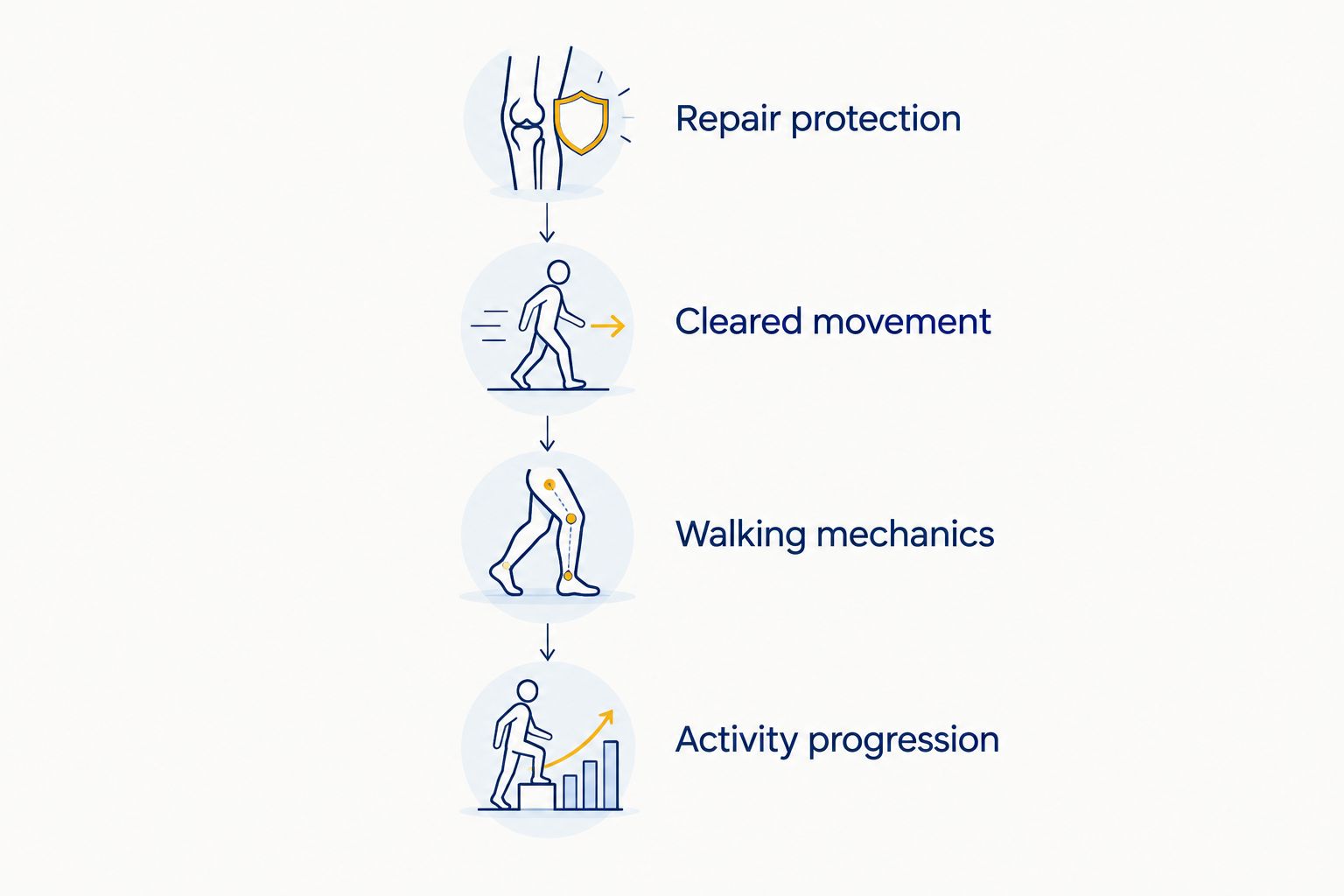
Build your 2026 rehabilitation plan around these checkpoints:
- Repair protection: Keep the operation’s movement and loading limits in place.
- Cleared movement: Begin only the exercises your team authorizes.
- Walking mechanics: Practice the approved walking pattern with the prescribed support.
- Activity progression: Increase demands after reassessment rather than testing the foot with sport.
Know when to call instead of waiting
Contact your surgical team promptly for spreading redness, increasing warmth, pus-like drainage, an incision that opens, fever, or pain that worsens rather than follows the expected course. Report a new injury or accidental weight-bearing event, especially if it produces a pop, bleeding, or increased pain.
New calf pain or swelling needs urgent medical evaluation because a blood clot is possible. Chest pain, sudden shortness of breath, fainting, or coughing blood requires emergency care. Call 911 rather than waiting for a routine office response.
Cold, pale, or blue toes, new loss of sensation, or severe escalating pain also require immediate assessment. Do not assume a tight cast or dressing will settle on its own.
For nonemergency foot and ankle concerns, contact Naples Podiatrist at 239 430 3668. Keep your surgeon’s postoperative contact instructions accessible; an appointment request is not a substitute for emergency evaluation.
Contact a foot and ankle specialist
Arrange evaluation for foot and ankle concerns. Use emergency care for emergency symptoms.
When can I return to pickleball, golf, or running?
Return to sport requires clearance for the specific demands of that activity, not just permission to walk. Pickleball involves quick changes of direction, golf involves rotational loading, and running adds repeated impact.
Tell your surgeon which activity matters to you and ask what milestones you need to meet. A comfortable walk around the house does not establish readiness for a court, uneven course, or running route.
For your 2026 return-to-activity plan, separate daily walking, exercise walking, and sport. Resume each stage only when cleared, and report pain or swelling that increases with progression rather than trying to train through it.
FAQ
What’s the safest way to speed up healing after foot surgery?
The safest approach is to follow weight-bearing restrictions, protect the incision, manage swelling as directed, and support adequate nutrition. Keep follow-up appointments so your surgeon can adjust the plan based on healing.
Can I walk sooner if my foot stops hurting?
No—less pain does not establish that a surgical repair can tolerate more weight. Follow your surgeon’s restrictions even when walking feels comfortable.
Should I keep my surgical boot on while sleeping?
Follow your surgeon’s instructions about wearing the boot during sleep. Requirements differ by procedure, so do not remove it overnight without clearance.
Does protein help healing after foot surgery?
Adequate protein supports tissue repair after surgery. Ask for individualized nutrition advice if kidney disease, poor appetite, or another condition limits your food choices.
Is swelling after foot surgery always normal?
No—some swelling is expected, but worsening swelling with increasing pain, redness, drainage, calf symptoms, or toe color changes needs medical assessment. Sudden shortness of breath or chest pain requires emergency care.
Can I soak my foot to help the incision heal?
Do not soak a surgical incision until your surgeon clears immersion. Follow the specific bathing and dressing instructions supplied after your operation.
Can Naples Podiatrist assess foot surgery recovery concerns?
Naples Podiatrist provides specialist foot and ankle medical and surgical care. Contact your operating surgeon first for postoperative concerns because that team knows the repair and its restrictions.
One last thing
Ask what has to heal before asking when you can stop wearing the boot. Understanding whether the priority is an incision, bone repair, tendon, or fusion makes your restrictions easier to follow and your follow-up questions more useful.
Bring a short record of symptoms and activity to appointments. Describe what changed, what you were doing, and whether the change improved with the measures your surgeon prescribed.
Related guides
- How to reduce swelling after foot or ankle surgery
- Moving from a CAM boot to regular shoes
- Physical therapy for foot and ankle recovery: what to expect