
 Fax: (239) 692-9436
 Tel: 239-430-3668
Pus, increasing warmth, swelling, and redness spreading beyond the nail edge suggest an infected ingrown toenail; redness and tenderness alone can also come from irritation. This 2026 guide explains what to check, when to seek care, and why fever, red streaks, rapidly spreading redness, or diabetes change how urgently you need an examination.
- How to tell if an ingrown toenail is infected: check for pus, increasing warmth, swelling, and spreading redness.
- Redness alone does not prove infection; a clinician must distinguish infection from pressure-related inflammation.
- Naples Podiatrist provides specialist foot and ankle care for Southwest Florida patients with concerning nail symptoms.
- Seek prompt care for drainage; get urgent help for fever, red streaks, or rapidly spreading redness.
How to tell if an ingrown toenail is infected
Pus and worsening inflammation raise concern for infection, but no home checklist confirms the diagnosis. Examine the skin beside the nail in good light without squeezing, probing, or lifting the nail corner.
The Naples Podiatrist foot and ankle practice provides specialist care when you need an examination rather than another attempt at trimming.
| What you notice | What it suggests | What to do |
|---|---|---|
| Tenderness and redness limited to the nail corner | Pressure-related irritation; infection is still possible | Reduce pressure and arrange care if symptoms persist or worsen |
| Thick white, yellow, or green drainage | Pus raises concern for infection | Contact a clinician promptly |
| Increasing warmth, swelling, or pain | Worsening inflammation, with possible infection | Arrange a prompt examination |
| Redness extending away from the nail fold | Possible spreading skin infection | Seek same-day medical assessment |
| Red streaks, fever, chills, or feeling unwell | Possible infection spreading beyond the nail area | Seek urgent medical care |
Clear fluid or a little blood is not the same as pus. Irritated tissue can drain or bleed, and a clinician interprets drainage alongside warmth, swelling, tenderness, and how symptoms are changing.
Why this matters
An embedded nail edge keeps pressing into the skin even after you clean the surface. If that skin breaks, bacteria can enter; treating the surface alone does not remove the source of pressure.
For your 2026 foot-care plan, separate two questions: does the nail need treatment, and is infection present? An ingrown nail can need professional treatment without being infected, while infection can require care before the pain becomes severe.
This matters when you want to keep walking, golfing, running, or playing pickleball. Pushing through pain in a tight shoe adds pressure to an already inflamed nail fold and makes it harder to protect damaged skin.
Local irritation: redness does not prove infection
A mildly ingrown nail often hurts exactly where its edge meets the skin. Shoe pressure or contact with a bedsheet can make that small area surprisingly tender.
Localized redness, slight swelling, and sensitivity fit inflammation from the nail edge. They do not establish whether bacteria are causing an infection, especially when the skin is intact and symptoms are not spreading.
Do not use pain intensity alone to decide whether the toe is infected. Mechanical irritation can hurt considerably, while reduced sensation can hide pain from an infection.
Raised, moist, red tissue beside the nail can be granulation tissue, which develops in response to ongoing irritation. It can bleed easily and is not automatically pus, but persistent tissue overgrowth needs assessment.
Suspected local infection: pus needs an examination
Thick drainage from beside the nail is a stronger warning sign than redness alone. Increasing warmth, swelling, throbbing, or tenderness adds to the concern.
Contact a podiatrist or another qualified clinician promptly when you see pus. Do not wait for fever: a localized infection can exist without a raised temperature or feeling generally ill.
A bad smell is not a reliable test by itself. Sweat, trapped moisture, and drainage can all affect odor, so the examination must focus on the skin, nail edge, circulation, and pattern of inflammation.
Avoid squeezing the nail fold to see whether more fluid comes out. That adds trauma and does not tell you how deeply an infection extends.
Spreading symptoms: seek urgent assessment
Redness moving beyond the nail fold, worsening swelling of the toe, or red streaks extending into the foot require urgent medical attention. These findings raise concern for infection spreading into surrounding skin.
A temperature of 100.4°F (38°C) or higher is a fever, but you do not need to reach that threshold before seeking help. Chills, rapidly worsening pain, or feeling significantly unwell also warrant urgent assessment.
Go to an emergency department for rapidly progressing symptoms, severe pain out of proportion to the appearance, confusion, or a toe that becomes cold, blue, or black. Do not wait for a routine appointment when these signs appear.
Why symptoms and infection risk vary
The same-looking nail problem does not carry the same risk for every patient. These factors help explain why a clinician asks about more than the toe's appearance:
- Nail pressure: An embedded edge keeps injuring the nail fold until that pressure is addressed.
- Skin damage: Picking, tearing, or cutting deeply into the corner creates additional breaks in the skin.
- Shoe pressure: A narrow toe box or repeated impact during activity aggravates the irritated area.
- Circulation: Reduced blood flow affects healing and changes treatment decisions.
- Sensation: Neuropathy can reduce pain even when skin damage or infection is present.
- Immune function: Diabetes, immune-suppressing medicines, and other health conditions change the threshold for seeking care.
These factors guide the examination; they are not a scoring system. You cannot rule out infection by counting how many apply to you.
What should you do while waiting for an appointment?
For 2026 home care, the priority is protecting the skin without trying to perform a nail procedure yourself. If you have diabetes, poor circulation, neuropathy, or reduced immunity, contact your clinician before soaking or treating the toe at home.
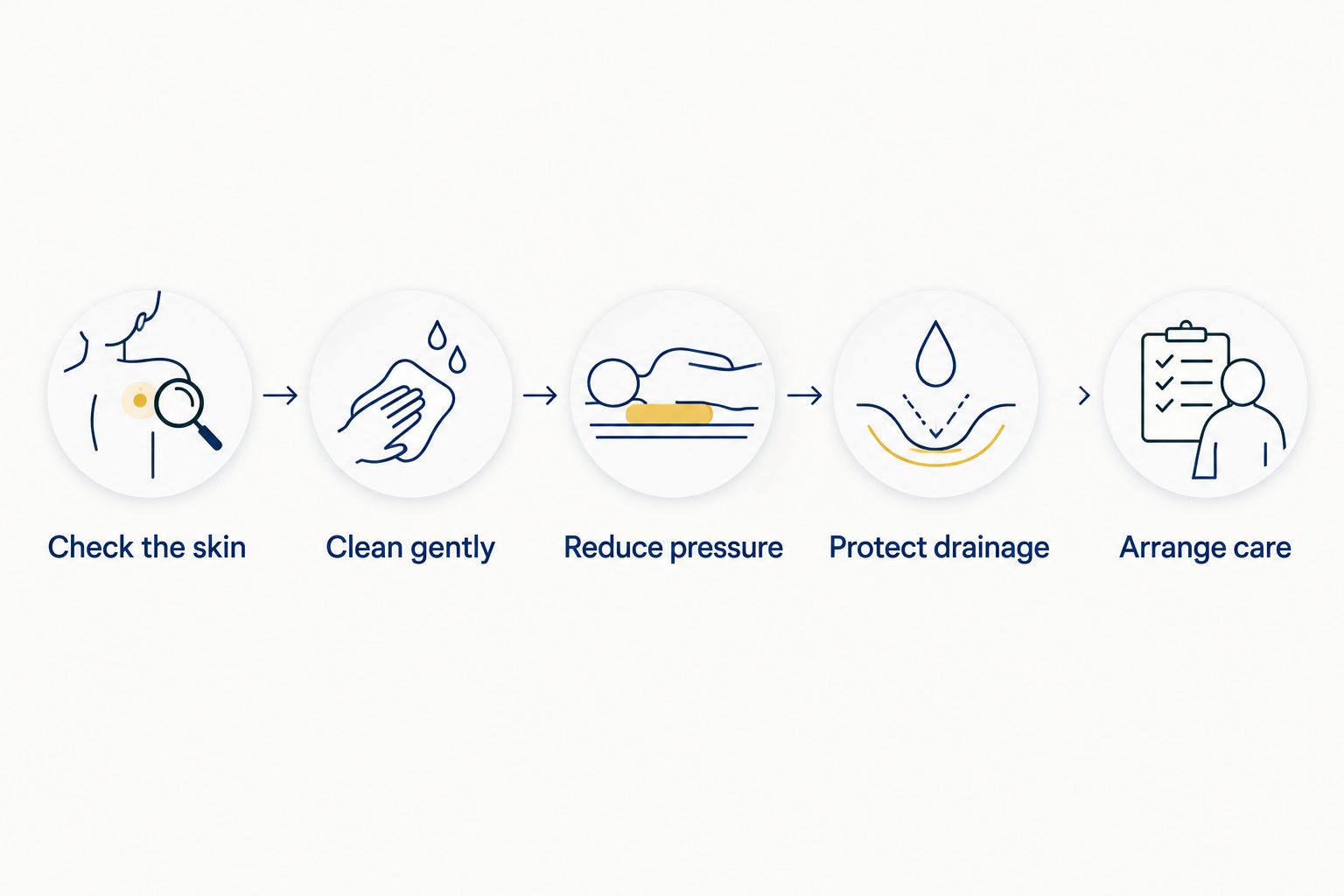
- Check the skin. Look for drainage, spreading redness, swelling, and any change in color. Use a mirror or ask someone to help if you cannot see the nail fold clearly.
- Clean gently. Wash with mild soap and water, then dry carefully. Do not scrub the wound or repeatedly apply rubbing alcohol or hydrogen peroxide.
- Reduce pressure. Choose footwear that does not press on the toe. Avoid a shoe that forces you to curl your toes or changes your walking pattern.
- Protect drainage. Use a clean, nonstick dressing if the skin is open or draining. Replace it when wet or dirty, and avoid wrapping tightly.
- Arrange care. Contact a clinician for suspected infection, persistent symptoms, or recurrent ingrowing. Escalate immediately if warning signs develop.
For mild irritation in someone without the higher-risk conditions above, warm-water soaking for 15–20 minutes can soften the surrounding skin and ease discomfort. Dry the foot afterward; soaking does not remove an embedded nail edge or treat a spreading infection.
Do not dig under the nail with scissors, cut a deep notch, push tools beneath the corner, or attempt to drain an abscess. Avoid pedicure treatment on an inflamed or draining nail, and do not use leftover antibiotics.
What treatment does an infected ingrown toenail need?
Treatment depends on whether the problem is mainly nail pressure, a localized collection of pus, or infection spreading into the skin. A podiatrist examines the nail fold and checks relevant health risks before recommending treatment.
Best for Southwest Florida patients needing specialist foot and ankle assessment, Naples Podiatrist provides care for painful nail problems. An examination is necessary to determine treatment; a photograph cannot assess circulation, tenderness, or the depth of a wound.
| Treatment approach | Best for | Main benefit | Limitation |
|---|---|---|---|
| Protective care and pressure reduction | Mild irritation without infection warning signs | Reduces further rubbing and skin trauma | Does not reliably correct an embedded nail edge |
| Partial nail removal | An embedded edge causing persistent symptoms or requiring source control | Removes the offending nail border | Requires a procedure, wound care, and healing |
| Antibiotics when prescribed | Spreading bacterial infection or other clinical indications | Treats susceptible bacteria | Does not remove the nail edge causing injury |
| Nail-root treatment when appropriate | Recurrent ingrowing along the same border | Helps prevent that border from growing back | Permanently narrows the nail and requires aftercare |
At Naples Podiatrist, foot and ankle care decisions depend on your examination. Read the in-office ingrown toenail removal explanation to understand what a nail procedure involves before discussing your options.
Antibiotics are not automatic for every red ingrown nail. Removing the offending edge and addressing any trapped drainage can be central to treatment; spreading infection requires a separate decision about medication.
Arrange a toenail assessment
Discuss a painful or draining nail with a foot and ankle specialist.
What if you have diabetes or numb feet?
Diabetes, reduced circulation, and neuropathy lower the threshold for seeking medical care. Contact your clinician promptly for a new inflamed nail, broken skin, drainage, or unexplained swelling rather than trying repeated home treatment.
Little pain does not mean little risk. Neuropathy can blunt warning sensations, and circulation problems can interfere with wound healing.
Make daily foot inspection part of your 2026 routine if your clinician recommends it. Check around every nail, not just the sole, and ask for help when limited vision or flexibility prevents a clear view.
Can you walk or play sports with an irritated toenail?
Normal walking is not a test of whether infection is present. If walking increases pain or makes you limp, reduce the activity and arrange assessment.
Pause pickleball, running, or golf when footwear rubs an open or draining nail fold. Avoid swimming and exposing broken skin to pools, hot tubs, or coastal water until a clinician confirms the skin has healed sufficiently.
After treatment, return to activity according to the wound's condition and your clinician's instructions. Do not choose a return date simply because the toe feels better inside a shoe.
FAQ
Can an ingrown toenail be red without being infected?
Yes, an ingrown toenail can be red from pressure-related inflammation without infection. Pus, increasing warmth, worsening swelling, or redness spreading beyond the nail fold raises concern and needs assessment.
Does yellow drainage mean my ingrown toenail is infected?
Thick yellow drainage can be pus and should prompt a clinical examination. Thin clear or pale fluid is not automatically pus, so color alone cannot confirm infection.
Can an infected ingrown toenail heal without antibiotics?
Some localized nail infections improve after a clinician removes the embedded edge and addresses drainage, without oral antibiotics. Spreading skin infection or other risk factors can make antibiotics necessary.
Should I go to urgent care for an infected ingrown toenail?
Seek urgent assessment for spreading redness, red streaks, fever, worsening swelling, or feeling unwell. Rapid progression, severe disproportionate pain, confusion, or a cold or dark toe warrants emergency evaluation.
Can I cut out an infected ingrown toenail myself?
Do not cut deeply into an infected nail corner or try to drain it yourself. Home digging can injure the skin further and leave a sharp nail fragment behind.
Is soaking enough to treat an infected ingrown toenail?
Soaking is not enough to treat a spreading infection or remove an embedded nail edge. People with diabetes, poor circulation, neuropathy, or reduced immunity should ask a clinician before soaking an affected foot.
Can I have an infected ingrown toenail without much pain?
Yes, infection can occur with little pain, particularly when neuropathy reduces sensation. Check for drainage, warmth, swelling, and skin changes rather than relying on pain alone.
One last thing
Less pain after drainage does not prove the problem is resolved. Fluid escaping can reduce pressure while the nail edge continues injuring the skin.
For your 2026 next step, track whether redness is spreading and whether drainage continues—not just whether your shoe feels more comfortable. Naples Podiatrist offers specialist foot and ankle care when a painful nail needs an examination rather than more home trimming.
Related guides
- Diabetic nail care: why toenails matter
- How long healing takes after ingrown toenail removal
- How to prevent ingrown toenails from coming back

