 Fax: (239) 692-9436
 Tel: 239-430-3668
Yes, some people with diabetes can cut their own toenails if they have normal foot sensation, adequate circulation, healthy nails, and the ability to see and reach their toes safely. If you have numbness, poor circulation, thick or ingrown nails, a previous foot ulcer, or trouble handling clippers, ask a podiatrist to assess your feet before trimming at home.
- Can diabetics cut their own toenails? Yes, when sensation, circulation, nail condition, vision, and hand control allow safe trimming.
- Diabetic nail care means cutting straight across, leaving the corners intact, and avoiding the surrounding skin.
- Choose professional toenail trimming for numbness, poor circulation, thick nails, or a history of foot ulcers.
- Naples Podiatrist provides diabetic foot care for patients who need specialist assessment rather than cosmetic nail care.
Can diabetics cut their own toenails?
Diabetes alone does not rule out home trimming. The deciding issue is whether you can trim without injuring skin and whether an injury would heal normally. A foot examination helps establish that risk; the absence of pain does not.
| Approach | Best for | Benefit | Limitation |
|---|---|---|---|
| Home trimming | People cleared for self-care who can see, reach, and control their clippers | Keeps routine nail maintenance manageable at home | Does not assess nerve damage or blood flow; accidental cuts remain possible |
| Podiatric nail care | People with reduced sensation, circulation problems, difficult nails, or previous ulcers | Combines nail care with medical assessment | Requires an appointment and continued daily checks at home |
| Cosmetic pedicure | Cosmetic grooming only, after medical clearance | Addresses appearance | Does not replace a diabetic foot examination or treatment of nail disease |
If your foot risk has never been assessed, arrange diabetic foot care in Naples before treating difficult nails yourself. Do not use a successful trim in the past as proof that your current sensation and circulation are normal.
Why this matters
A small clipper injury creates an opening in the skin. Diabetes-related nerve damage can make that injury difficult to feel, while peripheral artery disease can interfere with healing.
This 2026 guide focuses on preventing that opening, not making nails look perfect. The goal is comfortable walking and intact skin, whether your routine includes errands, golf, pickleball, or running.
Who should leave toenail cutting to a podiatrist?
Choose professional nail care if you cannot reliably see, feel, reach, or safely trim your toes. Being independent in other activities does not mean you must manage a difficult toenail yourself.
Contact a podiatrist before trimming if you have:
- Reduced sensation: Numbness, tingling, or known diabetic neuropathy makes accidental injury harder to detect.
- Circulation problems: Known peripheral artery disease, previous slow-healing wounds, or concerning color changes require assessment.
- Difficult nails: Thick, curved, brittle, crumbling, or ingrown nails need more than routine clipping.
- Previous complications: A foot ulcer, amputation, or significant foot deformity changes your risk assessment.
- Limited visibility or control: Poor eyesight, hand tremor, arthritis, or trouble bending makes precise clipping difficult.
Do not test sensation by poking your toes with a pin or checking whether sharp clippers hurt. A clinician uses appropriate examination methods, which can include a 10-gram monofilament to assess protective sensation.
A normal-looking foot is not proof of normal circulation. Likewise, being able to feel pressure does not establish that you can detect a small skin injury.
How do you trim toenails safely if home care is appropriate?
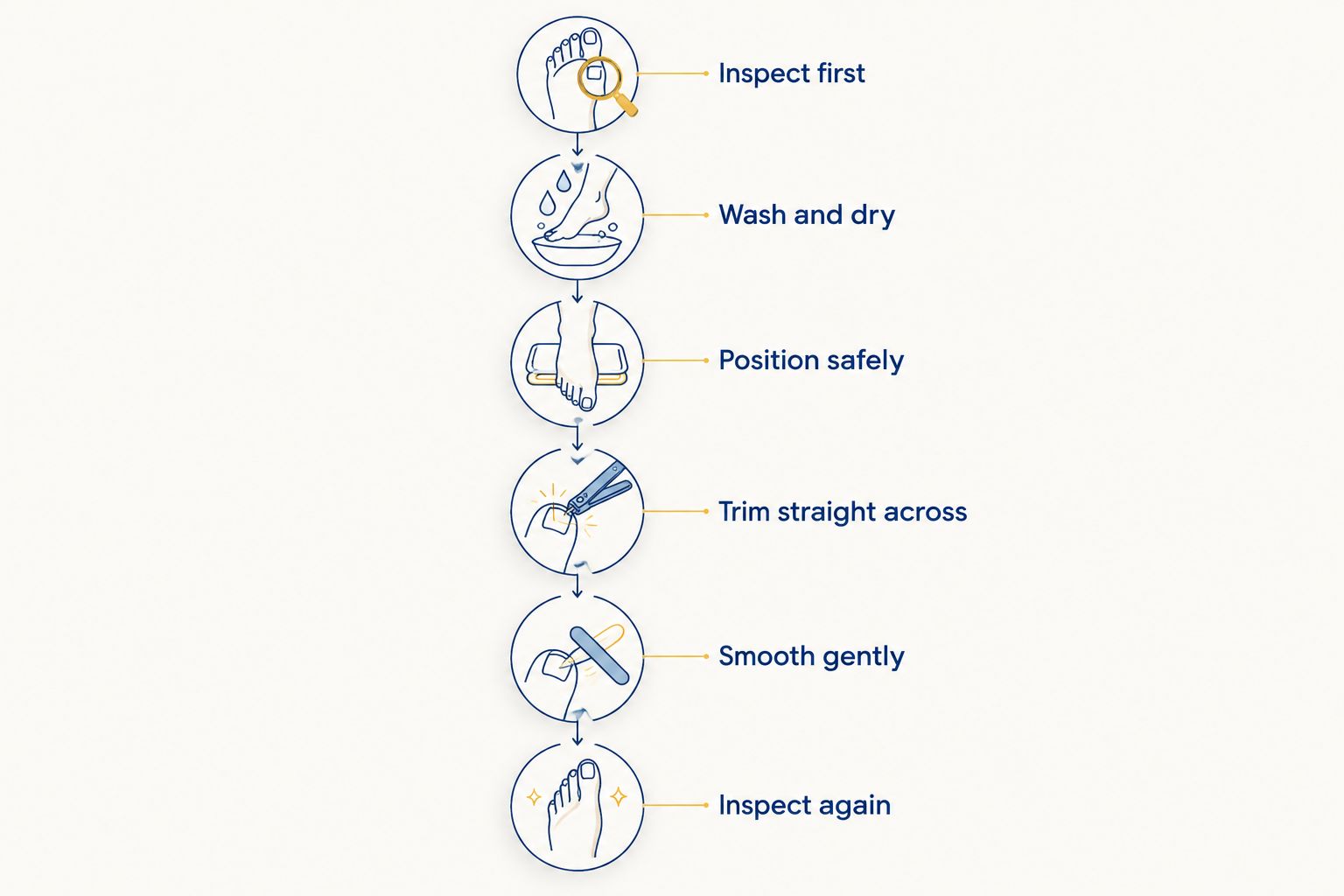
For your 2026 home-care routine, follow the plan agreed with your diabetes clinician or podiatrist. These steps apply to ordinary nails without surrounding redness, drainage, open skin, or an ingrown edge.
- Inspect first. Look at each toe, the nail folds, and the skin between the toes. Stop if you find a wound, bleeding, swelling, or a new color change.
- Wash and dry. Use lukewarm water and dry carefully, including between the toes. Do not soak your feet to soften difficult nails.
- Position safely. Sit in a stable chair with good lighting. Make sure you can clearly see where the nail ends and the skin begins.
- Trim straight across. Use clean toenail clippers and small, controlled cuts. Leave the corners intact and avoid cutting the nail down into the side folds.
- Smooth gently. Use a nail file on a rough free edge without rubbing the skin. Do not dig underneath the nail or cut the cuticle.
- Inspect again. Check for accidental cuts or bleeding. Put on clean socks and shoes that do not press against the toes.
The nail should not be cut flush with the skin. Leave a visible free edge rather than chasing a very short, rounded shape.
If a nail will not cut with gentle, controlled pressure, stop. Stronger clippers, forceful squeezing, or repeated attempts near the skin do not solve the underlying problem safely.
Why safe toenail care varies from person to person
A safe nail-care plan in 2026 depends on your feet today, not simply how long you have had diabetes. Your clinician considers several factors together:
- Protective sensation: Nerve damage changes whether you notice pressure, cuts, and rubbing.
- Blood supply: Reduced arterial circulation affects the ability of injured tissue to heal.
- Nail shape and thickness: Curved or thickened nails make it harder to keep a cutting edge away from skin.
- Vision and mobility: Safe technique requires a clear view and a stable position, not trimming by feel.
- Previous wounds: A history of ulceration or amputation calls for closer preventive care.
- Current skin condition: A blister, crack, inflamed nail fold, or open wound changes the immediate priority from grooming to assessment.
Good glucose management supports your overall health, but a glucose reading does not replace a foot examination. Neither does a comfortable pair of shoes.
What if you accidentally cut your toe?
Stop trimming, clean the area gently, cover it, and contact your healthcare team promptly for advice. A small cut deserves attention when you have diabetes, especially if you also have neuropathy or circulation problems.
Rinse with clean running water and use gentle pressure with clean gauze if the area is bleeding. Apply a clean, nonstick dressing; avoid pouring alcohol or hydrogen peroxide into the wound, and do not keep clipping around it.
Seek same-day medical assessment for increasing redness, warmth, swelling, pus, an unpleasant odor, or a wound you cannot properly inspect. Do not wait for pain: neuropathy can reduce the warning signal.
Seek emergency care for a suddenly cold, pale, blue, or black toe, uncontrolled bleeding, rapidly spreading redness, or a foot infection accompanied by fever or feeling seriously unwell. These are not routine nail-care problems.
Use the contact page to arrange non-emergency assessment. Do not wait for a routine appointment when emergency warning signs are present.
Can a family member cut your toenails instead?
A family member can help with visibility and daily inspection, but assistance does not remove the risks of neuropathy, poor circulation, or difficult nails. Ask your clinician whether caregiver trimming is appropriate before handing over the clippers.
The helper should have good vision, steady hands, and a clear understanding of straight-across trimming. They should stop at the first sign of bleeding, an embedded corner, or uncertainty about where the skin begins.
Do not ask a caregiver to dig out an ingrown nail, remove a thick nail with force, or cut away a callus. Those tasks are different from maintaining an ordinary free nail edge.
Do socks and shoes affect toenail safety?
Yes. A careful trim does not prevent repeated pressure from shoes that crowd the toes or socks that bunch against a nail edge.
Before golf, running, or pickleball, check that your footwear leaves room for your toes without sliding excessively. After activity, inspect the nail folds and look inside your shoes for seams, debris, or anything pressing against the foot.
Pressure also matters when you use compression garments: overly tight compression socks can create constriction or pressure marks that need attention, particularly when sensation is reduced. Ask your clinician whether compression is appropriate if you have known or suspected arterial circulation problems.
New numbness, toe discoloration, or skin injury is a reason to stop using the garment and seek assessment. Nail trimming cannot correct a circulation problem or an unsuitable fit.
What happens during a professional diabetic nail-care visit?
A podiatric visit should address why home trimming is difficult, not just shorten the nails. Tell the clinician about previous wounds, numbness, circulation diagnoses, medications, and any recent bleeding or drainage.
The examination can include nail and skin inspection, circulation assessment, protective-sensation testing, and a review of footwear. Thickened or discolored nails also need assessment because appearance alone does not confirm a fungal infection.
For your 2026 care plan, ask for at least 1 foot examination per year, with more frequent checks when your clinician identifies higher risk. Nail-trimming appointments follow your individual needs rather than a universal schedule.
Naples Podiatrist diabetic foot care is best for patients who need specialist assessment of nail problems alongside nerve, circulation, or wound concerns. Professional care does not replace home inspection, and an appointment schedule cannot guarantee that a new injury will wait until your next visit.
Arrange a diabetic foot assessment
Discuss difficult toenails, reduced sensation, or concerns about safe home trimming.
How often should someone with diabetes check their toenails?
Inspect your feet and toenails at least 1 time per day, including days when you do not trim them. Use a mirror or ask someone to help if you cannot see the bottoms of your feet.
Look for redness beside a nail, cracks, blisters, drainage, and blood on a sock. Daily inspection is more useful than waiting for discomfort to announce a problem.
Is filing safer than cutting diabetic toenails?
Gentle filing can smooth a rough free edge when your clinician has cleared you for home care. It is not automatically safe if you have numbness, poor circulation, or cannot see the area clearly.
Do not use powered grinding tools to thin difficult nails at home. Stop if the file contacts skin or if the nail is lifting, painful, or inflamed.
FAQ
Can diabetics cut their own toenails if their blood sugar is controlled?
Yes, some people with diabetes can trim at home, but glucose control alone does not establish safety. Foot sensation, circulation, nail condition, vision, and hand control still need consideration.
Should diabetic toenails be cut straight across or rounded?
Cut toenails straight across and gently file rough free edges when home trimming is appropriate. Do not round the corners deeply or dig into the nail folds.
Can I cut my toenails if my toes are numb?
Do not trim numb toes yourself without guidance from your clinician. Reduced sensation makes accidental cuts harder to detect, so professional nail care is generally the safer choice.
Should people with diabetes soak their feet before cutting nails?
Avoid soaking your feet before trimming. Wash with lukewarm water, dry carefully, and ask a podiatrist to manage nails that remain too thick or difficult to cut.
Can a nail salon replace diabetic foot care?
No, a cosmetic pedicure does not replace assessment of circulation, sensation, or a nail disorder. Ask your clinician whether salon care is appropriate for your individual foot risk.
What should I do if a toenail corner is red or draining?
Stop home trimming and arrange prompt medical assessment for redness or drainage around a toenail. Do not dig out the corner or wait for pain before seeking help.
Can Naples Podiatrist assess whether I should trim my own nails?
Naples Podiatrist provides diabetic foot care and can assess nail problems and the foot-health concerns that affect self-care. Ask specifically whether home trimming is appropriate and what changes should prompt another examination.
One last thing
A painless toe is not necessarily an uninjured toe. For your next trim in 2026, make the first step a visual skin check—not opening the clippers. If you cannot inspect safely, get help before cutting.
Related guides
- Diabetic nail care: why toenails matter
- How to check your feet daily with diabetes
- Peripheral neuropathy in the feet: symptoms and management