
 Fax: (239) 692-9436
 Tel: 239-430-3668
To shower with a boot on your foot, keep the boot and any dressings dry, use a stable bathing seat, and follow your clinician’s instructions about removing the boot and putting weight on your foot. Remove a walking boot only when your treating clinician allows it; never remove a cast yourself. If you cannot enter, wash, and exit without breaking those restrictions, use a seated sponge bath until your care team helps you arrange a safer setup.
- How to shower with a boot on your foot: stay seated, protect dressings, and follow weight-bearing restrictions.
- A removable walking boot does not automatically mean you can remove it for bathing.
- Keep casts dry unless your clinician confirms the entire cast system is suitable for water.
- Naples Podiatrist provides specialist foot and ankle care for Southwest Florida patients.
How do you shower with a cast or boot on your foot?
Protect the injury from both water and unapproved loading. A waterproof cover addresses moisture, not balance or permission to stand. Your discharge instructions take priority over this general 2026 bathing guide.
If surgery is ahead, include bathing equipment and bathroom access in your preparation for foot or ankle surgery. Arrange help before you need to cross a slippery threshold.
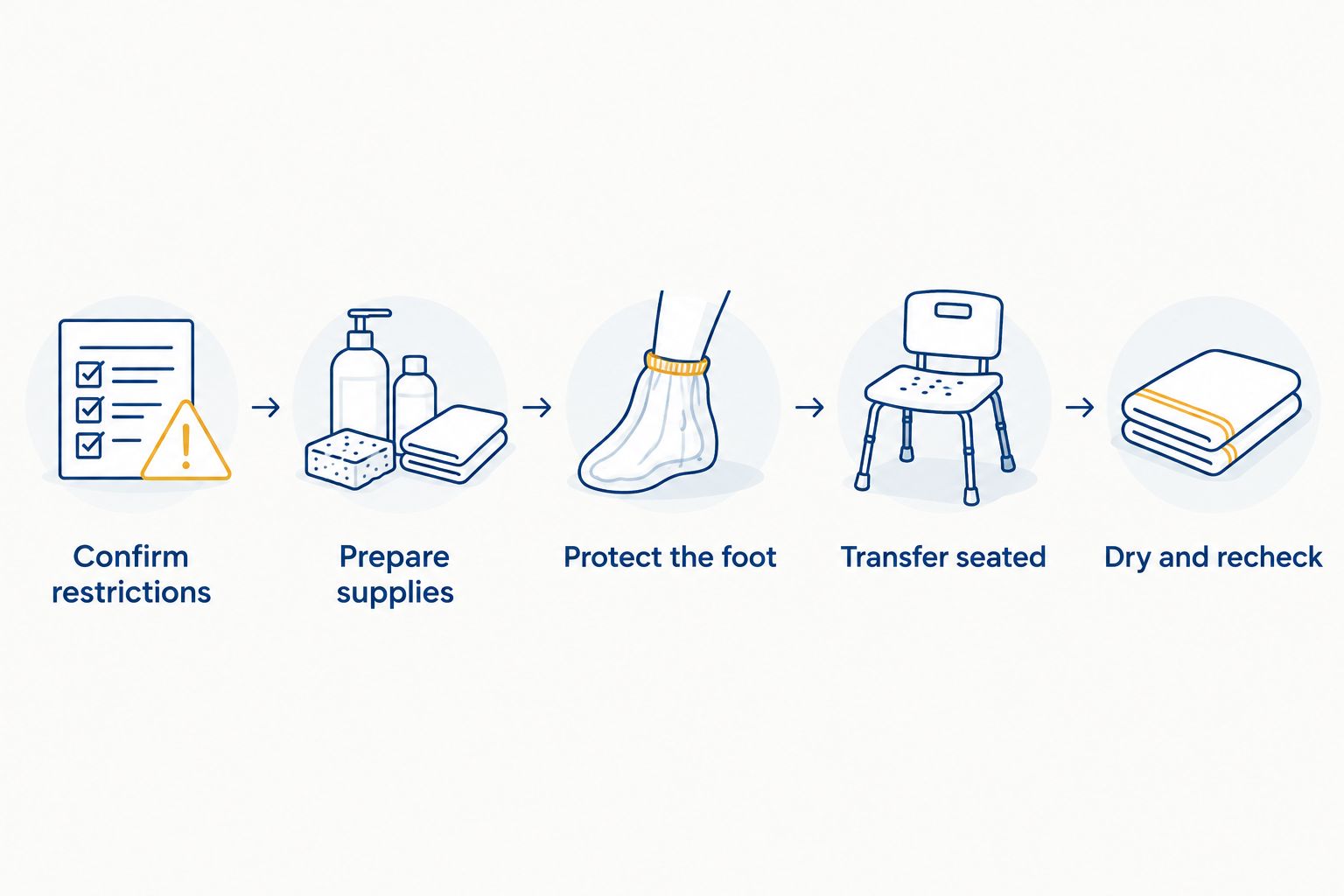
1. Confirm restrictions
Ask whether you can remove the boot, whether the wound or dressing must stay dry, and whether you can place weight on the injured foot during transfers. These are separate permissions. Being allowed to take the boot off while seated does not mean you can stand without it.
If instructions are unclear, keep the prescribed protection in place and contact your treating team before showering. Do not experiment with ankle movement, strap settings, or heel wedges.
2. Prepare supplies
Place soap, towels, clean clothing, and any permitted replacement liner within easy reach. Use a shower chair or transfer bench intended for bathing, with intact nonslip feet and a fit appropriate for your bathroom. A kitchen stool is not a substitute.
A handheld showerhead helps you direct water away from the protected leg. Keep the floor outside the shower dry, and remove loose rugs from the route.
3. Protect the foot
If the boot or cast must stay on, use a purpose-made waterproof protector that fits over the device and follow its instructions. Check for tears and an appropriate seal before bathing. Keep the protected leg away from the spray when possible, without balancing it in an unstable position.
Do not assume a cover permits immersion. Avoid tightly wrapping tape or elastic around your leg, and never rely on a household bag as your only protection.
4. Transfer seated
Follow the transfer method your clinician or physical therapist taught you. A transfer bench can let you sit outside a tub and move your legs across the edge while seated, but the setup must match your restrictions and abilities.
Do not hop across a wet floor or use a towel bar as a grab bar. If you need assistance, have a capable helper present; if the transfer remains unsafe, stop and use a seated wash instead.
5. Dry and recheck
Dry yourself and the surrounding floor before transferring out. Remove the waterproof protector carefully so trapped droplets do not run into the boot or cast. Check exposed toes and any accessible skin for changes.
If you had permission to remove the boot, dry the skin and reapply the device exactly as instructed before standing when required. Do not change prescribed positioning or remove surgical dressings to inspect underneath them.
Walking boot: remove it only with permission
Some patients can remove a walking boot for hygiene; others need continuous protection. The injury, surgery, wound, and prescribed ankle position determine the rule—not the fact that the straps open.
If removal is approved, sit before taking the boot off. Keep the foot supported as directed and avoid stretching, twisting, or testing it. Do not stand barefoot on the injured side unless your clinician specifically permits that activity.
Best for: patients cleared to remove the boot who can complete a seated transfer safely. The benefit is easier skin hygiene; the limitation is that an unprotected foot still needs the prescribed movement and loading restrictions.
Cast: protect it unless water exposure is approved
Keep a cast dry unless your treating clinician confirms that both the cast material and its lining are suitable for water exposure. A fiberglass outer shell alone does not establish that the padding underneath is waterproof.
Even with an approved waterproof cast system, follow instructions about wounds, soaking, and drying. Never cut, loosen, or remove a cast to shower, and do not push towels or other objects inside it.
Best for: patients who must keep fixed immobilization in place and can protect it during a safe transfer. A cover offers a moisture barrier, but leaks remain possible and the cast cannot simply be taken off afterward.
Which bathing setup fits your restrictions?
Choose your 2026 recovery setup around the instructions you received, not around which bathroom option feels most convenient. This comparison separates suitable uses from the limitations that matter.
| Bathing option | Best for | Main benefit | Main limitation |
|---|---|---|---|
| Seated shower with boot removed | Patients specifically cleared for removal and safe transfers | Allows access to exposed skin for washing | Does not permit unapproved standing or ankle movement |
| Seated shower with boot or cast covered | Patients who must keep the device on | Keeps prescribed support in place | Cover fit and leakage still need attention |
| Tub transfer bench | Patients whose tub edge prevents a safe standing entry | Supports a seated entry and exit | Requires correct setup and a suitable transfer method |
| Seated sponge bath | Patients without a safe shower transfer | Avoids the shower threshold and direct spray | Requires supplies and sometimes another person’s help |
A chair inside the shower does not solve an unsafe entry. If you cannot reach the seat while maintaining your restrictions, ask about a transfer bench, caregiver assistance, or another bathing arrangement.
Why showering instructions vary
Different patients need different plans, even when their boots look alike. These factors determine the instructions:
- The injury or procedure: a healing fracture, tendon repair, or surgical incision has specific protection needs.
- Weight-bearing status: permission to put weight on the foot determines how you enter, sit, and exit.
- Boot positioning: prescribed wedges or ankle settings must remain as directed.
- Wounds and dressings: an incision or wound covering can require dryness even when boot removal is allowed.
- Balance and bathroom access: weakness, dizziness, a tub wall, or limited space can make independent showering unsafe.
- Sensation and circulation: diabetes-related numbness or circulation problems require extra attention to skin and water temperature.
Recheck the plan when your treatment changes. Clearance given at a 2026 follow-up applies to the activities your clinician actually approved; it is not blanket permission to stop wearing the boot.
Why this matters
A dry cast is not enough if you fall getting out of the shower. Safe bathing protects healing tissue, keeps dressings intact, and avoids loading the foot before it is ready.
That applies whether your goal is returning to pickleball, walking the golf course, running, or moving comfortably around your home. Showering is a daily task, not a test of recovery progress. Protect the injury now rather than using comfort alone to decide what it can tolerate.
Naples Podiatrist is a fit for Southwest Florida patients who need specialist foot and ankle care. An examination can address changes in pain, skin condition, or device fit; general bathing advice cannot determine whether your particular repair is ready for movement.
Can I shower if I am non-weight-bearing?
You can shower only if your setup lets you maintain the prescribed restriction throughout entry, washing, and exit. Non-weight-bearing still applies in the bathroom. Briefly stepping on the injured foot to cross a tub edge is not an exception.
Ask your care team to review the transfer if you have not been taught one. Do not assume wet crutches or a walker inside the shower provide a safe solution. A seated sponge bath is the better choice when a safe transfer is not available.
What if my cast, boot liner, or dressing gets wet?
Stop the shower and move to a safe seated position. Contact your treating team promptly if cast padding or a surgical dressing becomes wet, or if you are unsure whether moisture reached the wound. A dry-looking outer surface does not confirm that the layers beneath are dry.
For a removable boot liner, follow the device instructions and your clinician’s directions. Do not resume walking without prescribed protection while waiting for it to dry, and do not use a heater or hot hair dryer against the foot or cast.
If you need help arranging an evaluation, contact Naples Podiatrist. Tell the team what became wet, whether you have a wound, and whether symptoms changed.
Ask about your foot protection
Get specialist foot and ankle care for concerns about symptoms, skin changes, or your recovery plan.
When should I seek urgent help instead of showering?
Seek urgent medical evaluation for severe or increasing pain, new persistent numbness, toes that become cold or markedly pale or blue, or a cast that suddenly feels excessively tight. Do not wait for the next shower or routine visit to assess these changes.
Contact your clinician promptly for spreading redness, drainage, foul odor, fever, or a new sore near the device. New calf pain or swelling also needs prompt assessment; chest pain or sudden shortness of breath requires emergency help.
For patients with diabetes or reduced sensation, include an accessible skin check in your 2026 bathing routine without removing dressings or devices against instructions. Use warm rather than hot water, and do not rely on a numb foot to judge temperature.
FAQ
Can I take my walking boot off to shower?
Take your walking boot off to shower only if your treating clinician has approved removal. Permission to remove it while seated does not automatically permit standing, walking, or moving the ankle without support.
Can I stand in the shower with a walking boot on?
Stand in the shower only if your clinician permits the required weight bearing and your bathroom setup is safe. A walking boot or waterproof cover does not prevent slipping; seated bathing avoids the need to stand during washing.
Is a plastic bag enough to keep my cast dry?
Do not rely on a household plastic bag as your only cast protection. Use a properly fitted waterproof protector according to its instructions, avoid immersion, and keep the protected leg away from direct spray when safely possible.
Can a fiberglass cast get wet in the shower?
A fiberglass cast should stay dry unless your clinician confirms that the entire cast system, including its lining, is suitable for water. The outer shell alone does not establish that the padding underneath can get wet.
What should I do if my surgical dressing gets wet?
Contact your surgical team promptly if your dressing gets wet. Do not remove or replace it unless your discharge instructions or treating clinician tells you to do so.
How do I shower if I cannot put weight on my foot?
Use a clinician-approved seated transfer that keeps weight off the injured foot throughout bathing. If you cannot enter and exit safely, use a seated sponge bath until an appropriate setup or assistance is arranged.
Can Naples Podiatrist help with concerns about my boot?
Naples Podiatrist provides specialist foot and ankle care for patients with concerns during recovery. Contact the practice about changes in symptoms or device fit, and keep following your treating clinician’s restrictions until they are updated.
One last thing
Practice the transfer with the water off before your first shower. Use the prescribed support and assistance, and stop if you cannot follow your restrictions.
For your 2026 recovery checklist, plan the exit as carefully as the entry: dry towels within reach, a clear floor, and the boot ready to reapply if removal was approved. A successful shower ends with you safely seated or supported—not hopping toward a towel.
Related guides
- Moving from a CAM boot to regular shoes
- How a CAM walker boot affects foot and leg pain
- How to reduce swelling after foot or ankle surgery