
 Fax: (239) 692-9436
 Tel: 239-430-3668
Neuropathy treatment generally takes weeks to improve nerve pain; recovery of sensation, when possible, takes longer and can extend over months. There is no single average that applies to every cause or treatment. Less pain does not prove that damaged nerves have healed, and some people need ongoing treatment to control symptoms and prevent foot injuries.
- How long does neuropathy treatment take to work? Expect gradual change, not a guaranteed recovery date.
- Pain relief, restored sensation, and safer walking are different treatment goals.
- Naples Podiatrist provides foot and ankle assessment; neuropathy care starts with identifying the cause.
- New weakness, an open wound, or a hot, swollen foot needs prompt medical assessment.
How long does neuropathy treatment take to work?
The answer depends on what your treatment is meant to accomplish. Medication can reduce burning without restoring feeling, while treatment of an underlying deficiency or nerve compression addresses a different problem. The distinction matters when you judge whether treatment is working.
If you are starting treatment in 2026, ask your clinician to identify the goal and schedule a review rather than promise a universal deadline. Understanding peripheral neuropathy in the feet helps separate symptom control from recovery.
| Treatment approach | Best for | What improvement looks like | Main limitation |
|---|---|---|---|
| Prescription nerve-pain medicine | Troublesome burning, shooting pain, or sleep disruption | Less pain and better sleep after treatment adjustment | Does not necessarily restore sensation; side effects can limit use |
| Treating an identified cause | A confirmed, treatable contributor such as a deficiency | Stabilization or gradual improvement, depending on existing damage | Established nerve damage can persist |
| Relieving confirmed nerve compression | Symptoms caused by a specific trapped nerve | Improvement in the affected nerve's symptoms | Not a treatment for every form of neuropathy |
| Footwear and pressure protection | Reduced protective sensation or pressure-related injury risk | Less rubbing and better skin protection | Does not regrow nerves |
| Physical therapy or balance training | Weakness, balance difficulty, or altered walking | Safer movement and improved function | Does not remove every underlying cause |
These approaches often complement each other. Choose treatment around the diagnosis, not around whichever option promises the fastest result.
Why this matters
If burning improves but numbness remains, treatment has not necessarily failed. Pain and protective sensation are different outcomes, and both belong in your follow-up assessment.
The opposite is also important: a painless foot is not automatically a healthy foot. Neuropathy can make a blister, pressure injury, or wound difficult to notice, particularly when diabetes is present. Your 2026 treatment plan should protect your skin while addressing symptoms.
Nerve-pain medicine: gradual relief over weeks
Prescription medicines for nerve pain commonly need gradual adjustment. Your prescriber considers the medicine, your response, kidney function, other prescriptions, and side effects when deciding how to proceed. An early dose is not always the dose used to assess the full response.
The first meaningful change might be fewer nighttime awakenings rather than complete relief. Persistent numbness does not, by itself, show that a pain medicine is ineffective because restoring sensation is not its primary purpose.
Best for: nerve pain that interferes with sleep or daily activity, after a clinician reviews suitability. The benefit is symptom control; the trade-off is that dizziness, sleepiness, or other adverse effects can outweigh relief.
Do not increase, combine, or abruptly stop prescription medicines on your own. Ask your prescriber what improvement to expect and which symptoms require an earlier call. Report new unsteadiness, especially if you already have trouble with balance.
Treating the cause: recovery can extend over months
When a treatable cause is present, addressing it is central to care. Examples include a confirmed vitamin deficiency, a medication-related problem, or diabetes requiring coordinated management. The treatment must match the cause rather than simply match the symptom of burning feet.
Removing the cause does not instantly reverse established nerve damage. Some people improve gradually; others mainly achieve stabilization. Preventing further deterioration remains a meaningful outcome even when normal sensation does not return.
Best for: neuropathy with an identified, treatable contributor. The benefit is addressing the underlying problem; the limitation is that the amount of recovery depends on the nerve injury already present.
Do not start high-dose supplements because a product is advertised for nerves. Excess vitamin B6 can itself cause neuropathy. Bring supplements as well as prescriptions to your medication review, and let testing and clinical findings guide replacement treatment.
Nerve compression: the diagnosis determines the timeline
A trapped nerve around the ankle or foot can cause burning, tingling, or numbness. That is different from widespread peripheral neuropathy, although more than one condition can occur together. Symptoms affecting a particular area deserve an examination rather than an assumption that every sensation has the same cause.
Treatment can include reducing aggravating pressure, changing footwear, or addressing a structural problem. Surgery is reserved for selected cases after evaluation; it is not a general solution for all numb feet.
Best for: a confirmed local nerve-compression problem. The advantage is a targeted approach; the limitation is that longstanding compression can leave persistent symptoms even after pressure is relieved.
Ask which findings support the diagnosis and how progress will be measured. A recovery estimate should follow that discussion, not replace it.
Why neuropathy treatment time varies
Your 2026 follow-up should account for these factors rather than compare your progress with someone else's:
- Cause: diabetes, a deficiency, nerve compression, and medication-related injury require different approaches.
- Existing damage: longstanding or severe nerve injury can limit recovery even after the cause is addressed.
- Treatment goal: pain relief, restored sensation, stronger muscles, and wound prevention are separate outcomes.
- Treatment tolerance: side effects can require slower adjustment or a different medicine.
- Ongoing injury: continued pressure, repeated skin damage, or an untreated underlying condition can interfere with progress.
- Other health problems: circulation problems, kidney disease, and balance difficulties can change treatment decisions.
A changing symptom pattern also matters. New weakness or rapidly spreading numbness is not simply evidence that treatment needs more time. Contact your clinician for reassessment.
How can I tell whether neuropathy treatment is working?
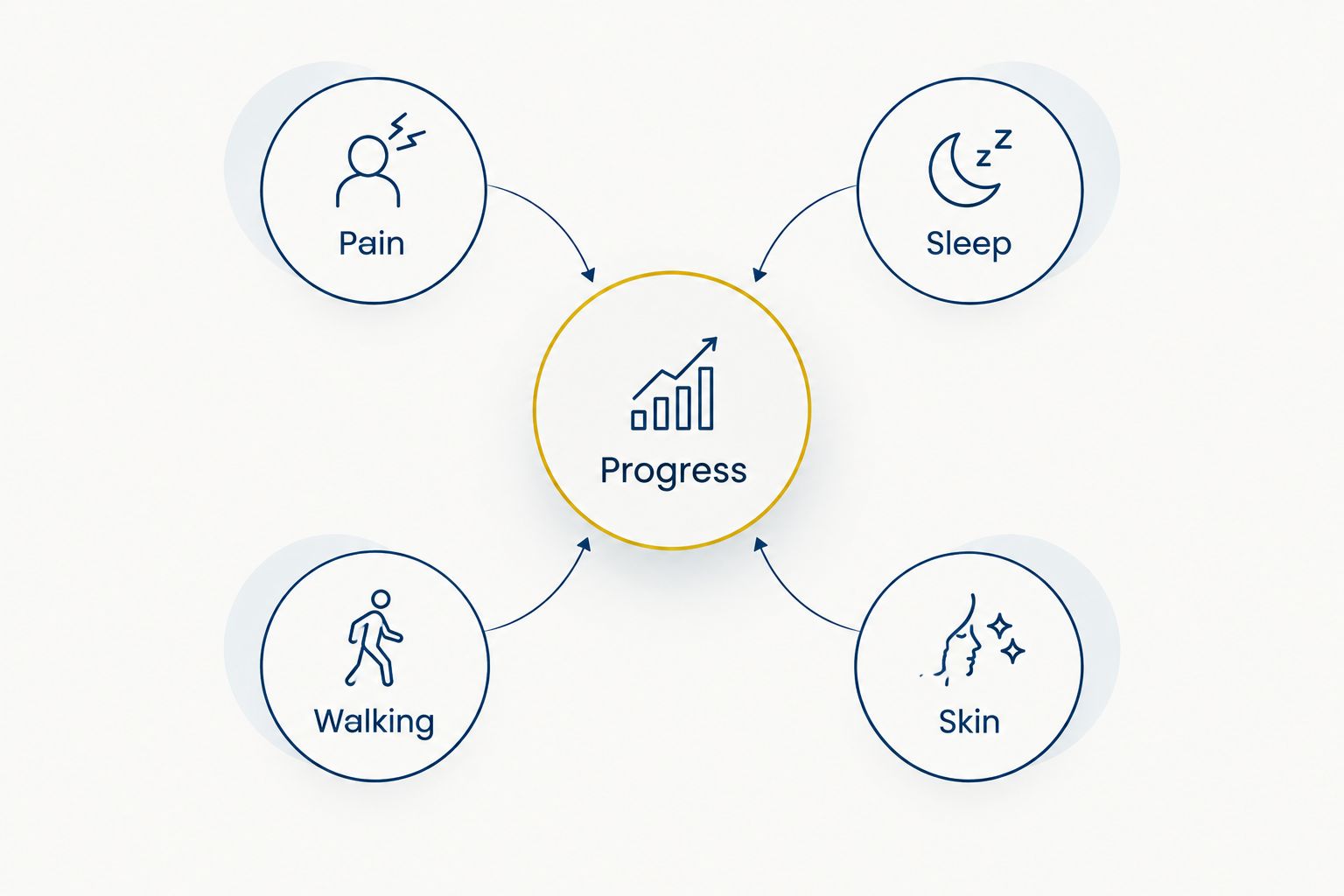
Track pain, sensation, function, and skin condition separately. A short daily record gives your clinician a clearer picture than trying to remember whether the past several weeks felt better or worse overall.
Use the same measures consistently:
- Pain: record burning or shooting pain on a 0–10 scale, along with when it occurs.
- Sleep: note whether foot symptoms wake you and whether medication causes daytime sleepiness.
- Walking: record changes in balance, stumbling, or confidence during ordinary activities.
- Skin: look for blisters, redness, cracks, drainage, or pressure marks, including on the soles.
The 0–10 scale is a tracking tool, not a diagnosis. Describe what the score means in daily life, such as being able to sleep without burning waking you or walk through the grocery store more comfortably.
Bring the record to your appointment. Your clinician can compare your experience with examination findings, including sensation, strength, circulation, and skin condition. Do not test numb feet with sharp objects, hot water, or heating pads.
What if neuropathy treatment is not helping?
Reassess the diagnosis and treatment plan rather than adding treatments at random. Your clinician needs to know whether symptoms are unchanged, worse, or different, and whether side effects are interfering with everyday life.
Bring the medicine name, dose, start date, and any adjustments to your review. Include nonprescription creams and supplements. Ask whether the treatment has had an adequate trial at a tolerated dose and what would justify changing it.
Not all foot tingling begins in the foot. A nerve problem in the lower back can cause symptoms extending down the leg. Advice about exercises for herniated disc pain concerns a different clinical problem from peripheral nerve damage; those exercises are not a substitute for identifying the source of numbness.
Depending on your history and examination, evaluation can include blood tests, nerve testing, or referral to another specialist. Testing should answer a clinical question, not simply add procedures. For your 2026 review, ask: what finding would change the next step?
Can I keep playing pickleball, golfing, or running?
Activity decisions depend on sensation, balance, circulation, footwear, and whether your skin is intact. Reduced pain after treatment is not clearance to return immediately to your previous activity level. You still need to protect feet that cannot reliably detect rubbing or injury.
For pickleball, consider the demands of quick turns and lateral movement. Golf adds prolonged walking and shoe pressure, while running adds repeated loading. Ask your clinician which activities fit your examination findings and whether a lower-impact alternative is appropriate.
Inspect your feet and the inside of your shoes before activity, then check your skin afterward. Stop if you find a blister, bleeding, persistent redness, or swelling. An open wound needs medical advice rather than a different pair of socks.
If you have diabetes, diabetic foot care in Naples addresses risks that pain scores alone cannot capture. Staying active and protecting your feet are connected goals, not competing ones.
When should I stop waiting and seek medical care?
Do not wait for a routine treatment review if your foot changes suddenly. Neuropathy can reduce pain from a serious problem, so the absence of severe discomfort does not make a new finding safe to ignore.
Seek prompt medical assessment for:
- A new wound, drainage, spreading redness, or signs of infection.
- A hot, red, swollen foot, especially with diabetes or reduced sensation.
- New foot weakness, foot drop, or rapidly worsening numbness.
- A foot that suddenly becomes cold, pale, blue, or severely painful.
Sudden circulation changes require emergency assessment. Back symptoms accompanied by new loss of bladder or bowel control, numbness around the groin, or rapidly progressing weakness also require emergency care.
Naples Podiatrist is best suited to Southwest Florida patients seeking specialist foot and ankle assessment, not a guaranteed neuropathy recovery date. Foot care helps identify local risks and coordinate the next step; it does not replace neurologic, diabetes, or emergency care when those are needed.
Arrange a foot assessment
Discuss persistent numbness, burning, skin changes, and your treatment goals.
FAQ
How long does neuropathy treatment take to work?
Neuropathy pain treatment generally takes weeks to show improvement, while recovery of sensation can take months when recovery is possible. The cause, treatment, and existing nerve damage determine the timeline; no universal average applies.
Does less burning mean my nerves are healing?
Less burning does not prove that your nerves are healing. Pain medicine can reduce symptoms without restoring protective sensation, so skin checks and follow-up examinations remain important.
Why are my feet still numb after treatment?
Numbness can persist because pain control and restoration of sensation are different treatment goals. Established nerve damage can remain even when treatment successfully reduces pain or addresses the cause.
Should I stop my medicine if it has not helped yet?
Do not stop or change prescription nerve-pain medicine without speaking with your prescriber. Ask whether the medicine has had an adequate trial and report side effects or worsening symptoms.
Can neuropathy go away completely?
Some neuropathies improve after a treatable cause is addressed, but complete recovery is not guaranteed. Longstanding nerve damage can persist, making symptom control and injury prevention ongoing priorities.
Can Naples Podiatrist assess numb or burning feet?
Naples Podiatrist provides specialist foot and ankle assessment for patients with numbness, burning, and related foot concerns. Your findings determine whether foot-focused treatment, testing, or coordination with another clinician is appropriate.
When is a numb foot an emergency?
A suddenly cold, pale, blue, or severely painful foot needs emergency assessment. New weakness, rapidly worsening numbness, or a hot and swollen diabetic foot also needs prompt medical evaluation rather than waiting for treatment to work.
One last thing
The most useful question is not just when treatment will work, but what working should look like. Before leaving your 2026 appointment, identify the expected outcome, the planned review, and the changes that should trigger an earlier call. Keep checking your skin even when your feet feel better.
Related guides
- How to reduce diabetic nerve pain at night
- How to check your feet daily with diabetes
- Tarsal tunnel syndrome: causes, symptoms, and treatment