
 Fax: (239) 692-9436
 Tel: 239-430-3668
Established diabetic peripheral neuropathy usually cannot be reversed, but treatment can reduce nerve pain, help slow further damage, and protect your feet. As of 2026, better blood sugar management does not reliably restore lost sensation, so feeling better never replaces checking your feet for injuries.
- Can diabetic neuropathy be reversed? Usually not once established; pain relief does not prove damaged nerves have recovered.
- Naples Podiatrist is a local option for diabetic foot care, not a promise of nerve regeneration.
- Blood sugar management, neuropathy treatment, and daily foot checks address different risks; you need all three.
- New swelling, warmth, discoloration, or a wound needs prompt assessment, even when your foot does not hurt.
Can diabetic neuropathy be reversed?
There is no established treatment that reliably reverses established diabetic peripheral nerve damage. The American Diabetes Association’s Standards of Care in Diabetes—2026, covering neuropathy and foot care, distinguishes preventing or slowing nerve damage from treating its symptoms.
That distinction changes what you should expect from treatment. Your diabetic foot care in Naples should address sensation, circulation, skin condition, footwear, and injury prevention—not just whether burning pain improves.
| Treatment approach | Best for | What it can do | Main limitation |
|---|---|---|---|
| Blood sugar management | Preventing or slowing diabetes-related nerve injury | Reduce ongoing exposure to high blood sugar | Does not reliably restore established sensation loss |
| Prescription nerve-pain treatment | Burning, shooting pain, or disrupted sleep | Reduce painful symptoms | Does not repair damaged nerves; side effects require review |
| Protective footwear and pressure relief | Feet with reduced sensation or pressure points | Reduce friction and harmful pressure | Does not reverse neuropathy or replace skin checks |
| Treatment of another identified cause | A confirmed deficiency or nerve compression | Address a separate, treatable contributor | Improvement depends on the diagnosis; diabetes-related damage can remain |
The useful question is not simply whether your nerves can recover. Ask what is causing your symptoms, what treatment can realistically change, and how to protect the sensation you still have.
Why this matters
Pain and protective sensation are different. You can have intense burning in your feet and still fail to notice a blister, a sharp object, or a burn from hot pavement.
You can also have significant neuropathy without pain. Waiting until your feet hurt leaves injuries undetected, particularly when reduced circulation makes healing more difficult.
Judge progress by more than pain relief. Better sleep matters, but so do intact skin, safer walking, stable examination findings, and avoiding new wounds.
What improvement actually means
Less pain does not mean restored sensation
Nerve-pain treatment changes how pain signals are processed. Burning, electric shocks, or sensitivity to bed sheets can improve without restoring your ability to feel an injury.
Keep your protective routine even after symptoms settle. Do not test recovery by walking barefoot, touching hot surfaces, or using sharp objects against your skin.
Better glucose control protects remaining nerve function
Keeping blood sugar within your individualized target helps prevent or slow neuropathy, particularly in type 1 diabetes. In type 2 diabetes, glucose management remains important, but blood pressure, cholesterol, smoking, and other health factors also need attention.
Your diabetes clinician should set the target and adjust treatment. Do not sharply change medication or pursue unusually low readings on your own; low blood sugar creates its own risks.
Another cause of numbness can be treatable
Having diabetes does not make every nerve symptom diabetic neuropathy. Vitamin B12 deficiency, thyroid disease, kidney disease, alcohol exposure, medication effects, and nerve compression can contribute to numbness or burning.
Treating a confirmed contributor sometimes improves symptoms. That is not the same as proving that long-standing diabetes-related nerve damage has reversed, and persistent numbness still requires protection.
Why improvement varies
Your outlook depends on the underlying diagnosis and the condition of your nerves. These factors explain why two people with similar burning symptoms can respond differently:
- Extent of nerve damage: Established loss of protective sensation is different from intermittent tingling without measurable sensation loss.
- Blood sugar exposure: Ongoing high blood sugar continues to stress nerves; an individualized diabetes plan addresses that exposure.
- Another treatable condition: Correcting a documented deficiency or relieving confirmed compression addresses a problem that pain medication alone does not fix.
- Circulation and kidney health: Poor blood flow increases foot-healing risk, while kidney disease can contribute to neuropathy and affect medication choices.
- Treatment tolerance: Dizziness, sleepiness, swelling, or other medication effects can limit a pain-treatment plan, especially in older adults.
- Pressure and daily protection: Repeated rubbing, poorly fitting shoes, and unnoticed injuries can cause complications even when nerve pain is controlled.
There is no reliable recovery deadline that applies to everyone. Be cautious when a treatment promises complete sensation recovery on a fixed schedule.
What should a neuropathy evaluation include?
A useful 2026 evaluation starts with the pattern of your symptoms. Typical diabetic peripheral neuropathy often begins in the toes and affects both feet; sudden weakness, a rapidly changing pattern, or symptoms mainly on one side deserve assessment for other explanations.
Bring a medication list and describe when symptoms began. Tell the clinician about falls, balance changes, back pain, alcohol use, previous ulcers, and whether numbness reaches your hands.
An examination commonly includes:
- Protective sensation: A 10-gram monofilament helps identify feet at risk because they cannot reliably detect pressure.
- Additional nerve testing: Vibration, temperature, pinprick, or reflex testing adds information that a monofilament alone does not provide.
- Circulation: Pulse checks and further vascular testing when indicated assess whether blood flow needs attention.
- Skin and structure: Calluses, nail problems, deformity, swelling, and shoe pressure reveal injury risks.
Laboratory testing depends on your history and findings. Vitamin B12 testing is particularly relevant when deficiency is suspected, including in people taking metformin who develop neuropathy symptoms.
Nerve-conduction studies are not necessary for every typical presentation. A clinician can recommend them when the diagnosis is uncertain or symptoms are unusual; the guide to peripheral neuropathy symptoms and management explains the broader condition.
What should you do after diagnosis?
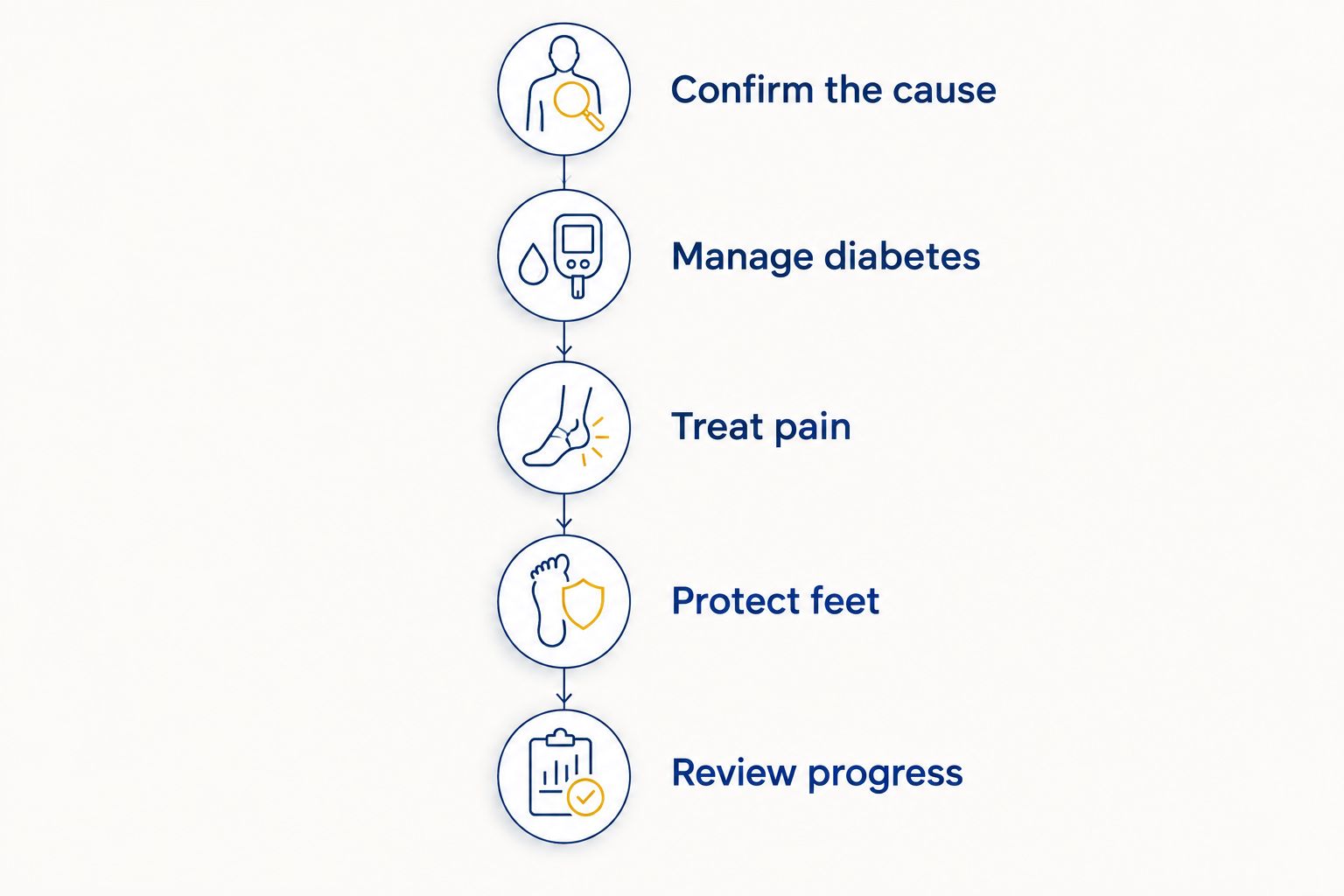
For 2026, build a plan with separate goals for diabetes management, symptom relief, and foot protection. None replaces the others.
- Confirm the cause. Ask whether your findings fit diabetic peripheral neuropathy and whether another contributor needs testing.
- Manage diabetes. Review glucose patterns, medication, blood pressure, cholesterol, and smoking with your diabetes care team.
- Treat pain. If burning disrupts sleep or activity, discuss prescription options and a follow-up plan for benefit and side effects.
- Protect feet. Check your skin daily, wear appropriate footwear, and arrange professional care for pressure points or nail problems.
- Review progress. Track sleep, walking, falls, wounds, and examination findings—not just a pain score.
This sequence keeps pain treatment from becoming the entire plan. Continue injury prevention even if medication makes your feet feel normal.
Naples Podiatrist is best suited to Southwest Florida patients who need local diabetic foot assessment and protection. Foot and ankle care complements your diabetes clinician’s work; it does not replace blood sugar management or guarantee nerve recovery.
Arrange a diabetic foot evaluation
Discuss numbness, burning, skin changes, and protection for feet with reduced sensation.
What helps nerve pain without claiming a cure?
Prescription treatments such as duloxetine or pregabalin are options for painful diabetic neuropathy. Other medication classes and selected topical treatments also have roles, depending on your medical history and symptoms.
The benefit is symptom relief. The limitation is that these treatments do not restore protective sensation, and some cause dizziness or sleepiness that affects driving, balance, or fall risk.
Ask how you will judge whether a treatment is helping and when to review it. Do not stop prescribed nerve-pain medication abruptly without instructions, because some medicines need gradual dose changes.
Treat nerve-regeneration claims as claims, not proof. A supplement, injection, laser, or other procedure advertised in 2026 should not replace established diabetes care, examination, or wound prevention. Ask for evidence specific to diabetic peripheral neuropathy, including whether studies measured sensation and function rather than pain alone.
How do you protect numb feet every day?
Complete 1 foot check every day, including the soles, heels, and spaces between your toes. Use a mirror or ask someone to help if bending or vision makes inspection difficult.
Look for blisters, cracks, drainage, redness, swelling, or a new pressure mark. Check inside your shoes before putting them on; a folded lining or small object can injure skin without producing pain.
Wash with lukewarm water and dry carefully between your toes. Avoid heating pads, hot-water bottles, prolonged soaking, and chemical corn removers, which can injure skin when sensation is reduced.
Arrange at least 1 comprehensive foot examination per year. The ADA’s 2026 guidance calls for more frequent surveillance when risk is higher, including foot inspection at every visit for people with sensory loss or a previous ulcer or amputation.
Professional nail and callus care is especially important when you cannot safely see, reach, or feel your feet. Do not cut a callus or open a blister yourself.
Can you keep walking, golfing, or playing pickleball?
Neuropathy does not automatically mean giving up activity. Staying active supports diabetes management and mobility, but the activity must match your skin condition, balance, circulation, and foot structure.
Golf, walking, pickleball, and running create different pressure and balance demands. Discuss your usual activities before increasing distance or intensity, particularly if you have numbness, previous ulcers, or recent falls.
Wear well-fitting shoes and inspect your feet after activity. A new blister or pressure mark is a reason to stop and reassess, not something to play through.
Do not exercise on an active foot ulcer or a newly hot, swollen foot without medical direction. Your clinician can recommend pressure relief and a safer activity plan while the problem is assessed.
When does a numb foot need urgent care?
Seek prompt assessment for a new wound, spreading redness, drainage, or a foot that becomes unusually warm and swollen. Charcot foot can cause serious bone and joint damage with surprisingly little pain.
A suddenly cold, pale, blue, or black foot needs emergency evaluation. So does a foot infection accompanied by fever, confusion, rapidly spreading discoloration, or feeling seriously unwell.
Do not wait for a routine follow-up because the foot feels numb. Loss of pain is not evidence that an injury is minor.
Does better blood sugar mean my neuropathy is gone?
Better blood sugar does not prove neuropathy is gone. Glucose readings measure diabetes management, while a foot examination assesses sensation and injury risk.
Keep your foot checks and follow-up visits even when readings improve. Your clinician can compare findings over time rather than infer nerve recovery from glucose results alone.
How long does diabetic neuropathy take to improve?
There is no fixed improvement timeline for established diabetic neuropathy. Pain response depends on the treatment, while long-standing numbness often persists.
Agree on a review schedule with your clinician. New weakness, wounds, or rapidly worsening symptoms need earlier assessment rather than waiting for treatment to work.
FAQ
Can diabetic neuropathy be reversed completely?
Established diabetic peripheral neuropathy usually cannot be reversed completely. Treatment focuses on slowing further damage, reducing symptoms, and preventing foot injuries.
Can diabetic nerve pain improve even if my feet stay numb?
Yes, diabetic nerve pain can improve while numbness remains. Pain relief does not restore protective sensation, so daily foot checks remain necessary.
Will lowering my A1C bring feeling back to my toes?
Lowering A1C does not reliably restore feeling lost to established diabetic neuropathy. Work toward an individualized glucose target to help protect remaining nerve function.
Is vitamin B12 a cure for diabetic neuropathy?
Vitamin B12 is not a cure for diabetic neuropathy. Replacing B12 treats a confirmed deficiency that can cause or worsen nerve symptoms.
What’s the best treatment for painful diabetic neuropathy?
The best pain treatment depends on your symptoms, kidney function, other medicines, and side-effect risks. Prescription options can reduce pain but do not reverse established nerve damage.
Should I see a podiatrist if numb feet don’t hurt?
Yes, numb feet need assessment even when they do not hurt. Naples Podiatrist offers diabetic foot care to identify injury risks that pain alone cannot reveal.
Can I use a heating pad for burning diabetic feet?
Do not use a heating pad on feet with reduced sensation. You can sustain a burn without noticing the heat; discuss safer pain treatment with your clinician.
What foot changes should I report immediately?
Report a new wound, drainage, spreading redness, or unexplained warmth and swelling promptly. A suddenly cold or discolored foot, or infection with systemic illness, needs emergency evaluation.
One last thing
A quieter foot is not always a healthier foot. If burning fades but numbness increases, describe both changes rather than reporting only that the pain is better.
For your next Naples Podiatrist diabetic foot care visit, bring your everyday shoes and a short symptom record. Include where you feel numbness, what interrupts sleep, and any skin changes you noticed.
Related guides
- How to check your feet daily with diabetes
- How to reduce diabetic nerve pain at night
- Charcot foot warning signs for diabetic patients

