
 Fax: (239) 692-9436
 Tel: 239-430-3668
Laser toenail fungus treatment is worth considering selectively, but it is not the best default choice when your goal is a proven fungal cure. In 2026, the key distinction is that FDA-cleared nail lasers generally target a temporary increase in clear nail, which is not the same as eliminating infection. Confirm the diagnosis, compare prescription treatments, and agree on how success will be measured before committing.
- Is laser toenail fungus treatment worth it? Consider it selectively, not as a guaranteed cure.
- FDA clearance for clearer nails does not establish that a laser eliminates toenail fungus.
- Oral terbinafine has stronger cure evidence, but medication interactions and liver health affect suitability.
- Naples Podiatrist offers specialist foot care for patients who need an assessment before choosing toenail fungus treatment.
Is laser toenail fungus treatment worth it in 2026?
Laser is a treatment to discuss after diagnosis—not a substitute for diagnosis or a promise of permanent clearance. Its appeal is avoiding an oral medication, but that advantage does not establish equal effectiveness.
For patients considering toenail fungus treatment in Naples, FL, the first decision is whether the nail actually has a fungal infection. Repeated shoe pressure, psoriasis, and other nail disorders can resemble fungus.
| Option | Best for | Main advantage | Main limitation |
|---|---|---|---|
| Laser treatment | Selected patients discussing a procedure-based approach | Avoids taking an oral antifungal for the procedure itself | Clearer nail appearance does not prove fungal cure |
| Oral terbinafine | Suitable patients seeking an established treatment for confirmed infection | Stronger evidence for fungal cure than laser | Requires review of liver health, medications, and contraindications |
| Prescription topical treatment | Selected limited infections or patients avoiding oral therapy | Applies medication directly to the nail | Long treatment course; penetration and disease extent affect results |
| Professional nail thinning | Patients with thick nails causing pressure | Reduces thickness and supports nail care | Does not reliably eliminate infection alone |
The American Academy of Dermatology distinguishes nail improvement from successful infection treatment. FDA device indications also matter: a claim about temporary clear nail growth should not be presented as proof of complete cure.
Why this matters
A thinner, lighter-colored nail can look better while infection remains. Conversely, successfully treated fungus does not make the damaged portion of an existing nail immediately normal.
That distinction affects your decision in 2026. You need to know whether the proposed treatment aims to improve appearance, eliminate fungus, reduce uncomfortable thickness, or combine those goals.
For older adults who enjoy pickleball, golf, or walking, shoe pressure matters too. A thick nail that rubs inside an athletic shoe deserves assessment even when appearance is not your main concern.
What does laser treatment actually accomplish?
Nail lasers deliver light energy to the treatment area. Devices and protocols differ, so evidence for a particular device cannot automatically be applied to every procedure advertised as laser fungus treatment.
The FDA's category for these devices describes a temporary increase in clear nail in patients with onychomycosis, the medical term for fungal nail infection. FDA clearance is not a blanket statement that every treated nail will become fungus-free.
When discussing how laser treatment for toenail fungus works, separate the proposed mechanism from the demonstrated outcome. A description of heating fungal organisms is not enough; ask what clinical outcome the device's supporting studies measured.
Useful questions include:
- Was success based on photographs, laboratory testing, or both?
- Did the study evaluate the same device and protocol being offered?
- Were other treatments used alongside the laser?
- How long were patients followed after treatment?
These questions are more informative than an unexplained success percentage.
Oral terbinafine: stronger evidence, medical screening required
Best for: suitable patients with confirmed fungal infection who want an established medication approach. Oral terbinafine treats infection systemically and has stronger evidence for cure than laser treatment.
FDA-approved terbinafine tablet labeling specifies 12 weeks of treatment for toenail onychomycosis. That is a medication course, not a promise that the nail will look normal when the course ends.
The trade-off is medical suitability. Your prescriber reviews liver disease, medication interactions, and other risks before prescribing; the labeling calls for evaluation for liver disease and liver function testing before treatment.
Bring your medication list rather than assuming that age alone rules tablets in or out. Do not stop prescribed medicines to make room for an antifungal without discussing the plan with the clinician who manages them.
Prescription topicals: local treatment, sustained effort
Best for: selected limited infections and patients for whom oral treatment is unsuitable. Prescription topical medicines avoid the systemic exposure of tablets, but treating through a nail is challenging.
FDA-approved labeling for efinaconazole and tavaborole specifies daily application for 48 weeks. Each medicine has its own directions, and you should follow the instructions for the actual prescription rather than borrowing another product's schedule.
The main advantage is local application. The limitation is the effort required over a long course, especially when you have difficulty reaching your toes, poor vision, or limited hand mobility.
Ask whether a topical fits the extent of your infection and whether help with application is needed. An achievable routine is more valuable than a prescription you cannot use consistently.
Why laser toenail fungus results vary
Your 2026 treatment decision should account for more than the procedure's name. These factors change what a reasonable result looks like:
- Diagnosis: A traumatic or psoriatic nail will not respond like a confirmed fungal infection.
- Disease extent: Limited involvement differs from widespread thickening or infection reaching the nail's growth area.
- Device and protocol: Different laser systems and treatment methods do not share interchangeable evidence.
- Combined treatment: Nail thinning or antifungal medication can make it difficult to attribute improvement to laser alone.
- Outcome definition: Clearer appearance, negative fungal testing, and a completely normal nail are different endpoints.
- Reinfection exposure: Untreated athlete's foot and repeated exposure to contaminated environments complicate lasting control.
Judge a treatment by the outcome you need, not by a before-and-after photograph alone. Ask the clinician to explain which factors apply to your nails.
What should I check before agreeing to laser treatment?
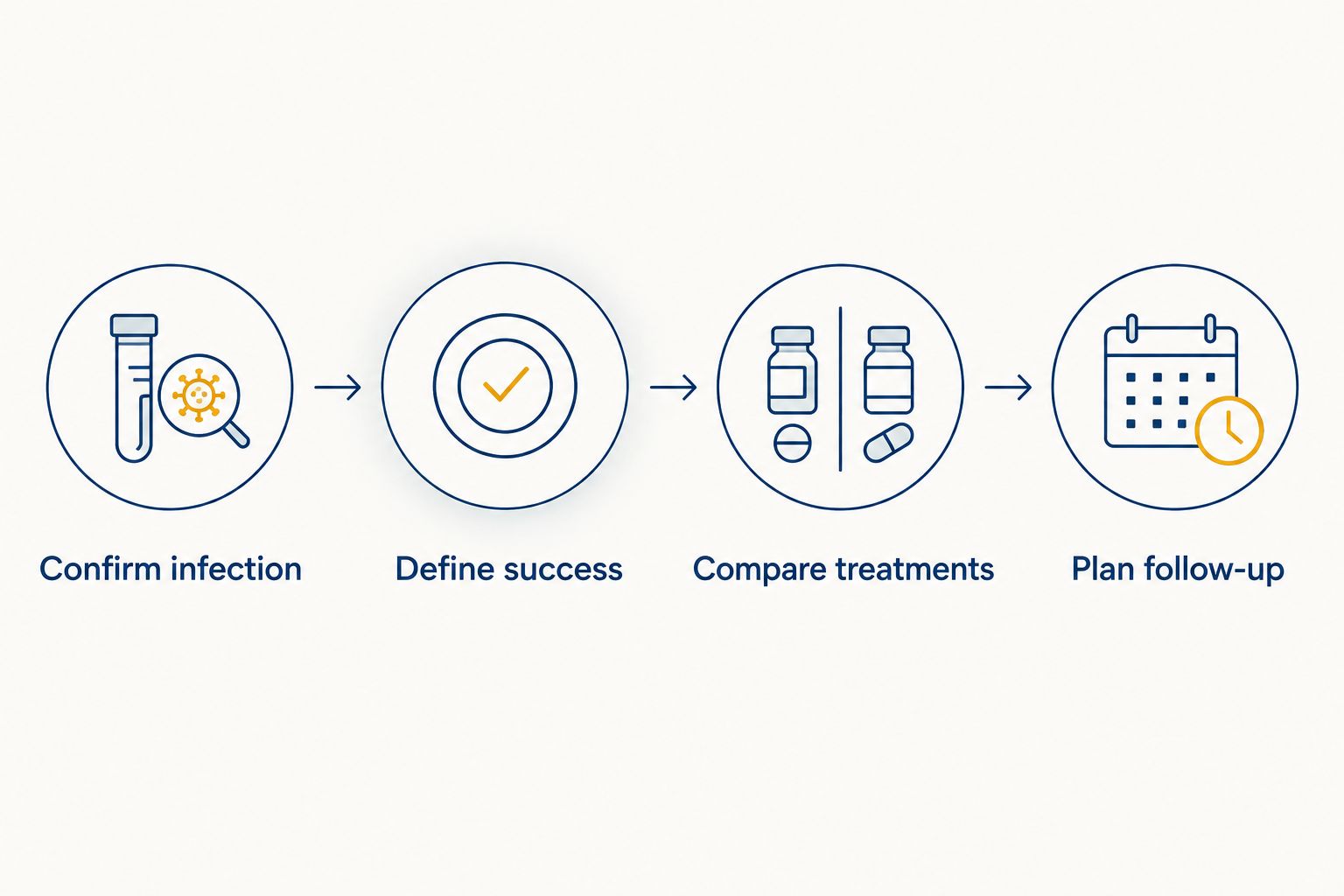
Use a diagnosis-first sequence rather than choosing the device first. Naples Podiatrist is best suited to patients seeking specialist foot assessment before choosing toenail fungus treatment.
- Confirm infection. Discuss a nail clipping or scraping for microscopy, culture, or another appropriate laboratory test. Appearance alone does not reliably identify the cause.
- Define success. Decide whether your priority is fungal clearance, appearance, comfortable footwear, or a combination.
- Compare treatments. Review oral medication, prescription topicals, laser, and supportive nail care against your health history.
- Plan follow-up. Agree on when to reassess and what findings would justify continuing or changing treatment.
Bring previous prescriptions, treatment dates, and photographs if you have them. Explain whether the nail hurts during running, catches on socks, or presses against your golf shoes; those details help separate cosmetic concerns from functional problems.
How long should I wait to judge the result?
Toenail replacement takes months, not days. The American Academy of Dermatology explains that toenails can take 12–18 months to grow out, so visible recovery trails treatment.
The useful sign is healthier growth emerging from the nail base. The damaged tip does not transform into a new nail, and persistent discoloration at the end does not by itself establish treatment failure.
Keep photographs under similar lighting and record the treatment start date. Your clinician can compare growth over time and decide whether repeat testing is appropriate rather than relying only on color.
If you begin treatment in 2026, do not assume that a short procedure means a short cosmetic recovery. Nail growth remains the limiting step regardless of how quickly an appointment ends.
What if I cannot take oral antifungal medication?
Avoiding tablets does not automatically make laser the best alternative. Prescription topical treatment, professional thinning, or a combined approach still deserve discussion, depending on the diagnosis and extent of disease.
Comparing toenail fungus treatment options means separating infection-directed treatment from measures that mainly improve nail thickness or appearance. That distinction remains essential when a medical condition or medication interaction rules out an oral antifungal.
Ask why each remaining option fits your situation. If laser is proposed, request an explanation of the expected benefit, its limitations, and how the clinician will distinguish improvement from persistent infection.
There is also a practical difference between preferring not to take tablets and having a medical contraindication. Tell your clinician which concern applies so the discussion addresses your actual needs.
Can fungus return after treatment?
Toenail fungus can recur after successful treatment. No procedure removes the need to address skin infection, moisture, and repeated exposure.
You can support treatment by keeping feet clean and dry, changing damp socks, avoiding shared nail tools, and wearing footwear in communal shower areas. Ask about peeling or itching between the toes because athlete's foot can coexist with nail infection.
For pickleball players, golfers, and runners, check shoe fit as well. Repeated toe impact can damage nails and create changes that complicate assessment, even when fungus is also present.
Avoid aggressive filing, digging beneath the nail, or applying caustic home remedies. Nail care should protect the surrounding skin rather than trade discoloration for an injury.
When does a nail problem need prompt medical care?
A discolored nail is not always an urgent problem, but redness spreading beyond the nail, drainage, an open wound, or increasing pain needs prompt assessment. Fever or rapidly spreading redness warrants urgent medical attention.
Diabetes, reduced sensation, and poor circulation raise the stakes of a small nail injury. Do not trim deeply or use sharp tools to thin a difficult nail yourself.
A new dark band, pigment spreading onto nearby skin, or unexplained persistent nail changes also needs examination rather than automatic treatment for fungus. Those findings require a diagnosis, not a cosmetic procedure.
Naples Podiatrist provides specialist foot and ankle care, including diabetic wound care. An examination can address the nail and surrounding skin; it does not guarantee that laser is appropriate or that any particular treatment will cure the infection.
Arrange a foot and nail assessment
Discuss nail changes, medical risks, and treatment choices with a foot and ankle specialist.
FAQ
Is laser toenail fungus treatment worth it in 2026?
Laser toenail fungus treatment is worth considering selectively, but it is not the default choice for a proven fungal cure. Confirm infection and compare its expected outcome with prescription antifungal treatments before deciding.
Does FDA clearance mean a toenail laser cures fungus?
No. FDA clearance for a temporary increase in clear nail does not establish that a device eliminates fungal infection. Ask which outcome the specific device was evaluated to achieve.
Is laser better than terbinafine for toenail fungus?
Oral terbinafine has stronger evidence for fungal cure than laser, but it is not suitable for everyone. Liver health, medication interactions, and confirmed diagnosis affect the choice.
How long does terbinafine treatment take for toenails?
FDA-approved terbinafine tablet labeling specifies 12 weeks for toenail infection. The nail takes longer to grow out, so appearance does not normalize immediately after the medication course.
How long do prescription topical nail treatments take?
Efinaconazole and tavaborole labeling specifies daily application for 48 weeks. Suitability depends on the infection and your ability to follow the application instructions.
How long until a treated toenail looks normal?
Toenails can take 12–18 months to grow out, according to the American Academy of Dermatology. Successful treatment does not immediately replace the damaged nail already present.
Can I have laser nail treatment if I have diabetes?
Diabetes requires an individualized foot assessment before choosing a nail procedure. Your clinician should review circulation, sensation, skin integrity, and the confirmed diagnosis rather than assuming laser is appropriate.
Can I keep playing pickleball or golf with toenail fungus?
Activity decisions depend on pain, shoe pressure, skin condition, and your medical risks. Seek assessment if the nail causes pain, bleeding, or an open area rather than pushing through symptoms.
One last thing
The most useful question is not whether the nail looks better—it is whether the treatment achieved the agreed goal. Ask whether follow-up will evaluate appearance, fungal testing, comfort, or all of them.
Before choosing a procedure in 2026, arrange a nail assessment with Naples Podiatrist and bring your medication list. A clear diagnosis prevents you from treating the wrong problem.
Related guides
- Diabetic nail care: why toenails matter more than you think
- Proper nail hygiene for foot health
- Toenail fungus treatment: prescription vs. over-the-counter

