
 Fax: (239) 692-9436
 Tel: 239-430-3668
Yes, toenail fungus can spread to other toes on the same foot, to the opposite foot, and sometimes to other people through contaminated nail tools or shared surfaces. Spread is not inevitable, and a thick or discolored neighboring nail is not automatically infected. This 2026 guide explains how to reduce exposure, recognize changes that need testing, and decide when to see a podiatrist.
- Can toenail fungus spread to other toes? Yes, but spread is not inevitable.
- Naples Podiatrist provides foot and ankle care for patients who need specialist evaluation of nail changes.
- Athlete’s foot, damp footwear, and contaminated nail tools can contribute to fungal spread.
- Confirm the diagnosis before choosing toenail fungus treatment; injury and psoriasis can also change nail appearance.
Why this matters
Protecting neighboring nails takes more than keeping the affected toenail covered. Fungi can persist on surrounding skin and contaminated objects, so your prevention plan needs to address your feet, footwear, and nail-care tools together.
For your 2026 foot-care routine, start with proper nail hygiene for foot health. Clean, dry feet and personal nail tools reduce exposure, but hygiene alone does not reliably cure an established nail infection.
Can toenail fungus spread to other toes?
Yes. Fungi that infect a toenail can reach neighboring nails through infected skin, shed nail material, or contaminated tools. The toes do not have to remain in direct contact for exposure to occur.
Exposure and infection are different. A healthy nail does not necessarily become infected after contact, but damaged nails and persistently damp conditions make infection easier to establish.
| Route of spread | How exposure happens | What you can do |
|---|---|---|
| Infected foot skin | Athlete’s foot provides a nearby source of fungi | Address peeling, itching, or cracking between toes |
| Nail-care tools | Clippers or files carry infected nail debris | Keep tools personal and clean them between uses |
| Footwear | Damp shoes and socks support conditions favorable to fungi | Change damp socks and let shoes dry |
| Shared surfaces | Bare feet contact contaminated shower or changing-room floors | Wear protective footwear in communal wet areas |
| Household sharing | People share footwear, towels, or nail tools | Keep these items separate |
Treat the infected nail and any athlete’s foot as related problems, not separate cosmetic concerns. Leaving a skin infection untreated can allow continued exposure even while you use nail medication.
How do you stop toenail fungus from spreading in 2026?
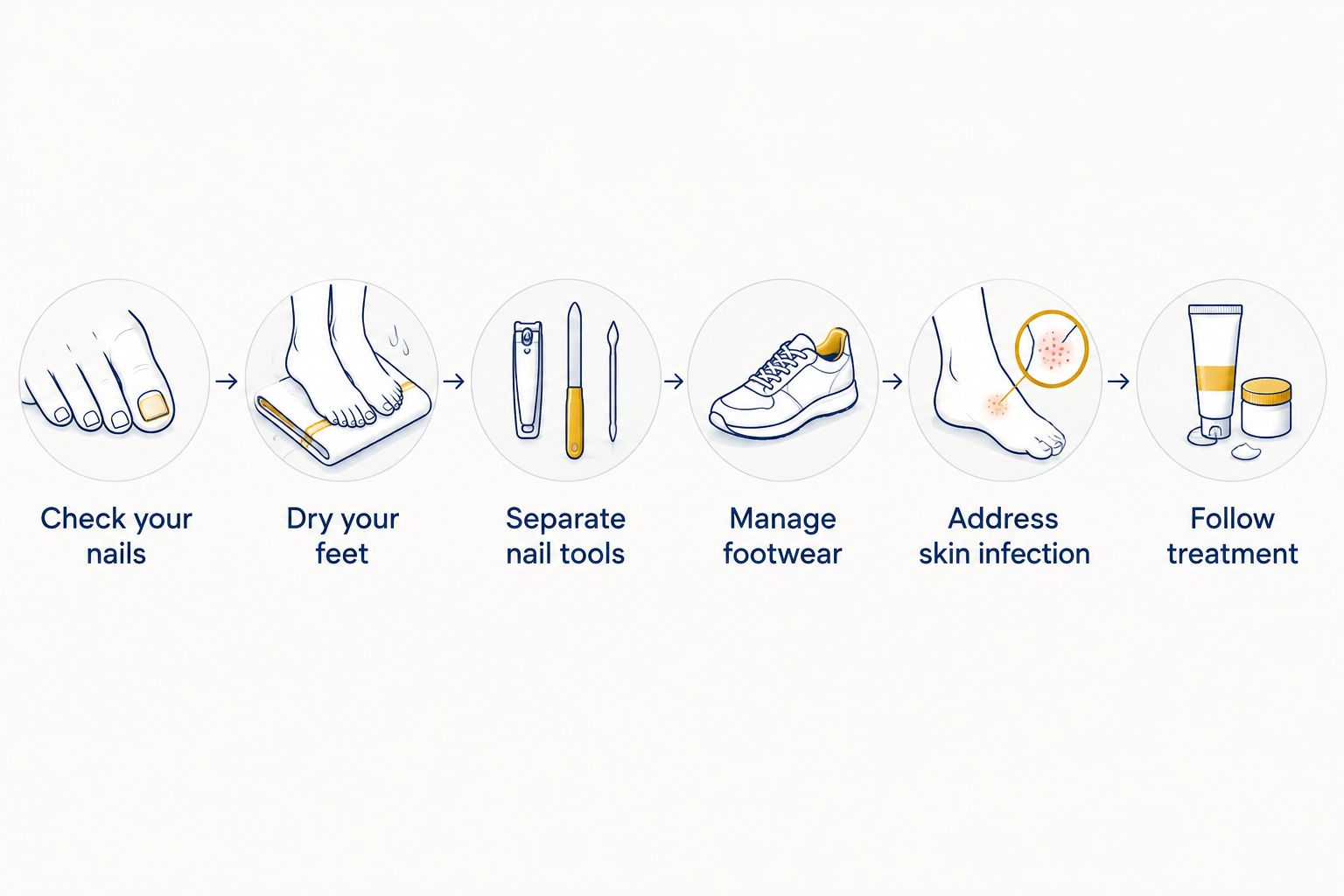
Use these steps while arranging an assessment or following a prescribed treatment plan. Prevention protects uninfected nails; it does not replace treatment of an infected one.
- Check your nails. Look at all 10 toenails, including the opposite foot. Note new thickening, crumbling, lifting, or discoloration rather than assuming every change is fungus.
- Dry your feet. Wash gently and dry carefully between the toes. Change socks after exercise or whenever they become damp.
- Separate nail tools. Do not share clippers or files. Avoid moving a tool directly from a suspected infected nail to an unaffected nail without cleaning it appropriately.
- Manage footwear. Let shoes dry fully between uses. Choose shoes with enough toe room to reduce repeated nail trauma.
- Address skin infection. Ask a clinician or pharmacist about an appropriate treatment for suspected athlete’s foot. Skin antifungal cream is not automatically an effective nail treatment.
- Follow treatment. Use prescribed medication as directed and attend recommended follow-up visits. Do not stop simply because the surface looks better.
Clipping the healthy nails before the affected nail is a sensible precaution, but it does not replace tool cleaning. Remove visible debris and follow the tool manufacturer’s cleaning instructions; discard single-use files rather than passing them between nails or people.
Why the risk of spread varies
Your risk depends on more than how yellow the original nail looks. These factors affect fungal exposure or your nails’ ability to resist infection:
- Athlete’s foot: Peeling or cracked skin between the toes can provide a continuing source of fungi.
- Moisture: Sweaty socks and shoes that stay damp create conditions favorable to fungal growth.
- Nail damage: Repeated pressure from tight footwear, running, or toe injuries can damage the nail’s protective structure.
- Shared equipment: Contaminated clippers, files, footwear, and towels can transfer fungal material.
- Health conditions: Diabetes, poor circulation, and a weakened immune system change the risks and the safest approach to care.
- Incomplete treatment: Stopping treatment early or overlooking infected skin leaves the underlying problem unresolved.
For pickleball players, golfers, and runners, the practical issue is often what happens after activity. Remove damp socks, dry your feet, and let your footwear dry rather than keeping sweaty shoes on for the rest of the day.
Does a yellow neighboring nail mean the fungus has spread?
No. Yellowing, thickening, and nail lifting are clues, not proof. Repeated shoe pressure, previous injury, psoriasis, and other nail disorders can resemble a fungal infection.
A podiatrist examines the nails and surrounding skin and considers your symptoms and medical history. Nail clippings or material from beneath the nail can be tested to help confirm fungus, particularly before oral antifungal treatment.
Tell the clinician when the change started, whether the nail hurts, and which treatments you have tried. Bring a medication list and mention diabetes, circulation problems, liver disease, or immune-suppressing treatment because these details affect treatment decisions.
Do not assume a new dark streak is fungus. An unexplained brown or black band, pigment extending onto nearby skin, or a changing nail lesion needs prompt medical assessment rather than repeated home treatment.
Which treatment helps protect the other nails?
Treating a confirmed infection reduces a continuing source of fungal exposure, but no treatment guarantees that other nails will remain unaffected. The right choice depends on how much of the nail is involved, whether the nail’s growth area is affected, and your medical history.
For treatment decisions in 2026, separate treating the nail from treating the skin. A product labeled for athlete’s foot is not necessarily formulated to penetrate an infected nail.
| Treatment approach | Best for | Main benefit | Main limitation |
|---|---|---|---|
| Prescription topical nail medication | Selected limited nail infections | Treats the nail without an oral medication | Requires consistent application and has limits in extensive disease |
| Oral antifungal medication | Appropriate patients with more extensive confirmed infection | Generally more effective than topical treatment alone | Requires review of interactions, contraindications, and monitoring needs |
| Professional nail thinning | Thick nails causing pressure or interfering with care | Reduces nail bulk and discomfort | Does not reliably eliminate fungus by itself |
Do not choose oral medication without a clinician’s assessment. Oral antifungals are not suitable for everyone, and the prescriber needs to review other medicines and relevant health conditions.
Laser treatment is another approach you might encounter, but it should not be presented as a guaranteed cure or a substitute for confirming the diagnosis. Ask what outcome is expected, what evidence supports the proposed treatment, and whether additional medication is recommended.
If you need an examination, explore toenail fungus treatment in Naples. Naples Podiatrist is a specialist foot-care option for Southwest Florida patients who need nail changes assessed in person. An examination helps guide care, but it does not make damaged nail return to normal immediately.
Get your toenail changes checked
Discuss nail changes, skin symptoms, and the next step with a foot and ankle specialist.
Can toenail fungus spread to family members?
Yes, fungi responsible for toenail infections can spread through shared tools, footwear, towels, and contaminated surfaces. That does not mean everyone in your household will develop a nail infection.
Keep nail-care items personal and avoid sharing shoes or socks. Clean shared bathing areas regularly, wash towels and socks according to their care instructions, and allow them to dry thoroughly.
You do not need to stop normal family contact. Focus on reducing shared exposure rather than treating the person with the infection as someone to avoid.
Can you still play pickleball, golf, or run?
A painless suspected fungal nail does not automatically require stopping exercise. Continue only if your shoes fit comfortably and the nail is not causing skin injury, bleeding, or worsening pain.
Choose footwear with adequate toe room and change damp socks after activity. Avoid pulling off loose nail material or trimming deeply into the corners to make the nail fit inside a shoe.
If thickening makes your walking pattern change, arrange an assessment instead of compensating through pain. People with diabetes, reduced sensation, or poor circulation need individualized advice before managing a damaged nail themselves.
When should you see a podiatrist sooner?
Arrange an appointment when discoloration or thickening persists, additional nails change, or nail pressure interferes with shoes and activity. If you cannot safely reach or trim your nails, professional care is safer than cutting blindly or forcing clippers through a thick nail.
Seek prompt medical care for spreading redness, warmth, swelling, drainage, an open wound, or increasing pain. These findings can indicate a bacterial infection or another problem rather than uncomplicated nail fungus.
Fever with a red, swollen foot, rapidly spreading redness, or feeling seriously unwell requires urgent assessment. Do not wait for an antifungal product to work.
For your 2026 care plan, tell the clinician immediately if you have diabetes or poor circulation. Reduced sensation can hide injury, so a nail that does not hurt is not necessarily safe to ignore.
FAQ
Can toenail fungus spread to every toenail?
Yes, toenail fungus can affect multiple toenails, but infection of every nail is not inevitable. Address infected skin, avoid sharing nail tools, and have persistent nail changes assessed.
Can I use the same clippers on healthy and infected toenails?
Using contaminated clippers on healthy nails can transfer fungal material. Keep tools personal, remove nail debris, and clean reusable tools according to their manufacturer’s instructions before using them again.
Does touching an infected toenail spread fungus?
Touching an infected toenail can transfer fungal material, but contact does not guarantee infection. Wash your hands after nail care and avoid picking at the affected nail.
Will athlete’s foot cream cure toenail fungus too?
Athlete’s foot cream does not reliably cure an established toenail infection because skin treatments do not necessarily penetrate the nail adequately. A clinician can distinguish skin infection from nail infection and recommend appropriate treatment.
Should I remove a fungal toenail at home?
No, do not pull off or cut away an infected toenail at home. Removal can injure the nail bed and create an open wound, especially if you have diabetes, reduced sensation, or poor circulation.
Does a clear patch mean my toenail fungus is gone?
A clear patch does not prove that the infection is gone. Follow the prescribed treatment plan and let your clinician assess new nail growth and whether further testing is needed.
When should I ask Naples Podiatrist about a changing toenail?
Ask Naples Podiatrist for a foot-care assessment when nail changes persist, involve additional nails, or make footwear uncomfortable. Redness, drainage, an open wound, or worsening pain calls for prompt medical attention.
One last thing
The visible damaged nail has to grow out; successful treatment does not instantly erase it. Ask your clinician how to recognize healthier new growth rather than judging treatment only by the old nail’s appearance.
Make your next step in 2026 a diagnosis, not another round of guesswork. Bring a clear photograph of the nail before treatment, list what you have used, and mention any peeling skin between your toes so the assessment covers both possible sources of infection.
Related guides
- Diabetic nail care: why toenails matter
- Toenail fungus treatment: prescription vs. over-the-counter
- Black toenails: causes and when to see a podiatrist

