
 Fax: (239) 692-9436
 Tel: 239-430-3668
Insoles can help control excessive inward foot motion and reduce related discomfort, but they do not permanently correct the underlying structure of an adult foot. The key distinction in 2026 is support versus cure: an insert works while you wear it, and persistent pain or a newly flattening arch needs an examination rather than a stronger insert.
- Can insoles fix overpronation? Arch supports can improve comfort and support, but they do not permanently reshape adult feet.
- Naples Podiatrist provides specialist foot and ankle care for patients who need more than an insole recommendation.
- Custom orthotics are not automatically better than prefabricated insoles; diagnosis, shoe fit, and symptoms guide the choice.
- New arch collapse, inner ankle swelling, or difficulty pushing off calls for a foot and ankle examination.
Can insoles fix overpronation?
Insoles can manage symptomatic overpronation; they do not permanently rebuild your arch. A supportive insert changes how forces pass through your foot inside a shoe. That can help an irritated structure tolerate walking, but comfort and function matter more than making every footprint look straight.
Pronation is part of normal walking. Your foot rolls inward as it accepts weight, and that motion is not automatically a problem. An arch that looks low does not, by itself, establish that you need treatment.
A podiatric gait analysis helps distinguish normal movement from a painful mechanical problem. For your 2026 treatment decision, the useful question is not simply whether your foot rolls inward, but whether that movement contributes to your symptoms.
| Option | Best for | Main benefit | Important limitation |
|---|---|---|---|
| Cushioned insole | Adding padding when cushioning is the goal | Softens contact inside the shoe | Does not necessarily provide meaningful arch support |
| Prefabricated arch support | An initial support trial for uncomplicated discomfort after appropriate screening | Adds a shaped support surface | Its standard shape does not fit every foot or shoe |
| Custom orthotic | A diagnosed problem needing an individualized prescription | Allows the clinician to tailor support and pressure distribution | Requires fitting and sometimes adjustment; it is not a permanent cure |
| Ankle-foot brace | A diagnosed condition needing support beyond the foot | Supports the foot and ankle together | Is bulkier and requires clinical selection and shoe accommodation |
Why this matters
Buying inserts solely because someone called you an overpronator can send treatment in the wrong direction. Heel pain, tendon pain, arthritis, and nerve symptoms do not all need the same support, even when the feet look similar.
For active adults, the goal is comfortable walking and a safe return to activities such as pickleball, golf, and running. Treat the painful condition, not the appearance of the arch alone. A low arch without symptoms is different from an arch that recently dropped and now hurts.
Naples Podiatrist foot and ankle care is best for Southwest Florida patients who need specialist evaluation alongside orthotic treatment options. An examination helps establish whether an insert addresses the problem or whether another treatment needs priority.
Prefabricated insoles: an initial support option
Best for: uncomplicated symptoms when a standard insert fits comfortably and a clinician has not identified a condition requiring different care. Prefabricated arch supports offer a shaped surface beneath your foot without an individualized prescription. They can be a reasonable starting point, but the label on the package does not establish that an insert matches your needs.
Choose support that follows your arch without feeling like a hard ridge pressing into it. Check the whole shoe, not just the insert: your heel should remain seated, your toes should have room, and the upper should not squeeze your foot.
The limitation is fit. A standard contour can press in the wrong place, take up too much shoe volume, or fail to address a particular pressure point. Stop using an insert that creates new pain, numbness, rubbing, or blisters rather than assuming discomfort proves it is correcting you.
Custom orthotics: individualized support, not a permanent fix
Best for: a diagnosed mechanical or pressure-related problem that needs an individualized prescription. Custom orthotics allow a clinician to select the shape, materials, and modifications around your examination findings and footwear. The prescription matters as much as the impression or scan used to make the device.
Customization does not mean every patient needs a device or that a device will solve every symptom. Some patients do well with prefabricated support; others need adjustments, rehabilitation, or treatment for a condition an insert cannot resolve.
A useful orthotic prescription has a clear purpose. Ask whether the goal is reducing stress on a tendon, redistributing pressure, improving comfort during walking, or accommodating a stiff foot. An orthotic should have a treatment target, not just an arch shape.
Bracing: when an insert does not provide enough support
Best for: a diagnosed tendon or alignment problem needing control above the foot. An ankle-foot brace supports more of the lower limb than an in-shoe insert. A clinician selects bracing when the condition and examination justify it, not merely because your arch looks flat.
The trade-off is bulk and footwear compatibility. Bracing also does not eliminate the need to address the underlying diagnosis or monitor symptoms. Do not independently escalate from inserts to a brace because the first insert failed.
A painful, worsening flatfoot deserves assessment for conditions such as posterior tibial tendon dysfunction. That tendon helps support the arch; a problem involving it requires a different plan from simply adding cushioning.
Why results from insoles vary
The same insert can feel helpful in one situation and unsuitable in another. These factors explain why appearance alone cannot predict the result:
- The diagnosis: An insert that changes loading does not repair a fracture or treat every source of nerve pain.
- Foot flexibility: A flexible arch and a stiff, arthritic foot have different support and accommodation needs.
- Shoe fit: An insert needs adequate depth and a stable position inside the shoe; crowding creates another problem.
- Activity demands: Running, prolonged standing, and side-to-side court movement place different demands on your footwear.
- Tendon function: Weakness or tendon injury can require treatment beyond an insole.
- Skin and sensation: Diabetes, reduced sensation, and circulation problems change how safely you can assess pressure and rubbing.
More arch pressure is not the same as better correction. Choose a treatment that improves function without creating a new painful area, and arrange reassessment when the response does not match the treatment goal.
How should you try insoles safely in 2026?
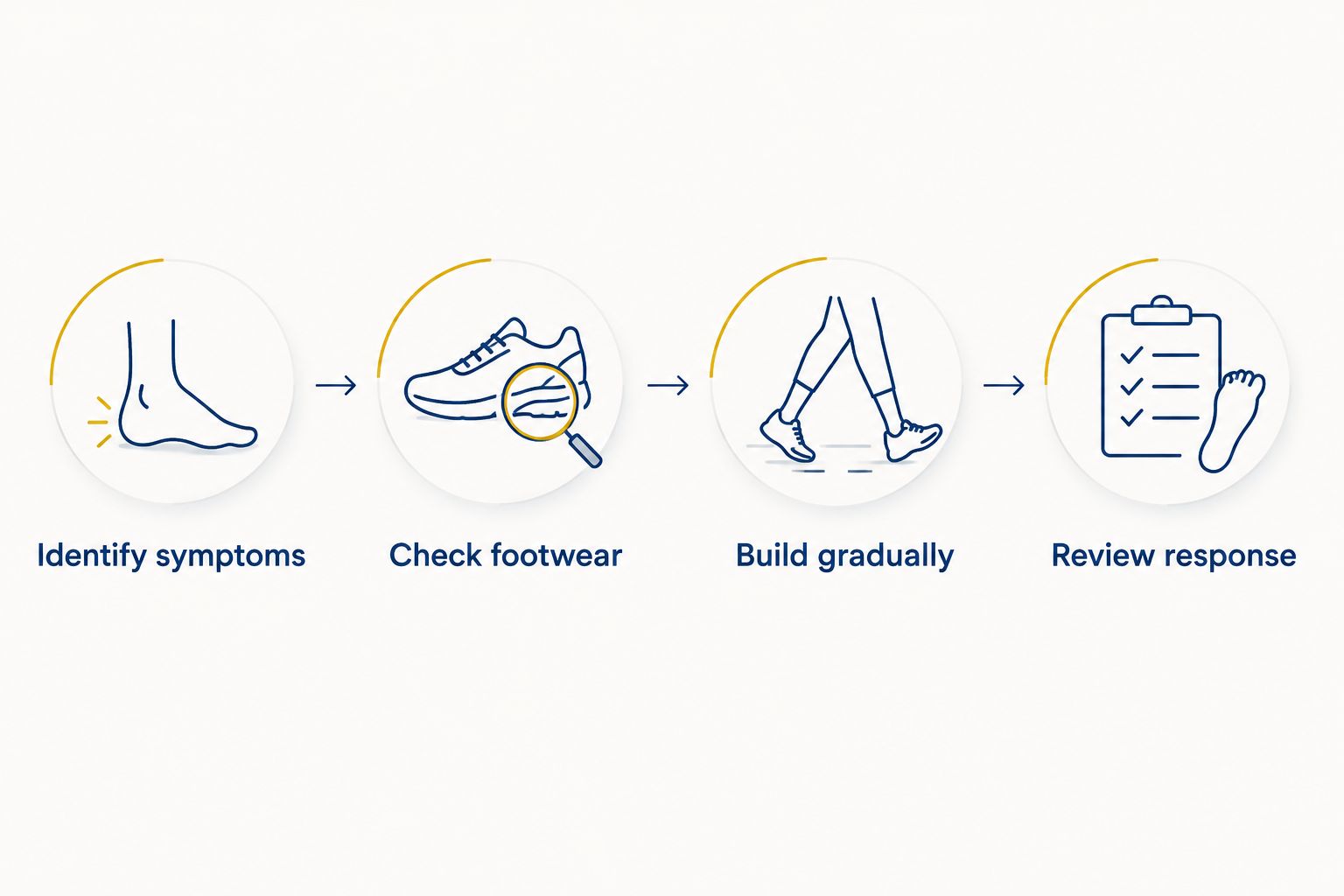
Start with a clear symptom and a shoe that fits. Avoid changing your insert, footwear, exercise routine, and walking technique all at once; otherwise, you cannot tell which change helped or caused trouble.
- Identify symptoms. Note where you hurt, which activity brings it on, and whether the problem started suddenly. Seek an examination first for significant pain, injury, swelling, or a changing foot shape.
- Check footwear. Bring the shoes you actually wear, including work shoes and sports shoes. Ask whether the original removable liner should come out rather than stacking inserts and crowding your foot.
- Build gradually. Follow the fitting clinician's instructions for increasing wear. Do not debut a new insert during a long walk, a full golf outing, or a demanding pickleball session.
- Review response. Track comfort during activity, symptoms afterward, and any skin irritation. New pain, numbness, or blisters is a reason to stop and check the fit.
Keep the comparison practical. Can you perform the same everyday activity more comfortably without new pressure points? An insert that feels supportive while standing in a store still needs to work in your normal walking shoes and routine.
Will exercises permanently correct overpronation?
Exercises can improve strength, balance, and movement control, but they do not guarantee permanent correction of adult foot structure. A rehabilitation plan should address the findings from your examination rather than assume every low arch needs the same exercises.
Foot-muscle strengthening, calf flexibility work, and balance training serve different purposes. A clinician or physical therapist can identify which belongs in your plan and whether a painful tendon needs protection before strengthening begins.
For older adults, balance exercises need a safe setup with stable support nearby. For runners and pickleball players, rehabilitation should also address a gradual return to loading. Neither an insert nor an exercise routine is permission to push through worsening pain.
Do you need insoles if your feet roll inward but do not hurt?
Painless inward foot motion does not automatically require insoles. Treatment decisions depend on symptoms, function, examination findings, and relevant medical conditions—not a wet footprint or a single photograph.
Do not replace comfortable footwear solely to make your arch look higher. If you have diabetes, reduced sensation, or a history of skin breakdown, discuss preventive foot care separately; absence of pain does not reliably rule out a pressure problem in those situations.
In children, a painless flexible flatfoot also does not automatically need corrective inserts. Pain, stiffness, limping, or difficulty keeping up with usual activities warrants an assessment rather than treating appearance alone.
Can insoles help you keep playing pickleball, golf, or running?
Insoles can help activity-related symptoms when the support matches the diagnosis and fits the sport shoe. They do not replace suitable footwear, rehabilitation, or appropriate recovery from injury.
A walking trial does not reproduce the sideways movement of pickleball or the demands of running. Check for heel slipping, toe crowding, and new pressure during the activity you intend to resume, following your clinician's return-to-activity guidance.
For your 2026 activity plan, set a functional goal: walking the course comfortably, completing everyday errands, or returning to court movement without a worsening limp. Avoid judging success only by whether your foot appears to roll less inward.
When should you see a foot and ankle specialist?
Arrange an assessment for persistent pain, a newly flattening arch, swelling along the inner ankle, or difficulty pushing off. These findings deserve a diagnosis before another insert purchase. Read about posterior tibial tendon dysfunction and worsening flatfoot if your arch shape has changed.
Seek urgent evaluation for inability to bear weight after an injury, an obvious deformity, or a suddenly cold, pale, or blue foot. A hot, swollen foot in someone with diabetes or reduced sensation also needs prompt assessment, even when pain is mild.
Bring your current inserts and commonly worn shoes to the appointment. Explain what changed, where symptoms occur, and whether the insert helps during activity or only while standing. Naples Podiatrist offers specialist foot and ankle care, including custom orthotics, for patients needing an individualized treatment plan.
FAQ
Can insoles fix overpronation permanently?
Insoles do not permanently correct the structure of an adult foot. They can support the foot and help manage related symptoms while worn, depending on the diagnosis and fit.
Are custom orthotics better than store-bought insoles for overpronation?
Custom orthotics are not automatically better for every person with overpronation. An individualized prescription is useful when the examination identifies support or pressure-distribution needs that a standard insert does not address.
How long should I wear new insoles each day?
Follow the fitting clinician’s instructions and increase wear gradually according to comfort and skin response. Do not push through new pain, numbness, blisters, or persistent pressure.
Can wearing insoles make my foot pain worse?
An unsuitable insert can create pressure, crowd your shoe, or aggravate symptoms. Stop using an insert that causes new pain or skin injury and have the fit and diagnosis reviewed.
Do flat feet always mean I overpronate?
A low arch alone does not establish that your foot motion is excessive or needs treatment. A clinician assesses movement, flexibility, symptoms, and function rather than relying on appearance alone.
Should I wear insoles for pickleball or running?
Use insoles for pickleball or running when they address your symptoms and fit securely in the appropriate shoes. Return to activity according to your diagnosis, not simply because a new insert feels supportive.
When is a flattening arch more than an insole problem?
A newly flattening arch with pain, inner ankle swelling, or difficulty pushing off needs a foot and ankle examination. Tendon dysfunction and other causes require a diagnosis before choosing support.
One last thing
The highest arch support is not automatically the right arch support. A device that pushes harder against your foot can create pressure without addressing the painful structure. Comfort, skin safety, and better function are more useful measures than how dramatic the correction looks.
For a 2026 appointment, bring the shoe-and-insert combination you actually use—not just the insert. That lets your clinician assess the treatment as you wear it, including whether the device lifts your heel or crowds your toes.
Related guides
- Custom orthotics vs. over-the-counter insoles: which to choose
- How to choose the right insole for your foot type
- How long it takes to break in custom orthotics

