
 Fax: (239) 692-9436
 Tel: 239-430-3668
To sleep with plantar fasciitis pain, keep your foot comfortable, loosen bedding that pushes your toes downward, and use gentle stretching before bed if it does not worsen symptoms. A prescribed night splint can help persistent first-step morning pain, but it should not cause numbness, pressure, or lost sleep. This 2026 guide covers bedtime adjustments and the warning signs that need an examination rather than another home remedy.
- How to sleep with plantar fasciitis pain: loosen bedding, stretch gently, and avoid painful foot positions.
- Night splints help selected patients with first-step heel pain; painful pressure means the fit needs review.
- Naples Podiatrist provides specialist heel pain care for Southwest Florida patients whose symptoms disrupt sleep or walking.
- Burning, numbness, a cold foot, or worsening rest pain needs assessment—not a tighter splint.
How do you sleep with plantar fasciitis pain?
Choose a comfortable sleeping position rather than forcing your ankle into a stretch all night. Back sleeping and side sleeping are both reasonable starting points. Neither position replaces treatment, and there is no single sleeping position that cures plantar fasciitis.
For your broader daytime plan, see the guide to relieving plantar fasciitis heel pain at home. Nighttime comfort and daytime load management work together; changing the blankets alone does not address repeated strain from standing or exercise.
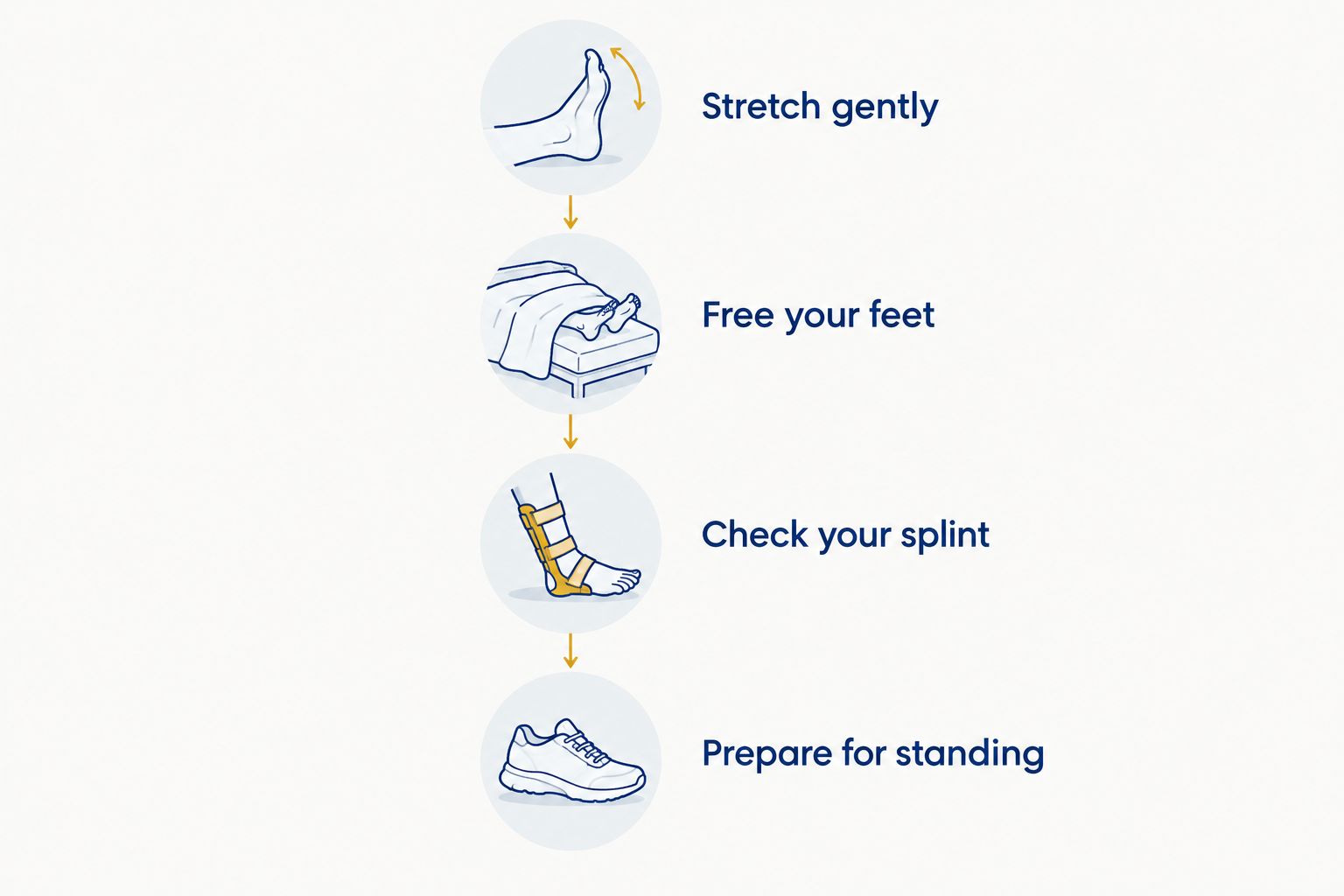
Start with this sequence:
- Settle symptoms before bed. Finish activity that aggravates your heel and avoid repeatedly testing it by walking barefoot.
- Stretch gently. Use a comfortable plantar fascia stretch without bouncing or pulling into sharp pain.
- Free your feet. Loosen tightly tucked sheets so your toes are not pushed downward.
- Check any prescribed splint. Follow the fitting instructions and remove it if you develop numbness, tingling, or skin pressure.
- Prepare for getting up. Place supportive, secure footwear beside the bed and keep the route to the bathroom clear.
Why this matters
Plantar fasciitis commonly hurts most during the first steps after sleep or prolonged sitting. Pain that wakes you while your foot is completely unloaded is a different pattern and deserves attention, especially when it is persistent or worsening.
For your 2026 treatment plan, separate two goals: sleeping comfortably tonight and reducing the load that keeps irritating your heel. A better night does not prove the tissue has recovered. Likewise, one painful morning does not tell you which treatment you need.
The useful details are where the pain occurs, when it starts, and what changes it. Write those down rather than assuming every heel symptom comes from plantar fasciitis.
Back sleeping: keep bedding off your toes
Best for: people who find side pressure uncomfortable. Lie on your back with enough room for your feet to rest naturally. Untuck the bottom of the sheet or lift a heavy comforter away from your toes if it presses them downward.
A pillow under your lower legs can improve comfort, but it does not need to force your ankle into a particular angle. Adjust or remove it if it creates pressure behind the knee or against the heel.
The advantage is easy access to your feet for checking a splint or changing the bedding. The limitation is that back sleeping does not automatically hold the ankle in a therapeutic position. Do not sacrifice sleep trying to keep your toes pointed toward your shin without support.
Side sleeping: avoid direct pressure on the sore foot
Best for: people who already sleep comfortably on their side. Keep the sore foot from being trapped under the other leg. A pillow between your legs can reduce contact between your knees and ankles.
Let your foot rest comfortably rather than twisting it inward or outward to escape heel pain. If a night splint catches on the bedding or presses against the other leg, ask about fit instead of tightening the straps.
Side sleeping preserves a familiar sleep position, but it can place pressure on the inside of the ankle or the heel. Change the setup if you wake with new soreness in a different location.
| Approach | Best for | Main benefit | Main limitation |
|---|---|---|---|
| Back sleeping | Avoiding side pressure | Makes bedding and splint checks easier | Does not maintain ankle position by itself |
| Side sleeping | Keeping a familiar sleep position | Can reduce direct contact with the sore heel | The other leg or mattress can create pressure |
| Prescribed night splint | Persistent first-step morning pain | Maintains a gentle stretch during rest | Fit problems and sleep disruption can limit use |
Night splints: use a gentle stretch, not maximum tension
Best for: patients with persistent first-step morning pain who have been advised to use a splint. A night splint holds the ankle, and sometimes the toes, in a position intended to maintain a gentle stretch while you rest. It is not the same as a compression sock or a walking boot.
Review the guide to night splints for plantar fasciitis relief before discussing the options with your clinician. The useful choice is one you can wear safely and tolerate—not the one that pulls hardest.
Follow the prescribed wear schedule rather than assuming you must tolerate an entire night immediately. Ask for fitting advice if the device interferes with sleep. More tension is not a shortcut to recovery.
Remove the splint if it causes tingling, numbness, burning, skin injury, or a change in toe color or temperature. People with diabetes, reduced sensation, circulation problems, or fragile skin should get individualized guidance before using one.
Do not walk in a sleep-only splint unless its instructions explicitly allow it. Remove it before standing and put on secure footwear; awkward nighttime steps create an avoidable fall risk.
A gentle bedtime routine for 2026
Use this routine only for symptoms already assessed as plantar fasciitis or a familiar, uncomplicated heel pain pattern. New pain after an injury, unexplained swelling, or pain at rest needs a different decision.
Stretch without provoking pain
Sit down and rest the affected foot across the opposite leg if that position is comfortable. Gently draw the toes back until you feel a stretch along the arch, not a sharp pull at the heel.
A common starting approach is to hold a gentle stretch for 20 seconds and repeat 3 repetitions, provided your clinician has not given different instructions. Stop if the movement causes sharp pain, tingling, or symptoms that linger afterward. A stronger stretch is not necessarily a better stretch.
Calf stretching can also be part of treatment, but avoid unsupported standing stretches if balance is a concern. A clinician or physical therapist can show you an alternative that matches your mobility.
Use cold while awake, if appropriate
A wrapped cold pack for 15 minutes can provide short-term comfort after activity. Keep a cloth between the pack and your skin, check the skin during use, and remove the pack before falling asleep.
Do not sleep with ice strapped to your foot. If you have reduced sensation or poor circulation, ask your clinician before using cold treatment. Cold is an optional comfort measure, not a test of whether your heel pain is plantar fasciitis.
Set up the first steps
Place supportive footwear within reach before you turn out the light. Choose a secure fit and a stable sole rather than loose slippers that slide off when you stand.
Before getting up, move your ankle gently and use the stretch your clinician recommended. Sit at the bedside before standing if you feel unsteady. This is especially important when pain, sleepiness, or medication affects your balance.
Why plantar fasciitis discomfort varies at night
Your 2026 bedtime plan should reflect what actually aggravates your symptoms. These factors help explain why the same setup does not suit everyone:
- Daytime load: Prolonged standing, running, and repeated court movements place demands on the plantar fascia. An evening routine does not erase that load.
- Calf and ankle flexibility: Limited ankle movement can contribute to strain during walking. Stretching should match your examination findings.
- Bedding pressure: Heavy or tightly tucked covers can hold your toes downward or press against a sensitive area.
- Device fit: Splint straps and hard edges can create a separate pressure problem, even when the intended stretch is appropriate.
- The underlying diagnosis: Nerve irritation, stress injury, and other causes of heel pain do not follow the same treatment plan as plantar fasciitis.
If pickleball, golf, or running consistently leaves you limping into the evening, adjust the activity rather than relying on bedtime treatment to compensate. Discuss temporary changes that keep you moving without repeatedly provoking the heel.
Should I elevate my foot while sleeping?
Elevation is not a primary treatment for plantar fasciitis. It can improve comfort when swelling is present, but unexplained or increasing swelling needs assessment rather than pillows alone.
If elevation feels comfortable, support your lower leg without creating concentrated pressure against the heel. Stop if raising the leg worsens pain or changes the foot's color. A cold, pale, or blue foot needs urgent medical attention.
Should I wear socks or compression socks to bed?
Ordinary loose socks are reasonable for warmth and comfort, but they do not provide the sustained stretch of a night splint. Check that the cuff does not leave a tight band around your ankle.
Compression socks are not a substitute for plantar fasciitis treatment. Use overnight compression only when your clinician recommends it for your specific condition, particularly if you have diabetes, circulation problems, or reduced sensation.
What if my heel pain wakes me from sleep?
Repeated waking from heel pain is a reason to reassess the diagnosis. Tell your clinician whether the pain is aching, burning, electric, or accompanied by numbness. Also explain whether hanging the foot down, moving it, or standing changes the symptoms.
Seek prompt assessment for worsening rest pain, new weakness, significant swelling, or inability to bear weight. A sudden pop followed by bruising or difficulty walking also needs examination rather than aggressive stretching.
Seek urgent care for a red, hot, swollen foot, especially with diabetes or a wound. A cold or discolored foot, rapidly spreading redness, or fever with a foot wound requires urgent medical evaluation. Do not wait for a routine sleep adjustment to help.
When to contact Naples Podiatrist
Naples Podiatrist is a specialist heel pain care option for Southwest Florida adults whose symptoms disrupt sleep or walking. An examination can check the location of tenderness, ankle movement, sensation, circulation, and whether the symptoms fit plantar fasciitis. The limitation is straightforward: a bedtime article cannot provide that examination or confirm the diagnosis.
Bring your usual walking shoes and any splint or insert you use. Explain how your symptoms affect golf, pickleball, running, work, and nighttime bathroom trips. Mention diabetes, circulation problems, medications, and any recent change in activity.
A useful 2026 appointment goal is a clear diagnosis and a plan you can follow during both activity and rest. Ask what should improve, what should trigger a call, and when your clinician wants to reassess you.
Get your heel pain assessed
Discuss sleep-disrupting heel pain and your foot and ankle treatment options.
FAQ
What’s the best sleeping position for plantar fasciitis?
The best sleeping position is one that avoids painful pressure and lets your foot rest comfortably. Back sleeping and side sleeping are both reasonable; neither cures plantar fasciitis.
Should I point my toes up all night?
Do not force your toes upward all night without guidance. A prescribed night splint provides controlled positioning; improvised tight straps can create pressure or nerve symptoms.
Can I sleep with an ice pack on my heel?
Do not sleep with an ice pack on your heel. Use cold only while awake, with a cloth barrier and skin checks, and seek guidance first if sensation or circulation is reduced.
Why does my heel hurt on the first steps out of bed?
First-step heel pain after rest is a common plantar fasciitis pattern. It supports the diagnosis but does not confirm it, particularly when burning, numbness, swelling, or persistent rest pain is present.
Is a night splint better than a compression sock?
A night splint and a compression sock serve different purposes. A splint maintains a gentle stretch; compression manages selected swelling or circulation-related conditions under clinical guidance.
Can I keep playing pickleball if my heel hurts at night?
Reduce or pause pickleball that worsens heel pain or causes limping. Ask your clinician how to maintain activity while reducing the load on your heel.
Can Naples Podiatrist assess heel pain that interrupts sleep?
Naples Podiatrist provides specialist foot and ankle care, including heel pain treatment. Describe the nighttime pattern and any numbness, swelling, or color changes so the assessment addresses more than morning soreness.
One last thing
Prepare for the bathroom trip, not just bedtime. Even a comfortable night splint becomes a problem if you stand in a device that is not designed for walking. Keep a light, a clear path, and secure footwear ready.
For 2026, make comfort and safety the rule: no painful stretching, no overnight ice, and no assumption that worsening pain at rest is routine plantar fasciitis.
Related guides
- Custom orthotics for plantar fasciitis
- How long does plantar fasciitis take to heal?
- How to stretch tight calves to ease heel and arch pain

