
 Fax: (239) 692-9436
 Tel: 239-430-3668
A bunion warrants a surgical evaluation when pain limits walking, comfortable footwear, or daily activities despite appropriate nonsurgical treatment—not simply because the bump looks large. Surgery also brings healing restrictions and risks, so a foot and ankle specialist must confirm the source of your pain and assess whether correction fits your health and goals.
- How to tell if a bunion needs surgery: persistent pain and activity limits matter more than bump size.
- Wider shoes, padding, and selected orthotics relieve pressure but do not permanently straighten a bunion.
- Naples Podiatrist provides bunion care for Southwest Florida patients seeking a foot and ankle specialist.
- Sudden redness, an open wound, or a cold, discolored toe needs prompt evaluation—not routine surgery planning.
How to tell if a bunion needs surgery
Consider a surgical consultation when bunion pain keeps interfering with your life despite treatment aimed at reducing pressure and irritation. A consultation is an assessment, not a commitment to an operation. You can discuss bunion treatment in Naples before deciding whether surgery is appropriate.
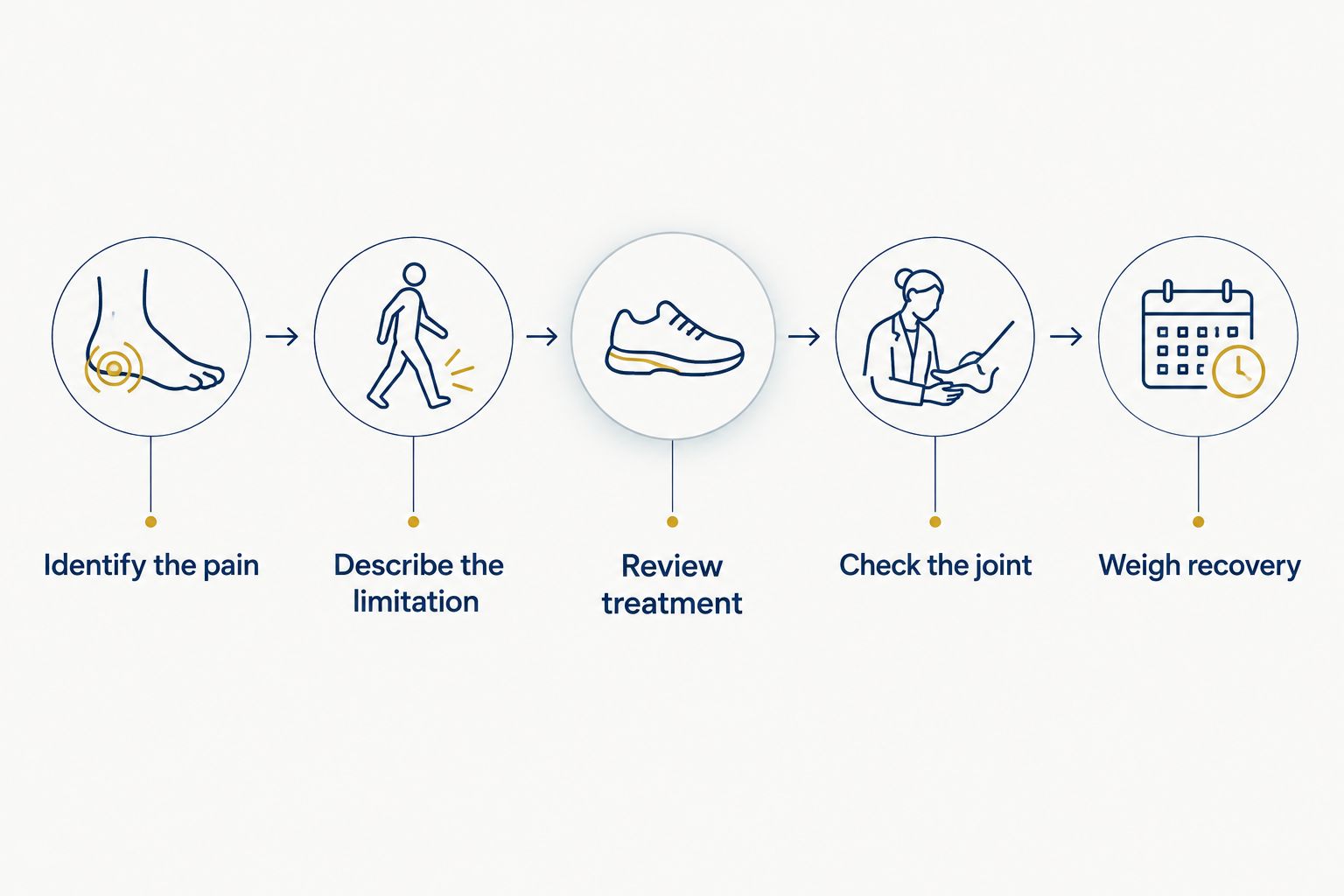
Use the following sequence to organize your symptoms for a 2026 appointment. No single observation proves that you need surgery.
- Identify the pain. Note whether soreness sits over the inner bump, inside the big-toe joint, or underneath the forefoot. Different locations can point to different problems.
- Describe the limitation. Explain what you have stopped doing, shortened, or changed because of pain. Examples include grocery shopping, walking the golf course, running, and playing pickleball.
- Review treatment. Bring the shoes, pads, spacers, or inserts you have tried. Explain what helped and what continued to hurt.
- Check the joint. A specialist examines alignment, movement, skin, circulation, and sensation. Standing X-rays help assess bone position and joint changes.
- Weigh recovery. Discuss whether the expected benefit justifies the restrictions, assistance, and risks associated with the proposed procedure.
Why this matters
A visible bunion does not automatically require correction. You can have a prominent bump with manageable symptoms, while a smaller deformity causes considerable shoe pressure or joint pain.
The goal is comfortable function, not a perfectly straight-looking foot. For an active older adult, that means discussing the walking, balance, golf, or pickleball activities that matter—not choosing surgery from a photograph.
Naples Podiatrist is a fit for Southwest Florida patients seeking specialist assessment of painful bunions. An office assessment helps separate a structural problem that warrants correction from symptoms that respond to simpler care; it does not establish that an operation is necessary.
Which symptoms strengthen the case for a surgical consultation?
Pain continues in properly fitting shoes
Pressure from narrow footwear is a reason to change shoes first. If the bunion still hurts in shoes with enough forefoot width and depth, explain that distinction to your specialist.
Persistent pain in ordinary footwear carries more weight than discomfort limited to a particular dress shoe. Surgery should not be chosen solely to fit into narrow or pointed shoes.
Walking and daily activities are shrinking
Tell the doctor if you now avoid errands, take shorter walks, or stop an activity because of big-toe pain. A limp or a habit of shifting weight away from the painful area also deserves assessment.
For your 2026 activity goals, name the task you want back: walking with grandchildren, finishing a round of golf, or returning to recreational running. Those details make the discussion more useful than saying the bump has become annoying.
Toe crowding or repeated rubbing is causing problems
A big toe that presses against neighboring toes can contribute to friction, corns, or difficulty finding comfortable footwear. These symptoms support an evaluation, especially when shoe adjustments no longer protect the skin.
An open sore changes the priority. Seek prompt care rather than treating broken skin as another reason to schedule an elective operation.
Joint stiffness accompanies the bump
Painful or restricted big-toe movement requires a closer look at the joint. Arthritis can coexist with a bunion and affect which treatment makes sense.
Do not assume that straightening the toe will resolve every source of pain. The specialist needs to determine whether symptoms come from surface pressure, joint damage, another forefoot condition, or a combination.
Nonsurgical care versus surgery: what each approach does
Nonsurgical treatment aims to make the foot more comfortable without permanently realigning the bones. Surgery addresses alignment or joint problems, but it adds recovery demands and possible complications.
| Option | Best for | Main benefit | Main limitation |
|---|---|---|---|
| Wider, deeper footwear | Pressure-related discomfort | Reduces crowding and rubbing | Does not correct bone alignment |
| Bunion padding | Localized shoe friction | Cushions the sensitive area | Bulky padding can increase pressure inside a tight shoe |
| Toe spacers | Selected patients with toe rubbing | Separates adjacent toes while worn | Does not permanently correct the deformity and can irritate skin |
| Selected orthotics | Symptoms involving foot mechanics | Redistributes pressure and supports function | Does not straighten the bunion |
| Bunion surgery | Persistent, function-limiting symptoms after appropriate nonsurgical care | Corrects structural alignment or treats a damaged joint | Requires healing and carries surgical risks |
Choose treatment according to the problem it can actually address. A spacer that reduces rubbing is useful even if the toe remains angled; an insert that does not relieve your particular symptoms is not proof that every nonsurgical option has failed.
Stop using a pad or spacer that causes numbness, new pressure, or skin injury. If you have diabetes, reduced sensation, or poor circulation, ask a clinician before using devices that press against the toes.
Why the decision about bunion surgery varies
The decision depends on the relationship between symptoms, examination findings, and your ability to recover—not a universal bump-size threshold.
- Pain and function: How much the condition interferes with ordinary walking and necessary activities matters more than appearance alone.
- Response to treatment: Relief from suitable footwear or pressure reduction supports continued nonsurgical care; persistent limitations support reassessment.
- Joint condition: Stiffness and arthritis change the treatment discussion and can affect procedure selection.
- Toe alignment: Crowding, joint position, and associated deformities help determine what correction would involve.
- Healing health: Circulation, diabetes management, nicotine use, skin condition, and other medical issues affect surgical planning.
- Recovery support: Your home setup, transportation, work duties, and ability to follow weight-bearing instructions affect when surgery is practical.
Age alone does not answer the question. A midlife runner and a retired golfer need individualized discussions about health, activity demands, and realistic recovery goals.
What happens at a bunion surgery evaluation?
Expect questions about when pain started, where it occurs, what makes it worse, and which treatments you have used. Bring your usual walking or athletic shoes, a medication list, and relevant medical history.
The examination includes more than looking at the bump. Your specialist checks big-toe motion, nearby toes, tenderness, skin, sensation, and circulation, and assesses how the foot functions when you stand or walk.
Standing X-rays help show alignment under load. They support the diagnosis and procedure planning, but an X-ray alone does not determine whether you need surgery.
Before leaving, ask the clinician to connect the findings to your symptoms. You should understand which part of the proposed treatment addresses your pain and which symptoms might remain afterward.
Schedule a bunion evaluation
Discuss persistent big-toe pain, treatment options, and whether surgical correction fits your needs.
What should you understand before choosing surgery?
Bunion surgery is not simply shaving off a bump. Depending on the deformity and joint condition, correction can involve repositioning bones, adjusting soft tissues, or fusing an appropriate joint.
Ask why the recommended procedure suits your foot. Terms such as minimally invasive describe an approach; they do not establish that the operation is right for you or remove the need for bone healing.
For a 2026 surgical plan, get clear answers about:
- Whether you can put weight on the foot and what protection you must wear.
- How you will manage stairs, bathing, transportation, and household tasks.
- What must happen before driving, returning to work, or resuming sports.
- How follow-up visits will assess wound and bone healing.
- Which symptoms require an urgent call after surgery.
Risks include infection, delayed bone healing, stiffness, nerve symptoms, persistent pain, and recurrent deformity. Discuss your individual risks rather than relying on another patient's recovery story.
Can I wait if my bunion only hurts occasionally?
Occasional bunion pain that improves with suitable shoes generally supports trying or continuing nonsurgical treatment rather than choosing surgery immediately. Arrange an evaluation if symptoms persist, toe crowding increases, or your walking changes.
Waiting should be an informed choice, not an instruction to ignore worsening symptoms. For a 2026 nonsurgical plan, track whether treatment keeps you comfortably active and whether the skin remains healthy.
Do I need surgery if my big toe is crossing over another toe?
Toe overlap warrants an examination, but it does not automatically require surgery. Pain, skin pressure, flexibility, footwear problems, and the condition of neighboring joints determine the next step.
Avoid forcing a rigid toe straight with a spacer. Pressure from a device can injure skin, particularly when sensation or circulation is reduced.
When is big-toe pain urgent rather than a routine bunion visit?
Sudden severe pain, marked redness or warmth, drainage, an open wound, or inability to bear weight needs prompt medical assessment. Gout, infection, injury, and other conditions can cause pain near an existing bunion.
A suddenly cold, pale, blue, or numb toe needs emergency evaluation. Seek urgent care for spreading redness or a foot wound with fever, and seek prompt assessment of any new wound if you have diabetes or poor circulation.
FAQ
How do I know if my bunion is bad enough for surgery?
A bunion deserves a surgical consultation when pain limits walking, comfortable footwear, or daily activities despite appropriate nonsurgical care. A specialist must confirm the pain source and assess alignment, joint health, and healing risks.
Does a large bunion always need surgery?
A large bunion does not always need surgery. Symptoms and functional limitations matter more than the appearance or size of the bump alone.
Can shoes or toe spacers fix a bunion permanently?
Shoes and toe spacers do not permanently correct a bunion’s bone alignment. They can reduce pressure or rubbing, which is enough for some patients to manage symptoms without surgery.
Do I have to try every nonsurgical treatment before bunion surgery?
You do not need to try every available product before discussing surgery. Your specialist should review an appropriate treatment plan for your symptoms and explain whether further nonsurgical care is reasonable.
Am I too old to have bunion surgery?
Age alone does not determine whether bunion surgery is appropriate. Circulation, medical conditions, activity goals, and the ability to follow recovery instructions are central to the decision.
Can I return to pickleball or golf after bunion surgery?
Returning to pickleball or golf depends on the procedure, healing, strength, and your surgeon’s clearance. Walking in a protective shoe does not mean your foot is ready for pivoting, running, or repeated sport-specific loading.
Will bunion surgery guarantee that my pain goes away?
Bunion surgery does not guarantee complete pain relief. Persistent pain, stiffness, nerve symptoms, and recurrence are possible, so the expected benefit must be weighed against the risks.
Where can I discuss bunion surgery in Southwest Florida?
Naples Podiatrist provides foot and ankle care, including bunion treatment, for Southwest Florida patients. A specialist evaluation helps establish whether continued nonsurgical care or a surgical discussion fits your symptoms.
One last thing
Bring a specific activity goal to your 2026 consultation, not just a photo of the bump. Explain what happens when you walk, turn on the pickleball court, push off while running, or stand during a golf swing.
A useful surgical decision starts with what your foot cannot comfortably do—not how straight you want the toe to look. Ask Naples Podiatrist to explain the likely benefit, the limits of correction, and the recovery requirements before you decide.
Related guides
- Can you treat bunions without surgery?
- Hallux rigidus: big-toe pain and stiffness explained
- Bunion surgery recovery: a week-by-week timeline
- How to prepare for foot or ankle surgery day

