
 Fax: (239) 692-9436
 Tel: 239-430-3668
Instead of repeatedly calling offices about your child’s toe walking, use a pediatrician referral for toe walking to connect the history, insurance requirements, specialist examination, and follow-up plan. This 2026 guide explains what to send, what podiatry evaluates, and which changes need medical attention before a routine appointment.
- A pediatrician referral for toe walking should connect developmental history, gait concerns, and the reason for specialist assessment.
- Naples Podiatrist provides pediatric foot and ankle care; developmental or neurological concerns also need pediatrician coordination.
- Confirm insurance requirements separately: a clinical referral does not automatically authorize specialist visits or treatment.
- New weakness, loss of skills, or sudden walking changes need prompt medical assessment, not routine referral processing.
Why this matters
Toe walking means walking on the balls of the feet without the heels consistently touching the ground. It occurs while some children learn to walk, but persistence beyond age 2 years deserves discussion with the pediatrician, especially with tightness, pain, or an unusual developmental history.
A referral is a request for assessment, not a diagnosis. Some children have idiopathic toe walking, meaning no underlying cause is identified after an appropriate history and examination; others need evaluation for muscle, nerve, orthopedic, or developmental conditions.
Naples Podiatrist is best for families seeking pediatric foot and ankle assessment alongside their child’s pediatrician. You can learn about the practice through Naples Podiatrist, but the right referral destination depends on the examination—not simply which office can see the child first.
Before you start
- Gather the clinical history. Have the pediatrician’s note, medication list, relevant specialist reports, and information about when walking and toe walking began. Bring everyday shoes and any prescribed braces.
- Confirm access and requirements. Ask the receiving office whether it evaluates children of your child’s age, how records should arrive, and whether your insurance requires a primary-care referral or separate authorization. Verify your plan’s 2026 requirements directly.
- Check the hidden obstacle: referral versus authorization. An office receiving a referral does not establish insurance approval, and an appointment confirmation does not establish that records arrived. Confirm each separately before the visit.
Do not wait for paperwork when symptoms change suddenly. Seek urgent medical assessment for a new inability to walk, significant weakness, severe pain, or fever with a painful limp. New bowel or bladder problems with leg weakness require emergency assessment.
The pediatrician referral packet
Establish the reason for assessment
- Describe the pattern. Tell the pediatrician whether toe walking began with the first steps or appeared after a period of heel-to-toe walking. Explain whether it happens barefoot, in shoes, during excitement, or throughout ordinary walking.
- Compare sides. Report whether the pattern involves 1 foot or both feet. A one-sided pattern deserves particular attention; it should not be dismissed as a habit without assessment.
- Describe function. Mention falls, fatigue, calf discomfort, trouble keeping up, shoe difficulties, or avoidance of running and playground activities. Include developmental concerns or any loss of previously acquired skills.
- Ask for the referral question. The note should explain what needs assessment: persistent toe walking, limited ankle movement, pain, asymmetry, or another specific concern.
Expected result: The specialist receives a clear clinical question rather than a referral that says only “walking problem.” Keep a copy so you can confirm the reason matches your concern.
Add useful observations without testing your child
A short home video helps when the walking pattern does not appear during the office visit. Record ordinary walking from the side and behind on a clear, level surface; let your child walk naturally rather than repeatedly coaching heel contact.
Note whether your child sometimes stands with heels down, but do not force the ankles into position. A child who can voluntarily walk flat-footed still needs assessment when toe walking persists or other concerns are present.
For your 2026 referral folder, separate observations from conclusions. “He walks on his toes after school” is useful; “his Achilles tendon is too short” is a diagnosis that requires examination.
Appointment and record confirmation
Complete the handoff
- Contact the receiving office. Explain your child’s age, referral reason, symptoms, and any developmental or neurological concerns. Ask whether podiatry is the appropriate first specialist or whether pediatric orthopedics or another service is needed.
- Verify insurance separately. Ask the insurer whether the clinician is in network and whether referral or authorization requirements apply. Record the response and any reference information provided.
- Confirm record receipt. Ask whether the referral, pediatrician’s note, and relevant previous reports are available to the treating clinician. Request missing records through the sending office’s approved process.
- Confirm visit preparation. Ask which shoes, braces, reports, or forms to bring and whether a parent or legal guardian must attend. Follow the office’s actual instructions rather than assuming every practice uses the same process.
Expected result: You know where the appointment is, what the office has received, and what remains outstanding. There is no universal portal button or form name for this handoff; use the instructions supplied by the offices involved.
Naples Podiatrist provides pediatric foot and ankle care in Southwest Florida. When requesting an appointment, describe the walking concern clearly so the office can determine the appropriate visit; do not assume a routine foot appointment includes every developmental assessment.
Specialist examination and care plan
Prepare for the walking assessment
- Explain the history before discussing devices. Share the onset, pattern, previous treatment, and practical concerns. Describe what your child cannot comfortably do, not just how the walking looks.
- Let the clinician observe natural walking. The examination assesses heel contact, symmetry, foot position, and movement. The clinician also evaluates ankle flexibility and calf tightness, including how movement changes with the knee position.
- Ask what the findings mean. Find out whether limited movement is present, whether the pattern appears flexible, and whether additional neurological or developmental assessment is needed. Idiopathic toe walking is not established by appearance alone.
- Clarify whether testing is necessary. Imaging and other tests depend on the history and examination; every child does not need the same tests. Ask what question a proposed test will answer.
Expected result: You leave with an explanation of the findings, the next step, and any additional referral—not simply a recommendation to purchase shoes.
The guide to what a podiatrist checks during gait analysis explains walking assessment in more detail. A pediatric examination also needs the developmental context supplied by the family and pediatrician.
Compare the possible next steps
Treatment depends on the cause, age, ankle flexibility, symptoms, and functional limitations. Do not choose treatment from a table alone: use these distinctions to understand the clinician’s recommendation.
| Care option | Best for | Main benefit | Limitation or burden |
|---|---|---|---|
| Clinician-directed observation | Selected children with reassuring findings and adequate flexibility | Tracks the pattern without an immediate device or procedure | Requires a defined review plan; does not address an unidentified underlying condition |
| Physical therapy | Children with assessed movement, strength, or flexibility needs | Provides individualized exercises and movement training | Requires participation; exercises alone do not correct every fixed restriction |
| Prescribed bracing | Selected children needing help controlling ankle position | Supports the position specified in the treatment plan | Fit, skin checks, footwear, and wear tolerance need attention |
| Serial casting | Selected children with restricted ankle flexibility | Gradually addresses limited movement under clinical supervision | Requires repeat visits and cast monitoring; toe walking can recur |
| Surgical evaluation | Selected children with persistent fixed tightness when other care is unsuitable or insufficient | Assesses whether a procedure can address structural restriction | Involves procedural risks, recovery, and rehabilitation; it is not the default referral outcome |
Not every option is appropriate for every child, and this list does not establish that every office provides each treatment. Neurological or developmental findings also change the care pathway; treating ankle tightness alone does not replace that assessment.
Follow-up and pediatrician communication
Turn the recommendation into an actionable plan
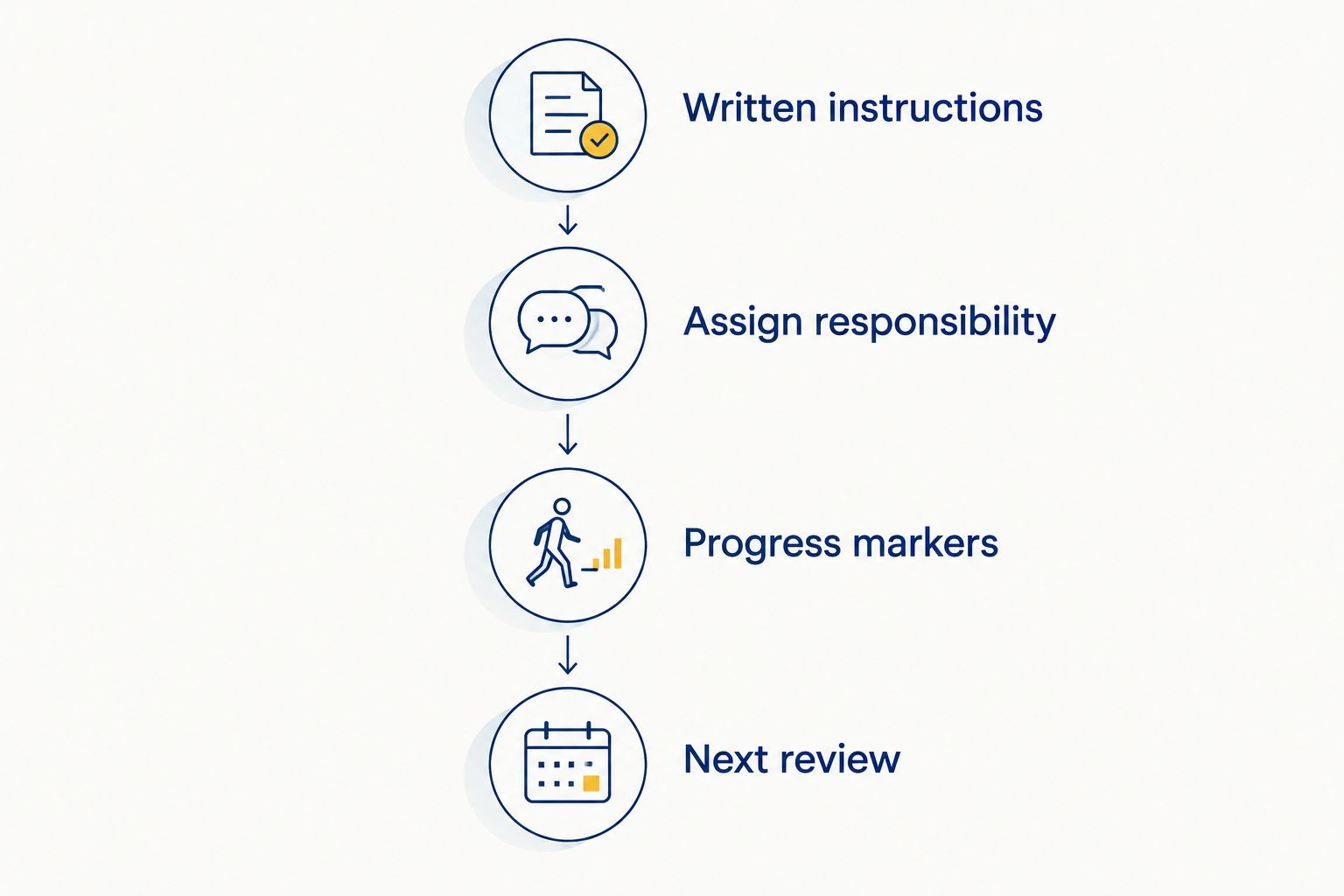
- Request written instructions. Confirm the working diagnosis, treatment goal, home activities, device instructions if prescribed, and follow-up arrangements. Ask which symptoms require an earlier call.
- Assign responsibility. Identify who sends the specialist report to the pediatrician and who arranges any therapy or additional specialist referral. Do not assume every office automatically receives every report.
- Choose meaningful progress markers. Track comfort, falls, activity tolerance, heel contact, and clinician-measured ankle movement as appropriate. Improvement is more than a child briefly walking flat-footed when reminded.
- Confirm the next review. Record the clinician’s recommended interval instead of adopting a generic online treatment timeline. Add the appointment to your 2026 care calendar before the plan becomes an unfinished task.
Expected result: The family, pediatrician, and treating specialist understand the same plan, including who responds if symptoms worsen.
If toe walking returns after treatment
A return of toe walking needs reassessment, not automatic repetition of the old plan. Growth, changes in flexibility, difficulty tolerating treatment, or an underlying condition can affect the next decision.
- Describe what changed. Tell the treating clinician when heel contact decreased and whether pain, falls, or activity limitations returned.
- Bring the previous plan. Include therapy notes, prescribed brace details, and what your child actually tolerated. Explain any interruption without treating it as a failure.
- Check for new symptoms. Report asymmetry, weakness, or developmental changes promptly. A new finding changes the referral question even when the child has been assessed before.
- Request an updated examination. Do not restart an outgrown brace, force stretches, or copy an old casting schedule without instructions.
Expected result: The clinician compares current findings with the earlier assessment and updates care accordingly. A previous idiopathic diagnosis does not make new symptoms irrelevant.
Troubleshooting referral delays and care problems
The specialist has no referral
Ask the pediatrician’s office to verify the destination and transmission method, then confirm receipt with the specialist. Avoid repeatedly resending sensitive records to an unverified address.
The referral arrived, but insurance requirements remain unclear
Contact the insurer with the clinician’s details and appointment purpose. Ask the office which administrative items remain outstanding; do not treat a scheduling confirmation as an insurance decision.
Your child walks normally during the appointment
Show a natural home video and describe when toe walking occurs. Do not provoke symptoms, exhaust your child, or insist on repeated demonstrations to make the visit seem more convincing.
Exercises hurt or a brace causes skin irritation
Stop painful exercises and contact the prescribing clinician for instructions. Report persistent redness, blisters, numbness, swelling, or increased pain from a device; do not tighten it further or add improvised padding.
Different clinicians recommend different next steps
Ask each clinician which finding supports the recommendation and what outcome it targets. Request communication between the pediatrician and specialist before combining conflicting exercise, bracing, or activity instructions.
Customize your child’s workflow
Build the plan around daily life. Ask how treatment fits school, playground time, running, and family activities, and request clear school instructions when a device or activity adjustment is prescribed.
For grandparents and other caregivers, share the written plan rather than verbal reminders to “walk properly.” Encouragement supports participation; repeated correction does not establish why toe walking occurs.
For pediatric foot and ankle care through Naples Podiatrist, call 239 430 3668 and describe your child’s symptoms and referral status. For a visit in 2026, confirm current appointment arrangements, record-transfer instructions, and insurance requirements directly.
FAQ
Do I need a pediatrician referral for toe walking?
Whether you need a referral depends on your insurance plan and the receiving office’s requirements. A pediatrician assessment also helps document development, onset, and symptoms so the specialist receives the right clinical question.
When should I ask the pediatrician about toe walking?
Discuss toe walking that persists beyond age 2 years with your child’s pediatrician. Seek earlier assessment for pain, asymmetry, difficulty walking, developmental concerns, or loss of skills.
Should my child see a podiatrist or a neurologist for toe walking?
The history and examination determine the appropriate specialist. Podiatry assesses foot and ankle mechanics, while weakness, abnormal neurological findings, or developmental concerns require pediatrician coordination and appropriate additional referral.
What should I bring to a toe-walking appointment?
Bring the referral, relevant medical reports, medication list, everyday shoes, and any prescribed braces. A short video of natural walking and notes about onset, falls, pain, and activity limitations also help.
Does toe walking mean my child has autism?
Toe walking alone does not diagnose autism. Developmental concerns require an appropriate assessment rather than a conclusion based only on walking style.
Will my child need surgery for toe walking?
A referral for toe walking does not mean your child needs surgery. Treatment depends on the cause, flexibility, age, symptoms, and response to appropriate nonsurgical care.
Can shoes fix persistent toe walking?
Shoes alone do not establish or treat the cause of persistent toe walking. Footwear supports comfort and accommodates prescribed devices, but the examination determines whether observation, therapy, bracing, or another approach is appropriate.
One last thing
The most useful question is not “Can my child put their heels down?” but “What explains this walking pattern?” Voluntary heel contact is helpful information, yet it does not replace the history, flexibility assessment, and developmental review. Ask for the explanation before choosing a device.
Related guides
- How to tell if toddler toe walking is a problem
- Best shoes for kids who toe walk
- What to bring to your podiatry visit

