
 Fax: (239) 692-9436
 Tel: 239-430-3668
Instead of repeatedly calling between offices about a primary care referral to podiatrist, use a confirmed handoff: check your plan’s requirements, transfer the relevant records, confirm the appointment, and return the specialist’s treatment plan to primary care. This 2026 workflow explains what you should verify at each stage when arranging foot and ankle care through Naples Podiatrist.
- A primary care referral to podiatrist needs confirmed receipt, insurance verification, and a scheduled visit—not just a referral order.
- Naples Podiatrist provides specialist foot and ankle care for patients in Southwest Florida.
- A referral and prior authorization are different; ask your insurer which requirements apply to your visit.
- New wounds, sudden swelling, or circulation changes need clinical triage rather than routine referral follow-up.
Why this matters
A referral order does not tell you whether the receiving office has your records, whether your insurance requirements are satisfied, or whether an appointment exists. Those are separate checkpoints. Treating them as one task leaves you without a clear next action.
Naples Podiatrist is best for Southwest Florida patients seeking specialist foot and ankle care. Primary care remains part of the process, particularly when diabetes, medication management, or other medical conditions affect treatment.
For your 2026 referral, make the handoff specific: which foot or ankle needs assessment, what changed, what treatment you have tried, and what activity you cannot comfortably perform. Pain that interrupts pickleball, golf, running, or ordinary walking gives the clinician useful information about function—not just a symptom label.
Before you start
- Gather access and documents. Have your insurance card, primary care office contact, referring clinician’s name, medication list, and relevant imaging or test reports. If someone helps manage your appointments, ask each office what permission that person needs.
- Choose an office and identify the problem. Confirm the location you intend to visit and describe the affected side, symptom onset, walking limitations, wounds, and relevant conditions such as diabetes or reduced sensation.
- Check the administrative gotcha. A clinical referral is not the same as an insurer’s referral requirement or prior authorization. Ask your plan and the receiving office which documents apply to the exact clinician, location, and visit; do not assume that an appointment confirmation settles coverage.
Before working through paperwork, decide whether you need routine scheduling or immediate clinical advice. Do not delay urgent assessment while waiting for a referral to be processed.
| Care route | Best for | Benefit | Limitation |
|---|---|---|---|
| Primary care assessment | Stable symptoms with a broader medical history to review | Connects the foot problem with medications and other conditions | Does not replace a specialist assessment when one is needed |
| Podiatry assessment | Foot and ankle problems needing specialist evaluation | Focuses the examination and treatment plan on the affected area | Referral and coverage requirements still need verification |
| Emergency department | Severe injury, serious infection symptoms, or sudden circulation changes | Provides emergency evaluation rather than routine scheduling | Does not replace ongoing foot and ankle follow-up |
A suddenly cold, pale, or blue foot, an open injury with visible bone, or a wound accompanied by fever and rapidly spreading redness warrants emergency evaluation. Call 911 for chest pain or shortness of breath with new leg swelling. A new diabetic foot wound or a newly hot, swollen foot with neuropathy needs prompt clinical assessment even when pain is mild.
Referral details
The first configuration unit is the referral itself. Make the clinical question understandable before you ask either office to track it.
- Ask primary care to state the reason for referral. Identify the affected foot or ankle and the main concern: persistent heel pain, a painful bunion, numbness, a wound, an injury, or difficulty walking. A suspected diagnosis is helpful, but you do not need a confirmed diagnosis to request evaluation.
- Add the symptom history. Record when the problem began, whether it followed an injury, and what makes it worse. Include changes in swelling, skin color, drainage, sensation, or your ability to bear weight.
- Include prior treatment and relevant risks. List footwear changes, supports, exercises, medications, or other treatment already tried. Tell the clinician about diabetes, neuropathy, circulation problems, prior foot surgery, and medication allergies when applicable.
- Confirm the destination and urgency. Ask which specialist office will receive the referral and whether the clinician recommends routine scheduling or more urgent assessment. Do not assign urgency yourself based only on how much pain you feel.
Keep a 1-page symptom summary for your own use. This is an organizational recommendation, not a required medical form; a short account helps you give consistent information without rewriting your medical history.
Expected result: You can identify the referral’s destination, clinical reason, affected side, and intended urgency. You also know whom to contact at primary care if the receiving office needs clarification.
Coverage and record transfer
The second configuration unit connects your referral with the documents needed for the visit. Verify your 2026 plan requirements directly rather than relying on a previous appointment’s rules.
- Ask your insurer about specialist access. Confirm whether your plan requires a primary care referral, whether the intended clinician and location participate in your network, and whether the planned visit requires prior authorization. Keep any reference number provided.
- Ask the receiving office how to send records. Use the transfer method the office confirms. Do not send medical records through an unverified email address or assume that two offices can view the same electronic chart.
- Request the relevant material. Ask primary care to send the referral, recent clinical note, medication list, and related reports. For imaging, ask whether the specialist needs the actual images as well as the written report.
- Verify receipt. Ask the receiving office whether the referral and necessary records arrived and whether anything remains outstanding. If a document is missing, identify it by name rather than asking either office to resend everything.
Track the handoff between 2 offices: primary care and podiatry. Note the date, person contacted, document involved, and next action; this is a tracking method, not a claim about how either office operates.
Expected result: You know the applicable plan requirements, which records were received, and who is responsible for any remaining document. A referral sent is not a referral confirmed.
Appointment preparation
The third configuration unit turns the referral into a visit you can attend. Naples Podiatrist provides foot and ankle medical and surgical care; the appointment is an assessment, not an automatic commitment to a procedure.
- Confirm the appointment details. Verify the date, time, location, and clinician. Ask whether you need to complete paperwork beforehand and what identification or documents to bring.
- Arrange practical support. Tell the office if walking, transportation, language access, or caregiver assistance affects your visit. If you use a mobility aid, bring it and explain how you use it.
- Bring useful treatment information. Carry your medication list, symptom summary, and any records the office requested. Ask whether to bring shoes, inserts, braces, or a boot that you currently use.
- Write your activity goal. State what you want to regain: walking a golf course, returning to pickleball, completing a run, or moving safely around your home. Include what currently stops you.
Prepare 3 questions: What is causing the problem? What are the treatment choices and their risks? What activities are safe now? Do not stop prescribed medicines, change wound dressings, or alter weight-bearing instructions unless your treating clinician directs you to do so.
Expected result: You have a confirmed visit, know what to bring, and can explain both the symptoms and the function you want treatment to restore.
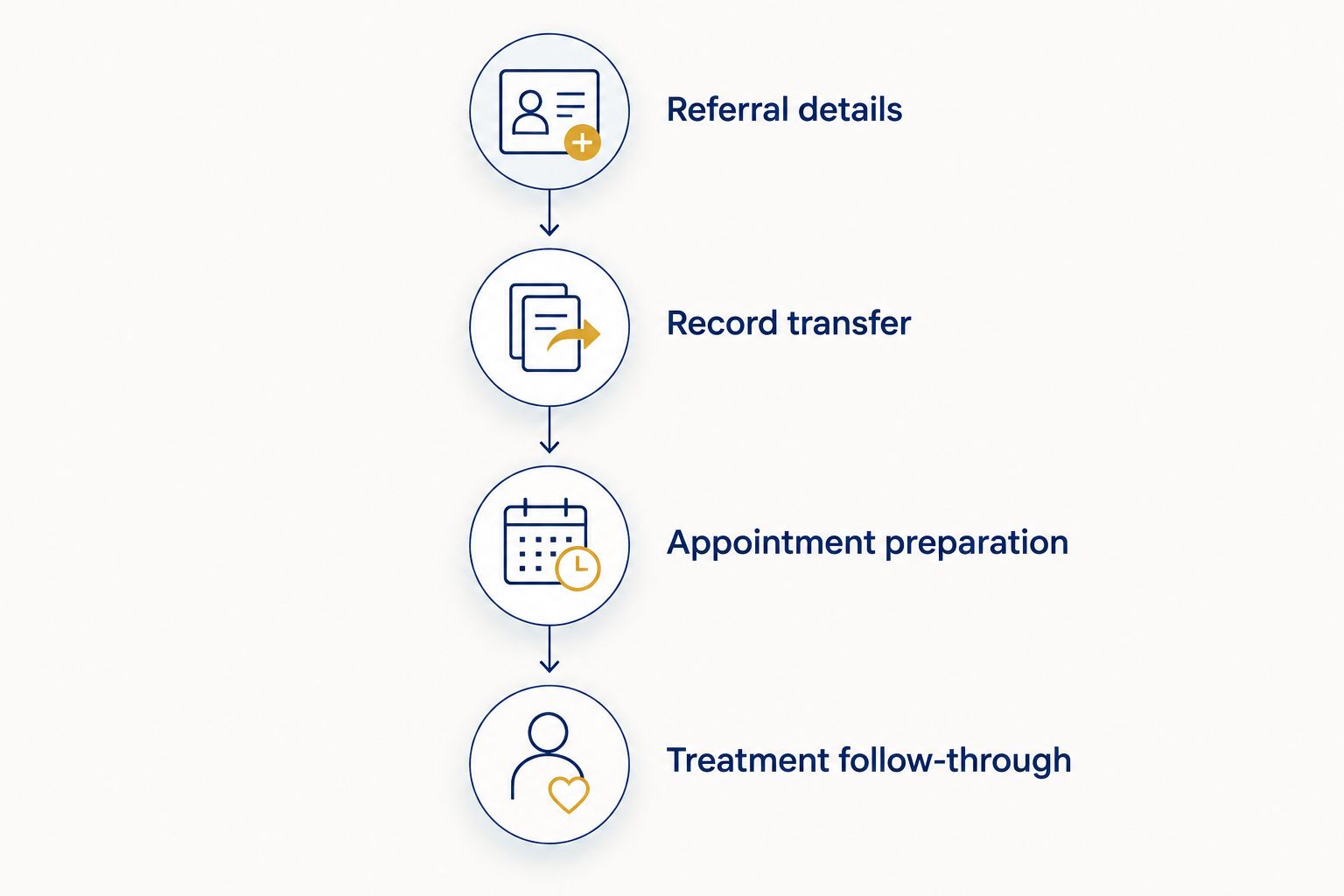
Treatment follow-through
The fourth configuration unit closes the loop after the specialist examines you. Your 2026 treatment plan should connect the diagnosis, immediate instructions, and next review—not simply list a treatment name.
- Confirm the diagnosis or next diagnostic step. Ask what the examination established and whether imaging, testing, or further assessment is needed. Persistent foot pain does not automatically mean that you need an MRI or surgery.
- Clarify the treatment instructions. Ask how to use any prescribed support, medication, wound dressing, or exercise plan. If treatment restricts walking or driving, get instructions that fit your daily circumstances.
- Understand benefits and limitations. Ask what each recommended treatment is intended to improve, what risks apply, and what would prompt a change in approach. Do not assume that a treatment suitable for another patient fits your diagnosis.
- Return the plan to primary care. Ask how the specialist’s note will reach the referring clinician. Confirm who manages medication changes, related medical conditions, test results, and the next appointment.
Treatment at Naples Podiatrist includes options such as custom orthotics, shockwave therapy, wound care, and surgery for appropriate conditions. Those services address different problems; the examination determines which options belong in your plan.
Expected result: You can explain what happens next, what activities are permitted, what changes require a call, and which clinician owns each follow-up task.
When symptoms change before the visit
An updated referral is the adjacent workflow when your condition changes while you are waiting. Keep the existing referral, but update the clinical information and request fresh triage.
- Contact the referring clinician or receiving office and describe the new symptom, when it started, and whether walking or skin condition changed.
- Ask whether the change requires earlier evaluation or a different care setting. Use emergency care for emergency warning signs rather than waiting for a scheduling response.
- Ask primary care to send an updated note if the receiving clinician needs it. Include new test results or treatment changes when relevant.
- Reconfirm the appointment and any revised instructions. Ask whether administrative documents also need updating if the clinician, location, or planned service changes.
For example, longstanding heel pain and a new open sore are different clinical concerns. Likewise, a newly hot, swollen foot in someone with diabetic neuropathy needs prompt assessment rather than being treated as an ordinary pain update.
This 2026 workflow also applies when a referral changes from an initial consultation to a proposed procedure: verify the new requirements instead of assuming that the original paperwork covers every later service.
Troubleshooting the referral handoff
The specialist cannot find the referral
Ask primary care to confirm the receiving office’s details and the transfer date. Then ask the receiving office to search using your identifying information through its approved process. Confirm receipt after any resend.
The appointment exists, but coverage requirements remain unclear
Contact both the insurer and receiving office with the exact clinician, location, and visit purpose. Ask which requirement remains unresolved and who must complete it. Scheduling confirmation is not a coverage guarantee.
The imaging report arrived, but the images did not
Contact the facility that performed the study and ask how it can share the images through the specialist’s accepted method. Ask the specialist whether those images are needed before the visit; do not arrange repeat imaging on your own.
Symptoms worsen while you are waiting
Request clinical triage and report the specific change. Do not rely on a routine portal message for an urgent problem or wait for paperwork when emergency symptoms are present.
Neither office has the follow-up plan
Ask the specialist’s office whether the visit note has been finalized and sent to primary care. Keep your patient instructions, and clarify who is responsible for tests, medication decisions, and the next review.
Customize your workflow
Match the referral packet to the problem. For a wound, include its onset and changes in drainage or surrounding skin; for an injury, include the mechanism and walking limitations; for chronic pain, include treatments tried and their effects.
If you spend part of the year outside Southwest Florida, identify where prior records are held and which primary care clinician should receive the specialist’s note. Do not assume that an out-of-state office shares the same chart.
Use the new patient guide to your podiatry visit to organize visit materials. Expand the workflow only where it helps your care: record transfer, caregiver coordination, transportation, or follow-up tracking.
FAQ
Do I need a primary care referral to see a podiatrist?
Your insurance plan determines whether a primary care referral is required for covered specialist access. Confirm the rule with your insurer and the receiving office for the intended clinician and location.
Is a podiatry referral the same as prior authorization?
No. A referral directs you to specialist care, while prior authorization is a separate insurer approval process that applies to certain services under some plans.
What should my primary care referral to podiatrist include?
The referral should identify the affected foot or ankle, the reason for assessment, relevant medical risks, prior treatment, and intended urgency. Related clinical notes and imaging reports help the specialist understand the problem.
Can I book the podiatrist before the referral arrives?
Ask the receiving office whether it can schedule while referral documents are pending. A booked appointment does not confirm that all insurance requirements or records are complete.
Does being referred to podiatry mean I need surgery?
No. A podiatry referral requests specialist assessment, and treatment depends on the diagnosis, examination, risks, and your goals. Discuss nonsurgical and surgical choices when both are appropriate.
Should I wait for a referral if I have a diabetic foot wound?
Do not wait for routine referral processing to seek clinical advice about a new diabetic foot wound. Fever, rapidly spreading redness, or serious circulation changes require emergency evaluation.
How do I know the referral process is finished?
The handoff is complete when the specialist has assessed you, you understand the next steps, and the relevant plan reaches primary care. Any remaining tests or reviews still need a named clinician responsible for follow-up.
One last thing
Less pain does not always mean less risk. Neuropathy can reduce sensation, so a foot wound or a newly swollen foot deserves attention even when it does not hurt much. When you call about a change, describe what you see and what you can do—not only your pain level.
Related guides
- What to expect at your first podiatrist appointment
- What insurance plans cover a podiatrist visit
- How to check your feet daily with diabetes