
 Fax: (239) 692-9436
 Tel: 239-430-3668
Parking valets’ and attendants’ foot care is daily protection of skin, joints, and tendons with the aim of keeping you walking safely through work. This 2026 guide covers shoe fit, standing breaks, moisture control, and warning signs for a job that combines hard pavement, repeated vehicle entry, and sudden changes of direction.
- Foot care for parking valets and attendants starts with secure work shoes, dry socks, and daily skin checks.
- Naples Podiatrist provides specialist foot and ankle care for Southwest Florida workers with persistent pain or injuries.
- Choose work shoes for both standing and movement; cushioning alone does not establish fit or traction.
- Stop working through a limp, new numbness, an open wound, or sudden swelling.
Why foot care matters for parking valets and attendants
Valet work is not simply standing all day. You move from waiting at a podium to walking across a lot, stepping over curbs, turning between vehicles, and operating pedals. Parking attendants also spend time in fixed positions, where shoes that feel comfortable while walking still create pressure while standing.
Your footwear has to handle both tasks. A loose heel creates rubbing; a cramped toe box presses on nails and toe joints. Wet socks add another problem by leaving skin exposed to moisture and friction.
Choose shoes around your actual duties, not just the uniform’s appearance. Before replacing your work pair, use this guide to measure your feet for the right shoe size. Check fit while wearing the socks and inserts you use on duty.
For your 2026 work routine, separate ordinary tiredness from a developing problem. General fatigue that settles with rest differs from pain in one precise spot, repeated morning heel pain, or an ankle that keeps giving way. Those patterns deserve attention rather than another shift of compensation.
Build a practical foot-care routine
Start with changes you can make yourself: inspect your feet, check your shoes, and reduce avoidable friction. Specialist assessment becomes the next step when pain persists, your walking changes, or a medical condition makes self-care unsafe.
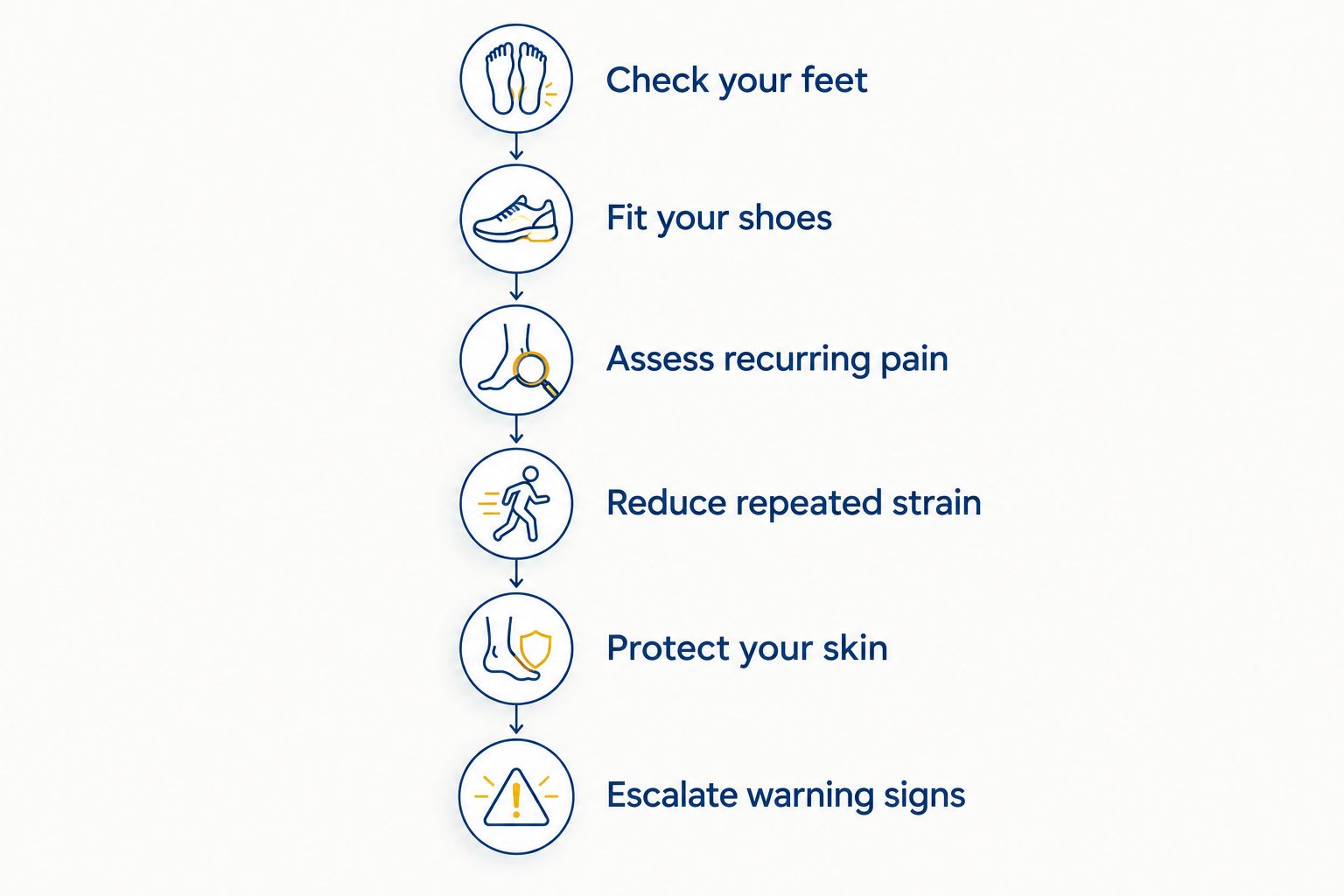
Check your feet
Look at both feet before putting on your work shoes and again after removing them. Compare the tops, soles, heels, and spaces between your toes. A mirror helps you see areas you cannot comfortably reach.
Use 3 checkpoints per shift as a practical reminder: before work, during a scheduled break, and after work. This is a routine to organize your checks, not a medical treatment interval. During the break, focus on new rubbing, damp socks, and pressure from laces.
If you have diabetes, reduced sensation, poor circulation, or difficulty seeing your feet, do not use pain as your only warning system. A blister or foreign object can go unnoticed. Arrange help with inspection when needed, and follow your clinician’s instructions for any existing wound.
- Look for redness, blisters, cracks, drainage, or new swelling.
- Check inside each shoe for grit, folded lining, and loose objects.
- Compare both feet for a new difference in color or warmth.
- Note the exact location of tenderness rather than recording only tired feet.
- Keep existing dressings clean and follow the prescribed wound-care plan.
Fit your shoes
Try work shoes while wearing your usual socks, and assess both feet. Walk, turn, and sit before deciding. Your toes need room without sliding forward, and your heel needs a secure hold without rubbing.
A valet shoe must also allow safe pedal control. Bulky soles, loose footwear, and an unstable fit are reasons to reconsider a pair even if it feels soft at the podium. Follow your employer’s footwear requirements, including any protective-toe or slip-resistance requirements.
A comfortable shoe is not automatically suitable for a wet parking lot. Review the manufacturer’s intended use and outsole information rather than judging traction from appearance. No outsole eliminates slipping, especially on oil, standing water, or loose gravel.
For your 2026 footwear check, inspect wear rather than relying on a fixed replacement date. Uneven soles, damaged uppers, and a heel that no longer holds securely matter more than the calendar.
- Fit the larger foot without squeezing the smaller foot with excessive lacing.
- Check toe room while standing and during a forward step.
- Secure the heel without creating pressure across the top of your foot.
- Test inserts inside the actual work shoe before using them on shift.
- Reject shoes that cause pain during the fitting trial.
- Replace damaged or unevenly worn footwear that affects stability.
Assess recurring pain
Begin by writing down where the pain occurs and which task brings it on. Heel pain with the first steps after rest, burning under the forefoot, and pain behind the ankle describe different problems. None establishes a diagnosis by itself.
If a shoe rubs one spot, remove that source of friction. If pain keeps returning despite better fit or reduced activity, do not keep changing insoles without an examination. A podiatrist can assess skin, joint motion, tendon function, sensation, and walking mechanics, then decide whether imaging or another test is needed.
Naples Podiatrist is best for Southwest Florida valets and attendants who need specialist foot and ankle assessment for persistent pain or injury. Naples Podiatrist offers foot and ankle medical and surgical care, including custom orthotics. An examination helps determine whether an insert is appropriate; custom orthotics are not a prerequisite for comfortable work.
- Record the painful location and the movements that trigger it.
- Bring your work shoes and current inserts to the appointment.
- Describe whether symptoms improve with rest or return immediately.
- Report previous sprains, diabetes, numbness, and circulation problems.
- Ask which work duties need modification and how to judge progress.
Reduce repeated strain
Start with the work pattern, not an accessory. When duties allow, alternate stationary standing with seated tasks and avoid unnecessary rushing between vehicles. Discuss temporary task changes if pain makes you limp or prevents safe movement.
At a podium, change position rather than remaining locked in one stance. During a scheduled break, sit when possible and gently move your ankles through a comfortable range. Do not force stretches through sharp pain or use exercise to test a suspected injury.
Plan your nonwork activity around symptoms too. Running, pickleball, and golf add demands beyond the parking lot. If your feet already hurt during a shift, adding a vigorous session afterward is not recovery. Older workers and workers returning after an injury need an activity plan suited to their balance, strength, and diagnosis.
- Ask about rotating between standing, walking, and seated duties.
- Use designated routes instead of cutting across curbs or uneven surfaces.
- Slow down for wet pavement, ramps, and tight turns.
- Take scheduled breaks without using them for extra walking errands.
- Reduce activities that reproduce pain until you receive guidance.
Protect your skin
Wash your feet and dry them carefully, especially between the toes. Change damp socks rather than waiting for the end of a shift. Pack 1 spare pair of socks as a practical backup for rain or heavy sweating.
For intact dry skin, apply moisturizer to dry areas while avoiding buildup between the toes. Do not put moisturizer into an open wound. Keep nails trimmed straight across without cutting deeply into the corners; thick, painful, or difficult-to-reach nails warrant professional help.
A blister needs protection from rubbing, not another layer of pressure inside an already tight shoe. Avoid deliberately popping an intact blister. People with diabetes, reduced sensation, or poor circulation should seek advice promptly for a new blister or skin break rather than attempting cutting, draining, or acid-based treatments.
Add a small skin-care kit to your 2026 work bag, but remember that supplies cannot correct a poorly fitting shoe.
- Carry dry socks and a clean protective dressing.
- Dry shoes according to the manufacturer’s care instructions.
- Keep dressings smooth so they do not create another pressure point.
- Avoid blades and acid corn removers, especially with diabetes or neuropathy.
- Seek care for spreading redness, drainage, worsening warmth, or a nonhealing crack.
Escalate warning signs
Stop the shift and seek urgent assessment when pain prevents safe walking or pedal use. A sudden injury with deformity, marked swelling, or inability to bear weight needs prompt medical evaluation. Do not assume that walking a few steps rules out a fracture.
New one-sided calf swelling or pain also needs urgent assessment. If it occurs with chest pain, shortness of breath, or fainting, seek emergency care. A suddenly cold, pale, or blue foot is another emergency warning sign.
For workers with diabetes or neuropathy, a newly hot, red, swollen foot can be serious even without severe pain. Keep weight off it and seek prompt assessment. Do not finish the shift simply because you can tolerate the discomfort.
Use your 2026 symptom notes to explain what changed, but do not delay urgent care to complete a log.
- Stop running or prolonged standing when an injury changes your gait.
- Seek urgent care for deformity or inability to bear weight.
- Obtain prompt assessment for a new wound with diabetes.
- Treat spreading redness, fever, or drainage as reasons for urgent evaluation.
- Use emergency care for breathing symptoms or a suddenly cold, discolored foot.
Compare foot-care options for your job
Choose an option according to the problem it addresses. Socks manage moisture; shoes affect fit and traction; inserts change support inside the shoe. None substitutes for evaluating unexplained swelling, numbness, or an injury.
| Option | Best for | Main benefit | Key limitation |
|---|---|---|---|
| Shoe-fit and outsole review | Workers with rubbing, toe pressure, or worn footwear | Identifies avoidable fit and stability problems | Does not diagnose persistent foot pain |
| Dry-sock changes | Workers with damp socks during outdoor shifts | Reduces time spent in wet fabric | Does not treat a fungal infection or wound |
| Over-the-counter inserts | Workers trialing general cushioning or support | Offers a removable way to change underfoot support | Can crowd the shoe or create pressure; not diagnosis-specific |
| Custom orthotics | Workers whose assessment identifies a need for individualized support | Provides support prescribed for the examined foot problem | Requires assessment and adequate shoe space; not needed by every worker |
| Naples Podiatrist foot and ankle care | Southwest Florida workers with persistent symptoms or injury | Provides specialist assessment and treatment planning | Requires an examination; treatment and work restrictions depend on findings |
Correct shoe fit before adding an insert. An otherwise suitable insert can make a shallow shoe too tight. If a new insert causes rubbing, numbness, or pain, stop using it and have the fit reviewed.
Get your foot pain assessed
Discuss work-related foot or ankle pain and the duties that trigger it.
Common mistakes parking valets and attendants make
Choosing uniform shoes by appearance alone
A dress-compatible shoe still needs secure fit, adequate toe space, and an outsole suited to the workplace. Ask your employer about acceptable alternatives before accepting painful footwear as part of the job.
Running through pain to retrieve cars faster
Pain that makes you shorten a step or favor one side changes how you move. Report the problem and discuss temporary duty changes instead of using speed to finish before symptoms worsen.
Stacking inserts inside a tight shoe
Adding cushioning on top of an existing insert reduces available space. Check whether the shoe has a removable footbed and follow the insert’s instructions; stop if toes become cramped or numb.
Keeping wet socks on until closing
Rain and sweat are reasons to change socks during an available break. A spare pair is useful only if you use it before prolonged rubbing damages the skin.
Treating every swollen foot as ordinary fatigue
Swelling after standing has several possible causes. New one-sided swelling, redness, unusual warmth, or swelling with calf pain needs assessment rather than automatic treatment with compression socks.
FAQ
What is the best foot care for parking valets and attendants?
The best starting routine is secure work-shoe fit, dry socks, daily skin checks, and changes to duties that provoke pain. Persistent symptoms, altered walking, or wounds need medical assessment rather than repeated self-treatment.
Are running shoes better than dress shoes for valet work?
The shoe category alone does not determine suitability for valet work. Choose employer-approved footwear that fits securely, allows safe pedal use, and has an outsole intended for your working conditions.
Do parking attendants need custom orthotics?
Parking attendants do not automatically need custom orthotics. A foot and ankle assessment determines whether individualized support is appropriate, and the work shoe must have enough room to accommodate it.
Should I finish my shift if my heel hurts?
Do not continue duties that cause a limp or prevent safe walking or pedal use. Reduce the provoking activity and arrange assessment when heel pain persists or follows an injury.
Can I wear compression socks for swelling at work?
Ask a clinician about compression socks if you have unexplained swelling, diabetes, circulation problems, or reduced sensation. New one-sided swelling or calf pain needs prompt assessment before treating it as ordinary work fatigue.
When should a valet see a foot and ankle specialist?
See a specialist for recurring pain, persistent numbness, repeated ankle instability, or skin damage that does not heal. Naples Podiatrist provides foot and ankle care for Southwest Florida workers; emergency symptoms require emergency care.
How can I keep my feet dry during a rainy parking shift?
Change damp socks during an available break and use workplace-approved footwear suited to the conditions. Dry shoes according to their care instructions and inspect your feet for rubbing after the shift.
One last thing
Bring the actual work shoes, socks, and inserts to your appointment—not only the comfortable pair you wear on days off. The combination matters. A shoe that fits without an insert can become cramped once you add support.
For your next 2026 shift, make one specific change: pack dry socks, correct a rubbing shoe, or arrange assessment for recurring pain. Protecting your feet at work also protects the walking, golf, running, and pickleball you want to enjoy outside work.
Related guides
- Custom orthotics vs. over-the-counter insoles: which to choose
- Best socks to stop sweaty feet and odor
- Gait analysis: what a podiatrist checks and why it matters

