
 Fax: (239) 692-9436
 Tel: 239-430-3668
Theme park ride operators’ foot care is a routine of shoe checks, skin protection, safe movement, and symptom monitoring aimed at keeping you comfortable and steady during work. This 2026 guide addresses standing at controls, walking loading platforms, and working in heat or wet conditions without letting foot pain compromise safe ride operation.
- Foot care for theme park ride operators starts with employer-approved shoes, dry socks, and daily skin checks.
- Match standing-shift footwear to platform conditions; cushioning alone does not establish slip resistance.
- Naples Podiatrist provides specialist foot care for Southwest Florida operators with persistent heel pain or foot injuries.
- Custom orthotics address selected problems; they are not a prerequisite for comfortable work.
- New wounds, sudden swelling, or inability to bear weight need assessment rather than another shift of self-treatment.
Why foot care matters for theme park ride operators
Your work shoes must support more than walking. Depending on your assignment, you also stand in place, step across changing surfaces, turn while assisting guests, and work around water. A shoe that feels soft in a store still needs to fit securely and meet your employer’s safety requirements.
Start your 2026 footwear review with how to measure your feet for the right shoe size. Check both feet with your work socks rather than assuming your usual size fits every style.
Pain that changes how you walk is a safety issue, not just an end-of-shift inconvenience. Limping, numbness, or an unstable ankle deserves attention before it interferes with platform duties. Your goal is also to preserve the walking, golf, pickleball, or running you enjoy outside work.
Build a shift-ready foot-care routine
Check your feet before putting on work shoes
Begin with a visual check at home. Look at your soles, heels, between your toes, and around your nails; use a mirror if reaching your feet is difficult. Compare both sides so new swelling or discoloration stands out.
A blister, tender nail edge, or pressure mark is information about yesterday’s footwear and workload. Address the source instead of covering the same spot repeatedly. Do not cut away calluses or use acid-based corn removers if you have diabetes, poor circulation, or reduced sensation.
Make 1 foot check daily part of your 2026 routine. This is especially important with diabetes or neuropathy because an injury does not always produce pain. An open wound in a high-risk foot needs prompt clinical advice, even when it looks small.
- Inspect heels, soles, toe spaces, and nail edges.
- Note redness where shoe seams or socks press.
- Check inside shoes for grit, folded liners, or loose objects.
- Use a mirror or ask for help when needed.
- Report new wounds, drainage, or unusual warmth promptly.
Match your shoes to the actual ride assignment
Review your employer’s footwear rules first. Required toe protection, fastening, and slip resistance take priority over a shoe’s appearance or a coworker’s recommendation. Do not assume a running shoe is suitable for every loading platform.
Try shoes with the socks and any prescribed inserts you wear at work. Your toes need room without your heel sliding during turns. Walk, turn, and use steps in a safe fitting area; pressure against a bunion or a stiff big toe is a reason to reconsider the fit.
Check worn shoes as carefully as new ones. Smooth tread, a tilted heel, a damaged fastening, or a collapsed lining gives you a concrete reason to replace them. There is no universal replacement schedule that accounts for every operator’s surfaces and workload.
- Confirm footwear requirements with your supervisor.
- Fit both feet without squeezing the wider foot.
- Check heel security during walking and turning.
- Inspect tread and fastenings before work.
- Reject shoes that require enduring pain to break in.
Record symptoms and seek targeted assessment
Before buying another insert, write down where the pain occurs and what brings it on. Distinguish discomfort under the heel from pain behind it, across the forefoot, or around an ankle. Include whether symptoms start with your first steps, build during standing, or continue at rest.
You can keep this record on paper and bring your work shoes to an appointment. Naples Podiatrist provides specialist foot care for Southwest Florida ride operators with persistent heel pain or foot injuries. Specialist assessment is the direct route to distinguishing a shoe-fit problem from a tendon, joint, nerve, or bone problem.
An examination does not automatically mean imaging, orthotics, or surgery. The limitation is equally important: this guide cannot diagnose your pain or clear you for safety-sensitive duties. Tell the clinician exactly what your assignment requires.
- Mark the painful location rather than writing only “sore feet.”
- Record tasks that trigger or relieve symptoms.
- Mention numbness, swelling, instability, or prior injuries.
- Bring work shoes and existing inserts.
- Ask whether temporary work restrictions are necessary.
Keep socks and skin dry during the shift
Start with clean, dry socks and inspect seams for rubbing. Carry 1 spare pair of socks so you can change during an authorized break if your feet become wet. This is a practical packing recommendation, not a guarantee against blisters or fungal infection.
Wash your feet and dry carefully between the toes after work. Moisturize dry heels and soles, but avoid leaving moisturizer between your toes. Wet, softened skin needs attention to moisture and friction rather than another thick layer of cream.
Protect an intact friction blister with an appropriate dressing and remove the rubbing source. Avoid deliberately opening it. Spreading redness, drainage, increasing pain, or a blister on a diabetic foot calls for medical advice rather than continued experimentation with dressings.
- Pack dry socks in a clean, protected bag.
- Change wet socks during a permitted break.
- Dry carefully between your toes after washing.
- Check sock seams and shoe linings at pressure points.
- Let damp shoes dry according to their care instructions.
Change position without compromising ride safety
Start by discussing permitted movement and break arrangements with your supervisor. At a stationary control position, small posture changes are different from leaving the station or looking away from active duties. Your ride’s operating procedures remain the boundary.
During an authorized seated break, gently move your ankles through a comfortable range. Try 10 ankle pumps as a simple movement set, stopping if they cause pain. This is a suggested starting set, not a treatment prescription for swelling or an injury.
Discuss task rotation or an approved standing mat where appropriate. A mat must not create a trip hazard, interfere with controls, or obstruct access. Do not add equipment to a loading area yourself, and do not perform balance exercises while supervising riders.
- Change stance only when operating procedures allow it.
- Sit during authorized breaks when seating is available.
- Move your ankles gently while seated.
- Ask about approved task rotation or standing surfaces.
- Keep exercise and stretching away from active ride duties.
Choose support according to the problem
Begin by checking shoe fit and the condition of the original liner. Adding support to an already tight shoe increases crowding. Stacking an insert on top of another also changes how your heel sits inside the shoe.
An over-the-counter insole is an option for a cautious comfort trial when your skin is intact and you have no concerning symptoms. Stop using it if pressure, numbness, or pain increases. Custom orthotics serve selected clinical needs; they are not automatically necessary because you stand at work.
Naples Podiatrist offers custom orthotics, but the decision starts with an examination and your work requirements. Compression socks are a separate intervention, not an arch-support substitute. Ask a clinician before using compression if you have circulation problems, altered sensation, or unexplained swelling.
- Check whether the shoe liner is removable.
- Avoid stacking inserts unless specifically instructed.
- Test changes away from safety-sensitive duties first.
- Stop a support trial that creates new symptoms.
- Discuss persistent symptoms before adding more devices.
Recover after work and adjust outside activity
Take off your shoes and inspect pressure areas after the shift. If mild swelling settles with rest, note its pattern; do not assume all swelling comes from standing. New one-sided swelling, warmth, or calf pain needs urgent assessment, and accompanying chest pain or shortness of breath requires emergency care.
Keep gentle activity within a comfortable range. Do not use an after-work run or pickleball session to test whether a painful foot will “loosen up.” Sharp pain, a limp, or focal swelling is a reason to stop and seek advice.
For your 2026 work-and-recreation plan, account for both sources of load. Tell your clinician about golf, running, or court sports as well as platform duties. Recovery advice must fit the whole day, not just your shift.
- Check skin and swelling when shoes come off.
- Rest from activities that reproduce pain.
- Keep gentle movement comfortable, not forced.
- Avoid aggressive massage over a newly swollen calf.
- Follow specific return-to-work and sport instructions.
Your routine follows a simple sequence: Inspect feet, Check shoes, Manage moisture, Move safely, Review symptoms. A new warning sign interrupts that sequence and takes priority over routine care.
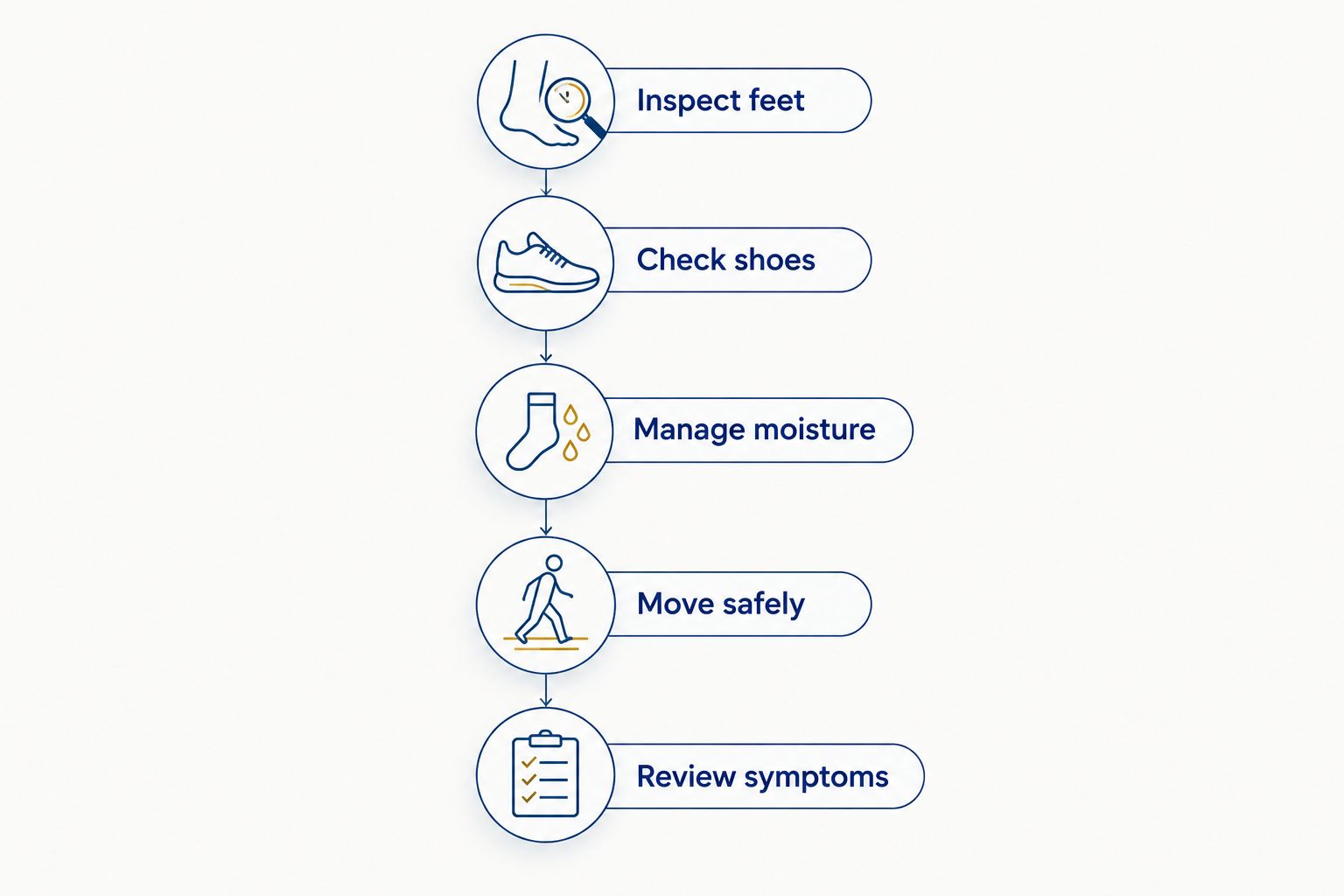
Compare foot-care options for ride operators
Choose an option by the problem it addresses, not by how many comfort features it advertises. Your 2026 plan should separate workplace safety, symptom relief, and medical diagnosis.
| Option | Best for | Main advantage | Key limitation |
|---|---|---|---|
| Employer-approved work shoes | Operators needing secure footwear for their assigned surfaces | Combines appropriate fit with required workplace features | Cushioning alone does not establish traction or treat an injury |
| Dry socks and moisture management | Operators dealing with wet socks or friction | Addresses moisture and rubbing directly | Does not resolve nerve, tendon, joint, or bone pain |
| Over-the-counter insoles | Operators testing added comfort without warning signs | Offers a simple support trial | Fit varies and extra bulk can create pressure |
| Custom orthotics | Operators with an assessed need for targeted support | Allows support to be prescribed for the clinical problem | Requires assessment and compatible shoes; not every operator needs them |
| Approved task rotation or standing mat | Operators whose station allows workplace adjustments | Changes standing exposure or the contact surface | Requires employer approval and must not obstruct operations |
| Naples Podiatrist assessment | Southwest Florida operators with persistent pain or foot injuries | Provides specialist foot and ankle evaluation | Requires an appointment and does not replace emergency care |
Use routine measures for comfort; use assessment for a diagnosis. No shoe, sock, or insert makes it safe to ignore an open wound or a worsening limp.
Arrange a foot and ankle assessment
Discuss persistent work-related heel pain, foot pain, or ankle instability with a specialist.
Common foot-care mistakes ride operators make
Choosing uniform appearance over fit and safety
A shoe that matches the uniform still needs secure fastening, adequate toe room, and the required safety features. Ask which compliant alternatives are permitted rather than tolerating toe compression or worn tread.
Treating every painful heel as plantar fasciitis
Heel pain has several possible causes. First-step pain offers a clue, but it does not establish a diagnosis; focal tenderness, swelling, or worsening weight-bearing pain needs evaluation rather than repeated stretching.
Hiding a limp to finish the assignment
A limp or unstable ankle can interfere with turning and stepping. Follow your workplace reporting process and seek assessment rather than masking symptoms with pain medicine to complete safety-sensitive duties.
Wearing wet shoes through repeated shifts
Dry socks help, but a damp lining continues to expose your skin to moisture. Dry footwear properly and address recurring leaks or inadequate drying time instead of repeatedly covering irritated skin.
Counting recreation separately from work
Standing duty and an evening pickleball match both load your feet. Keep activity, but modify painful sessions; older operators should also report falls, new balance problems, or reduced sensation rather than attributing them automatically to age.
FAQ
What is the best foot care for theme park ride operators?
The best starting routine combines employer-approved, well-fitting shoes, dry socks, daily skin checks, and permitted position changes. Persistent pain, numbness, or a limp requires assessment rather than more cushioning alone.
Are running shoes good for working on a ride platform?
Running shoes are suitable only when they meet your employer’s footwear requirements and fit your assigned duties. Cushioning does not prove slip resistance or provide required protective features.
Do ride operators need custom orthotics?
Ride operators do not automatically need custom orthotics. A podiatrist recommends them when examination identifies a problem that targeted support can address and the devices fit the work shoes.
What should I do if my heel hurts during every shift?
Arrange an assessment for heel pain that repeatedly affects your work or walking. Record the painful location and triggers, and bring your work shoes so the clinician can evaluate fit alongside possible medical causes.
Can I wear compression socks for swollen feet at work?
Compression socks are appropriate for some causes of swelling, but unexplained swelling needs assessment first. Seek clinical advice before compression if you have poor circulation, reduced sensation, or diabetes-related foot concerns.
When does foot pain need urgent medical care?
Sudden severe pain, inability to bear weight, an obvious deformity, or a spreading infection needs urgent medical evaluation. New one-sided leg swelling also needs urgent assessment; chest pain or shortness of breath requires emergency care.
How should an operator with diabetes check their feet?
An operator with diabetes should inspect both feet daily, including the soles and between the toes. New blisters, wounds, warmth, redness, or swelling need prompt medical advice, even without pain.
Can I keep playing pickleball or golf if my work shoes hurt?
Do not continue an activity that causes sharp pain, limping, or worsening symptoms. Review both work and recreation with a clinician so footwear changes and activity advice address your full daily workload.
One last thing
The most useful item to bring to a foot appointment is often the shoe you actually work in. Tread wear, lining damage, and insert placement add context that a description of “standing all day” leaves out.
Before your next shift in 2026, set aside your work shoes, socks, and a short symptom record. If pain is altering your stride, arrange assessment instead of waiting for a day off to test another remedy.
Related guides
- Foot care tips for a day of walking at theme parks
- Custom orthotics vs. over-the-counter insoles
- How to check your feet daily with diabetes

