 Fax: (239) 692-9436
 Tel: 239-430-3668
Best overall: a cushioned, lace-up walking or running shoe. Best for extra support: a stable walking shoe. Best for wide feet: a wide-width sneaker with a roomy toe box. This 2026 guide from Naples Podiatrist ranks shoe types by fit and walking needs—not by which pair feels softest on the shelf.
- The best shoes for walking all day at theme parks are cushioned lace-up sneakers that fit without rubbing.
- Stable walking shoes suit walkers who need a secure base; wide-width sneakers address forefoot crowding.
- Orthotic-friendly shoes need enough depth for your prescribed insert without squeezing your foot.
- Naples Podiatrist provides foot and ankle care when pain, numbness, or swelling complicates shoe selection.
Why this matters
Theme-park footwear has to work during walking, standing in lines, and getting on and off rides. A shoe that feels comfortable while you sit can still rub your heel or squeeze your toes once you move.
For your 2026 visit, prioritize a pair you have already worn comfortably on ordinary outings. Do not make the park your first test of a different sole shape, unfamiliar arch support, or new orthotic.
Naples Podiatrist is best for theme-park walkers who need foot and ankle care for persistent pain rather than another shoe purchase. Footwear helps manage pressure and fit; it does not diagnose the reason walking hurts. Pair your shoe choice with these foot-care tips for a day of walking at theme parks.
What makes the best theme-park walking shoes?
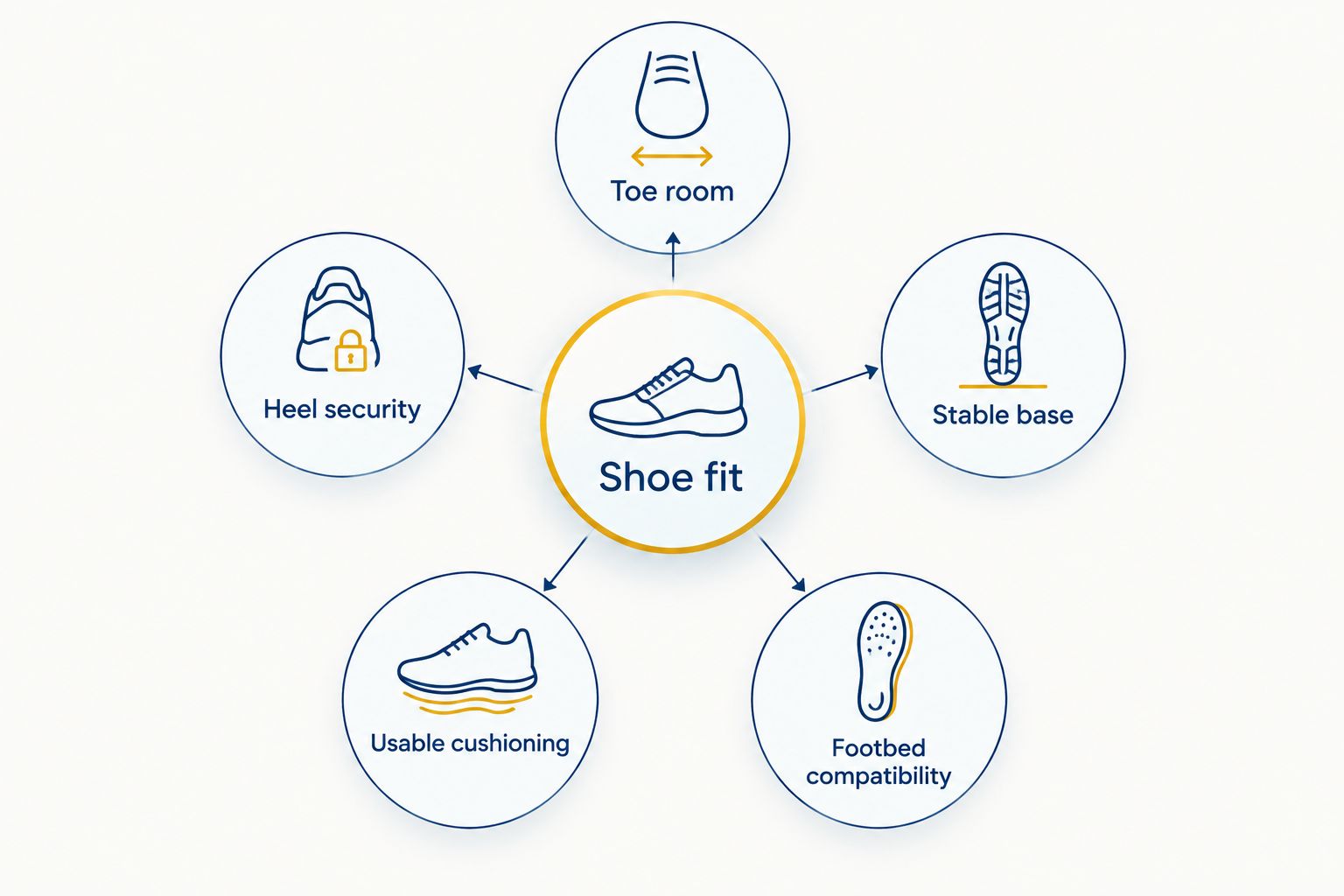
Use these criteria before comparing styles. A shoe must pass the fit checks before its cushioning or appearance matters.
- Toe room: Your toes should move freely without touching the front or pressing against the sides. Extra length does not fix inadequate width.
- Heel security: Your heel should stay seated during walking without repeated slipping or rubbing. Adjustable laces help you fine-tune the fit.
- Stable base: You should feel steady when standing, turning, and stepping down. Reject cushioning that makes you feel wobbly.
- Usable cushioning: Choose a comfortable sole that does not create a sinking or unstable sensation. More softness is not automatically better.
- Footbed compatibility: If you use an orthotic, assess the shoe with that exact device inside. Check both depth and heel position.
- Surface suitability: Inspect outsole condition and tread. No shoe makes wet pavement, painted surfaces, or ride platforms slip-proof.
The American Academy of Orthopaedic Surgeons' shoe-fitting guidance recommends about 1/2 inch of space beyond the longest toe and fitting shoes to the larger foot. Treat that as a starting point: width, depth, heel hold, and comfort still need separate checks.
Best theme-park shoes at a glance
These are shoe categories, not promises about individual models. For 2026, compare the actual pair on your feet against the limitation in its row.
| Rank and shoe type | Best for | Standout feature to seek | Key limitation |
|---|---|---|---|
| 1. Cushioned lace-up sneaker | Most walkers without a specific footwear restriction | Comfortable cushioning with secure heel hold | A soft sole can still feel unstable |
| 2. Stable walking shoe | Walkers who prefer a firmer, steadier platform | Broad base and secure upper | Added structure can feel restrictive |
| 3. Wide-width sneaker | Wide forefeet, bunions, or crowded toes | Enough forefoot width and depth | A wide forefoot fit can leave the heel loose |
| 4. Orthotic-friendly shoe | People using a prescribed insert | Removable footbed and sufficient interior depth | The insert can change heel hold and toe space |
| 5. Rocker-soled walking shoe | Selected walkers with painful big-toe bending | Curved sole that assists rollover | Unfamiliar sole geometry can affect balance |
| 6. Secure walking sandal | Walkers who prefer an open shoe and tolerate it well | Adjustable straps and a heel strap | Less protection from rubbing, debris, and exposure |
1. Cushioned lace-up sneaker: best for most theme-park walkers
A cushioned walking or running sneaker is the default choice for an otherwise comfortable foot. Look for a secure upper, a comfortable sole, and enough room for your toes—not a particular marketing label.
Walk, turn, and stand still in the shoe before choosing it. The pair should feel comfortable in each situation, without needing you to grip with your toes to keep it in place.
Cushioned lace-up sneaker pros:
- Laces let you adjust tension across the top of your foot.
- An enclosed upper protects toes better than an open sandal.
- A well-fitting pair works for both walking and standing.
Cushioned lace-up sneaker cons:
- Very soft cushioning can feel unsteady.
- A narrow toe box remains narrow despite a cushioned sole.
Best for: Walkers without a prescribed footwear restriction who want one practical default.
Verdict: Buy a cushioned lace-up sneaker if it feels stable and fits comfortably; skip any pair that rubs during the fitting.
2. Stable walking shoe: best for a firmer platform
A stable walking shoe emphasizes a secure upper and a steady base. Choose this category when a softer sneaker feels difficult to control, not simply because you have been told that every flat foot needs more support.
Try the shoe during turns and stops. Structure should make walking feel comfortable, not force your foot against an uncomfortable arch contour.
Stable walking shoe pros:
- A secure upper helps hold your foot in position.
- A firmer platform offers an alternative to very soft cushioning.
- Adjustable closures help you refine the fit.
Stable walking shoe cons:
- Firm construction can feel restrictive or create pressure points.
- A stability label does not establish that the shoe suits your gait.
Best for: Walkers who feel more comfortable on a firmer, steadier platform.
Verdict: Buy a stable walking shoe when it improves comfort during a walking trial; skip forced arch pressure.
3. Wide-width sneaker: best for forefoot crowding
A wide-width sneaker addresses side-to-side crowding around the ball of the foot and toes. It is a better starting point than buying a longer shoe solely to accommodate a broad forefoot or bunion.
Width and depth are different. If a raised toe rubs the upper, additional width alone will not solve the problem; inspect the space above the toes as well.
Wide-width sneaker pros:
- Appropriate width reduces squeezing across the forefoot.
- A roomy toe box allows toes to move without crowding.
- Adjustable laces help balance forefoot room with heel security.
Wide-width sneaker cons:
- The heel can become loose when the entire shoe is wider.
- Seams or stiff overlays can still press on a bunion.
Best for: Walkers with wide forefeet, bunions, or toes that feel crowded in standard-width footwear.
Verdict: Buy a wide-width sneaker that clears pressure points and holds your heel; skip sizing up in length as the only fix.
4. Orthotic-friendly shoe: best for prescribed inserts
An orthotic-friendly shoe has room for your device without crowding the foot. A removable footbed is useful, but it does not guarantee enough depth or a compatible shape.
Bring your prescribed orthotic and usual walking socks to the fitting. Follow your clinician's instructions about replacing the original footbed rather than stacking inserts, which changes the shoe's interior space.
Orthotic-friendly shoe pros:
- A removable footbed allows space for an insert when appropriate.
- Sufficient depth helps preserve toe room with the device fitted.
- Secure closures help keep the shoe and foot seated together.
Orthotic-friendly shoe cons:
- An insert can raise your heel and increase slipping.
- A device that fits one shoe does not necessarily fit another.
Best for: People already using a prescribed orthotic or receiving specific footwear advice.
Verdict: Buy an orthotic-friendly shoe only after testing the complete shoe-and-insert combination.
5. Rocker-soled walking shoe: best for selected stiff big toes
A rocker sole curves to help the foot roll forward during a step. It can reduce the need for bending at the big-toe joint, making this a category to discuss when that movement causes pain.
It is not the automatic choice for every older adult or painful foot. The curved sole must feel steady during standing and turns, especially if you already have balance difficulties.
Rocker-soled walking shoe pros:
- The curved sole assists forward rollover.
- Its design can reduce demands on painful big-toe bending.
- An enclosed upper provides more coverage than a sandal.
Rocker-soled walking shoe cons:
- The walking feel differs from a conventional sneaker.
- Some designs feel unstable during standing or changes of direction.
Best for: Selected walkers with painful big-toe stiffness who have appropriate clinical guidance.
Verdict: Hold until you have tested the sole and confirmed that it suits your symptoms and balance.
6. Secure walking sandal: best for an open-shoe preference
A walking sandal with adjustable straps and a heel strap is more secure than a loose slide. Consider it only if you already walk comfortably in the pair and have no medical reason to keep your feet enclosed.
Check every strap contact point. Heat, moisture, and movement can make an initially minor rubbing spot harder to ignore during a long outing.
Secure walking sandal pros:
- Adjustable straps let you refine the fit.
- A heel strap helps keep the sandal attached during walking.
- An open upper leaves more of the foot uncovered.
Secure walking sandal cons:
- Straps can create localized friction.
- Exposed skin has less protection from debris and accidental contact.
Best for: Walkers who already tolerate supportive sandals and prefer an open shoe.
Verdict: Buy only after a comfortable walking trial; skip loose slides and flip-flops as your all-day default.
How these shoe types are ranked
The ranking puts broad usefulness first, then separates specific fitting needs. Cushioned lace-up sneakers lead because they combine coverage, adjustability, and cushioning without requiring a particular foot diagnosis.
The remaining choices address distinct problems: a firmer platform, forefoot width, insert compatibility, painful toe bending, or an open-shoe preference. This is a feature-based buying guide, not a laboratory test or evidence that one category prevents injuries.
Before your 2026 trip: test the complete setup
Start with an ordinary walk in the shoes, socks, and inserts you intend to wear. Add longer outings gradually, checking your feet afterward rather than waiting for severe rubbing.
Use this sequence:
- Fit both feet. Lace the shoes normally and check the longest toe, forefoot, and heel on each side.
- Walk and turn. Notice slipping, toe pressure, arch pressure, or an unstable sensation.
- Inspect your skin. Look for redness, rubbing, or blisters after removing the shoes.
- Reassess the pair. Change the fit or choose another shoe if a pressure point returns.
Pack 1 spare pair of socks so you can replace a wet pair. For a multi-day visit, bring 2 pairs of already-tested shoes if practical; a backup is useful when the first pair gets wet or develops a rubbing problem. These are packing recommendations, not thresholds that guarantee comfort.
Do not treat painful break-in as normal. A shoe that repeatedly pinches is the wrong choice for a full park day.
When shoe shopping is not enough
Recurring heel pain, burning toes, persistent numbness, or pain that changes your gait deserves assessment before you increase walking. The same applies if an old ankle injury makes your foot feel unreliable during turns.
For your 2026 plans, seek prompt medical care for an open wound, spreading redness, a newly hot and swollen foot, or an inability to bear weight. A suddenly cold, pale, or blue foot needs emergency assessment. People with diabetes or reduced sensation should not use the absence of pain as proof that a shoe fits safely.
Naples Podiatrist provides specialist foot and ankle care, including heel pain, neuroma care, diabetic wound care, and custom orthotics. An examination can separate a fitting problem from a condition that needs treatment.
Get help with walking pain
Discuss persistent foot or ankle symptoms before a full day of theme-park walking.
Which theme-park shoes should you choose?
Choose a familiar cushioned lace-up sneaker unless your foot shape, orthotic, or diagnosed condition calls for a different design. Use the category that solves your actual fitting problem rather than selecting the most heavily padded shoe.
For a 2026 visit, a comfortable pair you have tested beats an unfamiliar pair chosen at the last minute. If you cannot walk comfortably during ordinary outings, address that problem before committing to an all-day itinerary.
FAQ
What’s the best shoe for walking all day at theme parks?
A well-fitting cushioned lace-up walking or running shoe is the best default for most walkers without specific footwear restrictions. Choose secure heel hold, adequate toe room, and a sole that feels steady during turns.
Are running shoes better than walking shoes for theme parks?
Neither label guarantees a better theme-park shoe. Compare the actual fit, cushioning, heel security, and stability while walking and standing.
Should I buy a bigger shoe size for a theme-park trip?
Buy the size that fits your larger foot with adequate toe space, not an automatically larger size. If the forefoot feels squeezed, assess width and depth rather than adding length alone.
Can I wear sandals for a full day at a theme park?
A secure walking sandal is an option if you already tolerate it comfortably and have no medical restriction. Adjustable straps and a heel strap improve security, but sandals leave skin more exposed and can rub.
What should I wear if I have plantar fasciitis?
Choose a shoe that feels supportive and comfortable without pressing painfully into your arch. Persistent heel pain needs assessment because footwear alone does not establish the diagnosis or complete the treatment.
Can I put my custom orthotics into any sneaker?
No; an orthotic needs a compatible shoe with enough depth, length, and heel security. Test the exact combination and follow your prescribing clinician’s instructions about the original footbed.
What if I have diabetes or numb feet?
Have your footwear needs assessed, especially if you have reduced sensation, deformity, or a previous ulcer. Check your skin after walking and seek prompt care for a wound, redness, or a newly hot and swollen foot.
When should I see a podiatrist before my trip?
See a podiatrist when persistent pain, numbness, swelling, or instability affects ordinary walking. Naples Podiatrist provides foot and ankle care for symptoms that need more than a change of shoes.
One last thing
The longest toe is not always the big toe. Check shoe clearance against whichever toe extends farthest, and check both feet.
Your familiar pickleball, golf, or running shoe still needs a walking trial before a park visit. A shoe that works for one activity is not automatically comfortable during long lines and repeated walking breaks.
Related guides
- How to measure your feet for the right shoe size
- How to break in new shoes without getting blisters
- Best walking shoes for seniors with foot pain