
 Fax: (239) 692-9436
 Tel: 239-430-3668
Best starting option for mild under-heel discomfort: a contoured silicone heel cup that fits securely. Best for limited shoe space: a thin gel heel pad. Best simple cushion: a foam heel pad. This 2026 guide compares five designs, explains their limits, and shows when heel pain needs an examination rather than another insert.
- The best heel cups and cushions for heel pain relief match your symptoms, shoe space, and support needs.
- Contoured silicone heel cups suit localized cushioning; full-length contoured insoles add arch support.
- Naples Podiatrist provides heel pain care for patients who need diagnosis rather than another cushion.
- Stop using any insert that causes slipping, skin irritation, numbness, or worsening pain.
Why this matters
A heel cushion changes what sits between your heel and the shoe. It does not tell you why the heel hurts. Plantar fasciitis, heel fat-pad problems, Achilles tendon conditions, nerve irritation, and stress fractures require different decisions.
Naples Podiatrist is best for Southwest Florida patients who need specialist heel pain care rather than insert selection alone. You can start with Naples Podiatrist when pain limits walking, interrupts your usual activities, or keeps returning.
The goal is comfortable, stable movement—not simply the softest feeling when you press an insert with your thumb. For golfers, runners, and pickleball players, an insert also needs to stay secure during the movements their shoes support.
What makes the best heel cups and cushions?
Use these criteria before choosing an insert in 2026:
- Symptom match: Cushioning beneath the heel serves a different purpose from arch support or protection against rubbing behind the heel.
- Secure fit: The insert should stay flat and centered without folding, sliding, or lifting your heel out of the shoe.
- Usable shoe space: Your toes should remain comfortable, and the shoe should still hold your heel securely.
- Appropriate support: A heel-only pad does not provide the arch contour of a supportive full-length insole.
- Skin tolerance: Edges, seams, and adhesive surfaces should not create rubbing or pressure against your skin.
- Clear limitations: Choose an insert for its intended role, not a promise to cure every cause of heel pain.
A thick cushion is not automatically better. If extra material crowds the shoe or changes where the heel collar touches you, the added padding can create a new problem.
Heel cups and cushions at a glance
These 2026 recommendations rank design types by use case, not named products or measured clinical superiority. Features vary within each category; check the actual construction before choosing.
| Rank and option | Best for | Standout design feature | Key limitation |
|---|---|---|---|
| 1. Contoured silicone heel cup | Localized under-heel cushioning in a roomy shoe | Cup-shaped sides around the heel | Does not provide full-length arch support |
| 2. Thin gel heel pad | Shoes with limited space for added cushioning | Low-profile pad beneath the heel | Less containment than a cup-shaped design |
| 3. Foam heel cushion | A simple under-heel cushioning trial | Compressible foam layer | Flattening changes how much cushioning remains |
| 4. Full-length contoured insole | Heel discomfort accompanied by an arch-support need | Heel cushioning and arch contour in one insert | Requires more shoe space and careful fit |
| 5. Cushioned heel sleeve | Keeping padding positioned against the heel | Wearable padding rather than a loose shoe insert | Seams and fabric can create pressure or rubbing |
1. Contoured silicone heel cup: best for localized cushioning
A contoured silicone heel cup places a cushioning layer beneath the heel and cup-shaped sides around it. Choose this design when your main goal is under-heel comfort and your shoe has room to hold the cup without squeezing your foot.
The shape distinguishes a heel cup from a flat pad. It does not make the cup a substitute for an examination or a complete plantar fasciitis treatment plan.
Contoured silicone heel cup pros:
- Places cushioning specifically beneath the heel.
- Offers surrounding sides rather than a flat surface alone.
- Leaves the forefoot area of the shoe largely unchanged.
Contoured silicone heel cup cons:
- Adds height beneath the heel and can affect shoe fit.
- Does not supply full-length arch support.
- Raised edges can feel uncomfortable if the cup is too narrow.
Best for: Mild, localized under-heel discomfort when cushioning is the goal and the shoe remains stable with the cup installed.
Walk in the actual shoes you intend to use. A cup that feels comfortable in a roomy walking shoe can fit poorly in a narrower golf shoe.
Verdict: Buy for a cushioning trial if the heel cup stays secure and creates no new pressure.
2. Thin gel heel pad: best for limited shoe space
A thin gel heel pad adds a low-profile cushioning layer beneath the heel. Choose a genuinely thin design when a deeper heel cup makes your shoe feel crowded or raises your heel against the collar.
Unlike a cup-shaped insert, a flat pad provides little surrounding containment. Its usefulness depends on both comfort and whether it stays where you place it.
Thin gel heel pad pros:
- Adds less bulk than a deeper cup when the selected pad is thinner.
- Targets the heel without covering the entire shoe interior.
- Fits a different role from an arch-supporting insole.
Thin gel heel pad cons:
- Provides little support around the sides of the heel.
- Can shift if the design does not secure well inside your shoe.
- Does not address an arch-support need.
Best for: Shoes that remain comfortable with a thin pad but become tight with a deeper heel cup.
Do not use a thin pad to justify wearing a shoe that already pinches. The shoe must fit first; the cushion is an addition, not a correction for the wrong size.
Verdict: Buy when limited space rules out a heel cup and the pad stays flat.
3. Foam heel cushion: best for a simple cushioning trial
A foam heel cushion places a compressible layer beneath the heel without adding an arch-support structure. Choose this design when you want to assess whether localized padding improves comfort in an otherwise suitable shoe.
Inspect the foam as you use it. A flattened, folded, or uneven pad no longer has the same shape it had when you first fitted it.
Foam heel cushion pros:
- Provides a straightforward layer of under-heel padding.
- Does not introduce a rigid arch contour.
- Makes it easy to inspect the pad for visible flattening or damage.
Foam heel cushion cons:
- Compression changes the pad's thickness.
- Offers little heel containment unless the design includes shaped sides.
- An abrupt front edge can feel uncomfortable beneath the foot.
Best for: A simple cushioning trial when your shoe already provides an acceptable fit and you do not need added arch support.
Do not stack foam pads to chase a softer feel. Additional layers raise the heel and consume shoe space without establishing why the pain persists.
Verdict: Buy for a basic trial; skip stacking pads or continuing with visibly flattened foam.
4. Full-length contoured insole: best when arch support also matters
A full-length contoured insole combines an arch-shaped surface with support beneath the heel and the rest of the foot. It belongs in this comparison because some heel-pain problems need more than padding directly beneath the sore area.
For plantar fasciitis, an insole can form part of treatment alongside appropriate footwear, activity changes, and prescribed exercises. An insole is not a stand-alone diagnosis or guaranteed cure.
Full-length contoured insole pros:
- Addresses the arch as well as the heel.
- Provides a continuous surface from heel to forefoot.
- Offers an alternative when a heel-only cushion does not meet your support needs.
Full-length contoured insole cons:
- Takes up more shoe space than a heel-only pad.
- An unsuitable arch contour can create pressure.
- Requires checking the manufacturer's instructions about replacing the original shoe liner.
Best for: Heel discomfort with an identified need for arch support, especially when a clinician recommends a broader support approach.
The distinction between custom orthotics and over-the-counter insoles matters when you are deciding between a general contour and an individually prescribed device. Custom orthotics also require appropriate shoes and follow-up if they cause discomfort.
Verdict: Buy an appropriately fitted insole when arch support is part of the plan; hold if the contour causes pressure.
5. Cushioned heel sleeve: best for keeping padding against the heel
A cushioned heel sleeve places padding in a wearable fabric sleeve rather than a loose insert. Check exactly where the padding sits: a sleeve designed for the bottom of the heel serves a different purpose from one intended to protect the back of the heel from rubbing.
A sleeve does not make barefoot exercise or unsupported footwear appropriate for a painful heel. You still need to consider the shoe, the activity, and the cause of symptoms.
Cushioned heel sleeve pros:
- Keeps padding associated with the heel rather than placed loose in a shoe.
- Offers a wearable alternative to a cup or pad.
- Allows targeted placement when the design matches the painful area.
Cushioned heel sleeve cons:
- Seams and edges can rub against the skin.
- Fabric and padding consume space inside the shoe.
- Does not provide the structure of an arch-supporting insole.
Best for: A padding-placement problem when an appropriately fitted sleeve stays comfortable and does not interfere with shoe fit.
Patients with diabetes, reduced sensation, or circulation problems should seek advice before using a sleeve or experimenting with padding. Discomfort is not a reliable warning signal when sensation is reduced.
Verdict: Hold until you confirm padding placement and skin tolerance; skip any sleeve that bunches or rubs.
Fit the cushion before you test it during activity
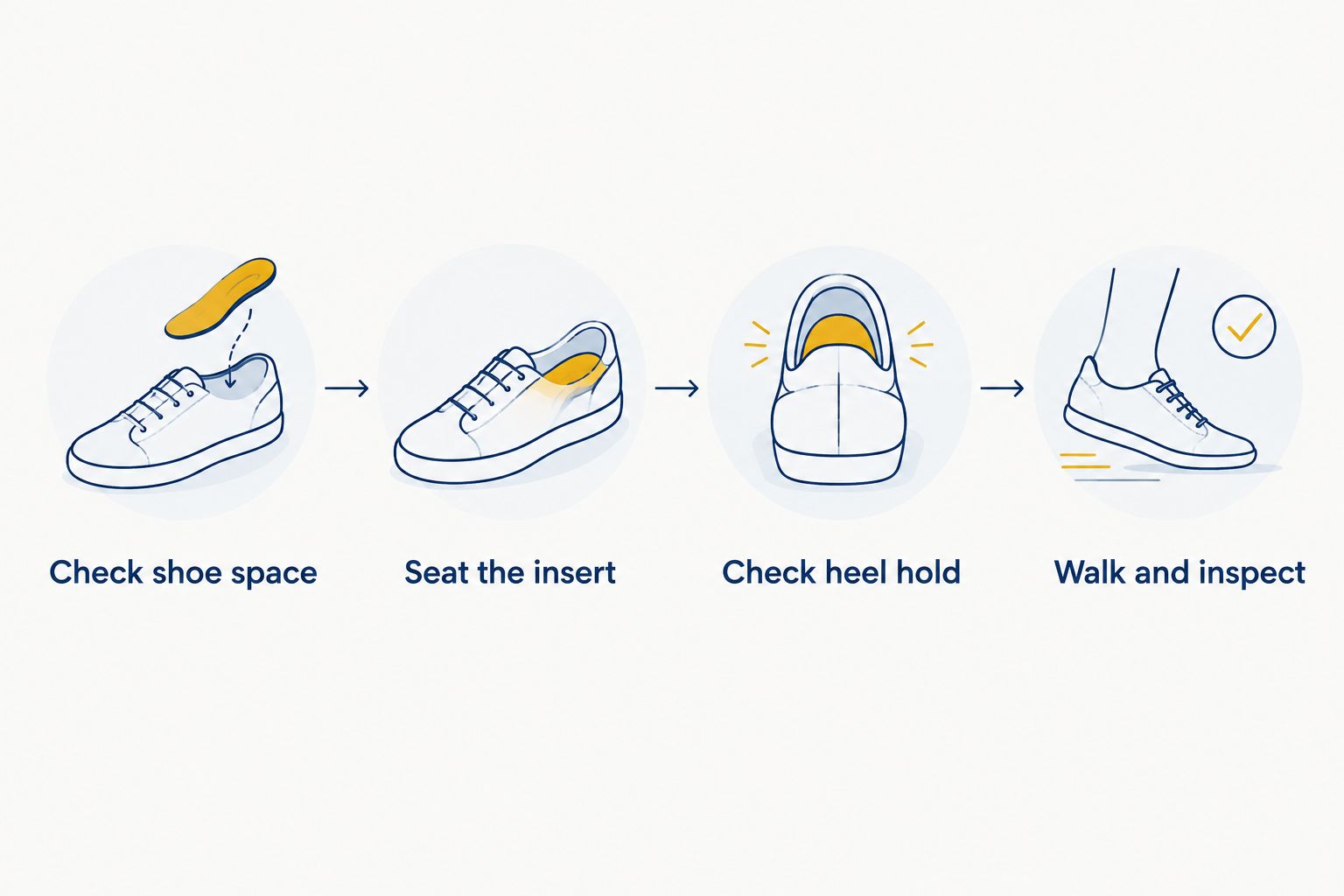
Use this sequence for any heel insert you choose in 2026. Start with ordinary walking rather than a pickleball match, a run, or a full round of golf.
- Check shoe space: Put on your usual socks and confirm the shoe is comfortable before adding the insert.
- Seat the insert: Position the cup or pad flat beneath the heel, following its instructions.
- Check heel hold: Make sure your heel remains secure and the collar does not create new rubbing.
- Walk and inspect: Walk comfortably, then check for insert movement and skin irritation. Stop if symptoms worsen.
Change one part of your setup at a time. If you replace your shoes, add an insert, and increase your walking together, you lose a clear way to judge what affects comfort.
For older adults, stability matters as much as softness. An insert that makes your heel slip is a poor choice even if standing on it initially feels comfortable.
When another cushion is the wrong next move
Seek prompt medical assessment for heel pain after an injury, inability to bear weight, substantial swelling, an open wound, or spreading redness. A sudden pop with loss of push-off strength also needs urgent assessment.
Pain beneath the heel during your first steps after rest can occur with plantar fasciitis. Burning, tingling, or numbness points toward a different evaluation; pain behind the heel raises different questions from pain underneath it. These patterns help guide an examination but do not establish a diagnosis by themselves.
Arrange an appointment when symptoms persist, worsen, change your walking, or keep you from normal activity. Do not keep increasing cushion thickness to avoid addressing the cause.
Naples Podiatrist provides heel pain care, custom orthotics, and other foot and ankle treatments. An examination determines which approach fits your condition; the right next step is not automatically a more elaborate insert.
Get your heel pain assessed
Find specialist care when heel pain persists, changes your walking, or limits activity.
How these options are ranked
This 2026 ranking uses symptom match, shoe space, secure positioning, support needs, and skin tolerance. It compares design roles rather than claiming that one material produces better clinical outcomes for every patient.
A heel-only cushion ranks first for the narrow task of localized cushioning. A full-length insole becomes the better choice when arch support is part of your treatment plan.
Which heel cup or cushion should you choose?
Start with a securely fitted contoured silicone heel cup if you need localized cushioning for mild under-heel discomfort. Choose a thin gel pad if shoe space prevents a cup from fitting, or a foam pad for a simple cushioning trial.
Choose a full-length contoured insole when arch support is also needed. Consider a heel sleeve only when its padding location and fit solve a specific problem.
For persistent symptoms, Naples Podiatrist heel pain care addresses the decision that shopping cannot: what is causing the pain. Bring your usual shoes and any inserts you have tried so the clinician can assess the setup you actually use.
FAQ
What’s the best heel cup for heel pain?
A securely fitted contoured silicone heel cup is a reasonable starting option for localized under-heel cushioning. It is not the best treatment for every cause of heel pain, and persistent symptoms need assessment.
Are gel heel pads better than foam cushions?
Neither gel nor foam is universally better for heel pain. Choose based on fit, comfortable cushioning, secure positioning, and whether the pad keeps its shape during use.
Do heel cups cure plantar fasciitis?
Heel cups do not reliably cure plantar fasciitis on their own. They can serve as a comfort aid within a treatment plan that addresses footwear, activity, flexibility, and support needs.
Should I choose a heel cup or a full-length insole?
Choose a heel cup for localized cushioning and a full-length contoured insole when arch support is also needed. Both must fit without crowding the shoe or creating pressure.
Can I wear heel cushions while playing pickleball or golf?
Use a heel cushion during pickleball or golf only if it stays secure and does not worsen pain or affect shoe stability. Test the fit during ordinary walking first, and do not use cushioning to push through an injury.
Are heel cushions safe if I have diabetes?
People with diabetes, particularly those with reduced sensation or circulation problems, should get clinical advice before trying new heel padding. Check the skin for rubbing, redness, blisters, or wounds rather than relying on pain alone.
When should I see a podiatrist instead of trying another insert?
See a podiatrist when heel pain persists, worsens, changes your walking, or limits normal activity. Injury-related pain, inability to bear weight, an open wound, or spreading redness needs prompt assessment.
One last thing
Before choosing another cushion in 2026, check where your heel sits inside the shoe. Added thickness can raise the heel into a collar that did not rub before.
The best cushion is not the thickest one; it is the one that meets your support needs without creating a new fit problem. If walking still hurts, stop changing inserts and get the cause assessed.
Related guides
- How to relieve plantar fasciitis heel pain at home
- Best shoes for plantar fasciitis relief
- Heel spur vs. plantar fasciitis

